
Office stress breaks are short pauses that combine comfortable breathing, gentle shoulder movement, and a change from screen work. You do not need a yoga mat, special clothes, or a private room to begin. A supported chair and enough space to move your arms can be enough. This guide offers a small routine you can adapt to your workday, without forcing your breath or stretching through pain. The aim is to make room for a pause, not to solve every source of work stress.
This guide is for general education and is not medical advice. Check with your doctor before starting if you have a health condition, recent injury or surgery, unexplained symptoms, or concerns about whether these movements suit you.
What are office stress breaks?
Office stress breaks are brief changes of activity during desk work. They can include looking away from a screen, letting your hands rest, and moving within a comfortable range. Breathing and shoulder movements are options rather than requirements; a quiet pause without exercise can also be a useful choice.
Why do people take these breaks?
People take breaks to interrupt long stretches of work and notice how they feel. You might realise that your jaw is clenched or that you have held your arms still while typing. A pause gives you a chance to change position, without making perfect posture another task to complete.
How do you start?
Start with a small pause that feels easy to repeat. Save your work, place your phone aside, and choose a moment when you can stop safely. If you want a wider introduction to chair-based movement, explore yoga at your desk rather than adding several unfamiliar exercises at once.
Step one: Settle into your chair
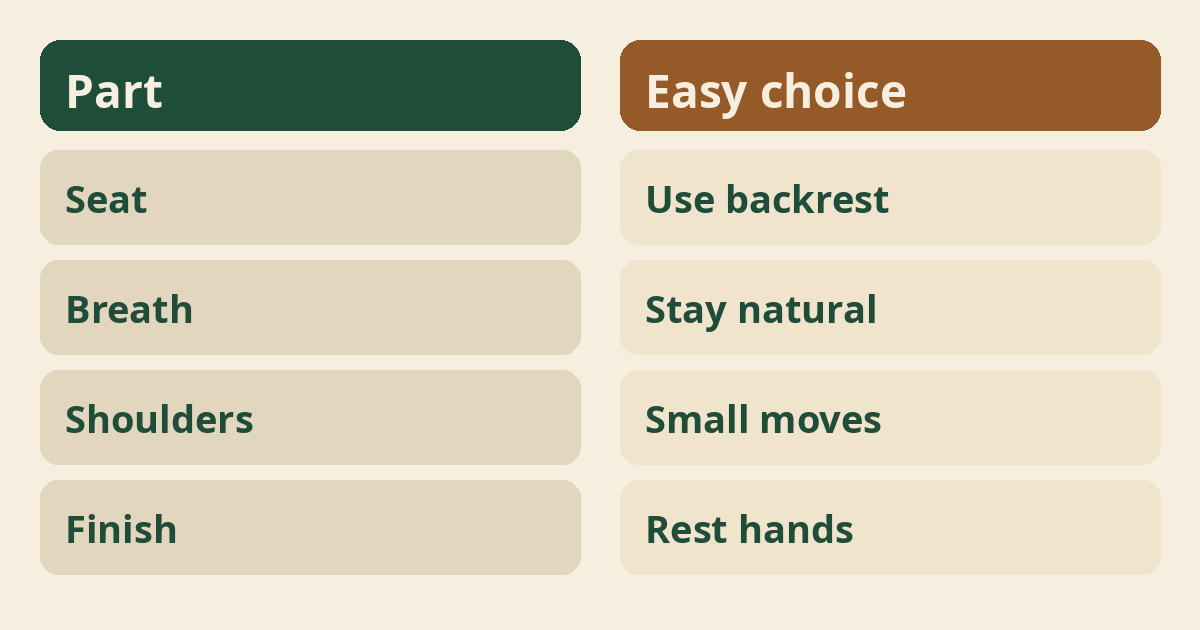
Sit in a supported position with your feet resting comfortably. Use the backrest if it helps, and avoid balancing on the edge of a rolling chair. Let your hands rest on your thighs or desk. You do not need to pull your shoulders back or hold your spine rigidly.
Step two: Notice ordinary breathing
Observe a few normal breaths before trying to change anything. Keep your eyes open if that feels more comfortable in the office. Notice whether breathing feels easy, without grading its depth or speed. If paying attention to the breath makes you uneasy, focus instead on the support beneath your feet.
Step three: Make a small shoulder movement
Lift your shoulders slightly, then let them return to their resting position. Keep the movement small and leave room around your neck. Repeat only if it feels comfortable; there is no need to squeeze or push downward. Skip this step if you have shoulder pain or a movement restriction.
Step four: Move your shoulder blades
Allow a small forward and backward movement across your upper back. Rest your hands loosely and let your arms follow rather than pulling them behind you. Think of exploring a little movement, not pinching the shoulder blades together. Return to an easy resting position between repetitions and stop if symptoms appear.
Step five: Change your view
Look away from the screen and let your arms rest. Choose a comfortable point across the room rather than forcing your eyes to focus far away. Notice the room around you and the feeling of the chair. This step can stand alone when you cannot move your shoulders comfortably.
Step six: Return without rushing
Finish by checking whether your next working position feels comfortable. Bring your keyboard and mouse within easy reach if possible, then resume one clear task. Avoid testing how much farther your shoulders can stretch at the end. The break is complete even if you feel much the same as before.
How should you breathe?
Use an easy, unforced breath rather than taking the biggest breath possible. Let air enter through your nose if comfortable, but do not insist on it when congested. Avoid breath holding or repeated forceful breaths. Belly breathing for beginners offers another gentle approach to explore without pushing the belly outward.
Should you count your breaths?
Counting is optional and should not make breathing harder. You can notice a few comfortable breaths without giving each one a fixed length. If a count leaves you short of air or creates pressure to perform, drop it. Ordinary breathing is enough for this routine, even when someone nearby follows a different rhythm.
How long should a break last?
A minute or two can be a practical starting point. Choose a length that fits your task and workplace rather than chasing a perfect session. You can spend the whole pause resting your hands if movement is not suitable. Longer breaks are a separate choice, not proof that the short version failed.
How often should you pause?
Choose a repeatable cue instead of treating a schedule as a strict rule. Finishing a call or completing a piece of work may provide a natural opening. Follow workplace safety requirements and any individual advice from your clinician. For broader practice planning, see how often to do yoga.
What benefits are realistic?
Many people find that a brief pause feels refreshing, but results vary. You may notice your working position or return with a little more patience; you may also notice no immediate change. These possibilities are not promises about symptoms or productivity. For wider background on yoga and its safety, see National Center for Complementary and Integrative Health.
Is this a treatment?
No, this routine is not a treatment for stress-related illness, anxiety, or shoulder problems. It cannot identify why you are uncomfortable or replace care from a qualified professional. Ongoing distress or pain deserves attention beyond a desk routine. You do not need to keep practising while waiting to see whether symptoms disappear.
Who should ask a doctor first?
Ask your doctor first if you have an injury, recent surgery, or a condition that affects breathing or movement. This is especially important when you have been given restrictions or are unsure what activity is suitable. Follow your own care plan rather than adapting medical advice from a general article or a colleague’s experience.
When should you stop?
Stop if you develop pain, dizziness, tingling, unusual breathlessness, or other concerning symptoms. Return to a supported position and do not repeat the movement to test it. Seek medical advice for new, persistent, or recurring symptoms. Chest pain, fainting, or severe breathing difficulty needs urgent medical help rather than another breathing exercise.
What if focusing on breath feels uncomfortable?
Choose an outward focus if breath attention increases unease. Notice the colour of an object, feel your feet on the floor, or listen to ordinary sounds nearby. You can omit breathing practice entirely. If these experiences recur or affect your daily life, speak with an appropriate healthcare professional rather than forcing yourself through them.
What are the common mistakes?
The common mistake is trying to turn a gentle pause into an intense stretch. Avoid large shoulder circles, forceful neck movements, and holding a shape because you think discomfort proves it works. Another mistake is judging the break by how calm you feel afterward. You can finish without achieving a particular feeling.
Do you need any props?
A stable chair and comfortable foot support are usually enough for the suggested setup. A firm footrest may help if your feet do not reach the floor. Avoid unstable stacks or anything that shifts under pressure. Yoga props for beginners explains support choices, but buying equipment is not a requirement for taking a pause.
Should you stretch your neck?
Neck stretching is not required for this shoulder-focused break. Keep your head in a comfortable position instead of pulling it sideways with your hand. If you want to explore more movement, yoga for neck and shoulders is a separate starting point, subject to any advice or restrictions you already have.
Can you do it standing?
You can stand for part of the pause if standing is comfortable and safe for you. Move away from a rolling chair and keep the floor clear. Let your arms rest before deciding whether to add movement. A supported seated version is equally valid; standing does not make the break more advanced or more effective.
Can you pause during a meeting?
You can take a quiet version during a meeting without obvious stretches. Let your hands rest when you are not typing, soften any unnecessary effort, and breathe normally. Do not sacrifice attention when your role requires active listening or safety awareness. Save shoulder movements for a suitable gap if they would distract you or others.
What about working from home?
The same small routine can fit a home workspace. Choose a stable chair rather than a soft sofa if the latter makes sitting or standing awkward. Keep enough room around you to avoid hitting furniture with your arms. Household interruptions do not spoil the practice; you can stop and continue your day without restarting.
Does desk setup matter?
A comfortable desk setup can make it easier to vary your position. Try keeping frequently used items within reach so you are not repeatedly reaching far forward. There is no single posture you must hold all day. If work equipment repeatedly causes discomfort, ask about a workplace assessment rather than relying only on stretching breaks.
What if your shoulders already hurt?
Existing shoulder pain calls for individual guidance before adding shoulder exercises. A general routine cannot tell whether movement, rest, or another approach is appropriate for you. Keep the pause free of painful movement and arrange medical advice as needed. A colleague’s successful stretch does not show that the same exercise suits your shoulder.
Can a break change a difficult workload?
A breathing pause does not fix an unreasonable workload or unsafe working conditions. It may provide space to notice that you need help, but it should not replace practical support. Consider discussing priorities, breaks, equipment, or deadlines with the appropriate person. Responsibility for workplace problems does not rest solely on your ability to stay calm.
How do you build a habit?
Attach the pause to an ordinary work transition that you already notice. You might rest your hands after sending a document or before starting another call. Keep the cue flexible enough that missing it does not become another source of pressure. A habit should make the pause easier to remember, not harder to fit into life.
How do you progress?
Progress by making the routine more comfortable and easier to choose. You do not need bigger movements, longer breath counts, or more repetitions. Once familiar, you might decide whether sitting, standing, or a quiet non-movement pause suits each situation. Add unfamiliar exercises separately so you can notice how each one feels without rushing.
Would a teacher help?
A qualified teacher may help you understand comfortable movement options. Tell the teacher about relevant restrictions and avoid classes that ask you to push through pain or hold your breath despite discomfort. Teaching support does not replace medical assessment. Choose someone who is willing to simplify the practice and respect your decision to stop.
What mindset is useful?
Treat the break as permission to pause rather than a test of calmness. A busy mind does not mean that you are doing it wrong. You can notice an unfinished task and still rest your hands for a moment. Yoga for stress relief for beginners explores this broader approach without promising a particular result.
Can you take a break after a tense call?
Yes, a quiet pause after a difficult call can be a reasonable option. Begin with ordinary breathing and a supported position rather than immediately stretching. You may prefer to get water, write down the next action, or ask for support. Shoulder movement is optional, and you do not have to use exercise to process every emotion.
What if there is no private space?
A simple pause does not require a private room. Rest your hands, look away from the screen when safe, and let your breath remain natural. Avoid closing your eyes if you need to remain aware of people or equipment. Privacy may help you feel comfortable, but it is not a condition for the smallest version.
How do you know what suits you?
Choose the version that feels manageable and does not bring on symptoms. After a few attempts, consider whether the setup, timing, and movements fit your day. You do not need a score or a record of improvement. If a step consistently feels unpleasant, leave it out and seek guidance when discomfort or uncertainty persists.
Where to read next
For a calm, beginner-friendly start, Ranjana Sinha’s Begin Where You Are is written for people who want simple steps. Our guide to starting a home yoga practice adds a gentle routine you can follow at home.
Frequently asked questions
Can I do office stress breaks in work clothes?
Yes, choose small movements that your clothes allow comfortably without pulling or restricting your breath.
Do I need to close my eyes?
No, keeping your eyes open is fine and may be more suitable in a shared workspace.
Should I hold my breath during shoulder movements?
No, allow ordinary breathing and leave out movements that make it difficult to breathe comfortably.
What if I miss my planned break?
Take the next suitable opportunity without adding extra exercises to make up for it.
Can I skip every shoulder movement?
Yes, a supported pause with resting hands and a change of view is a valid version.
The bottom line
Keep office stress breaks small, comfortable, and optional, and seek professional guidance when symptoms or health concerns need more than a pause.

