
Yoga for cyclists is a gentle way to explore movement outside the bent, forward-facing position used on a bike. A beginner practice can include supported standing, small spinal movements, and comfortable stretches for the hips and shoulders. You do not need deep poses or a long session to begin. Start when you feel steady and rested enough to move with control. This guide explains a simple approach, including when to hold back and why pain needs assessment rather than a stronger stretch.
This guide offers general education, not medical advice or a personal exercise plan. Check with your doctor before starting if you have a medical condition, an injury, unexplained symptoms, or concerns about exercise.
What is yoga for cyclists?
Yoga for cyclists adapts basic yoga movements to the needs and comfort of someone who rides a bike. It is not a separate medical method or a requirement for cycling. The practice gives you time to move in different directions, notice how you feel, and choose a comfortable range away from the saddle.
Why do cyclists try yoga?
Some cyclists enjoy yoga because it offers a quieter change from pedaling and watching the road. Riding keeps the hands, feet, and body in fairly set positions for long periods. Gentle floor or standing work can feel different without needing to become another hard training session or a test of flexibility.
What benefits are realistic?
Many people find a gentle practice useful for body awareness, comfortable movement, and unwinding, but results vary. A pose cannot promise a faster ride or freedom from soreness. For a broader overview of yoga and its limits, see National Center for Complementary and Integrative Health; judge your own practice by comfort and consistency rather than dramatic claims.
How should you start?
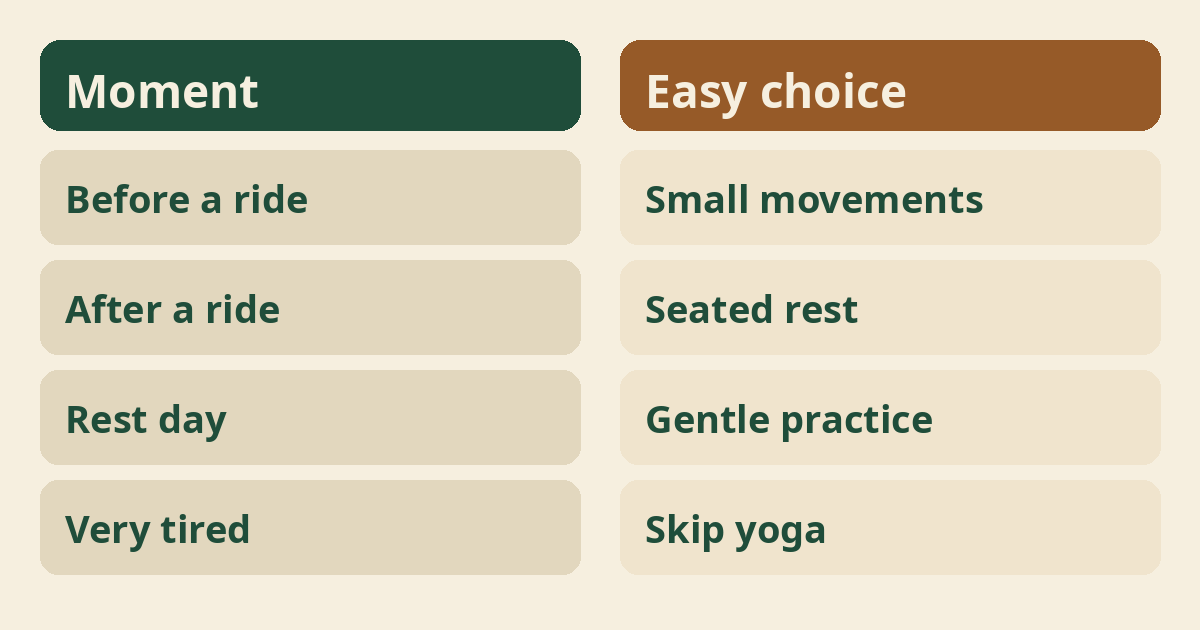
Begin with a few easy movements on a day when you are not exhausted from riding. Choose a clear space, a stable surface, and clothing that lets you move freely. First check whether you can stand and change positions without dizziness or pain; skip the session if you feel unwell or unusually drained.
Step one: find a steady stance
Stand with your feet at a comfortable width and let your arms rest beside you. Keep your knees soft instead of pushing them back, and allow your gaze to settle on a fixed point. Take several easy breaths without trying to look perfectly straight; mountain pose basics offers a simple starting reference.
Step two: loosen the shoulders
Move your shoulders through small, comfortable circles while keeping your head easy. Lift them slightly, circle them back, and let them settle without pulling the shoulder blades hard together. Stop if the movement produces pain, tingling, or a headache, and do not use large neck circles to chase a feeling of release.
Step three: try small cat-cow movements
On hands and knees, alternate a small rounding of the back with a return toward a comfortable neutral position. Place padding beneath your knees and keep the movement slow enough to breathe normally. Avoid dropping your lower back deeply; a beginner cat-cow guide explains the movement without making a large bend the goal.
Step four: explore a supported lunge
Try a shallow half-kneeling lunge only if kneeling and changing position are comfortable. Pad the back knee, place your hands on a stable chair, and shift forward a little with your torso upright. Keep the front foot planted and stop before your lower back arches or your knee feels pressured; standing is an acceptable alternative.
Step five: use a chair-supported hinge
Place your hands on a sturdy chair and send your hips back slightly with both knees bent. Keep your back in a comfortable shape rather than trying to reach your chest toward the floor. The movement should stay mild behind the legs; stand up slowly, and leave it out if it brings on pain or dizziness.
Step six: finish with supported rest
End by sitting comfortably on a chair or resting on your side with support. Let your hands be still and allow your breathing to settle at its own pace. A brief rest can mark the end of practice without a demanding final pose, especially when you are fitting yoga around an already busy riding day.
How should you breathe?
Breathe easily throughout each movement instead of holding your breath to stay in position. You can use the nose or mouth as comfort requires, without forcing large breaths or matching a rigid count. If you want a quiet introduction, explore gentle belly breathing and stop if deliberate breathing makes you lightheaded.
How long should a session last?
A short session of five to ten minutes is a reasonable place to explore your starting point. Include time to get into and out of positions rather than spending every minute stretching. Finish earlier if your movements become shaky or rushed; the right duration leaves you comfortable enough to carry on with your day.
How often can you practice?
Start with a few short sessions each week and adjust according to how you feel afterward. Your riding load, other exercise, sleep, and health all affect what feels manageable. Use a guide to yoga frequency as a planning aid, not a reason to add sessions when you need rest instead.
Should yoga come before a ride?
Before a ride, keep any yoga brief, easy, and based on familiar movements. A demanding stretch session is not needed before you get on the bike. Leave time for your usual cycling warm-up, and avoid trying a new balance pose or a deep hold just before handling a bicycle in traffic.
Can you practice after cycling?
After cycling, wait until you feel settled, steady, and ready to move without rushing. Put the bike away, address thirst and hunger as needed, and allow your breathing to return toward its usual rhythm. If you feel faint, overheated, or depleted, skip yoga rather than using a floor routine to push through those feelings.
What about a long ride day?
On a long ride day, rest may be more useful than adding a full yoga practice. If you choose to move, use supported positions and a smaller range than usual. Tired muscles do not need to prove their flexibility, and a comfortable seated pause can be a complete choice rather than an unfinished session.
Which props help?
A stable chair, folded towel, and comfortable mat can make basic positions easier to arrange. Test the chair first so it cannot slide or tip, and avoid using lightweight furniture for support. Beginner yoga props can help you choose simple supports without buying equipment or pulling your body deeper into a pose.
What if your wrists dislike floor work?
Choose standing or seated movements when bearing weight through your hands feels uncomfortable. Cyclists may already spend plenty of time with pressure through the hands on the handlebars. You do not need planks or long downward-facing dog holds to do yoga; new or ongoing wrist pain deserves assessment rather than a workaround that hides it.
What if kneeling is uncomfortable?
Replace kneeling positions with supported standing or seated options if your knees do not welcome floor work. Padding can change surface pressure, but it does not make a painful position suitable. Keep both feet on the floor for a small seated spinal movement, or simply omit the lunge rather than trying to tolerate joint pain.
How should you approach the hips?
Explore hip movement gently without assuming every cyclist needs a deep hip stretch. Begin with a small range and avoid pushing the knees down or pulling a leg firmly toward your body. Gentle yoga for hips offers a broader introduction, but your own comfort matters more than copying a photograph or reaching a named shape.
What about the neck and shoulders?
Use easy shoulder movements and a relaxed head position rather than strong neck stretching. Keep your gaze forward or slightly down, and avoid pulling on your head with a hand. Yoga for neck and shoulders may offer options, while persistent pain, weakness, or tingling calls for medical advice rather than repeated stretching.
Should you stretch your lower back?
Do not assume a tight-feeling lower back needs a stronger forward fold or twist. Start with a comfortable resting position and small movements only if these feel good. Back pain has different possible causes, so talk with your doctor or a qualified clinician before choosing exercises for ongoing, worsening, or ride-related symptoms.
Who should be careful?
Speak with your doctor first if you have an injury, recent surgery, significant joint problems, or a condition that affects exercise. Pregnancy and heart, bone, or balance conditions may also change which positions suit you. Ask about specific limits, then share those limits with a qualified teacher rather than expecting a general routine to fit every situation.
When should you stop?
Stop if a movement causes pain, numbness, tingling, dizziness, or a feeling that you cannot control the position. Sit or rest somewhere safe instead of trying another stretch immediately. Seek urgent medical help for chest pain, fainting, sudden weakness, or severe breathing trouble; do not interpret these symptoms as ordinary stiffness from a hard ride.
Is this a treatment?
No, yoga for cyclists is not a treatment for an injury, medical condition, or cycling pain. It cannot replace a diagnosis, rehabilitation plan, or a clinician’s advice about returning to activity. If symptoms keep coming back, arrange an assessment instead of building a longer stretch routine around an unexplained problem.
What are common mistakes?
Common mistakes include forcing a stretch, holding the breath, and turning every session into a workout. Another is copying the flexibility of an experienced teacher without using support. Keep enough ease to leave any position slowly, and remember that a deeper shape does not prove you are getting more value from the practice.
How much sensation is enough?
Choose a mild, manageable sensation rather than searching for the strongest stretch you can tolerate. You should be able to breathe and soften unnecessary effort without fighting the position. Sharp, burning, electric, or joint-centered sensations are reasons to stop, not signs that a tight area is finally opening or that the pose is working.
How can you progress?
Progress by making familiar movements steadier before adding time, range, or new positions. Change one thing at a time so you can notice your response that day and afterward. If a longer session leaves you uncomfortable, return to the shorter version instead of treating the change as a challenge you must overcome.
Do cyclists need balance poses?
Balance poses are optional, and beginners can keep one hand on a stable support. Start near a wall or chair with both feet close to the floor rather than attempting a difficult one-leg pose. Feeling steady during yoga does not establish readiness for road cycling, especially after illness, injury, dizziness, or a fall.
How do you choose a teacher?
Look for a qualified teacher who welcomes beginners, asks about limitations, and offers clear alternatives. Explain your cycling routine and any advice you have received from a clinician. A useful teacher respects your decision to skip a pose and does not promise to correct an injury, change your bike fit, or produce a certain riding result.
Can yoga replace bike-fit advice?
Yoga cannot tell you whether your saddle, handlebars, or riding position fit your needs. Repeated discomfort on the bike deserves attention to the cycling setup and, where appropriate, a clinical assessment. Do not keep stretching around a problem while assuming your body is the only thing that needs to change.
What if one side feels different?
Notice side-to-side differences without trying to force both sides into an identical shape. Use a comfortable range on each side and avoid adding extra pressure to the side that moves less. A new, marked, or painful difference is worth discussing with a clinician, particularly if it follows a crash or changes how you walk.
What mindset helps?
Treat yoga as a chance to listen rather than another place to chase distance, speed, or personal records. Some days a single supported movement will suit you better than a complete routine. You can stop while you still feel comfortable, and you do not need to earn rest by finishing every pose on a list.
How do you build a lasting habit?
Attach a small practice to a realistic part of your week instead of making a large daily promise. Keep your mat or chair easy to access, and repeat a simple sequence until it feels familiar. Notice whether it fits your life and feels comfortable; those observations are more useful than counting how far you can bend.
Where to read next
For a calm, beginner-friendly start, Ranjana Sinha’s Begin Where You Are is written for people who want simple steps. Our guide to starting a home yoga practice adds a gentle routine you can follow at home.
Frequently asked questions
Do I need to be flexible first?
No, start with small movements and supports that let you stay comfortable without forcing a stretch.
Can I practice in cycling clothes?
Yes, if the clothes allow easy movement and you remove shoes or equipment that make standing or floor work awkward.
Should I hold every pose for a long time?
No, brief comfortable movements and easy transitions are enough for a beginner to explore the practice.
Can yoga replace a recovery day?
No, a yoga session can still add effort, so keep rest days restful and omit practice when you need to recover.
What if I cannot get down to the floor?
Use a stable chair and standing options rather than attempting floor transitions that feel unsafe or uncomfortable.
The bottom line
Begin with a few comfortable movements, respect symptoms, and let yoga fit your cycling life without becoming another demand.

