
Evening wind down yoga is a short, gentle practice you do in the last hour before bed to help your body and mind shift out of the busy day. It uses slow poses, easy stretches and calm breathing, and you need no experience, no special fitness and no equipment beyond a mat or a soft floor. Anyone can learn it in one evening. This guide shows you a simple routine you can start tonight.
This article is general education, not medical advice. If you have any health condition, injury, pain or pregnancy, check with your doctor before starting.
What is evening wind down yoga?
Evening wind down yoga is a gentle practice done before bed to release tension from the day. It is not a workout. The goal is to slow down, breathe softly and let the body know it can rest. Most sessions last ten to thirty minutes.
Why do people practise yoga at night?
Many people find that a short evening practice helps them feel calmer and less wired at bedtime. The day often leaves the body tight and the mind busy. Slow movement and quiet breathing give both a signal that work is over. Results vary from person to person.
How is it different from morning yoga?
Evening yoga is slower, softer and lower to the ground than a morning practice. Morning routines often wake the body up with standing poses and energy. Evening routines do the opposite, with seated and lying poses that invite stillness and quiet.
How do I start tonight?
Start with ten minutes, a quiet corner and three or four easy poses. Dim the lights and put your phone out of reach. Wear loose, comfortable clothes. You do not need a perfect setup, just a little space and a little quiet.
Step one, set up your space
Choose a calm spot with soft light where you will not be disturbed. A mat or folded blanket on the floor is enough. Keep a cushion or pillow nearby. If you like, learn more in yoga props for beginners.
Step two, begin with belly breathing
Lie on your back and breathe slowly into your belly for one or two minutes. Place one hand on your stomach and feel it rise and fall. Let the exhale be a little longer than the inhale. A full guide is at belly breathing for beginners.
Step three, move the spine gently
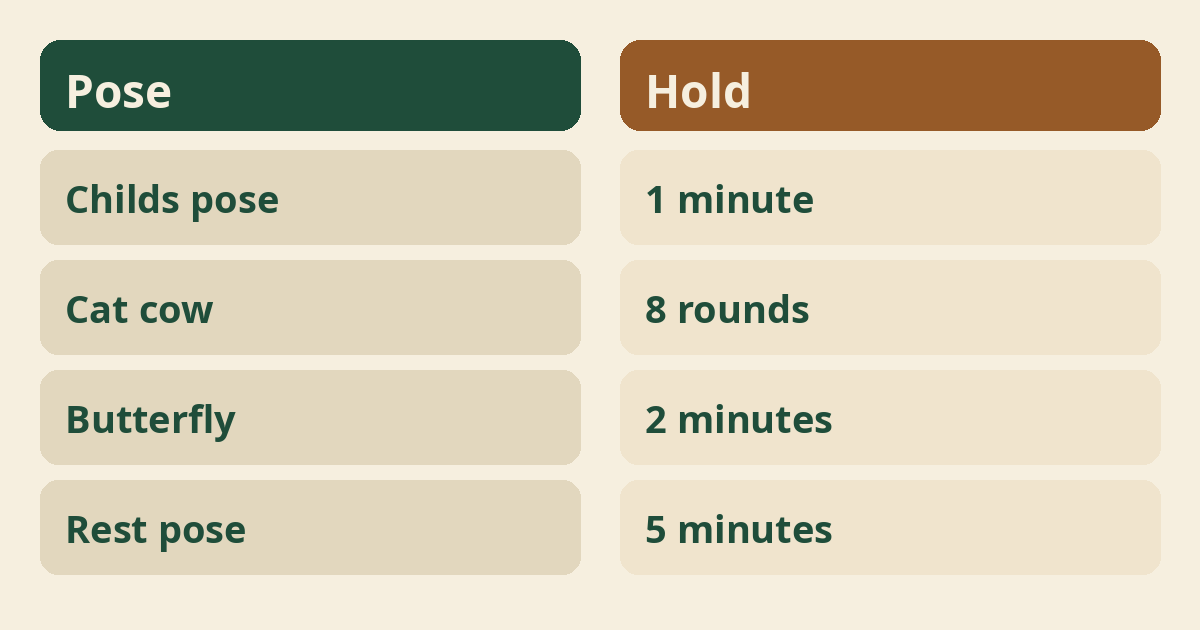
Start with slow cat and cow movements on hands and knees. Round the back as you breathe out, then soften it as you breathe in. Move slowly, about five to eight rounds. See cat cow pose for beginners for details.
Step four, fold into a rest pose
Ease into child’s pose and stay for a minute or more. Knees wide, big toes touching, forehead resting on the floor or a cushion. Let your shoulders drop. The full steps are in child’s pose for beginners.
Step five, open the hips softly
Finish with a gentle hip opener like butterfly pose or a lying figure four stretch. Hips often hold the day’s tension from sitting. Keep the stretch mild and breathe slowly. More options are in yoga for hips for beginners.
Step six, end in stillness
Close the practice lying on your back in quiet rest for a few minutes. Let your arms and legs relax completely. Scan your body from head to toe and release any holding. Then get up slowly and head to bed.
How should I breathe during evening yoga?
Breathe slowly through your nose, with the exhale slightly longer than the inhale. Slow, long exhales are widely used in relaxation practices. Never force or hold the breath. If you feel dizzy or strained, return to normal breathing.
How long should an evening session be?
Ten to twenty minutes is enough for most beginners. A short practice you actually do beats a long one you skip. Start small. You can always add a few minutes once the habit feels natural.
How often should I practise?
Most people do well with a short practice most nights of the week. Consistency matters more than length. Even three nights a week builds a useful rhythm. More on frequency is at how often should you do yoga.
What time in the evening is best?
Aim for the last hour before bed, at least a little while after dinner. Practising right before sleep lets the calm carry into bed. Leave a gap after a heavy meal so twists and folds feel comfortable.
Can I do it in bed?
Yes, many gentle poses work fine on a firm mattress. Supine twists, knee hugs and belly breathing all translate well to bed. Keep a pillow handy for support. Avoid anything that needs strong balance on a soft surface.
Do I need any props?
No props are required, but a cushion, pillow and blanket make the practice more comfortable. A folded blanket under the knees eases the lower back. A pillow under the head helps in rest poses. Props exist to support you, not to impress anyone.
Is evening wind down yoga a treatment?
No, it is not a treatment, cure or therapy for any condition. It is a gentle wellbeing practice, not medicine. It does not treat insomnia, anxiety, pain or any diagnosis. For health concerns, always speak with your doctor first.
What benefits do people report?
Many people find they feel more relaxed, less stiff and sleepier after a gentle evening practice, though results vary. Some notice they fall asleep more easily, others simply enjoy a quiet end to the day. Research on yoga and relaxation is ongoing, and resources like National Center for Complementary and Integrative Health offer balanced overviews. Nothing here is a guarantee.
Can it help with stress?
Many people find a slow evening practice helps them unwind after a stressful day. Gentle movement and slow breathing are common tools for settling the nervous system. For more on this, see yoga for stress relief for beginners. It is a support, not a fix.
What are common mistakes?
The biggest mistakes are pushing too hard, going too fast and practising too close to sleep with effortful poses. Evening practice should feel easy. Skip strong flows, deep stretches and anything that raises your heart rate. If a pose feels like work, soften it or skip it.
Who should be careful?
Anyone with an injury, recent surgery, dizziness, uncontrolled blood pressure or pregnancy should talk to a doctor first. Gentle does not mean risk free for everyone. A doctor or qualified teacher can suggest safe changes for your situation. When in doubt, leave the pose out.
Can I do it with a bad back?
Often yes with care, but check with your doctor before you begin. Keep movements small and skip deep forward folds and strong twists. Knee hugs and belly breathing are usually the gentlest starting points. Pain is a stop sign, not a challenge.
Is it safe during pregnancy?
Pregnancy changes what is safe, so get your doctor’s approval before practising. Lying flat on the back for long periods is usually avoided later in pregnancy. Side-lying rest with pillow support is a common alternative. A prenatal teacher can guide the details.
What if my mind keeps racing?
A busy mind during evening yoga is normal and not a failure. Notice the thoughts, then return attention to the breath or the feeling of the floor. Counting slow breaths, up to ten and back, gives the mind a simple job.
Should I practise in the dark?
Soft, dim light is ideal for evening practice. Bright light tells the brain to stay alert. A lamp, candle-like glow or hallway light is enough to move safely. Make sure you can still see the floor and any props.
Can beginners really do this alone?
Yes, this routine is designed for people with no yoga experience at all. Every pose here is simple and low to the ground. Move slowly, skip anything that hurts, and you will be fine. A beginner class or teacher can help later if you want more.
How do I make it a habit?
Attach the practice to something you already do every night, like brushing your teeth. Keep your mat or blanket visible in the bedroom. Start with just five minutes so the barrier stays low. A small daily habit grows on its own.
What poses should I avoid at night?
Avoid strong backbends, fast flows, headstands and anything that builds heat or energy. These can wake the body up when you want it to settle. Save them for morning or daytime practice. Evening is for slow, low, quiet shapes.
What if I fall asleep during the practice?
Falling asleep during rest poses is common and completely fine. It simply means the body was ready. If it happens often, do the routine slightly earlier or keep the lights a little brighter until the end.
How do I progress over time?
Progress by holding poses a little longer and adding one new gentle pose at a time. There is no level to chase in a wind down practice. Deeper relaxation, not deeper flexibility, is the measure. Change only one thing at a time.
Do I need a teacher?
A teacher is helpful but not required for this gentle routine. Simple restful poses are safe for most people to learn from clear written guides. If you want feedback, one beginner class can answer many questions at once.
What mindset should I bring?
Bring a mindset of ease, with no goals and no judging. This is not exercise to win or flexibility to earn. It is a few quiet minutes you give yourself at the end of the day. Whatever happens is enough.
Can children or older adults do it?
Yes, the routine suits most ages with small adjustments. Children enjoy the breathing and simple shapes with a parent nearby. Older adults may want extra padding and slower transitions. The same doctor-first rule applies to everyone.
What should I do after the practice?
After the final rest, get up slowly and keep the evening quiet. Dim screens, sip water if you like, and let the calm carry you to bed. Avoid jumping straight back into email, news or bright phone light.
Where to read next
For a calm, beginner-friendly start, Ranjana Sinha’s Begin Where You Are is written for people who want simple steps. Our guide to starting a home yoga practice adds a gentle routine you can follow at home.
Frequently asked questions
How many poses do I need for an evening wind down?
Three to five gentle poses plus a few minutes of quiet rest is plenty for beginners.
Can evening yoga replace sleep hygiene habits?
No, it works best alongside basics like a regular bedtime, a dark room and limited late screen time.
Is it okay to practise every single night?
Yes, gentle restful yoga is mild enough for daily practice for most healthy people.
What if I only have five minutes?
Five minutes of belly breathing and one rest pose still counts as a real practice.
Do I need to be flexible to start?
No, this routine asks for no flexibility at all and gently meets you where you are.
The bottom line
Start tonight with ten quiet minutes, and let the practice grow at its own pace.

