
Hamstring stretches gently lengthen the muscles at the back of your thighs without asking you to touch your toes. Start with a supported position, a soft knee, and a small range that feels comfortable rather than painful. This guide explains how to try a lying stretch, adjust the effort, and build a short practice around your own starting point. You do not need flexible legs or special clothes, and a deeper stretch is not the goal of every session.
This guide offers general education, not medical advice or a personal exercise plan. Check with your doctor before starting if you have pain, a recent injury or operation, pregnancy, or a condition that affects movement.
What are the hamstrings?
The hamstrings are a group of muscles along the back of each thigh. They help bend your knee and move your thigh behind you at the hip. A stretch changes the position of these joints to place a gentle lengthening demand on the muscles, rather than pulling on the foot alone.
What is a hamstring stretch?
A hamstring stretch brings the thigh toward the body while the knee opens within a comfortable range. Your leg does not need to become completely straight for the movement to count. Bending the knee can help you choose an easier starting position and keep the effort from becoming a struggle.
Why do people stretch this area?
People often stretch their hamstrings to explore easier movement or ease a feeling of stiffness. Some include it after walking, while others use it within a gentle yoga session. A tight feeling does not tell you its cause, so do not assume that more stretching is always the right response.
Benefits and realistic expectations
Many people find gentle stretching helps them feel more comfortable moving, but results vary. Comfortable range may change with practice, and some days will still feel less open than others. General yoga information at National Center for Complementary and Integrative Health offers wider context, but it does not establish that a particular hamstring stretch is right for your symptoms.
How should you start?
Begin with one supported stretch rather than a long routine of forward bends. Choose a quiet space where you can get down and up without rushing, and keep a folded towel nearby. If floor transfers are difficult, ask a qualified teacher about a supported chair version before trying to improvise.
Step 1: Prepare your space
Lie on your back with both knees bent and your feet resting on the floor. Let your head rest comfortably and give your shoulders room to settle. A folded blanket under your head may help if needed, but use only enough height to keep your neck comfortable rather than tipping your chin sharply forward.
Step 2: Lift one thigh
Bring one bent knee toward your body only as far as feels easy. Keep the other foot on the floor instead of straightening that leg immediately. Hold behind the lifted thigh with both hands, avoiding pressure directly behind the knee, and keep your elbows relaxed rather than hauling the leg toward your face.
Step 3: Open the knee
Slowly open the lifted knee until you notice a mild stretch behind the thigh. Stop before you feel compelled to round your shoulders, clench your jaw, or hold your breath. The knee may remain quite bent, and the thigh may move slightly away from your chest as you find a workable position.
Step 4: Settle and breathe
Stay at a mild level of effort while allowing your breath to remain easy. Check that your pelvis is resting rather than rolling upward to chase extra distance. If the stretch grows stronger as you stay, bend the knee a little more instead of assuming you must hold the original shape until the timer ends.
Step 5: Release and change sides
Bend the lifted knee before lowering your foot back to the floor. Pause with both feet down, then repeat on the other side using its own comfortable range. Finish by resting briefly, rolling onto your side, and getting up slowly if you are leaving the floor, especially if position changes make you lightheaded.
How should you breathe?
Breathe naturally instead of using a long exhale to push farther. You can let the ribs and belly move without forcing a special pattern. If breathing feels unfamiliar, explore a simple belly breathing practice separately, then bring that easy attention back to the stretch without making the breath another test.
How long should you hold?
A brief hold of about ten to twenty seconds is a practical starting experiment, not a requirement. Release earlier if the position becomes uncomfortable or your breathing changes. One easy attempt on each side can be enough while you learn the setup; you do not need to hold longer just because the sensation is mild.
How often can you practise?
Choose a frequency that leaves your legs feeling comfortable during ordinary activities afterward. A few short sessions across the week may be easier to judge than several intense sessions in one day. Use guidance on yoga frequency to think about your wider routine, and adjust rather than treating any schedule as compulsory.
Should you warm up first?
Gentle movement before a held stretch can make the starting position feel less abrupt. Walk around the room or bend and straighten your knees comfortably for a short while. Warming up is not permission to pull harder, and feeling warm does not remove the need to pay attention to pain, fatigue, or a changing sensation.
Which props are useful?
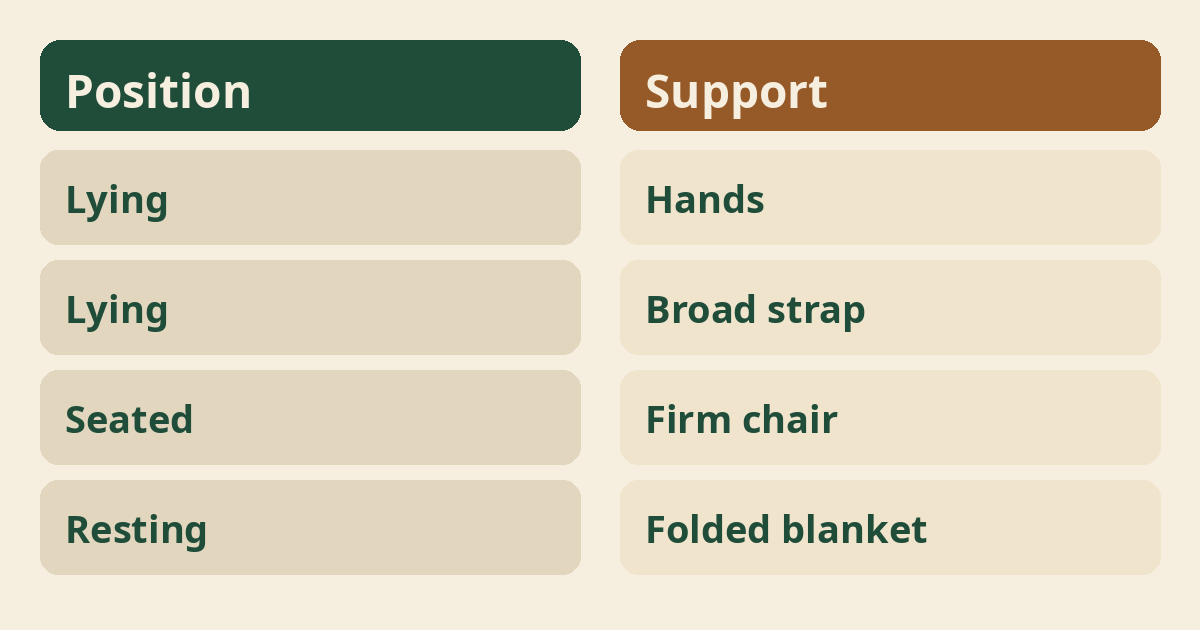
A strap, sturdy chair, or folded blanket can make a stretch easier to manage. Each prop should reduce strain rather than act as a tool for pulling you deeper. Read how beginners can use yoga props if you are choosing equipment, and check that any chair is stable before putting weight on it.
How do you use a strap?
A strap can support the lifted foot when holding behind the thigh is awkward. Place a broad strap around the ball of the foot and keep your elbows soft, with the knee bent as needed. Avoid yanking the ends or using a thin cord, and return to holding the thigh if the strap encourages you to pull.
Can you stretch in a chair?
A stable chair offers another option when lying on the floor is not practical. Sit near the front with one heel on the floor, the other foot planted, and the extended knee softly bent. Tip forward slightly from the hips with a long back, keeping the movement small and stopping if your back or leg feels uncomfortable.
Can you practise at a desk?
A desk break can include gentle leg movement without turning the chair into exercise equipment. Stand up safely, walk a little, or try the supported seated option away from rolling wheels. The ideas in yoga at your desk can help you plan breaks, but avoid stretching while distracted by a call or task.
Do you need to touch your toes?
Touching your toes is not a useful requirement for a hamstring stretch. Body proportions, position, and the movement available at several joints all affect where your hands reach. Judge the practice by comfortable effort and an unforced return to standing, rather than comparing your fingers with a photo or someone else’s starting point.
What if your knees stay bent?
A bent knee is a sensible adjustment, not evidence that the stretch has failed. Opening the knee only partway lets you explore the position without chasing a straight line. Keep enough bend to breathe easily, and remember that locking the knee backward adds a demand that beginners do not need for this practice.
What should a stretch feel like?
Aim for a mild, steady pulling feeling in the back of the thigh, never sharp pain. Burning, tingling, numbness, or a sensation shooting below the knee are reasons to stop rather than stretch through. If these sensations recur or persist, ask your doctor for advice before returning to the movement or trying a stronger version.
Who should ask a doctor first?
Ask your doctor first if you have ongoing symptoms, a recent strain, surgery, or a known nerve or joint condition. Pregnancy and conditions that affect balance or sensation also call for individual guidance. Explain which movement you plan to try, because a general instruction to stay active does not automatically clear every stretch or position.
What if you have back pain?
Back pain calls for individual advice before you choose a hamstring stretching routine. Forward bending and lifting a leg can feel very different depending on the person and the problem. Use questions to ask about yoga with back pain as a conversation aid, not as clearance to work through symptoms at home.
Is this a treatment?
No, this beginner stretching practice is not a treatment for an injury, back pain, or sciatica. Similar feelings can have different causes, and a general article cannot identify yours. If you are trying to address symptoms rather than explore comfortable movement, start with your doctor and follow the personal advice you receive instead of a generic routine.
What are common mistakes?
The usual errors are pulling too hard, locking the knee, and mistaking pain for useful effort. Another is rounding the back to make the hands travel farther in a seated stretch. Make one small adjustment at a time, and return to the supported lying setup if you cannot tell where the effort is going.
Should you bounce?
Skip bouncing while learning a gentle held hamstring stretch. Moving in and out quickly makes it harder to notice the first clear sign that the range is too much for you. Enter slowly, settle briefly, and leave with control rather than using momentum to reach a position you cannot comfortably maintain.
What if one side feels tighter?
Let each leg use its own range instead of forcing both sides to look the same. Small differences in comfort and movement are a reason to pay attention, not a reason to double the effort on one side. A new or marked difference, especially with pain or weakness, is worth discussing with your doctor.
Should you point or flex the foot?
Keep the ankle relaxed at first instead of strongly drawing the toes toward your face. Changing the ankle position can change the sensation along the leg, which may make the practice harder to interpret. You do not need an intense calf stretch at the same time, and tingling should never be used as a target.
How can you progress?
Progress by making the setup steadier and the effort easier to judge before seeking more range. Over time, you might open the knee slightly more without changing the rest of the position. The ideas in yoga for flexibility can support a wider practice, but more distance is optional rather than proof of success.
Do hamstrings need more than stretching?
Stretching is only one part of a varied movement routine. Walking, comfortable strength work, and changing positions through the day give your body different tasks. If your legs repeatedly feel limited despite stretching, seek individual guidance rather than assuming the answer is a longer hold, a stronger pull, or more sessions every day.
When is a teacher helpful?
A qualified teacher can help you choose a position and notice habits that are hard to see alone. Tell them about relevant symptoms and any advice from your doctor before class. A teacher should welcome a smaller range or a pause, and teaching support does not replace medical assessment when symptoms need investigation.
What mindset supports practice?
Treat the stretch as a quiet check-in rather than a contest with yesterday’s body. Some sessions will feel easy and others less so, even when your setup looks unchanged. Notice whether you can stay patient, breathe freely, and leave without strain; these are more useful beginner questions than how close your knee came to straight.
Can you stretch after a walk?
After an easy walk can be a convenient time to try a short, gentle stretch. Let your breathing settle and choose a stable place rather than balancing on a kerb or leaning into traffic. If the walk brought on pain or unusual leg symptoms, skip the stretch and seek advice instead of trying to loosen them away.
What is a simple finishing routine?
Finish with both feet down and a few comfortable breaths before returning to your day. Notice how standing and walking feel without repeatedly testing your deepest bend. If a session leaves you sore or less comfortable later, stop that version and seek advice if symptoms persist, rather than treating soreness as a sign that it worked.
Where to read next
For a calm, beginner-friendly start, Ranjana Sinha’s Begin Where You Are is written for people who want simple steps. Our guide to starting a home yoga practice adds a gentle routine you can follow at home.
Frequently asked questions
Do beginners need straight legs?
No, keeping the knee bent lets you choose a smaller, more comfortable range.
Should I stretch a painful hamstring?
Do not stretch into pain, and ask your doctor about a painful or recently injured hamstring before starting.
Can a towel replace a strap?
A broad, strong towel may work if it is long enough to hold without pulling or straining, but holding behind the thigh is also an option.
Is a stronger stretch more useful?
A stronger sensation is not proof of a better practice, so keep the effort mild and easy to leave.
Can I skip a session?
Yes, a missed session does not need to be made up with a longer or harder stretch.
The bottom line
Start with a small, supported range and let comfort, clear attention, and appropriate medical advice guide what comes next.

