
Yoga can help you feel steadier on your feet through simple standing poses, slow breathing and steady focus. This guide shows beginner friendly balance poses with a wall or chair for support, plus safety tips and a short routine. Want the full foundation set? See our complete yoga poses for beginners guide.
This is general education, not medical advice. If you have dizziness, have fallen recently, are pregnant or have a health condition, check with your doctor before starting.
Why does balance matter?
Good balance helps you walk, climb stairs, stand on one leg and move through daily life with confidence. Balance comes from the eyes, the inner ear, the muscles and the joints working together. It can fade if we sit a lot or stop practising it. The good news is that balance can be trained. Simple yoga poses are a gentle way to practise. The National Center for Complementary and Integrative Health describes yoga as a mind and body practice that includes physical postures.
Is yoga good for balance?
Many people find that regular practice of standing poses makes them feel steadier, though results vary and yoga is not a treatment for balance problems. Standing poses ask you to hold a shape while breathing calmly. That trains the legs, ankles and core and sharpens focus. Always practise near a wall or chair at first. Our guide to the benefits of yoga explains what regular practice may offer.
What should you do before you start?
Check with a doctor if you often feel dizzy, have fallen recently or have a health condition, and clear a safe space with a wall or sturdy chair nearby. Wear non slip clothes or go barefoot on a mat. Keep the floor free of rugs and clutter. Practise when you are rested and have eaten lightly. Safety comes before depth in every pose.
Mountain pose
Stand tall with feet hip width apart, arms by your sides, weight even on both feet and breath slow. This is the base for every standing pose. Feel the four corners of each foot. Keep the knees soft. Our guide to yoga for posture explains how to stand well.
Weight shifts
Slowly shift your weight from one foot to the other, lifting the free heel slightly, with a hand on a chair. This is a gentle warm up for one leg standing. Move slowly. Breathe. Keep the supporting knee soft. Do ten shifts on each side.
Tree pose near a wall
Place one foot on the calf or ankle of the other leg, keep a hand on the wall and hold for five breaths. Our guide to tree pose explains the shape in detail. Never press the foot against the knee. Lower the foot if you wobble.
Warrior pose
Step one foot back, bend the front knee and hold for three to five breaths, keeping the hips facing forward. Our guide to warrior pose shows how to do it safely. A wide stance feels steadier. Use a chair if you need support.
Chair pose
Bend the knees as if to sit down, keep the weight in the heels and hold for three to five breaths. This builds strength in the thighs that supports balance. Keep the knees over the ankles. Make it shallower if your knees feel any strain.
Standing leg lifts
Hold a chair, lift one leg slightly to the side or back and hold for three breaths before switching. Keep the lifted leg low. Do not lean. This trains hip strength that helps steady your steps. Move slowly and keep the supporting knee soft.
Heel and toe raises
Hold a chair, rise onto the toes, lower, then lift the toes with the heels down, for ten slow rounds. This builds strength in the ankles and calves. Go slowly. These muscles help you stay upright and react when you start to tip.
Eagle arms and gentle eagle legs
Cross one arm over the other at chest height and, if steady, cross one leg lightly over the other. This pose is optional for beginners. Keep a hand on a chair. Skip the leg wrap if it feels unsteady. Our guide to yoga for knees explains caution with the knees.
Single leg stand
Hold a chair and lift one foot a few centimetres, holding for five breaths. Lift the foot only as high as feels safe. As you grow steadier, use fingertips instead of a full hand. Do both sides.
Where should you look?
Pick a still point at eye level a few feet away and rest your gaze softly on it. A steady gaze helps steady the body. Looking down or around makes balance harder. Keep your face soft. If you feel dizzy, stop and sit.
How does breathing help?
Slow, smooth breathing keeps the body calm and stops you from tensing up when you wobble. Our guide to belly breathing explains an easy pattern. Never hold the breath in a balance pose.
What if you wobble?
Wobbling is normal and shows that your muscles are working to keep you steady, so smile, breathe and try again. Use the wall or chair when you need it. Place the foot down and start again. Every wobble is practice. Do not compare yourself with others.
How often should you practise?
Practise balance poses a few minutes at a time, two to four days a week. Short regular sessions work best. Our guide on how often to do yoga gives a weekly rhythm. Rest when you are tired.
A simple five minute routine
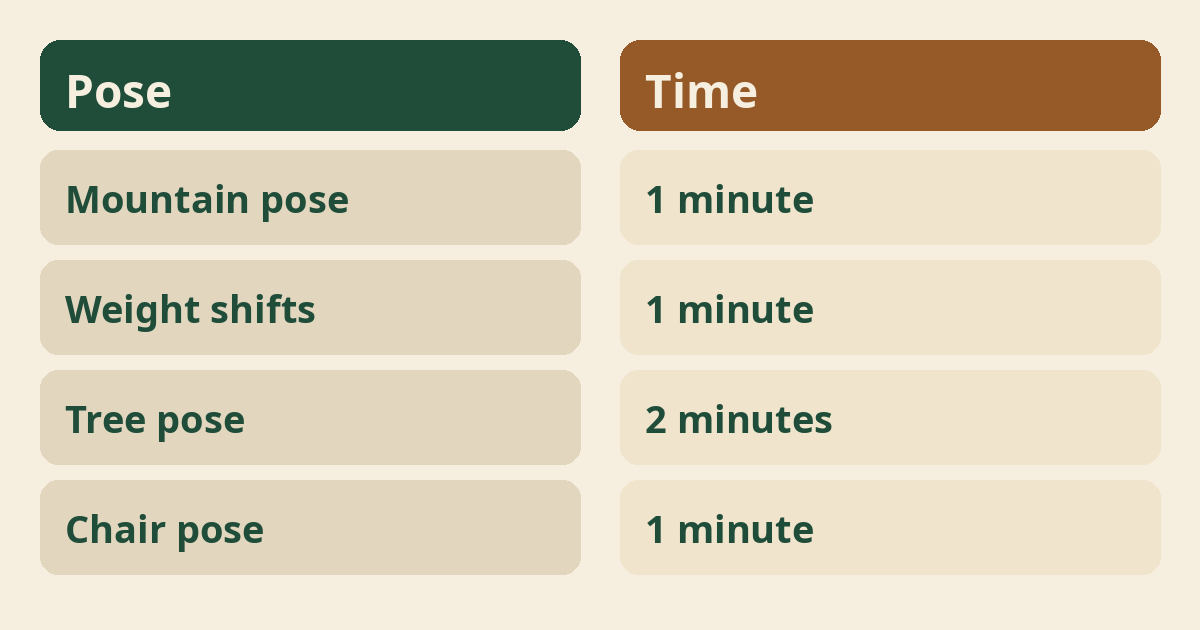
Do mountain pose for one minute, weight shifts for one, tree pose for two and chair pose for one. Repeat each side. Keep the wall close. As you grow steadier, add a few breaths or move a little further from the wall.
Is it safe for older adults?
Yes when done gently and with support, but speak with a doctor first if you have had falls or have health conditions. Our guide to yoga after 50 and chair yoga show supported options. Always keep support within reach.
Does footwear matter?
Practise barefoot or in non slip socks on a firm mat, and avoid slippery floors or loose shoes. A mat gives grip. Our yoga mat guide explains how to choose one. Do not practise on a wet or polished floor.
What mistakes should you avoid?
Locking the knees, staring down, holding the breath and trying to do too much too soon. Keep the knees soft. Use support. Stop at the first sign of dizziness. Small steps build lasting steadiness.
Can you practise at home?
Yes, with a wall or chair, a clear space and a short routine. Our guide to starting a home yoga practice explains how to set up. Have a phone nearby in case you need help.
What else helps balance?
Walking, strength exercise, good lighting, sensible footwear and regular eye and ear checks all help. Yoga is one part of staying steady. Speak to a doctor about dizziness, medicines or repeated stumbles.
When should you see a doctor?
See a doctor before starting if you have dizziness, recent falls, a health condition, pregnancy or any concern. Stop if you feel faint, in pain or breathless. This guide is general education, not medical advice.
How can you make poses easier?
Widen your stance, keep a hand on support, bend the knees slightly and shorten the hold. There is no shame in using help. A wall under one fingertip makes many poses much easier. As confidence grows, reduce the support in small steps. The aim is steady progress, not looking a certain way.
How can you make poses harder, safely?
Hold a little longer, use less support or soften the gaze slightly, but only when the pose feels easy and calm. Change one thing at a time. If you wobble a lot, go back a step. Never challenge your balance in a space with hard edges or slippery floors.
What should you notice afterwards?
Notice how your legs and ankles feel and whether you moved with more ease, without judging yourself. A note after each session helps you see slow change. You might write how long you held a pose or how steady it felt. Progress is often subtle and builds across weeks.
What about the mind?
Balance practice trains attention, because you have to stay present to stay steady. When your thoughts wander, balance often wobbles. Bring your focus back to the breath and the still point. This can be a quiet lesson in patience. Our guide to how to meditate explains attention training in more detail.
Where to read next
For a calm, beginner-friendly start, Ranjana Sinha’s Begin Where You Are is written for people who want simple steps. Our guide to starting a home yoga practice adds a gentle routine you can follow at home.
Frequently asked questions
Is yoga good for balance?
Many people find standing poses help them feel steadier, but results vary.
What is the easiest balance pose?
Weight shifts and mountain pose, holding a chair.
How long should I hold a balance pose?
Start with three to five breaths.
Is it safe to practise alone?
Yes if you keep a wall or chair close and check with a doctor if you are unsure.
Does yoga prevent falls?
It may help you feel steadier, but it is not a guarantee. Talk to a doctor about fall risk.
The bottom line
Balance grows slowly with practice. Keep support close, move gently and speak to a doctor about any concerns.

