
A body scan meditation moves your attention slowly through the body, one area at a time, noticing sensations without trying to change them. Lie down or sit, breathe naturally and spend a few breaths on each area. Five to fifteen minutes is enough.
This is general education, not medical advice. If you have trauma, strong anxiety, chronic pain or a mental health condition, speak with a doctor or qualified teacher before starting.
What is a body scan meditation?
A body scan meditation is a practice where you move your attention slowly through the body, noticing sensations without trying to change them. You usually lie down or sit and bring awareness to one area at a time, from the feet to the head or the reverse. It is one of the easiest forms of meditation for beginners because the body gives you a clear place to rest your attention. It is also a useful companion to the practices in our guide to meditating correctly.
How do you do a body scan step by step?
Lie down or sit comfortably, close your eyes, breathe naturally and bring your attention to each part of the body in turn for several breaths. Move slowly and keep the attention soft.
- Lie on your back with your arms by your sides, or sit with support.
- Take a few slow breaths and let the body settle.
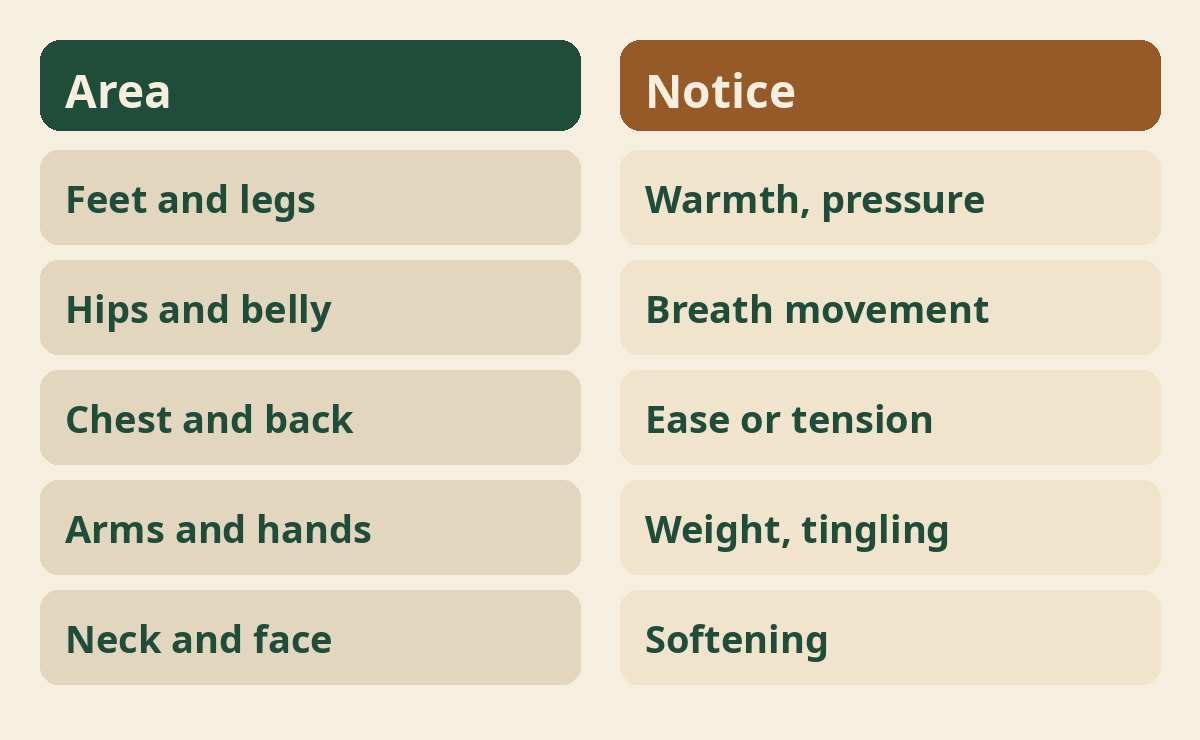
- Bring your attention to your feet. Notice any sensations, such as warmth, pressure or tingling.
- Move slowly up through the ankles, calves, knees and thighs.
- Continue through the hips, belly, chest, back, hands, arms and shoulders.
- Notice the neck, face and head, softening the jaw and eyes.
- Rest for a few breaths with a sense of the whole body, then open your eyes slowly.
How long should a body scan take?
A beginner session can last five to fifteen minutes, and you can extend it if you wish. Start with five minutes and spend about thirty seconds on each area. Longer sessions suit evenings or weekends. If you feel restless, shorten it. Consistency matters more than length. Our guide on how long to meditate explains how to build up gently.
What should you notice?
Notice whatever is there, such as warmth, heaviness, tension, tingling or even no sensation at all. There is no right or wrong feeling. You are not trying to relax on purpose. You are simply paying attention. If you feel nothing, that is fine, just note it. If your mind wanders, gently return to the next body area. The returning is the practice.
Why do people use it?
People use it to slow down, to notice how they feel and to give the mind a steady, simple focus. The National Center for Complementary and Integrative Health describes meditation and mindfulness as practices that train attention and awareness. A body scan is one common way to practise. Research suggests mindfulness practices can help some people with stress, but results vary, and it is not a treatment on its own.
Is it better to lie down or sit?
Lying down is easiest for beginners, but sitting is better if you tend to fall asleep. If you lie down, support your knees with a cushion and your head with a small pillow. If you sit, keep your spine tall and use a chair. If you want to use the practice to fall asleep, see our guide on meditating before bed.
What if you fall asleep?
It is common, especially at night, and it is not a problem if you wanted to rest. If you want to stay awake, sit upright, keep your eyes slightly open or practise earlier in the day. You can also keep a lighter body awareness and a slightly quicker pace. Falling asleep does not mean you did it wrong.
What if your mind keeps wandering?
Notice it, say a gentle internal note such as thinking, and return to the body part you were on. A wandering mind is normal. Do not scold yourself. Each time you return, you strengthen your attention. If it happens often, shorten the session. Our guide to common obstacles to meditation has more tips.
What if you feel pain or discomfort?
Notice it with curiosity, adjust your position if needed and skip the area if it feels too strong. A body scan is not a test of endurance. If an area hurts, you can breathe near it or move on. If you have chronic pain, speak with a doctor or a trained teacher. Do not ignore pain that is new, sharp or worrying.
What if difficult feelings come up?
Take a few slow breaths, open your eyes, feel your feet on the floor and stop if you need to. Sometimes slowing down brings up emotions. This is normal but can be uncomfortable. If strong feelings or memories arise, pause the practice and speak with a trusted person, a counsellor or a doctor. You do not need to push through.
How is a body scan different from yoga nidra?
Both involve lying down and moving attention through the body, but yoga nidra is a longer guided practice with more steps. Our guide to yoga nidra explains the full practice. A body scan is simpler and shorter, which makes it a good starting point.
Should you use a recording?
A guided recording can help beginners follow along, but you can also do it on your own with a quiet timer. Choose a calm voice and a short length. Avoid anything that makes strong promises. Over time, you can practise in silence. A recording is not necessary, and you can create your own order, such as feet to head.
When is a good time to practise?
Any quiet time works, such as before bed, after yoga or during a break in the day. Many people like to do a body scan after an evening yoga routine. Others practise at midday. Avoid practising right after a heavy meal when you may feel too sleepy.
Can you do it at work?
Yes, a short seated body scan can be a quick reset, as long as you feel safe and can pause for a few minutes. Sit in your chair with your feet flat. Scan from your feet to your head over two or three minutes. Keep your eyes open or lowered. Our guide to meditating at work has more tips for short breaks.
What are common mistakes?
Common mistakes include trying to force relaxation, judging sensations, rushing and giving up too soon. Another is expecting special feelings. Keep a gentle attitude. Allow whatever happens to happen. If you feel nothing, that is fine. Give the practice a few weeks before you decide whether it suits you.
Who should be careful?
People with trauma, severe anxiety, certain pain conditions or a history of mental health difficulties should speak with a doctor or a qualified teacher before starting. Body-focused practices can bring up strong sensations or memories in some people. This guide is general education and not medical advice. If a practice feels distressing, stop and seek support.
How can you combine it with yoga?
Finish a yoga session with a short body scan while lying in a resting pose. After gentle poses, lie on your back and move your attention through the body. Our guide to the benefits of yoga explains why many classes end this way. This is a gentle way to notice the effects of movement.
How can you build a habit?
Pick a regular time, keep the session short and track your practice on a calendar. Start with five minutes three times a week. Pair it with something you already do, such as getting into bed or finishing yoga. Be kind about missed days. A small, regular practice is easy to keep.
What should you expect over time?
You may notice more about how your body feels, but results vary, and a body scan is not a treatment for any condition. Some people feel calmer, others become more aware of tension. Both are fine. Keep your expectations modest and enjoy the practice. If you have ongoing health concerns, speak with a doctor.
Where to read next
For a calm, beginner-friendly start, Ranjana Sinha’s Begin Where You Are is written for people who want simple steps. Our guide to starting a home yoga practice adds a gentle routine you can follow at home.
Frequently asked questions
How long should a body scan be?
Five to fifteen minutes is enough for a beginner.
Can I do a body scan sitting up?
Yes. Sitting helps if you tend to fall asleep.
What if I feel nothing?
That is normal. Simply note it and move on.
Is a body scan the same as yoga nidra?
They are similar, but yoga nidra is a longer guided practice with more steps.
Is it safe?
It is gentle for most people. If you have trauma or strong anxiety, speak with a professional first.
The bottom line
A body scan is a simple way to rest your attention. Go slowly, stay curious and be kind to yourself when your mind wanders.

