
Prenatal yoga is yoga adapted for pregnancy: slower, with more support, and without belly-squeezing poses, deep twists and strong core work. Always check with your doctor or midwife first, choose a teacher with prenatal training and stop if you feel pain, dizziness or bleeding.
This is general education, not medical advice. Speak with your doctor or midwife before starting yoga in pregnancy, especially if you have any complication.
How is prenatal yoga different from regular yoga?
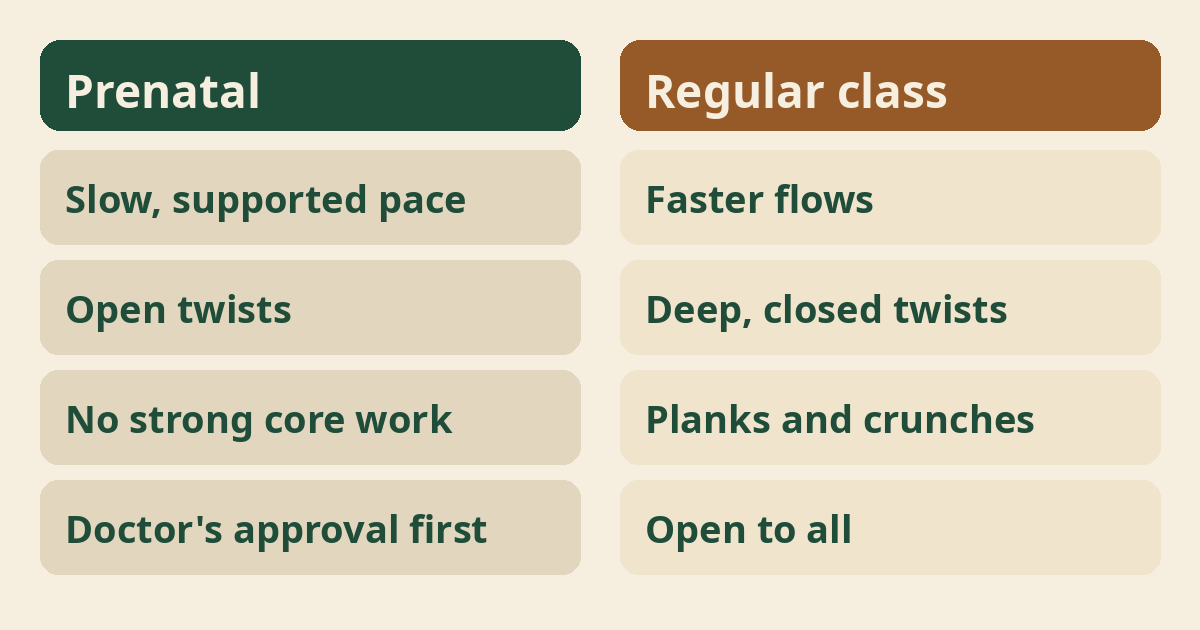
Prenatal yoga is adapted for pregnancy: it avoids lying flat on the belly, deep twists and strong core work, and it adds support, gentler pacing and breath awareness. Regular yoga classes often include poses that are unsuitable during pregnancy. A prenatal class is designed by teachers trained to modify them. The National Center for Complementary and Integrative Health notes that yoga is generally considered safe for healthy people when practised under a qualified instructor, and pregnancy is a time to be extra careful and to check with your doctor or midwife first.
Should you talk to your doctor first?
Yes, always speak with your doctor or midwife before starting any yoga during pregnancy. Your care provider knows your health history and can tell you whether yoga is right for you and which movements to avoid. This is especially important if you have high blood pressure, bleeding, a low-lying placenta, a history of pregnancy loss or preterm labour, or any other complication. This guide is general education only and not medical advice.
What changes in a prenatal class?
The pace is slower, props are used more, and poses are changed to leave room for the belly and protect the joints. Common changes include a wider stance in standing poses, open twists instead of closed twists, and no lying flat on the back for long periods after the early months, as advised by your provider.
- Wider stance and extra support for balance.
- Open twists that do not compress the belly.
- No deep backbends or strong abdominal work.
- Props such as bolsters, blocks and chairs.
- More time for breathing and rest.
Why are some poses avoided?
Poses that squeeze the belly, strain the abdominal wall, overstretch ligaments or risk falls are generally avoided. Pregnancy hormones soften ligaments, which can make joints more mobile and easier to strain. Balance also changes as the belly grows. A prenatal teacher will help you move within a safe range. Avoid hot yoga and any practice that makes you overheat, and stop if you feel dizzy or short of breath.
What about breathing practices?
Gentle, slow breathing is usually fine, but strong breath holds and fast breathing exercises are usually avoided. Calm breathing can help you relax and may be useful in labour preparation, but ask your provider about what suits you. Our pranayama for beginners guide covers gentle breathing in general. In pregnancy, always follow the advice of your doctor and a prenatal teacher.
How often can you practise?
Many people practise two to three times a week, with shorter sessions, if their doctor agrees. Listen to your body and rest when you need to. A calm, short practice is better than a long, tiring one. If you feel pain, dizziness, bleeding, fluid leakage or unusual contractions, stop and contact your doctor straight away.
Is chair yoga a good option?
Yes, chair-based movement can be a comfortable and safe-feeling option for many pregnant people, with your provider’s approval. It offers support and reduces the risk of falling. Our guide to chair yoga for beginners shows simple movements that you can adapt with a prenatal teacher. Keep movements small and never force a stretch.
Can you start yoga while pregnant if you are new to it?
Many people begin during pregnancy, but they should choose a prenatal class and get approval from their provider first. A beginner-friendly prenatal class is a safe way to learn. Avoid following online videos meant for general yoga unless a prenatal teacher has approved them. Tell the teacher how far along you are and about any health conditions.
What should you look for in a prenatal teacher?
Choose a teacher with specific prenatal training who asks about your pregnancy and offers modifications. Ask about their training and experience, and whether they are comfortable working with your provider’s guidance. A good teacher will welcome your questions and encourage you to rest. Avoid anyone who promises easy labour or health outcomes.
How does yoga fit with the rest of your care?
Yoga can be one gentle part of staying active, alongside the care and advice from your doctor or midwife. It does not replace prenatal visits, tests or medical advice. Many people also find walking, good sleep and time to rest helpful. Our article on the benefits of yoga gives a general overview, though pregnancy needs specific guidance.
What about meditation and relaxation?
Short, gentle meditation or a body scan is usually fine, and many find it helps them rest. Lie on your side or sit comfortably, as your provider advises. Our guide to meditating before bed has a calm routine, though in pregnancy you should lie on your side rather than your back in later months if advised. If meditation brings up difficult feelings, talk to a trusted professional.
What should you wear and bring?
Wear loose, breathable clothing, bring a water bottle and a snack, and keep a mat and a bolster or cushion handy. A supportive but comfortable top and non-slip socks or bare feet can help. Avoid anything tight around the belly. If you practise at home, clear the space of loose rugs. Keep your phone nearby in case you need to reach someone.
How does yoga help with common discomforts?
Gentle movement and rest may ease stiffness, but it does not treat pregnancy conditions. Many people say gentle stretches and breathing help them feel more comfortable and relaxed. Back, hip and leg aches have many causes in pregnancy, so tell your provider about any pain and ask what is safe. Our guide to yoga for back pain offers general ideas, but pregnancy needs tailored advice.
What about practising after the baby arrives?
Wait until your provider clears you, then return slowly with gentle movement and breathing. Recovery times vary after birth, especially after a caesarean. Ask your provider before starting. Begin with short sessions, pelvic-floor-friendly movements recommended by a trained teacher, and plenty of rest. Sleep is hard to find with a newborn, so be kind to yourself.
What are the warning signs to stop?
Stop and seek medical help for bleeding, leaking fluid, sharp pain, dizziness, chest pain, shortness of breath, headaches or reduced baby movement. These signs can have many causes, and your provider can check them. Never ignore them to finish a class. Keep your phone and emergency numbers handy.
Common myths about prenatal yoga
Some beliefs are misleading or unsafe. Here are a few to rethink.
- Myth: any yoga class is fine in pregnancy. Choose a prenatal class.
- Myth: deeper stretches are better. Joints are looser in pregnancy and can be overstretched.
- Myth: yoga guarantees an easy birth. It cannot.
- Myth: you can skip your doctor’s advice. You should not.
How does yoga’s tradition view this time?
Yoga’s traditions value care, rest and listening to the body, which fits well with the needs of pregnancy. Our guide to the eight limbs of yoga explains the principle of non-harming, which applies to yourself and your baby. Gentle practice, calm breath and rest are in keeping with this idea.
How can you build a small routine?
Pick a safe, quiet space, wear comfortable clothes, keep water nearby and begin with ten to fifteen minutes as your provider approves. Use a firm mat, a chair and a couple of cushions. Warm up with slow joint movements, practise a few approved poses and finish with rest on your side. If you are tired, skip the day and rest.
Where to read next
For a calm, beginner-friendly start, Ranjana Sinha’s Begin Where You Are is written for people who want simple steps. Our guide to starting a home yoga practice adds a gentle routine you can follow at home.
Frequently asked questions
How is prenatal yoga different?
It avoids belly-squeezing poses, deep twists and strong core work, and uses more support and gentle pacing.
Is yoga safe during pregnancy?
It is considered safe for many healthy pregnant people in a prenatal class, but check with your doctor first.
Can I do regular yoga while pregnant?
Many regular poses need changes. Choose a prenatal class or a teacher with prenatal training.
How often can I practise?
Often two to three times a week in short sessions, if your provider agrees.
What are warning signs to stop?
Bleeding, leaking fluid, sharp pain, dizziness, chest pain or breathlessness. Seek medical help.
Can yoga help labour?
It may help you relax and breathe calmly, but it cannot guarantee an easy labour.
The bottom line
Prenatal yoga is a gentler, adapted practice. Get your provider’s approval, choose a trained teacher and keep your practice calm, short and supported.

