
Loving-kindness meditation is a gentle practice in which you silently repeat kind wishes, first for yourself, then for loved ones, neutral people, and eventually everyone. Start with five to ten minutes, keep the phrases simple, and do not worry if you feel nothing at first.
This is general education, not medical advice. If strong sadness or distress comes up, pause and speak with a doctor, counsellor or qualified teacher.
What is loving-kindness meditation?
Loving-kindness meditation is a practice of silently repeating kind wishes, first for yourself and then for others. It comes from Buddhist traditions, where it is called metta, and is now taught in many secular settings. The National Center for Complementary and Integrative Health lists it among the meditation and mindfulness approaches studied for health, though research is still developing. It is a gentle practice, but it can stir up feelings, so it helps to go slowly.
How do you practise it step by step?
Sit comfortably, silently repeat a few kind phrases for yourself, and then extend them outward to others in stages. A short session of ten minutes is enough to start.
- Sit with a relaxed, upright spine and take a few slow breaths.
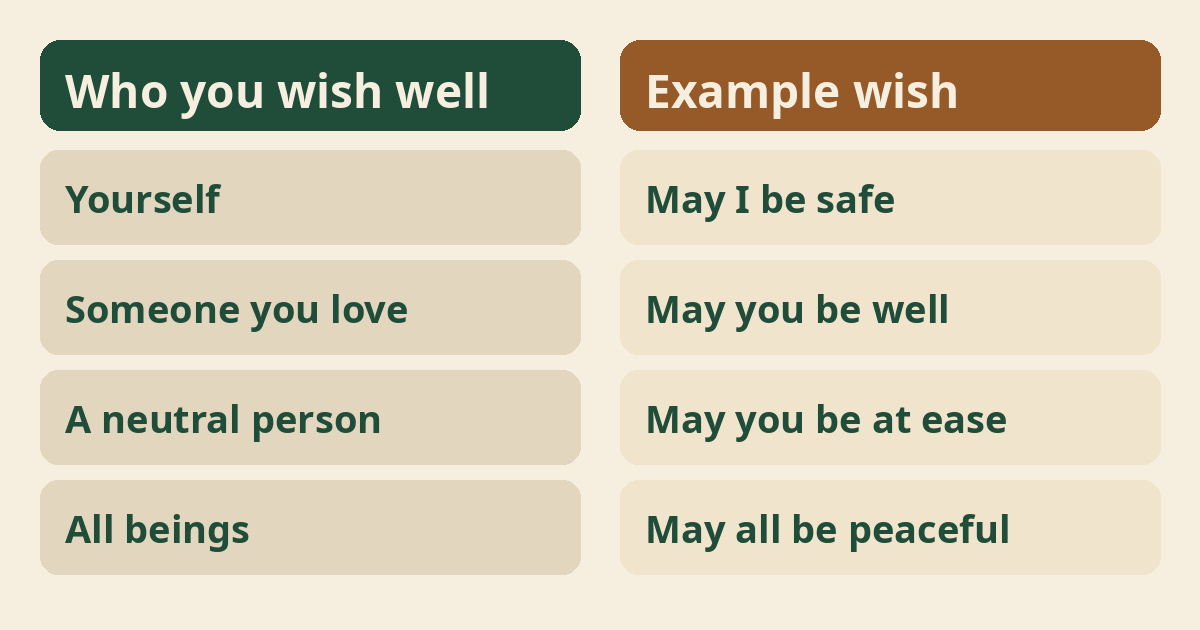
- Bring yourself to mind and silently say, May I be safe, may I be well, may I be at ease.
- Think of someone you love easily and repeat the wishes for them.
- Think of a neutral person, such as a neighbour you barely know, and repeat the wishes.
- If you feel ready, think of someone mildly difficult and offer the same wishes.
- Widen your wishes to all beings, everywhere.
- Finish with a slow breath and a moment of stillness.
What phrases can you use?
Simple, sincere wishes work best, such as safe, healthy, peaceful and at ease. Choose words that feel natural to you. If one phrase feels false, change it. The aim is a warm intention, not a forced feeling. You can also pair the phrases with the breath, one phrase per out-breath, to help you stay with them.
What if you feel nothing?
That is very common, and it does not mean you are doing it wrong. Loving-kindness is about the intention, and feelings may come and go. Some days you may feel warmth, other days only the words. Keep going gently. Our guide on common obstacles to meditation explains how to work with flat or restless sessions.
What if it feels hard to wish yourself well?
Start with someone easy, such as a friend or a pet, and come back to yourself when you feel ready. Many people find self-kindness the hardest step. It is fine to begin elsewhere. You can also imagine speaking to yourself the way you would speak to a close friend. If strong sadness or distress comes up, stop, rest and consider speaking with a counsellor or qualified teacher.
How long should a session be?
Five to fifteen minutes is a good range for beginners. Short and regular is better than long and strained. Our guide on how long you should meditate shows how to build up time slowly. If you find it tiring, shorten your sessions.
What are the possible benefits?
Some studies suggest loving-kindness may help people feel more positive and connected, though results vary and it is not a treatment. Many people say the practice softens self-criticism and helps them respond more kindly to others. These are personal reports and early research findings, not promises. It can sit alongside other healthy habits such as exercise, sleep and social contact.
Who should be careful?
People dealing with trauma, grief or depression should take extra care and may wish to practise with a trained teacher or health professional. Gentle wishes can sometimes bring up strong feelings. If that happens, you can pause, open your eyes, feel your feet on the floor and take a few slow breaths. This guide is general education, not medical advice. Seek professional help if distress continues.
How is it different from mindfulness of breath?
Breath meditation trains steady attention, while loving-kindness trains a warm attitude using phrases. The two work well together. Many people begin with a few minutes of breath awareness to settle, then move to loving-kindness. Our guide to pranayama for beginners covers simple breathing that can prepare you.
How does it connect with yoga?
Yoga’s ethical guidelines, the yamas, begin with non-harming and include truthfulness and compassion. Loving-kindness is a natural way to bring these values to life. Our guide to the eight limbs of yoga explains the ethical foundations of the path. Practising kindness toward yourself and others fits well with a calm yoga routine.
When is the best time to practise?
Morning is a good time to set a tone for the day, but any quiet moment works. Try a short session before you get out of bed, or on a commute if you are not driving. Do not practise while driving or doing anything that needs full attention. Our guide on morning meditation offers more ideas for building a morning habit.
Can you use it in daily life?
Yes, you can silently offer a kind wish to people you pass, such as a shopkeeper, a colleague or a stranger on a bus. These small moments train the same habit without any formal sitting. If someone annoys you, try a quiet wish for their wellbeing, and notice how your own body responds. You are not excusing harmful behaviour, only softening your own reaction.
How do you choose the people to include?
Pick a loved one who makes you smile, a neutral person you see sometimes, and later someone mildly difficult. Avoid starting with someone who has hurt you deeply. The practice is gradual, and it can take weeks or months before the difficult-person stage feels comfortable. You can skip that stage entirely if it is too much. The aim is a steady widening of care, not a test of willpower.
What if your mind wanders or gets sleepy?
Return to the phrases, slow the pace and sit a little more upright. If you feel sleepy, open your eyes or try the practice earlier in the day. If your mind races, link the phrases to the out-breath so that there is a simple rhythm to follow. Wandering is part of the process and each return is a small success.
Can you practise it in a group or with a teacher?
Yes, many teachers offer guided sessions, and a guided recording can be helpful when you are new. A guide’s voice can keep you steady and suggest phrases. If you practise in a class, tell the teacher if you feel unsettled so that they can adjust. At home, a short, quiet session without a guide works well too. Choose the style that feels natural, and keep it simple.
What does a typical week look like?
Aim for three to five short sessions a week, and add a quick wish during daily moments. For example, practise for ten minutes on three mornings, and offer a silent wish to a colleague or neighbour on other days. Keep it light. If a week goes by without practice, simply begin again. A kind, patient approach to the habit itself is part of the practice. Over a month, many people find the phrases come to mind on their own during the day.
Common myths about loving-kindness meditation
Some beliefs can put people off. Here are a few to rethink.
- Myth: it must make you feel warm right away. Feelings vary.
- Myth: it means being nice to everyone no matter what. It is about your own heart, not about allowing harm.
- Myth: it is only for religious people. It is taught in secular settings too.
- Myth: you must start with the hardest person. Start with someone easy.
What should you do after a session?
Sit quietly for a moment, notice how you feel and carry a bit of the kindness into your next task. A short note in a journal can help you see patterns over weeks. Drink water, stretch gently and go on with your day. Do not judge the session. Over time, the habit of kindness tends to grow quietly.
Where to read next
For a calm, beginner-friendly start, Ranjana Sinha’s Begin Where You Are is written for people who want simple steps. Our guide to starting a home yoga practice adds a gentle routine you can follow at home.
Frequently asked questions
What is loving-kindness meditation?
A practice of silently repeating kind wishes, first for yourself and then for others.
How do I start?
Sit comfortably, breathe slowly and silently say, May I be safe, may I be well, may I be at ease. Then extend the wishes to others.
What if I feel nothing?
That is common. The intention matters more than the feeling. Keep practising gently.
How long should I practise?
Five to fifteen minutes is enough for beginners.
Can it make me feel worse?
Sometimes it brings up strong feelings. Pause if that happens and seek support from a professional or teacher.
Is it religious?
It comes from Buddhist tradition, but many people practise it in a secular way.
The bottom line
Loving-kindness meditation is a simple way to practise warmth and patience. Use short phrases, go slowly and let the practice grow at its own pace.

