
Meditating before bed can be as simple as sitting or lying comfortably for five to ten minutes and following your slow breath. It may help you unwind and ease racing thoughts, though it is not a cure for insomnia or any sleep condition.
This is general education, not medical advice. If you have ongoing trouble sleeping, or meditation brings up distress, speak with a doctor or qualified professional.
Is it a good idea to meditate before bed?
Yes, a short, quiet sitting before bed can help many people unwind and feel ready for sleep. Meditation is not a sleeping pill, and it does not work the same way for everyone. But a few minutes of slow breathing and calm attention can ease the busy thoughts that keep people awake. The National Center for Complementary and Integrative Health notes that mindfulness meditation may help some people with sleep problems, though more research is needed.
How do you meditate before bed step by step?
Sit or lie comfortably, soften your breath and rest your attention on the feeling of breathing for five to ten minutes. Keep it simple. You do not need any special skill, only a quiet place and a little time.
- Dim the lights and put your phone away.
- Sit on the bed or a chair, or lie on your back with knees bent.
- Let your shoulders drop and your jaw soften.
- Breathe in through the nose and let the breath out a little slower.
- Rest your attention on the belly or chest as it rises and falls.
- When thoughts come, note them gently and return to the breath.
- End with a slow stretch and then go to bed.
Should you sit up or lie down?
Sitting upright is better if you fall asleep too quickly, and lying down is fine if your goal is simply to fall asleep. Many people prefer to sit for a few minutes and then lie down. If you often drift off while sitting, that is a sign your body is tired, not a mistake. Lying down with your knees bent and a pillow under your head is a comfortable option for those with back discomfort.
How long should a bedtime meditation last?
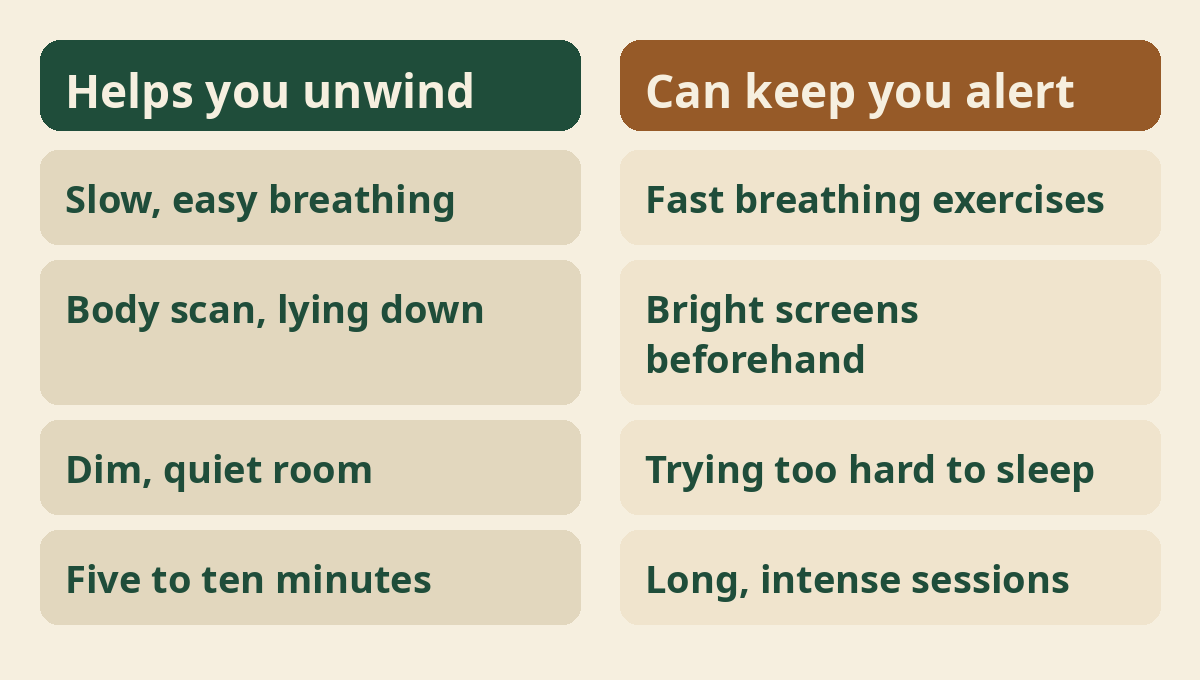
Five to ten minutes is enough for most beginners, and you can extend it to fifteen or twenty if it feels good. Longer is not always better. A short, regular habit works best. Our guide on how long you should meditate explains how to build up time safely, and our piece on whether you can meditate for too long covers the signs of overdoing it.
Which breathing practice works well before sleep?
Slow, relaxed breathing with a slightly longer out-breath is a gentle and widely used way to calm down. Try breathing in for a count of four and out for a count of six, without strain. Stop if you feel dizzy or tight. Avoid strong, fast breathing exercises close to bedtime, because they can wake you up. Our pranayama for beginners guide covers easy options.
What about a body scan?
A body scan, where you move your attention slowly from your feet to your head, helps many people release tension before sleep. Notice each part of the body without trying to change it. If your mind wanders, bring it back to the part you were on. A body scan is often done lying down, so it pairs well with going to bed. Yoga nidra is a related practice, explained in our guide to yoga nidra for better sleep.
How can you prepare your space?
A cool, dark, quiet room and a short wind-down routine make bedtime meditation easier. Turn off bright screens at least thirty minutes before. Keep the room comfortable and use a soft light if you need one. A regular time each night teaches your body what to expect. Keep your bedtime meditation separate from work or news so that it stays calming.
What if your mind will not slow down?
A busy mind is normal, and the practice is simply to notice and return to the breath. You do not need to stop thoughts. Counting breaths from one to ten can give the mind something to do. If worries pile up, write them in a notebook earlier in the evening so they are not waiting at bedtime. Be patient, because it often takes a couple of weeks to feel the habit settle.
What if you feel more awake after meditating?
Shorten the session, move it earlier in the evening or switch to a gentler practice such as slow breathing or a body scan. Some people find that focusing the mind makes them more alert. If that happens, try meditating an hour before bed and doing only slow breathing in bed. Keep the effort low. Trying hard to fall asleep tends to backfire.
Can you meditate in the middle of the night?
Yes, if you wake and cannot fall back asleep, slow breathing or a gentle body scan can help you rest. Keep the lights low and avoid checking the time. Lie still and follow your breath. If you are still awake after a long while, it can help to get up, sit quietly in dim light and return to bed when you feel sleepy. Lying in bed worrying about sleep tends to make it harder.
Does it matter what you do after you meditate?
Keep the rest of your routine calm so you do not undo the quiet you have just built. Avoid checking messages, news or work after meditating. Drink a little water if you like, turn off the light and let your body settle. If you are still alert, try gentle reading or soft stretches. Many people find that a regular order of small steps, practised every night, works better than any single technique.
Can children or older adults meditate before bed?
Yes, shorter and simpler versions suit most ages, with guidance from a parent, teacher or doctor where needed. For children, a few slow breaths and a short story or body scan is plenty. Older adults can use a chair or a supported lying position, and keep sessions short if they have pain or health concerns. Anyone with a medical condition should check with their doctor first.
Is bedtime or morning meditation better?
Neither is better for everyone, so pick the time you can keep up. Morning practice sets a calm tone for the day, and bedtime practice helps you let the day go. Some people do both for a few minutes each. The best time is the one you will actually do, most days, without feeling rushed. If you are unsure, start with bedtime for a week and see how you feel.
When should you talk to a doctor?
Speak with a doctor if you have long-term trouble sleeping, loud snoring with pauses in breathing, or low mood that does not lift. Meditation can support good sleep habits, but it does not treat sleep disorders or mental health conditions. If meditation brings up distress, pause and seek advice from a health professional or a qualified teacher.
How can you make it a habit?
Attach it to something you already do, such as brushing your teeth, and keep it short. Do the same steps in the same order each night. Skip perfection. Missing a night is fine. Over a few weeks, the routine itself becomes a signal to your body that sleep is near. A morning practice can also help, and our guide to morning meditation shows how to build one.
Common myths about meditating before bed
A few popular beliefs can make people give up too soon. Here are some worth clearing up.
- Myth: you should fall asleep within minutes. Often it takes a few weeks of practice.
- Myth: you must clear your mind. You only need to notice and return.
- Myth: it must be long. Five minutes counts.
- Myth: it replaces medical care for insomnia. It does not.
Where to read next
For a calm, beginner-friendly start, Ranjana Sinha’s Begin Where You Are is written for people who want simple steps. Our guide to starting a home yoga practice adds a gentle routine you can follow at home.
Frequently asked questions
Is it good to meditate before bed?
For many people, yes. A short, calm session can help you unwind. It is not a treatment for sleep disorders.
How long should I meditate before sleeping?
Five to ten minutes is enough for most people. Extend it only if it feels comfortable.
Should I meditate lying down or sitting?
Either works. Sit if you tend to fall asleep too quickly, and lie down if your goal is to rest.
Can meditation cure insomnia?
No. It may help you relax and build better habits, but long-term sleep problems need a doctor’s advice.
What if I fall asleep while meditating?
That is fine at bedtime. It usually means you are tired.
What is the best breathing for sleep?
Slow, relaxed breathing with a slightly longer out-breath. Stop if you feel dizzy.
The bottom line
A short, quiet meditation before bed can help you wind down. Keep it simple, make it regular and be patient with a busy mind. If sleep problems last, see a doctor.

