Yoga nidra is a guided practice where you lie down, stay awake, and follow a voice through simple steps of attention. There is no pose to hold and nothing to get right. Many people find it a calm way to rest. This guide covers the basics in plain words, so you can try your first session today. Want a bigger, step-by-step routine? Read our complete yoga nidra for beginners guide.
This article is general education and is not medical advice. If you have a medical or mental health condition, are pregnant, or take medicine, check with your doctor before you start.
What is yoga nidra?
Yoga nidra is a guided rest practice done lying on your back. The name is often translated as yoga sleep, but you stay awake and listening. A teacher or recording leads your attention around the body and through simple images.
Why do people practice it?
People practice it to rest, slow down, and feel more settled. Many people find it easier than sitting meditation because the body is fully supported. Results vary, and it is not a quick fix for anything.
Is it the same as sleeping?
No, it is not the same as sleep, though it can feel close. You aim to rest in a quiet, aware state. If you doze off, that is common and nothing to worry about.
How is it different from meditation?
It is a form of guided meditation done lying down. Sitting meditation often asks you to focus on your own. In yoga nidra a voice does the guiding, so you can simply follow along.
How do I start?
Start with one short guided session in a quiet place. Choose a recording of ten to twenty minutes led by a calm, clear voice. Press play, lie down, and let the guide do the work.
Step 1: Find a quiet spot
Pick a room where you will not be disturbed. Turn off notifications and tell people at home you need a short break. A dim room helps, but it is not required.
Step 2: Lie down comfortably
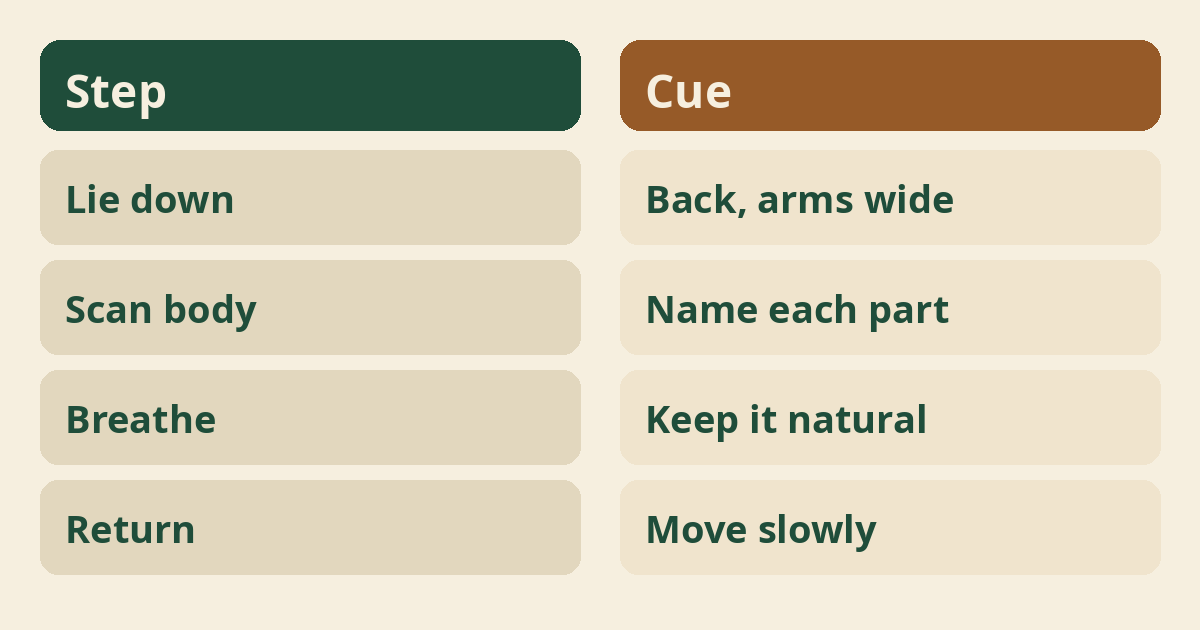
Lie flat on your back with your arms a little away from your sides. Let your palms face up and your feet fall open. Use a mat or a firm bed, and cover up so you do not get cold.
Step 3: Set a simple intention
Choose one short, kind phrase to hold for the session. It can be as plain as “I am resting” or “I am here”. Say it quietly in your mind once or twice, then let it go.
Step 4: Follow the body scan
Move your attention through the body as the guide names each part. You do not need to move or squeeze anything. Just notice each area, such as the right hand or the left foot, and keep going.
Step 5: Notice the breath
Watch your natural breath without changing it. Feel the belly rise and fall, or the air at the nostrils. If your mind wanders, gently return to the next word you hear.
Step 6: Come back slowly
Close the session by moving gently before you get up. Wiggle your fingers and toes, take a deeper breath, and roll to one side. Sit for a moment before standing so you do not feel dizzy.
How should I breathe?
Breathe in your usual way and let it be easy. Yoga nidra does not need special breathing. If you like, a few slow breaths at the start can help you settle. See belly breathing for beginners for a gentle option.
How long is a session?
Most beginner sessions last ten to thirty minutes. Short ones are a good place to start. Longer recordings can feel rich later, once lying still feels natural.
How often should I practice?
A few times a week is a good rhythm for a beginner. Short and regular is better than long and rare. See how often should you do yoga for ideas on building a steady habit.
When is the best time of day?
Choose a time when you can be undisturbed and unhurried. Some people like the middle of the afternoon for a reset. Others like the evening, though they may fall asleep, which is fine.
Can I do it in bed?
Yes, you can, though a firm surface keeps you more alert. If your goal is to rest at night, bed is fine. If you want to stay awake and aware, try the floor with a mat.
What props can help?
A folded blanket, a small pillow, and an eye cover can add comfort. Place a pillow under the knees if your lower back feels tight. See yoga props for beginners for more ideas.
What should I wear?
Wear loose, soft clothes that do not pinch. Take off your watch and any tight belt. Keep a light blanket close by, as the body can feel cooler when it is still.
What does it feel like?
It often feels heavy, warm, floaty, or simply quiet. Some people feel nothing special, and that is normal. There is no right feeling to chase.
What if my mind keeps wandering?
A wandering mind is normal and not a mistake. Each time you notice you drifted, you are already back. Gently return to the voice and carry on without scolding yourself.
What if I fall asleep?
Falling asleep is very common, especially when you are tired. It just means your body needed rest. Try a different time of day or a slightly firmer surface if you want to stay awake.
Common mistake: trying too hard
Effort works against this practice, so ease off. Many beginners try to relax on purpose and get frustrated. Let the guide lead and allow things to be as they are.
Common mistake: judging the session
Do not grade a session as good or bad. Some days feel deep and some feel busy. Both count as practice, and both teach you something about how you are today.
Common mistake: skipping the setup
A few minutes of setup makes the session smoother. Check the room, your blanket, and your recording before you lie down. Fiddling with a phone mid-session pulls you out.
Which style of recording is best?
Pick a voice and pace that you find calming. Try a few free guides and keep the one you like. A steady voice with gentle pauses suits most beginners.
Should I warm up first?
A little gentle movement before can make lying still easier. A few rounds of cat cow pose or a short child’s pose rest can ease the back and shoulders before you lie down.
Can it help with stress?
Many people find it a soothing break from a busy day. Results vary, and it is not a replacement for care from a professional. You may also like yoga for stress relief as a gentle companion.
What are the possible benefits?
Many people find that it brings rest, calm, and a clearer head. Some also say it helps them wind down in the evening. Results vary from person to person. For balanced, trusted information on mind and body practices, see National Center for Complementary and Integrative Health.
Is yoga nidra a treatment?
No, it is not a treatment for any condition. It is a relaxation practice, not medicine. Use it alongside, never instead of, the care your doctor or therapist gives you.
Who should be careful?
Check with your doctor first if you have a medical or mental health condition. This includes anxiety, trauma history, low blood pressure, or pregnancy. Lying still and turning inward can bring up strong feelings for some people. If this happens, open your eyes and stop.
Can I practice during pregnancy?
Ask your doctor first, and lie on your side if they agree. Lying flat on the back is often not advised later in pregnancy. A teacher trained in prenatal work can guide you. See prenatal yoga vs regular yoga.
How do I progress?
Add length and variety slowly over several weeks. Move from ten minutes to twenty, then try a version with more detail in the body scan. Let your comfort set the pace.
Do I need a teacher?
A recording is enough to start, but a live teacher can add a lot. A teacher can answer questions and adjust the practice for you. Look for someone with solid training and a calm, clear style.
What mindset helps most?
Curiosity and patience help more than effort. Think of each session as a small experiment. You are simply noticing what is true for you right now.
Where to read next
For a calm, beginner-friendly start, Ranjana Sinha’s Begin Where You Are is written for people who want simple steps. Our guide to starting a home yoga practice adds a gentle routine you can follow at home.
Frequently asked questions
Is yoga nidra safe for beginners? |
It is gentle for most people, but check with your doctor first if you have any medical or mental health condition.
Do I need to be flexible? |
No, because you lie still and do not hold any pose.
Can I practice with my eyes open? |
Yes, you can rest your gaze softly or close your eyes, whichever feels more comfortable.
How soon will I feel something? |
Some people feel calm in the first session and others take a few weeks, so go at your own pace.
Can I do yoga nidra every day? |
Many people do a short session daily, but a few times a week is plenty to begin.
The bottom line
Lie down, press play, and let yourself rest for a few minutes today.