
Yoga for teachers can fit into a few quiet minutes before class, between lessons, or after the school day. It is a set of gentle movements, breathing, and attention practices that can be adapted to a busy workday. You do not need special clothes, a mat, or previous experience to begin. Choose a version that feels comfortable, keep movements easy, and stop if you feel pain, dizziness, or unwell. Start with a comfortable chair or a clear place to stand.
This article is for general education and is not medical advice. If you have a health condition, an injury, or concerns about movement, check with your doctor before starting.
What yoga for teachers means
Yoga for teachers is a gentle way to add mindful movement to the school day. It can include seated stretches, standing poses, and calm breathing rather than a long class. You can choose a few actions that suit your space and energy. The goal is a manageable pause, not a perfect pose.
Why teachers try it
Many teachers use short yoga breaks to make room for movement and attention. Teaching can involve standing, sitting, writing, carrying materials, and changing tasks quickly. A brief routine offers a deliberate change of pace. People respond differently, so consider it personal practice rather than a promise of a specific result.
Fit it to a real workday
A useful routine is one that fits the day you actually have. You might have a quiet classroom before students arrive, a staff room, or only a small patch beside your desk. Pick a time and place that do not interfere with supervision or school duties. Even one comfortable movement can be enough for that moment.
How to begin
Start with a few easy movements and leave room to stop or adjust. Wear clothes that let you move without pulling, and use a stable chair or wall if helpful. Clear nearby objects that could trip you. Keep your first practice simple, so you can notice how each movement feels instead of trying to keep up with a routine.
Step 1: Pause
Begin by pausing and noticing how you feel right now. Sit or stand in a steady position, let your hands rest, and look at one still point. Notice whether you feel tired, rushed, or comfortable without judging it. This brief check can help you decide whether to move gently, sit quietly, or skip practice today.
Step 2: Set your posture
Find a relaxed position that lets you breathe comfortably. If seated, place both feet on the floor and let your back feel supported. If standing, keep your feet steady and knees soft. Allow your shoulders to settle without forcing them down, and keep your face easy rather than holding tension in your jaw.
Step 3: Move your shoulders
Slow shoulder circles can offer a simple upper-body movement break. Raise the shoulders only as far as feels comfortable, then circle them back and down. Repeat a few times, changing direction if that feels fine. Keep the movement small and smooth; do not yank, bounce, or push into a stiff range.
Step 4: Add a gentle side reach
A small side reach can add movement to your seated or standing pause. Keep both sitting bones grounded if seated, or both feet steady if standing. Lift one arm only if it is comfortable, then lean slightly to the other side without twisting. Return to center and change sides, stopping if you feel strain or pinching.
Step 5: Fold with support
A supported forward hinge can be done without reaching for the floor. Stand behind a chair or sit with your hands on your thighs, then tip forward a little from the hips while keeping the movement easy. Let your neck stay comfortable and return upright slowly. A smaller range is a complete option, not a lesser one.
Step 6: Reset in mountain pose
Mountain pose gives you a steady standing shape for a short pause. Stand with feet about hip-width apart or choose a narrower stance that feels secure. Let your arms rest by your sides and notice the support under your feet. You can explore a beginner mountain pose guide for more setup ideas.
Seated options
A chair can make a short practice easier to fit into a school day. Sit toward the front only if you feel stable; otherwise use the backrest. Keep your feet supported and try gentle shoulder movement or a small seated twist with no pulling. For more ideas that suit a desk, see yoga at your desk.
Try a cat-cow variation
A gentle cat-cow movement can be adapted to a chair. Place hands on your thighs and slowly round or lengthen your back within a comfortable range, keeping your head easy. Move with your breath only if that feels natural. Avoid pushing the spine into an extreme shape; the seated version can stay quite small.
Breathing during practice
Let your breathing stay easy and natural while you move. You do not need to take unusually deep breaths or hold your breath. Notice a comfortable inhale and exhale, and pause if you feel light-headed or uneasy. If attention to breathing does not feel right for you, return to ordinary breathing and focus on the room.
How long to practice
A few minutes can be a reasonable starting point for a workday routine. You can try a short pause and stop when it feels complete, rather than aiming for a fixed duration. If time allows, add another gentle movement later. A longer practice is optional; it should not crowd out rest, meals, or responsibilities.
How often to practice
Choose a frequency that feels realistic rather than setting a strict target. Some people like a brief pause on workdays, while others practice only when they have a quiet moment. You can start with one or two days and adjust based on your schedule and comfort. For planning ideas, read how often to do yoga.
Use simple props
Ordinary classroom items can support a comfortable position. A stable chair, wall, or folded sweater may help you feel steady or cushioned. Check that anything you use will not slide, roll, or block a walkway. A prop is optional; avoid balancing on desks or using furniture that is not built to support your weight.
Common mistakes
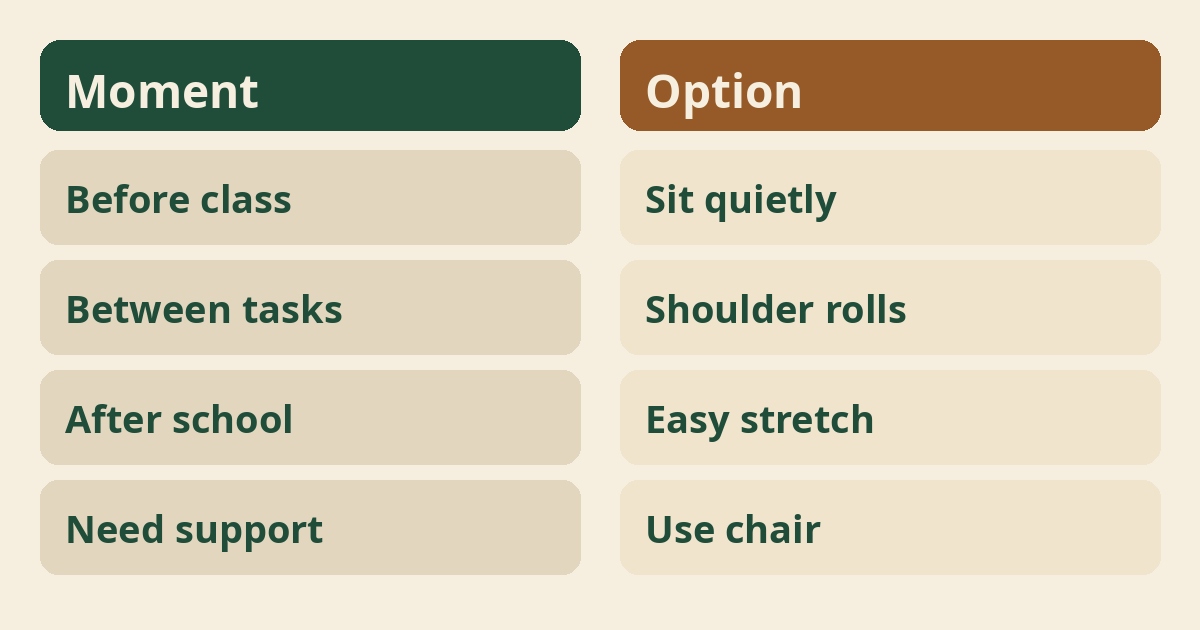
The main mistake is treating a gentle practice like a test of flexibility. Forcing a stretch, copying a shape that feels wrong, or holding the breath can make the break less comfortable. Move slowly and use a smaller range if needed. If you are distracted or short on time, one calm breath and a shoulder roll are enough.
Make room for different bodies
There is no single pose that every teacher needs to do. A movement can be done seated, standing, with support, or not at all. Choose options based on your comfort and what is practical in your room. If a pose causes pain or feels unsafe, leave it out rather than trying to make your body match an image.
Care after a long day
After a demanding day, a quieter practice may suit you better than a strong sequence. Try sitting comfortably, making a small shoulder movement, or resting your attention on a steady object. You do not have to use yoga to push through exhaustion. If your body is asking for rest, stopping and resting is a valid choice.
When to be careful
Check with your doctor before starting if you have a condition, injury, or concern about exercise. This is especially important if a clinician has advised limits on movement or you are unsure which positions are suitable. Move near a wall or chair if balance feels uncertain. Stop for pain, unusual shortness of breath, dizziness, or any symptom that worries you.
Is yoga a treatment?
No, this routine is not a treatment for a health condition. Yoga for teachers here means general movement and attention practices, not diagnosis or care. Do not use it instead of medical advice, prescribed treatment, or a plan from your healthcare professional. Ask a qualified clinician about health concerns and which activities are appropriate for you.
Possible benefits
Many people find that gentle movement offers a pleasant pause, but results vary. Some may value the chance to notice posture, move after sitting, or shift attention between tasks. These are personal experiences, not guaranteed outcomes or medical effects. The National Center for Complementary and Integrative Health resource gives general background on yoga and health; discuss personal questions with a clinician.
Progress at your own pace
Progress can mean finding a version that feels more comfortable and repeatable. You might learn to set up a chair, remember to pause, or choose movements that suit your day. There is no need to deepen a stretch or add difficult poses. If a routine becomes uncomfortable, return to an earlier option or take a break.
Choosing a teacher
A good yoga teacher should explain options and respect your limits. Look for clear instructions, beginner-friendly choices, and room to ask questions. You should not be pressured to ignore pain or attempt a pose that feels unsafe. If you join a class, tell the teacher about relevant restrictions and choose whether to share details.
Mindset for busy teachers
A brief practice does not need to become another task to complete perfectly. You can skip a day, change the plan, or simply sit and notice your breathing. Treat your experience as information, not a grade. This approach can make it easier to keep the practice flexible when the school day changes unexpectedly.
Classroom privacy and boundaries
Keep student safety and school rules ahead of personal practice. Choose a moment when students are supervised and a location where movement is appropriate. Follow school guidance about breaks, clothing, and shared spaces. A practice can wait until after class if the room is busy or you cannot give attention to your surroundings.
What if you have only one minute?
One minute can hold a small pause without needing a full sequence. Sit with your feet supported, relax your hands, and notice one comfortable breath. You might add a few gentle shoulder circles if that feels good. Stop there if needed; this short version is still a complete choice for a crowded day.
Can you practice in regular clothes?
Yes, regular clothes are fine if you can move comfortably and safely. You do not need a mat or specialist outfit for seated movements or a simple standing pause. Avoid clothing or footwear that makes you feel unstable. For more options, a guide to basic yoga props explains what may be useful and what is optional.
Can you do it at a desk?
Yes, some gentle movements can be adapted to a chair or desk area. Keep the chair steady and make sure the space around you is clear. Try small shoulder or seated spine movements rather than pulling against the desk. If the desk position feels cramped, wait until you can use a safer space.
What if a movement feels uncomfortable?
Stop the movement and choose a more comfortable position. Do not try to push past pain, tingling, dizziness, or a sense that something is wrong. Return to a neutral seated or standing position and rest. If symptoms persist or concern you, contact a healthcare professional for advice.
Can yoga replace a break?
Yoga should not replace a break you need for food, water, rest, or work duties. It can be one optional way to use a quiet moment, not a requirement. Follow workplace rules and your own needs. If you feel depleted, use the time to sit, drink water, or rest instead of adding movement.
Build a repeatable routine
A small routine is easier to repeat when it has a simple beginning and end. You might pause, move your shoulders, try one seated stretch, and return to your day. Keep the plan short enough to remember without a phone or special equipment. Change it when the schedule changes, and do not worry about following the same order each time.
After the practice
Finish by noticing how you feel before returning to the next task. Sit or stand quietly for a moment and let your breathing settle naturally. Check that you feel steady before walking or carrying materials. If you do not feel well, skip the next movement and seek appropriate help rather than assuming yoga will fix it.
A practical first week
In your first week, focus on trying comfortable options rather than building a streak. Pick a few workdays when a short pause is possible and keep the same simple sequence. Notice which movements fit your space and which you would rather avoid. At the end of the week, keep only what feels useful and easy to repeat.
Yoga beyond the classroom
A practice can happen outside school if that suits your routine better. Some teachers prefer a quiet moment at home, while others like a short class led by an instructor. Choose a setting where you feel comfortable and can pay attention to your body. Your practice does not need to happen at work to count as yoga for teachers.
Make the practice yours
The best starting routine is one you can adapt without pressure. Keep movements gentle, use support, and pause whenever you need. You can revisit the options that felt comfortable and leave out the rest. If questions about your health or physical activity remain, ask your doctor rather than relying on an article.
Where to read next
For a calm, beginner-friendly start, Ranjana Sinha’s Begin Where You Are is written for people who want simple steps. Our guide to starting a home yoga practice adds a gentle routine you can follow at home.
Frequently asked questions
Do I need a yoga mat?
No, a chair or clear standing space can be enough for gentle movements.
How long should a beginner practice?
Start with a few comfortable minutes and stop when you feel ready.
Can I do yoga during a school day?
Yes, if your duties, school rules, and available space make it appropriate.
Should I continue if I feel pain?
No, stop and choose a comfortable position; ask a clinician about concerns.
Is yoga for teachers a treatment?
No, it is general education and movement, not medical treatment.
The bottom line
Begin with one gentle pause, adapt it to your workday, and ask your doctor about health concerns.

