Yoga for pickleball players is a gentle way to explore movement, balance, and breathing alongside time on the court. You do not need to be flexible or already know yoga to begin. Start with a few comfortable poses, move slowly, and use a wall or chair for support if that feels steadier. This guide explains a simple approach for beginners and how to adjust it around your own comfort and schedule.
This article is for general education and is not medical advice. If you have a health condition, recent surgery, ongoing pain, or questions about exercise, check with your doctor before starting and follow their guidance.
What it means
Yoga for pickleball players is a beginner-friendly yoga practice chosen to complement court activity. It can include standing balance, comfortable range-of-motion work, and calm breathing. It is not a special medical program, and it does not need to copy the quick steps or reaches of a game. Choose movements that feel controlled and easy to stop.
Why players try it
Many players use yoga to add a slower kind of movement to an active week. A quiet practice offers time to notice posture, balance, and how the body feels from side to side. Some people enjoy having a steady routine away from the court. There is no single reason every player needs to practice.
What yoga can and cannot do
Yoga is a form of physical activity, not a treatment for an injury or health condition. A gentle session may help you explore comfortable movement and attention to breathing. It cannot promise a particular result or replace advice from a qualified health professional. Keep court practice and yoga within the limits set for you.
A simple starting point
A short, easy session is a sensible way to learn what feels comfortable. Try a few minutes of standing, a supported balance pose, and a seated or lying-down rest. You can begin with Mountain Pose for beginners as a steady place to notice your stance. Stop if anything feels sharp, alarming, or unlike normal effort.
Choose a safe space
Make room around you before you begin. Put away balls, paddles, and anything you could trip over. Use a flat, nonslip surface and keep a sturdy chair or wall within reach for balance. A quieter space can make it easier to focus on the movement instead of rushing.
Begin with a check-in
Notice how you feel before choosing poses. Ask yourself whether you feel rested, steady, and comfortable enough for light movement today. If you are unusually tired or something feels wrong, rest or choose a different activity. This check-in is not a diagnosis; it is a way to make a thoughtful choice.
Set a gentle intention
Pick one simple focus for the session. You might pay attention to even breathing, stable feet, or moving without hurry. A small focus can keep the practice from turning into a test of flexibility. There is no need to force a stretch or match another player’s range.
Warm up without rushing
Start with small, comfortable movements before holding poses. Let your shoulders move gently and shift your weight from one foot to the other while holding a chair if useful. Keep the movements slow and within a range that feels familiar. Warming up does not guarantee that discomfort or injury will not happen.
Step one: find your stance
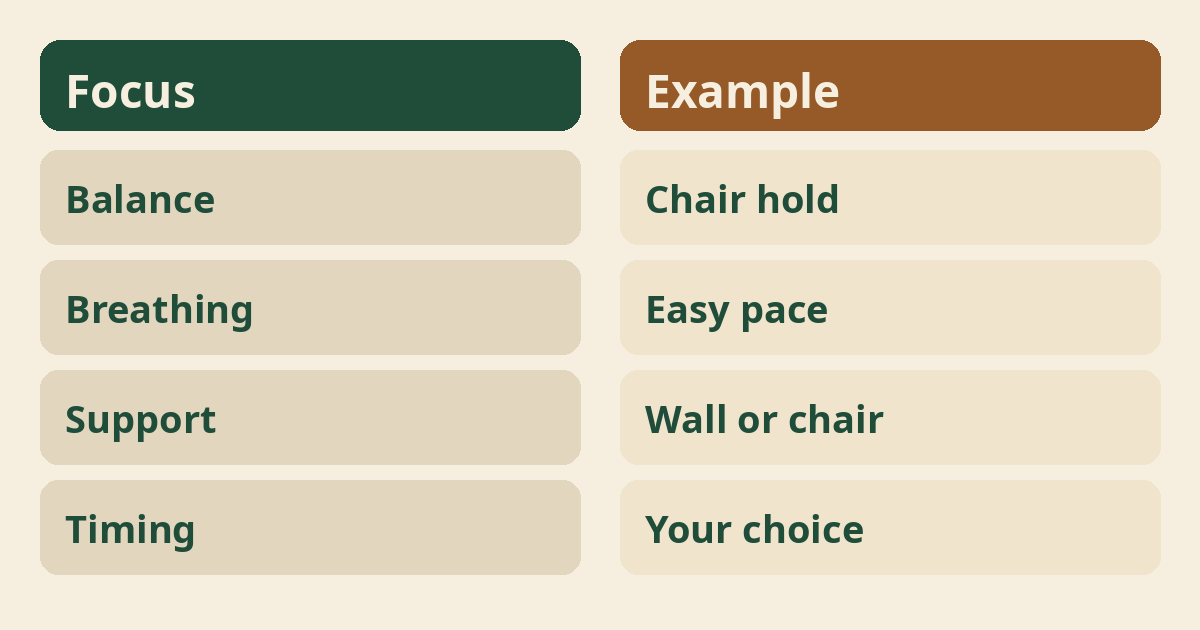
Stand with both feet placed in a comfortable position. Keep the knees soft rather than locked, and let your arms rest by your sides. Notice whether one foot carries more weight, then make a small adjustment if it feels natural. Use the wall or chair if standing without support feels uncertain.
Step two: use a supported balance pose
A supported pose lets you explore balance without making it a challenge. Hold the back of a steady chair and lift one heel or foot only a little, if comfortable. Keep your gaze on one still point and return both feet to the floor whenever you need. You can also practice shifting weight without lifting a foot.
Step three: try a gentle forward fold
A small hip hinge can make a mild standing stretch without a deep reach. Rest your hands on your thighs or a chair and tip forward only a little, keeping the back comfortable. Bend your knees as needed and come upright slowly. Skip this movement if it does not feel right for you.
Step four: explore a side reach
A small side reach can be a calm way to move the upper body. Stand or sit with a steady base, lift one arm only as high as comfortable, and lean slightly to the opposite side. Keep both sides of the body easy and breathe normally. You may leave the arm down and simply sit tall instead.
Step five: rest between movements
Pauses are part of a beginner practice. Stand or sit comfortably and let your breathing return to its usual pace. Notice whether you want a smaller movement, more support, or a longer break. You are free to skip any pose; finishing every step is not the goal.
Use breathing that feels easy
Let the breath stay natural rather than forcing a pattern. You can notice the air moving in and out while you hold a comfortable position. Avoid breath-holding or very deep breaths if they feel uncomfortable. If you want to learn a gentle option, see belly breathing for beginners.
How long to practice
A few minutes can be enough for your first attempt. Keep the session brief while you learn how your body responds, then decide whether you want more time another day. A longer routine is not automatically better. End while you still feel steady and able to move comfortably.
How often to practice
Choose a frequency that fits your week and feels manageable. Some people prefer a short practice on a non-court day; others like a few gentle movements after play. Leave room for rest and other activities. For a broader beginner guide, read how often to do yoga.
Before or after a game
There is no single best time for everyone to do yoga. Before play, keep movement light and avoid long, intense holds that leave you feeling sluggish. After play, let your breathing settle and choose easy movements rather than trying to push through fatigue. Follow any advice you have received about activity timing.
Choose useful props
A chair, wall, or folded blanket can make practice feel more supported. Place props so they cannot slide, and use only sturdy furniture. A yoga mat is optional if the floor is already comfortable and nonslip. See yoga props for beginners for simple ways to use common supports.
Common mistake: pushing too far
A pose should not become a contest to reach farther. Ease out if you feel strain, pinching, dizziness, or a loss of balance. Smaller movements and bent knees are valid choices, not signs of failure. Range and comfort can vary from one day to another.
Common mistake: copying court movements
Yoga practice does not need to imitate quick lunges or hard reaches. Fast, forceful movements may not suit a slow beginner session. Move in a way you can control, and keep the support of a chair or wall close for standing poses. Save game-specific drills for a coach or professional who knows your needs.
Common mistake: holding the breath
Breath-holding can make an easy pose feel harder. Keep breathing in a relaxed way and come out of the pose if you cannot do so comfortably. There is no need to count breaths or follow a strict rhythm. A natural breath is a good place to start.
Common mistake: expecting a quick change
Yoga does not produce the same experience for everyone. Some people enjoy the routine right away, while others prefer a different type of movement. Instead of measuring progress by flexibility, notice whether the practice feels clear, comfortable, and easy to repeat. Do not treat a change in symptoms as proof of a medical result.
Who should be careful
Check with your doctor before starting if you have a health condition or are unsure whether yoga is suitable. This matters especially after surgery, with ongoing pain, balance concerns, or instructions to limit activity. Ask what kinds of movement and support are appropriate for you. If a pose conflicts with medical guidance, leave it out.
Stop and get guidance
Stop the session if you feel pain, faintness, chest discomfort, unusual shortness of breath, or sudden weakness. Sit or lie down somewhere safe and seek appropriate medical help for severe or urgent symptoms. Do not try to push through alarming changes. If a concern keeps returning, ask a qualified health professional before trying again.
Is yoga a treatment?
No, this beginner yoga routine is not a treatment. It is general movement guidance for people who want to explore a gentle practice alongside pickleball. It cannot diagnose or manage an injury, and it does not replace care from a doctor or physical therapist. Follow professional advice for any specific condition.
Possible benefits
Many people find that gentle yoga gives them a calm chance to notice balance, posture, or breathing, but results vary. Enjoyment and comfort differ from person to person, and no benefit is guaranteed. For general background on yoga research, see National Center for Complementary and Integrative Health. Use that source for broad information, not as a promise that yoga will change your game or health.
Progress at your own pace
Build a routine by repeating movements that feel comfortable, not by making them harder each time. You might first become familiar with a supported stance, then add one small movement if it feels appropriate. Change one thing at a time and keep rest available. You do not need to advance to more difficult poses.
Find a suitable teacher
A qualified yoga teacher can offer options and help you understand pose setup. Tell the teacher you play pickleball and are new to yoga, and mention any limits you have been given by a health professional. Ask whether they can demonstrate easier versions and use supports. A teacher’s general class is not a substitute for personal medical advice.
Keep the practice welcoming
The aim is to explore movement, not to look like an experienced yogi. Use a chair, skip a pose, or pause whenever you need. There is no required outfit, perfect breathing pattern, or final shape. Treat a small, steady session as a complete practice.
Pair yoga with court time
Yoga can sit alongside pickleball, rest, and other activities without replacing them. Keep your overall schedule realistic and leave time for meals, sleep, and recovery. If you are planning a new exercise routine, consider asking a qualified professional how it fits your situation. Do not use yoga to ignore discomfort that needs attention.
A simple weekly plan
A flexible plan is easier to adapt than a strict rule. You could try one brief session on a day that feels calm, then decide whether it suits you. On busy weeks, a few minutes or no session may be the right choice. For movement between other tasks, yoga at your desk for beginners offers a separate gentle option.
Mindset for beginners
Curiosity is more useful than judging your performance. Notice which positions feel steady and which ones you would rather change. Let your body set the pace instead of comparing yourself with a partner or video. A practice that is simple and comfortable can still be worthwhile.
Quick answer: do I need flexibility?
No, you do not need to be flexible before starting beginner yoga. Choose comfortable movements and use supports rather than reaching for a deep stretch. If a position is not suitable, skip it. Yoga can be adapted, and flexibility is not an entry requirement.
Quick answer: can I practice at home?
You can practice at home if you have a clear, safe space and a stable support nearby. Start with familiar, gentle movements and avoid poses that leave you unsure. A class may be helpful if you want someone to show you basic setup. Use the option that feels safest for you.
Quick answer: should I practice on a game day?
You may choose a light practice on a game day if it feels comfortable for you. Keep it easy and do not let it replace a warm-up recommended by your coach or health professional. If you feel tired or sore, rest instead. Your response matters more than a fixed schedule.
Quick answer: what if one side feels different?
It is common to notice that movements feel different from side to side. Do not force both sides to match. Use a smaller range or skip the pose, and seek professional guidance if the difference comes with pain or concern. Keep your practice within the limits you have been given.
Where to read next
For a calm, beginner-friendly start, Ranjana Sinha’s Begin Where You Are is written for people who want simple steps. Our guide to starting a home yoga practice adds a gentle routine you can follow at home.
Frequently asked questions
Is yoga useful for pickleball players?
Some players enjoy yoga as a gentle way to explore movement and breathing, but experiences vary.
What is a good beginner pose?
Start with a comfortable standing pose and keep a chair or wall nearby for support.
Can I do yoga before pickleball?
If you choose to, keep it gentle and follow any guidance about your activity routine.
How long should my first session be?
Begin with a few comfortable minutes and stop whenever you need.
Does yoga guarantee fewer pickleball injuries?
No routine can guarantee that, and this article makes no injury-prevention claims.
The bottom line
Start with a few easy movements, use support when helpful, and let comfort guide whether yoga belongs in your pickleball routine.