
Yoga for gamers is a gentle way to add movement and pauses to long gaming sessions. You do not need to be flexible or athletic to begin. A few comfortable poses, an easy breath, and regular breaks can help you notice how your body feels after sitting and focusing for a while. Start away from your screen, move within a pain-free range, and keep the routine short enough to repeat. The goal is not to improve your game through yoga, but to make room for care and attention.
This article is for general education and is not medical advice. If you have a health condition, injury, or questions about whether movement is suitable for you, check with a doctor first.
What yoga for gamers means
Yoga for gamers is a simple movement practice that can fit around play. It can include standing, seated, or floor-based poses, with breathing and short pauses. You can choose movements that feel comfortable rather than follow a fixed routine or aim for a particular body shape.
Why gamers try it
Many players use yoga as a change of pace after sitting and concentrating. A short practice can create a clear break between matches, tasks, or study. Some people enjoy the sense of routine, while others simply like moving in a quieter setting for a few minutes.
Start with a small plan
Begin with a brief routine that feels easy to repeat. Set aside a few minutes before or after a session, or between longer blocks of play. Choose a clear spot where you can stand or stretch without hitting furniture, cables, or your equipment.
Make a safe space
Clear a little floor space before you move. Put controllers, headsets, drinks, and loose cables somewhere they cannot trip you. If you need to keep a game paused, check that it is safe to leave before stepping away; do not rush through poses to beat a timer.
Step 1: Pause and notice
Start by noticing how you feel before choosing a pose. Stand or sit comfortably and take a moment to sense your feet, shoulders, and breathing. You do not need to diagnose anything or force a correction; simple awareness helps you choose a gentle starting point.
Step 2: Stand comfortably
Mountain pose is an easy way to begin standing practice. Place your feet at a comfortable distance and let your arms rest by your sides. Keep your knees soft and your gaze easy. If standing feels unsteady, stay seated or hold a stable surface.
Step 3: Move the spine gently
Cat-cow is a simple movement for exploring a comfortable range. On hands and knees, gently round and lengthen your back as you breathe, without pushing to the end of a stretch. If kneeling does not suit you, try a small seated version by gently rounding and lifting the chest.
Step 4: Fold only as far as comfortable
A supported forward fold can be small and relaxed. Sit or stand and hinge slightly from your hips, letting your hands rest on your thighs or a chair. Keep your neck easy and stop before strain; there is no need to reach your toes or hold your breath.
Step 5: Add a gentle side reach
A mild side reach can bring variety to a short routine. Sit or stand tall, lift one arm only as high as comfortable, and lean slightly to the other side. Keep both sides of your body long and avoid twisting or pulling hard to make the movement bigger.
Step 6: Finish with a pause
End with a quiet moment rather than rushing straight back to play. Sit or stand comfortably and let your arms rest. Notice whether your breathing or attention feels different, without judging the result. You can choose one pose next time and leave the rest out.
Breathing during practice
Let breathing stay natural and comfortable while you move. You might notice an inhale as you grow taller and an exhale as you soften, but there is no required pattern. Avoid holding your breath or taking forceful breaths; return to ordinary breathing whenever a technique feels uncomfortable.
How long should a session be?
A few minutes can be enough for a beginner’s first practice. Choose a length that fits your day and leaves you feeling unhurried. A short sequence you can repeat is often easier to maintain than a long session that feels like another task on your schedule.
How often should you practise?
Pick a frequency that fits your routine and energy. Some people prefer a small movement break on many play days; others practice less often. Let comfort and consistency guide you, and explore how often to do yoga for more ideas about setting a realistic rhythm.
Use breaks, not just sessions
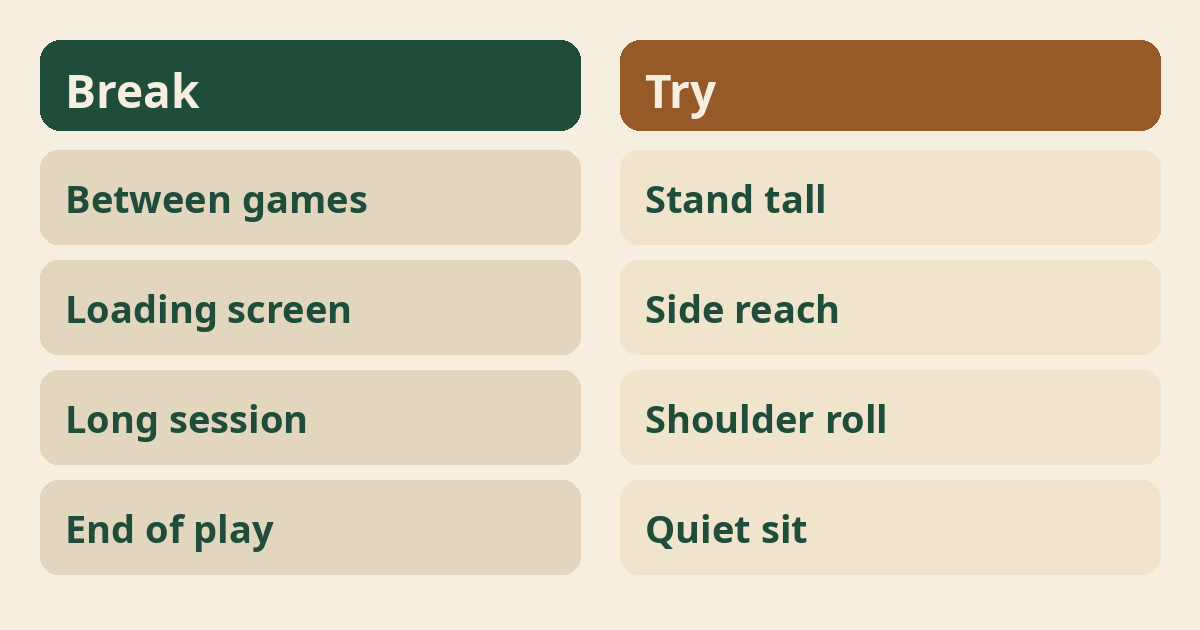
A yoga break can be separate from a formal routine. Between rounds or after a long block, stand up, walk a little, or change position if it is safe to pause. A break does not need special clothing, a mat, or a complete sequence to count as time away from your usual posture.
Try a seated option
Seated movements can be useful when floor poses are inconvenient. Sit with your feet supported and make small shoulder rolls or gentle turns within a comfortable range. Keep your movement slow, and avoid pulling your head or using your hands to force a deeper stretch.
Give your neck and shoulders room
Gentle shoulder movement may feel like a useful pause from screen focus. Let your shoulders rise and soften, then move them in small circles if that feels comfortable. You can explore yoga for neck and shoulders for more beginner-friendly ideas, keeping every motion easy rather than sharp or forced.
Use props if they help
A chair, folded towel, or cushion can make practice feel more supported. Props are optional tools, not signs that you are doing a pose incorrectly. Set them on a stable surface and use them to reduce reaching or wobbling; see yoga props for beginners for simple ways to make a setup more comfortable.
Common mistake: pushing too far
A stretch should not require you to grit your teeth or strain. Keep the movement modest and come out if it feels sharp, uncomfortable, or worrying. Do not compare your range with a streamer, teammate, or pose photo; bodies and daily energy differ.
Common mistake: holding the breath
Breathing should remain easy while you practise. If you notice yourself bracing or holding your breath, pause and return to your usual breathing. You can make the pose smaller, rest, or stop for the day instead of trying to complete every step.
Common mistake: turning it into a test
Yoga is not a score or a performance challenge. There is no combo to perfect and no need to measure how far you bend. Treat the routine as a chance to pay attention and make a comfortable choice, not another leaderboard to climb.
Common mistake: practising beside hazards
A clear space matters more than a perfect yoga setup. Keep screens, cables, chair wheels, pets, and hard-edged furniture in mind before moving. Do not balance on an unstable chair or stretch while holding a drink, controller, or other object that could distract you.
Who should be careful?
Check with a doctor first if you have a condition or injury that may affect movement. Also seek individual guidance if you are unsure whether a pose is suitable, or if movement brings concerning symptoms. Choose only activity that feels safe for you, and stop rather than trying to push through pain or dizziness.
Is yoga a treatment?
No, this routine is not a treatment for any health problem. It is general movement education for people who want to try gentle poses around gaming. Do not use it instead of medical care, a clinician’s advice, or a plan you have been given for a health concern.
Possible benefits
Many people find that gentle movement helps them feel more aware of their posture and routine, but results vary. Yoga may also offer a calming pause for some people, though no single practice works the same way for everyone. Read the National Center for Complementary and Integrative Health overview for general information about yoga and health, and keep expectations modest.
Progress at your own pace
Add a pose or a little time only when the current routine feels comfortable. You might repeat the same few movements for a while before changing anything. Progress can mean finding a version that fits your day, not stretching farther or practising longer.
Choosing a teacher
A beginner-friendly teacher should explain options and invite you to stop or adapt. Look for clear demonstrations, calm pacing, and language that respects different bodies and experience levels. You can practise from a video or class if it suits you, but do not follow instructions that make you feel pressured to ignore discomfort.
Yoga at a desk
A few gentle movements can fit beside a desk or gaming setup. Move away from your screen when possible and make sure your chair is stable before trying a seated option. Browse yoga at your desk for ideas, and leave enough room to stand without bumping your equipment.
A simple rest pose
Child’s pose is one option for a quiet pause on the floor. Use a cushion or stay upright if kneeling or folding forward does not feel right. You can read about child’s pose for beginners, but you never need to use a pose just because it is common in a routine.
Pair poses with transitions
Slow transitions can make a beginner routine feel easier to follow. Move from standing to sitting only when you have a clear, stable path. If getting down to or up from the floor feels awkward, keep your routine seated or standing instead.
Set a gaming reminder
A simple cue can help you remember to pause without interrupting play at a bad moment. Choose a natural break, such as after a match or when you save progress. The reminder is an invitation, not a rule; wait until it is safe to step away and return when you are ready.
Mindset for beginners
Curiosity is more useful than judging your flexibility or skill. Some days a pose may feel easy, and on other days you may prefer to sit quietly. Both choices are valid. Let the practice fit your needs rather than treating consistency as a reason to ignore how you feel.
Keep the routine flexible
You can change the order, skip a pose, or take a rest. A useful practice should fit your space, mobility, time, and comfort. If a movement is not right for you, leave it out; there is no need to replace it with a harder pose.
Returning to your game
Take a moment to settle before putting your headset back on. Notice your surroundings, pick up equipment carefully, and check that your next task is ready. If you feel distracted or uncomfortable, stay paused and choose what feels sensible rather than rushing back into a match.
A sample three-pose sequence
Try standing tall, a gentle side reach, and a seated pause as one simple sequence. Spend a comfortable moment with each movement, then stop or repeat only if it feels good for you. The sequence is an example, not a prescription, and you can shorten it whenever your schedule or energy calls for that.
Make it your own
The best starting routine is one you can adapt without pressure. Keep the parts that feel comfortable and useful, and leave out the rest. Over time, you may find a few simple movements that help you take a mindful break from the screen, while remembering that every person’s experience is different.
Where to read next
For a calm, beginner-friendly start, Ranjana Sinha’s Begin Where You Are is written for people who want simple steps. Our guide to starting a home yoga practice adds a gentle routine you can follow at home.
Frequently asked questions
Do gamers need a yoga mat?
No, you can begin with a clear, stable space and comfortable clothing.
Can I do yoga while a game is loading?
Yes, if it is safe to step away and you have room to move.
Do I need to be flexible?
No, choose small comfortable movements and skip shapes that do not suit you.
Is yoga for gamers a workout?
It can involve movement, but this beginner routine is simply a gentle practice.
Should I keep going if a pose hurts?
No, stop the movement and seek appropriate advice if you are concerned.
The bottom line
Start with one comfortable pause, keep expectations gentle, and let your yoga routine fit the way you play.

