Yoga for golfers is a gentle way to explore movement, balance, and focused breathing alongside your regular golf practice. You do not need to be flexible or know golf-specific poses to begin. Start with easy movements, keep each one comfortable, and let your breath stay smooth. This guide offers a simple routine and ways to adapt it around a round. Yoga is optional support for general wellbeing, not a shortcut to a better score or a replacement for golf coaching.
This article is for general education, not medical advice. If you have a health condition, recent injury, ongoing pain, or questions about safe movement, check with your doctor before starting and follow their guidance.
What yoga for golfers means
Yoga for golfers means choosing comfortable yoga movements that fit beside golf practice. The aim is to notice how your body moves, practise steady balance, and breathe without strain. There is no required pose list, level of flexibility, or promise of a change in your game.
Why golfers try yoga
Many golfers use yoga to add gentle movement and a quieter focus to their routine. A session can give you time to move your hips, shoulders, and spine through easy ranges. Your experience will depend on your body, practice, and other training, so keep expectations modest.
How yoga relates to golf
Golf asks you to coordinate your stance, arms, trunk, and attention. Yoga offers a different setting to explore balance and controlled movement, but it does not teach swing technique. Use your golf coach for swing questions and treat yoga as optional general movement.
Start with a comfortable plan
Begin with a short, easy practice rather than a demanding sequence. Choose a clear floor, wear clothes that let you move, and have a chair or wall nearby. Pick two or three simple movements, pause between them, and stop if anything feels wrong.
Before you begin
Check in with how you feel before each practice. If you feel unwell, unusually tired, dizzy, or uncomfortable, postpone the session. If a clinician has given you movement limits, follow those limits and ask them whether a yoga practice is suitable.
Step 1: Set your stance
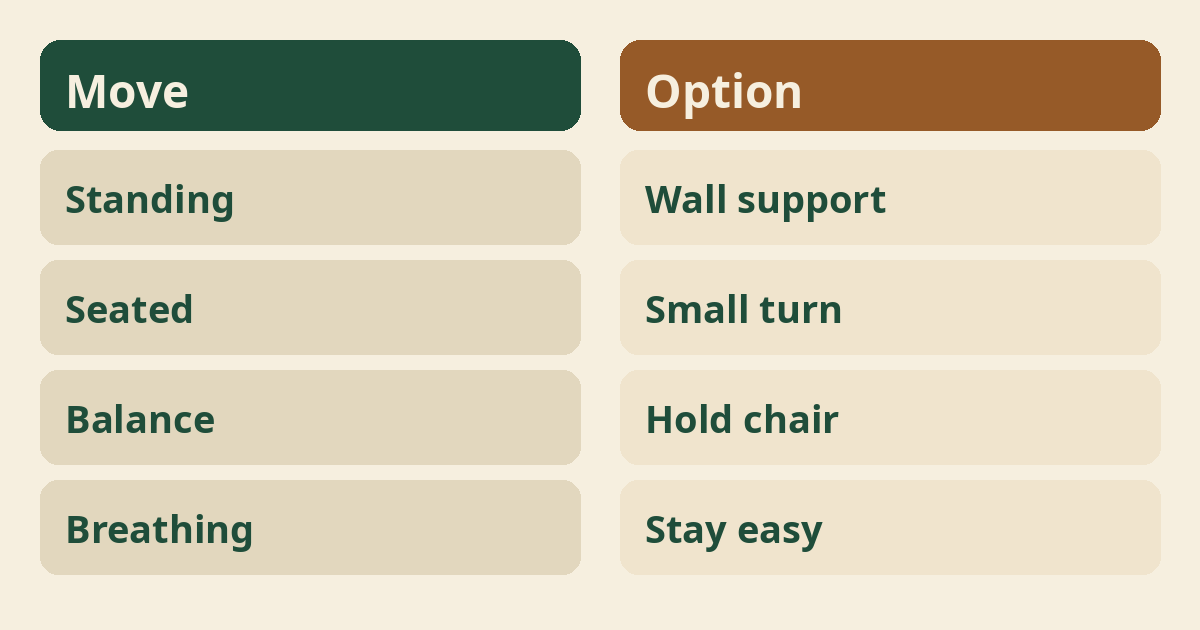
Stand in a relaxed position with your feet about hip-width apart. Let your arms rest by your sides and soften your knees without forcing them. Notice whether you can stand comfortably; use a wall or sturdy chair for support if balance feels uncertain.
Step 2: Find easy movement
Move only through a range that feels comfortable and controlled. Slowly shift your weight from one foot to the other, keeping both feet grounded. Take a few gentle repetitions, then return to standing still and notice whether your balance feels steady.
Step 3: Try a seated turn
A small seated turn can help you explore gentle trunk movement. Sit near the front of a stable chair, keep both feet on the floor, and turn your chest a little to one side without pulling with your arms. Come back to centre and repeat on the other side; do not chase a larger turn.
Step 4: Add a standing reach
A relaxed reach can bring movement to your sides and shoulders. Stand tall with a stable base and raise one arm only as far as comfortable. Lean slightly to the opposite side if that feels easy, then return upright and switch. Keep your neck relaxed and do not hold your breath.
Step 5: Practise a supported hinge
A small hip hinge lets you practise moving your torso while keeping support close. Stand facing a chair back or counter, place your hands there, and move your hips back a little with a soft bend in your knees. Return to standing with control. Keep the movement shallow and skip it if it does not feel right.
Step 6: Finish with balance
Practise balance near a stable support rather than testing how long you can stand. Hold the chair or wall and shift weight gently to one foot, keeping the other toes on the floor as needed. Switch sides after a few breaths. A supported variation is a valid practice, not a lesser one.
Use breath without forcing it
Let your breath stay natural and easy during movement. You can inhale as you grow taller and exhale as you soften or return to centre, but there is no need to match every movement perfectly. If breath-holding or deep breathing feels uncomfortable, return to ordinary breathing and rest.
How long to practise
A few comfortable minutes can be enough to learn the movements. Keep the first session short, with pauses as needed. Add time only if the practice remains comfortable and fits your day. A longer session is not automatically more useful, and there is no set duration every golfer must follow.
How often to practise
Choose a pace that is manageable and leaves room for recovery. Some people prefer a brief mobility break on non-playing days; others practise less often. Notice how you feel during and after each session, and use this guide to how often you should do yoga only as general planning information, not a rule.
Common mistake: forcing a stretch
A stretch should not become a contest to reach farther. Ease out if you feel sharp, pinching, or increasing discomfort. Keep your face and jaw relaxed, and avoid bouncing or pulling yourself into a position. Comfortable movement is more useful than copying a shape that does not fit you.
Common mistake: copying a swing
Yoga poses are not swing drills. Do not twist quickly or use a pose to rehearse a powerful golf rotation. If you want to change your swing or build golf-specific conditioning, ask a qualified golf coach or clinician who knows your situation.
Common mistake: holding your breath
Breath-holding can make a simple movement feel harder. Keep breathing in an easy, ordinary way, and pause when needed. If you notice yourself bracing, reduce the range or stop. Calm breathing is a cue to stay relaxed, not a technique that guarantees a result.
Use props for support
A chair, wall, or folded blanket can make practice feel steadier. Keep the chair on a non-slip surface and use only sturdy furniture. A folded blanket may cushion seated positions, while a wall can support balance. More ideas are in yoga props for beginners, but use only what feels safe.
What to wear and where to practise
Choose a stable surface and clothes that allow easy movement. Bare feet can help some people feel the floor, while secure shoes may suit others; choose what is steady for you. Keep clubs, loose rugs, pets, and other trip hazards out of the practice area.
Who should be careful
Check with your doctor before beginning if you have a health condition or movement concern. Ask first if you have a recent operation, injury, balance problem, pregnancy-related question, or ongoing symptoms. Share the movements you plan to do and follow individual advice. Do not rely on a general article to clear you for exercise.
Is yoga a treatment?
No, yoga is not a treatment for a medical condition in this guide. It is presented here as general movement and breathing practice. Do not use it instead of a medical assessment, prescribed care, or a golf professional’s instruction. If symptoms arise or worsen, stop and contact an appropriate health professional.
Possible benefits
Many people find gentle yoga helps them feel more aware of movement and relaxed, though results vary. Some people enjoy the balance practice, a pause from their routine, or an easy way to move. These are personal experiences, not guaranteed effects or medical outcomes. For a general evidence overview, see National Center for Complementary and Integrative Health, and discuss health questions with your doctor.
Build a gradual routine
Progress by making practice more familiar, not by pushing for harder poses. Repeat the same comfortable movements until they feel clear and controlled. If you choose to add something, change one thing at a time, such as a few extra repetitions, while keeping the range easy and the support nearby.
Before a golf round
Keep any pre-round movement gentle and familiar. If you choose to do yoga before playing, try a few easy standing movements rather than a long or intense session. Leave time to settle, and follow your normal warm-up and the guidance of your golf coach.
After a golf round
Use a quiet, comfortable practice if you want to move after playing. You might try seated breathing or a gentle standing reach, then stop while it still feels easy. Rest, hydration, and your usual recovery habits matter too; yoga is not required after every round.
A seated option
You can practise a few movements while seated if standing is not comfortable. Sit on a stable chair with feet supported and try a small shoulder roll or gentle seated turn. Keep the movements modest and ask your doctor about adaptations if sitting, balance, or mobility is a concern.
A gentle floor option
Floor poses are optional, and you do not need to get down to practise yoga. If getting to and from the floor is easy and safe for you, you could explore a comfortable cat-cow movement with a small range. Skip floor work if it creates strain or makes it hard to stand back up.
Mobility and flexibility
Mobility can be explored without forcing a deep stretch. Try a relaxed shoulder circle or a small side reach, paying attention to comfort. If you want a broader introduction, yoga for flexibility for beginners can offer ideas, but no flexibility target is required for golf or yoga.
Balance practice
Balance work should be scaled to the support you need. Keep a hand on a wall or chair and choose a stance that feels secure. You can review yoga for balance for beginners for simple options, but practise on a clear surface and stop if you feel unsteady.
Mindset during practice
Curiosity is more useful than judging how a pose looks. Notice where your feet are, whether your breath is easy, and what range feels comfortable today. People move differently from one another, and your own body may feel different from session to session.
Working with a teacher
A qualified yoga teacher can help you adapt movements to your needs. Tell the teacher about your golf routine, relevant health concerns, and any clinician guidance before class. Choose a teacher who welcomes questions and offers options rather than insisting that everyone take the same shape.
Keep golf coaching separate
Ask a golf coach about swing mechanics and golf-specific training. A yoga teacher may guide yoga practice, but should not replace a qualified coach for technical golf feedback. If your goal involves pain or a health limitation, consult your doctor or an appropriate licensed clinician before changing activity.
A simple weekly approach
Make a plan that fits around your golf and daily life. You could pick one brief practice time, then decide later whether it feels useful to repeat. Avoid making a missed session into a problem. Rest days and changes in routine are normal, and consistency should not mean ignoring discomfort.
Questions to notice
Track comfort rather than trying to measure a promised result. After practice, you might note which movements felt easy, which needed support, and whether you would like to repeat them. Stop or adjust anything that feels wrong. These observations can help you explain your experience to a teacher or clinician.
Where to read next
For a calm, beginner-friendly start, Ranjana Sinha’s Begin Where You Are is written for people who want simple steps. Our guide to starting a home yoga practice adds a gentle routine you can follow at home.
Frequently asked questions
Do golfers need yoga experience?
Beginners can start with simple, supported movements without prior yoga classes.
Can yoga improve my golf swing?
This article cannot promise a change in swing or score; use golf coaching for swing advice.
Should I practise before every round?
No fixed pre-round yoga routine is required; keep any movement familiar and gentle.
What if a pose feels painful?
Stop if it causes pain or feels wrong, and seek individual guidance for symptoms.
Can I use a chair?
Yes, a sturdy chair can offer support or a seated option.
The bottom line
Start small, stay within a comfortable range, and let your doctor and golf coach guide questions that need personal expertise.