
Bird dog is a balance on hands and knees where you reach one arm forward and the opposite leg back. It builds gentle strength and steadiness in the back, hips and belly. The beginner version lifts only the leg or only the arm, and a small lift is plenty. This guide shows a safe, simple way to practise, with easy options and a clear safety note.
This is general education, not medical advice. If you have back, wrist, shoulder or knee problems, balance concerns, are pregnant or have a health condition, check with your doctor before trying this pose.
What is bird dog pose?
Bird dog is a balance on hands and knees where you reach one arm forward and the opposite leg back, keeping the body level and steady. It builds gentle strength in the back, hips and belly and trains balance and coordination. The beginner version lifts only the leg or only the arm. Our guide to cat cow is a good warm up.
Why do people practise it?
People practise bird dog to build steady core strength, to practise balance and to support everyday posture. It is a calm, low impact movement that you can do at home. Our guide to benefits of yoga explains what regular practice may offer.
How do you set up?
Come onto hands and knees with the wrists under the shoulders and the knees under the hips. Spread the fingers and keep the neck long, with the gaze on the floor. Pad the knees with a folded blanket if they are tender. Take a few slow breaths.
How do you begin lifting?
Start by sliding one foot back along the floor and lifting it only a little, keeping the hips level. Keep the belly gently drawn in. Do not twist the hips open. A small lift is a real bird dog.
How do you add the arm?
Reach the opposite arm forward at shoulder height, with the palm facing in, only when the leg lift feels steady. Move slowly. If balance feels shaky, keep the hand on the floor and lift only the leg. Many beginners stay at this stage for weeks.
What should the hips do?
Keep the hips level, as if a cup of water sat on the lower back. If the hips tilt or swing, lower the leg. A lower leg that stays level is better than a high leg that tips.
What should the lower back do?
Keep the lower back long and neutral, without sagging or arching. Draw the belly gently in. Our guide to yoga with a bad back explains cautious practice.
What should the neck do?
Keep the neck long, with the head in line with the spine and the gaze down. Looking forward strains the neck. Keep the chin slightly tucked. Our guide to yoga for neck and shoulders explains gentle neck care.
How do you breathe?
Breathe slowly through the nose, lifting on an out breath and breathing steadily while you hold. Do not hold the breath. Our guide to belly breathing explains an easy pattern.
How long should you stay?
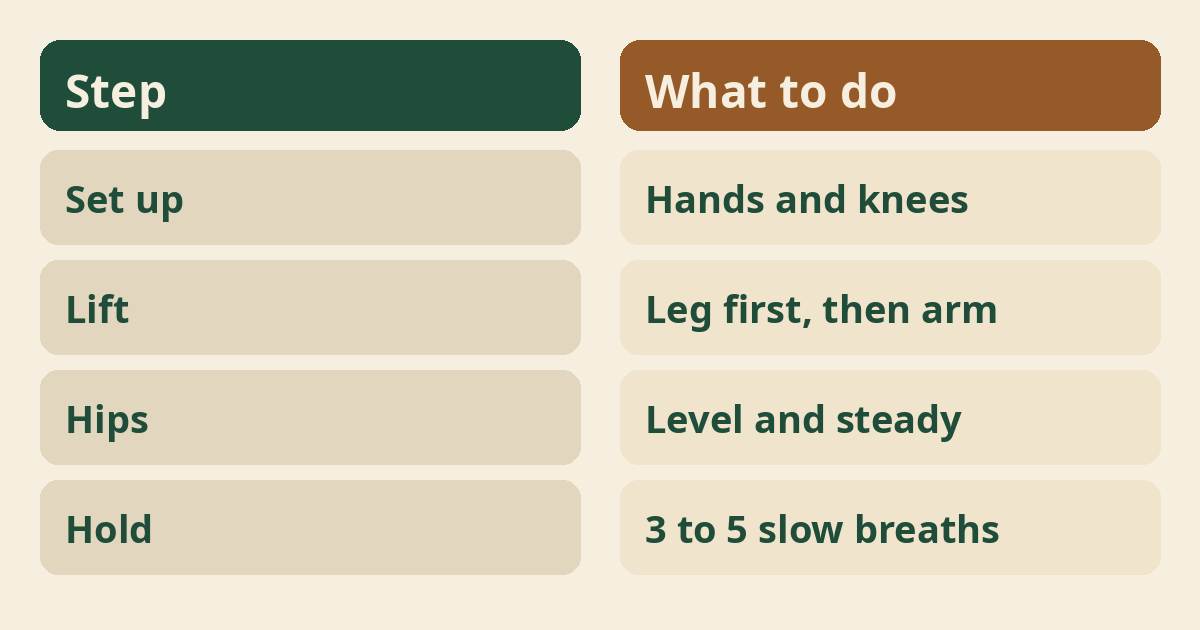
Stay for three to five slow breaths on each side, then lower with control. Short holds are enough. Alternate sides and rest in child’s pose afterwards.
How do you come out?
Lower the arm and leg slowly, return to hands and knees and rest. Move with control and do not drop. Sit back toward the heels if it feels good and breathe for a few moments.
What if the wrists feel sore?
Make fists, rest on the forearms or place the hands on a folded mat edge. Wrist discomfort is common. Our guide to yoga props has ideas for support. Stop if you feel pain.
What if the knees feel sore?
Fold a blanket under the knees or practise a standing version against a wall. Hard floors can be uncomfortable. Pad the knees well and keep the pose short.
What if you wobble?
Wobbling is normal. Lower the leg, breathe and try again with a smaller lift. Balance changes from day to day. Do not judge it. Keep the movement slow and smooth.
What are common mistakes?
Lifting the leg too high, twisting the hips, sagging the belly and holding the breath. Keep the lift small and the hips level. The goal is steady control, not height.
How can you warm up?
Warm up with cat cow, gentle hip circles and a few slow breaths. Our guide to cat cow prepares the spine. A warm body moves more easily.
What poses pair well with it?
Cat cow, child’s pose, puppy pose and plank pair naturally with bird dog. Try the puppy pose afterwards to stretch the back and shoulders. Our plank pose guide builds more strength.
Can you do it standing?
Yes. Stand facing a wall, rest the hands on it and lift one leg behind you. This is a gentler option if kneeling is hard. Keep the standing knee soft and the hips level.
What are the benefits?
Many people find bird dog helps them feel steadier and stronger through the middle of the body, though results vary. The National Center for Complementary and Integrative Health notes that research on yoga is still developing. Practise for comfort, not for a fixed result.
Who should be careful?
People with back, wrist, shoulder or knee problems, balance problems, recent surgery or pregnancy should check with a doctor first. Our guide to prenatal yoga explains cautious practice in pregnancy. If you are unsure, skip this pose.
How often should you practise it?
Two or three times a week is plenty for most beginners. Give the body time to adapt. Keep each session gentle and stop if you feel pain.
Should you eat before practising?
Practise on a fairly empty stomach, leaving a couple of hours after a meal. A full stomach makes floor poses uncomfortable. Wear comfortable clothes and use a mat on a flat floor.
Is bird dog right for everyone?
No. It is optional, and many people do better with simpler poses like cat cow. Yoga is not about reaching a shape. If bird dog does not feel good, skip it without worry. Choose the poses that feel kind to your body today.
What should you notice afterwards?
Notice whether the body feels steady, the breath feels easy and the back feels calm. If the back, wrists or knees feel sore, reduce the lift next time or skip the pose for a few days.
How do you progress over time?
Add the arm only when the leg lift feels easy, steady and pain free. Progress is measured in comfort, not height. Give each step a few weeks. If a change causes pain, return to the earlier version.
Can you practise it in a short routine?
Yes. Place it after cat cow and before child’s pose. A simple order is cat cow, bird dog for three rounds each side, then child’s pose. Rest between rounds. Ten minutes is plenty at first.
Can you practise it with a teacher?
Yes. A qualified teacher can check the hips, back and wrists and suggest props. Learning with support is a sensible way to start any new pose, especially with a past injury.
Does bird dog help with posture?
It can support the muscles that hold the spine steady, which many people find helpful for sitting and standing comfortably. Posture is shaped by many things, including habits and movement through the day. Bird dog is one gentle way to practise steadiness. Combine it with short walking breaks and stretching, and notice how you feel.
How do you keep the movement smooth?
Move at the pace of the breath, taking about as long to lift as to lower. Slow movement builds control and lowers the risk of strain. Avoid swinging the leg or arm. If you notice rushing, pause on hands and knees and start again.
What is a good mindset for practice?
Treat it as a calm experiment, not a test. Notice what feels steady and what feels shaky. Both are useful information. A small, patient practice done often beats a big effort done rarely.
Where should you practise?
Choose a flat, non slip surface with a little room around you. A mat on a firm floor is ideal. Keep a folded blanket nearby for the knees. Practise somewhere quiet so you can listen to your body.
Where to read next
For a calm, beginner-friendly start, Ranjana Sinha’s Begin Where You Are is written for people who want simple steps. Our guide to starting a home yoga practice adds a gentle routine you can follow at home.
Frequently asked questions
What is bird dog good for?
Gentle core strength and balance on hands and knees.
Do I have to lift arm and leg together?
No. Start with only the leg or only the arm.
How long should I hold it?
Three to five slow breaths on each side.
What if my wrists hurt?
Use fists or forearms, or try a standing version.
Is it safe?
Usually with care, but check with a doctor if you have back, wrist or balance concerns.
The bottom line
Bird dog rewards patience. Keep the lift small, the hips level and the breath slow.

