Maybe your mind runs fast at night, or your chest feels tight after a long day, and someone told you to try kriya yoga breathing. The good news: the beginner version is simple. You sit, you breathe slowly through your nose, and you pay attention. This guide walks you through kriya yoga breathing techniques step by step, with safety notes, common mistakes, and an easy way to build a steady habit.
This article is general education, not medical advice, and it cannot replace care from a qualified health professional. If you have a heart, lung, blood pressure, pregnancy, or mental health condition, talk with your doctor before starting any breathwork.
What is kriya yoga breathing?
Kriya yoga breathing is a set of slow, controlled breathing practices done with attention. The word kriya points to action or practice, and the breathing work is one part of a wider path. Beginners usually start with simple awareness of the breath rather than advanced methods.
Where does it come from?
Kriya yoga comes from a long tradition of meditation practices passed down through teachers. Different lineages teach the techniques in their own way, and some keep advanced methods private. This article covers only the beginner-friendly breathing side; for the wider picture, our cornerstone guide to kriya yoga techniques walks through the full practice.
Why do people practice it?
Most people try kriya yoga breathing techniques to feel calmer and more focused. A slow breath gives the mind one simple job to do. Many people also like having a quiet daily routine that belongs only to them.
Is it safe for beginners?
Basic slow breathing is safe for most healthy adults when done without strain. The key rule is to never force the breath or hold it for a long time. If anything feels uncomfortable, you stop and breathe normally.
What do you need before you start?
You need a quiet spot, a comfortable seat, and ten free minutes. No equipment is required, though a cushion or chair helps many people. Wear clothing that does not press on your belly or chest.
How to set up your space
Pick a corner where you will not be disturbed for a short while. Silence your phone and let others in your home know you need a few minutes. A steady place and time makes the habit easier to keep.
How should you sit?
Sit upright with a long spine and relaxed shoulders, on the floor or on a chair. Your head should feel balanced over your spine, not pushed forward. If sitting on the floor is hard, a chair with both feet flat works just as well, and poses like thunderbolt pose can also serve as a steady seat.
Step 1: settle the body
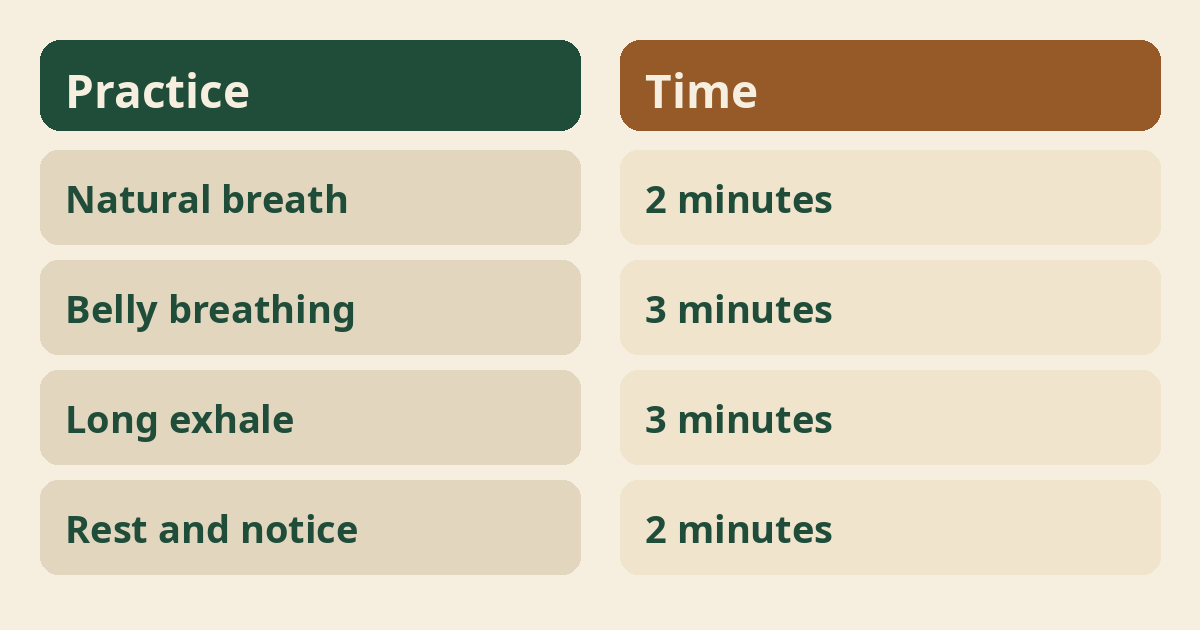
Begin by sitting still and letting your body get quiet. Close your eyes or soften your gaze. Take a moment to release your jaw, shoulders, and hands before you touch the breath at all.
Step 2: notice your natural breath
Watch your breathing exactly as it is, without changing it. Notice where you feel it most, such as the nose, chest, or belly. This simple watching is already a real kriya yoga breathing technique for beginners, not a warm-up to skip.
Step 3: slow belly breathing
Let each inhale fill your belly gently and each exhale let it fall. Place one hand on your abdomen so you can feel the movement. If this style is new, our guide to belly breathing for beginners breaks it down in more detail.
Step 4: lengthen the exhale
Make your exhale a little longer than your inhale, without straining. For example, breathe in for a count of three and out for a count of four. A longer, slow exhale is the part many people find most calming.
Step 5: add a soft pause
Let a brief, easy pause happen at the top and bottom of each breath. Keep the pause short and comfortable, a second or two at most. Never clamp the throat or hold the breath with effort.
Step 6: rest and notice
Finish by letting the breath return to normal and sitting quietly. Notice how your body and mind feel compared to when you started. This rest is part of the practice, not an extra.
What is ujjayi-style breathing?
Ujjayi is a soft ocean-sounding breath made by slightly narrowing the throat. Some kriya yoga breathing techniques use this sound as an anchor for attention. Beginners should keep it very light, and skip it entirely if it feels scratchy or forced.
How long should a session be?
Start with five to ten minutes and stop there for the first few weeks. Short daily sessions teach the body more than one long session once in a while. You can add a minute at a time as the practice starts to feel natural.
How often should you practice?
Once a day is a good beginner target, and most days of the week is plenty. Consistency matters more than length or intensity. If you wonder how breathing work fits alongside movement, our guide on how often to do yoga gives a sensible weekly rhythm.
Morning or evening?
The best time is the time you will actually keep. Morning practice sets a calm tone for the day, while evening practice can mark the end of work. Try both for a week and keep whichever one sticks.
Common mistakes beginners make
The biggest mistake is trying too hard. Other common ones are breathing too deeply too fast, chasing special sensations, and skipping practice for days then overdoing it. Slow and ordinary beats intense and rare.
Forcing the breath
Forcing the breath is the one error that can actually cause problems. Pushing big breaths can make you lightheaded or anxious, which is the opposite of the goal. If the breath wants to stay small and quiet, let it.
Mouth or nose breathing?
Breathe through your nose unless your nose is blocked. Nose breathing naturally slows and warms the air, which suits this style of practice. If you are congested, skip the session or breathe gently through the mouth instead.
Props that make sitting easier
A cushion, folded blanket, or sturdy chair can make sitting far more comfortable. Raising your hips a little helps the spine stay tall without effort. Our guide to yoga props for beginners shows simple household options that work well.
Can you pair it with easy poses?
Yes, a few minutes of slow movement before breathing helps many people settle. A simple upright shape like mountain pose is enough to wake up posture before you sit. Keep the movement easy, since the breathing is the main event.
Does it help with stress?
Many people find slow breathing a useful way to unwind, though results vary from person to person. It can be one quiet tool among many, not a fix for everything. For a wider set of calming options, see our guide to yoga for stress relief.
Who should be careful?
Anyone with a heart, lung, blood pressure, seizure, or pregnancy situation should check with a doctor first. The same goes for anyone who has felt panic or trauma responses during breathwork. A doctor or qualified teacher can help you adapt the practice safely.
Is kriya breathing a treatment?
No, kriya yoga breathing techniques are not a treatment for any medical condition. They are a traditional practice people use for general wellbeing. They do not cure, treat, or prevent disease, and they never replace medical care or prescribed medicine.
What benefits do people report?
People often report feeling calmer, sleeping more easily, and concentrating better, though results vary and research is still developing. Some notice the effect within days, while others take weeks. The National Center for Complementary and Integrative Health has balanced overviews of breathing and meditation research if you want an evidence-based picture.
How does progress look?
Progress usually looks boring: the breath gets smoother and sitting gets easier. You may notice longer sessions feel natural, or that you return to calm faster after a hard moment. There is no finish line, so there is nothing to chase.
Do you need a teacher?
The basics in this guide are safe to learn alone, but advanced kriya methods are best learned from a qualified teacher. A teacher can correct your posture, pace, and expectations in ways an article cannot. Look for someone patient who welcomes questions and never promises dramatic results.
The role of mindset
Treat the practice as time with yourself, not a test you can fail. Wandering thoughts are normal and expected, not a problem. Each time you notice and return to the breath, that return is the practice working.
Counting and rhythm
Light counting gives busy minds a helpful anchor. Counting in for three and out for four is enough; exact ratios are not important at the beginner stage. Drop the counting whenever the breath feels steady on its own.
What if you feel dizzy?
Stop, breathe normally, and let the feeling pass before continuing. Dizziness usually means the breaths were too big or too fast. Next time make everything smaller and slower, and sit rather than stand until you feel steady again.
Can you practice at your desk?
Yes, a shortened version works well in a chair at work. Two minutes of slow nasal breathing with a longer exhale fits between meetings, and our guide to yoga at your desk pairs well with it. Skip any breath holding when you are in a public setting.
Keeping a simple journal
A one-line note after each session helps you see patterns. Write the time, the minutes, and one word for how you felt. Over a month these tiny notes show progress that memory alone would miss.
Breathing before sleep
A short, slow session can be a calm way to end the day for many people. Keep it very easy at night, since strong breathing work can feel alerting for some. If you notice your mind speeding up, move the practice to earlier in the evening.
Staying consistent
Link the practice to something you already do every day. Breathing after brushing your teeth or before bed removes the decision of when. A small habit you keep beats a big plan you drop.
Where to read next
For a calm, beginner-friendly start, Ranjana Sinha’s Begin Where You Are is written for people who want simple steps. Our guide to starting a home yoga practice adds a gentle routine you can follow at home.
Frequently asked questions
Is kriya yoga breathing safe to learn from an article?
The gentle basics here are fine for most healthy adults, but advanced kriya methods should be learned in person from a qualified teacher.
What should I do when my mind keeps wandering?
Notice the wandering without judgment and guide your attention back to the breath, because that returning is the practice itself.
Do I have to sit on the floor cross-legged?
No, a chair with both feet flat on the ground works just as well for breathing practice.
When will I notice a difference?
Some people feel calmer after the first few sessions, while for others the change builds over several weeks, and results vary.
Should I practice during pregnancy?
Ask your doctor first, and avoid any breath holding or strong techniques unless a qualified prenatal teacher guides you.
The bottom line
Start small, breathe gently, and let a few quiet minutes a day grow into a practice that is yours.