
Living with PCOS can feel like your body is working against you, with tired days, stubborn symptoms, and a mind that never quite switches off. PCOS yoga poses offer a small, doable way to push back: slow stretches and steady breathing that ask little and give calm back. This guide walks you through beginner-friendly poses, how often to practice, and how to stay safe, all in plain language. Roll out a mat, take a breath, and start where you are.
This article is for general education and is not medical advice. If you have PCOS or any other health condition, talk with your doctor before starting a new exercise routine.
What are PCOS yoga poses?
PCOS yoga poses are slow, low-impact yoga positions that many people with PCOS use to move their bodies and unwind. They are not a workout plan or a medical fix. They are a calm way to stretch tight muscles, breathe deeply, and spend a few quiet minutes caring for a body that can feel out of sync. Most people use them alongside the care plan they already have.
Why do people with PCOS try yoga?
Many people with PCOS try yoga because it is low-pressure movement that also settles a busy mind. PCOS can bring tiredness, stress, and frustration with your own body. A short, kind practice gives you something doable on hard days. If you want the full picture of a PCOS-focused practice, our main guide Yoga for PCOS for Beginners walks through how the pieces fit together.
Can a total beginner start?
Yes, these poses are chosen so a complete beginner can start at home with no experience. You move slowly, hold easy shapes, and rest whenever you want. There is no test and no keeping up with a class. Starting small is the whole idea.
How do you set up for your first session?
Clear a small patch of floor, wear clothes you can bend in, and keep water nearby. A quiet corner the size of a yoga mat is enough. Turn off notifications for fifteen minutes so the time feels like yours. Simple surroundings make it easier to come back tomorrow.
What props make poses easier?
A cushion, a folded blanket, and a sturdy chair cover almost everything a beginner needs. Sitting on a cushion lifts your hips so seated poses feel less strained, and a blanket pads knees on the floor. For a fuller rundown of helpful gear, see our guide to yoga props for beginners. None of it needs to be fancy or expensive.
Step 1: How do you warm up your spine?
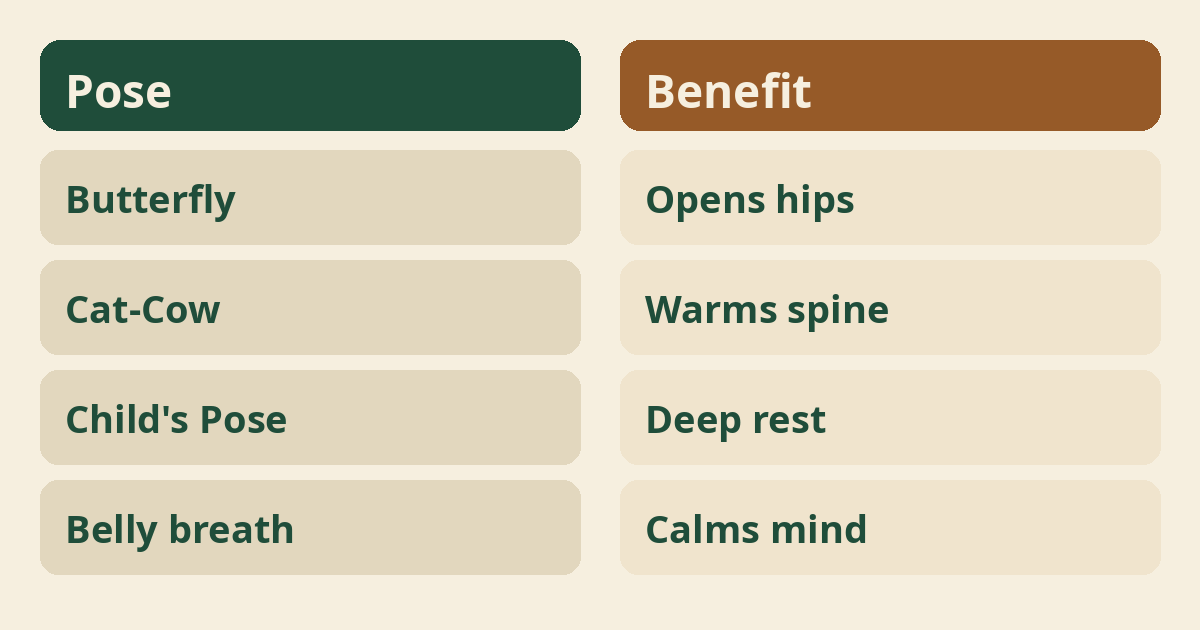
Begin on hands and knees and move slowly between arching and rounding your back. This flowing motion is often called Cat-Cow, and it wakes up a stiff back after long sitting. Move with your breath for five to eight slow rounds. Our walkthrough of Cat-Cow pose for beginners shows the exact rhythm if you want pictures and cues.
Step 2: How do you open your hips?
Sit tall, bring the soles of your feet together, and let your knees fall out to the sides. This is Butterfly Pose, a favorite in many pcos yoga asanas lists because it opens the hips without strain. Sit on a cushion if your lower back rounds. Our page on the butterfly pose for beginners explains how far to take it.
Step 3: How do you rest between poses?
Kneel, fold forward, and rest your forehead down to give your whole body a pause. Child’s Pose is the classic resting shape, and you can drop into it any time practice feels like too much. Keep knees wide if that feels better on your belly. The cues in our Child’s Pose guide for beginners help you get comfortable fast.
Step 4: How do you finish with breathing?
End seated or lying down, breathing slowly into your belly for two to five minutes. Slow breathing is where a lot of the calming effect of pcos yoga poses seems to come from, and it costs nothing. Rest one hand on your stomach so you can feel it rise and fall. If you are new to this, our belly breathing for beginners page breaks it into tiny steps.
Step 5: How do you close a session?
Take one last slow breath, notice how your body feels, and roll up slowly. Rushing off the mat undoes the calm you just built. Sit for a moment and name one thing that felt easier than yesterday. That small pause is what turns a stretch session into a practice.
Which PCOS yoga asanas come up most often?
The poses most often suggested for PCOS are Butterfly, Cat-Cow, Child’s Pose, mild twists, and easy forward folds. These show up again and again because they are kind to the body and simple to learn. You do not need headstands or long holds. A short list done regularly beats a long list done once.
How should you breathe during poses?
Breathe slowly through your nose, letting the exhale run a little longer than the inhale. Longer exhales tell your nervous system it can stand down, which is part of why yoga feels calming. Never hold your breath to push deeper into a stretch. If breathing feels strained, ease out of the pose.
How long should one session last?
Ten to twenty minutes is plenty for a beginner session. Short sessions done often build the habit better than one long weekend class. You can always add time once the routine feels normal. Stop while you still feel good, not after you are worn out.
How many days a week should you practice?
Three to five days a week works well for most beginners. Rest days are part of the plan, not a failure. Consistency over weeks matters more than any single session. Our guide on how often you should do yoga helps you match the schedule to your energy.
Is morning or evening better?
The best time is the time you will actually keep, and both morning and evening work. Morning practice can loosen a stiff body and set a calm tone for the day. Evening practice helps some people unwind before bed. Try both for a week and keep whichever sticks.
What mistakes do beginners make?
The most common mistakes are pushing into pain, holding the breath, and skipping rest days. Pain is a stop signal, not a goal. Comparing yourself to photos online also drains motivation fast, because those shapes took years. Your only job is to show up and move kindly.
Who should talk to a doctor first?
Anyone who is pregnant, recovering from surgery, or managing another health condition should check with their doctor before starting. The same goes for sharp pelvic pain, dizziness, or anything that feels medically off. A quick conversation with your doctor keeps practice safe and takes the guesswork out. Bring a list of the poses if that helps the talk.
Is yoga a treatment for PCOS?
No, yoga is not a treatment or a cure for PCOS. PCOS is a medical condition that needs proper care, and yoga cannot replace that care or any medicine you take. Think of these poses as a supportive habit, like good sleep or a walk. Anyone who claims yoga cures PCOS is overstating what it can do.
What benefits do people notice?
Many people say regular practice leaves them feeling looser, calmer, and more at home in their bodies, though results vary from person to person. Some notice better sleep or less stress after a few weeks, and some simply enjoy having time that is theirs. Research groups like National Center for Complementary and Integrative Health study yoga for general wellness, and the evidence is still growing, so it is best to keep expectations modest. What yoga cannot do is fix hormone levels on its own.
Does stress relief matter for PCOS?
Stress can make PCOS symptoms feel harder to live with, so many people value yoga mostly for the calm it brings. Slow movement and long exhales give your body a clear signal to relax. That alone can make difficult days easier to handle. For a wider set of calming poses, look at our guide to yoga for stress relief for beginners.
How do you move from easy poses to harder ones?
Add time, not difficulty, and only after the basic poses feel comfortable for a few weeks. Hold poses a breath or two longer, or add one new shape at a time. Jumping into advanced flows too soon is how beginners get hurt and quit. Slow progress is still progress.
Is a yoga teacher worth it?
A few sessions with a qualified teacher can help, especially if you are unsure about your form. A teacher can adjust poses around knee, back, or wrist issues that a video cannot see. Online classes work too if in-person ones are out of reach. Tell any teacher about your PCOS and what your doctor has advised.
What mindset keeps practice going?
Treat practice as care, not a chore, and let a messy short session count. Five distracted minutes on a bad day still keep the habit alive. Some weeks you will feel strong and some you will not, and both are normal. The mat will be there tomorrow either way.
Do you need to be flexible first?
No, you practice yoga to build flexibility, you do not need it before you start. Stiff hamstrings and tight hips are exactly why many people begin. Props and bent knees make every pose in this guide reachable. If flexibility becomes a goal later, our page on yoga for flexibility for beginners shows a safe path.
What if a pose feels wrong?
Come out of the pose right away and swap it for a rest position. A stretchy pull is fine; sharp, pinching, or joint pain is not. Skip any pose that never feels okay, because there is always another option. When in doubt, ask your doctor or a teacher.
Can you practice during your period?
Most people can, and many find slow poses and breathing soothing on period days. Listen to your body and cut the session short if cramps or fatigue say stop. Skip strong twists or belly pressure if they feel uncomfortable. There is no rulebook here, only how you feel.
What about hot yoga or fast styles?
Intense styles are not required, and slower practice suits most beginners with PCOS better. Fast flows and heated rooms can leave you drained rather than rested, especially on low-energy days. If you love a stronger class later, build up to it slowly. Calm and steady is a complete practice on its own.
How does yoga fit with medical care?
Yoga works best as one small piece sitting next to the care your doctor gives you. Keep taking prescribed medicine and going to appointments, and let yoga handle the stress-and-movement side. Tell your doctor you have started, since they may want to hear about changes in how you feel. The two approaches support each other; neither replaces the other.
How do you remember to practice?
Tie your session to something you already do, like after morning coffee or before your shower. A fixed cue beats willpower every time. Leaving your mat unrolled where you can see it removes one more excuse. Miss a day and just start again, no guilt required.
What small signs show progress?
Look for easier breathing, looser hips, and sessions that feel shorter than they used to. Progress in a calm practice is quiet, so people often miss it. A quick note after each session makes changes visible over a month. Celebrate showing up, not performing.
When should you stop and rest?
Stop when you feel dizzy, nauseous, sharp pain, or simply worn out. Rest is a skill in yoga, not a weakness. Some PCOS days come with heavy fatigue, and lying down with slow breathing still counts as practice. Pushing through exhaustion helps no one.
Can you do these poses at a desk?
Some of the breathing and a few seated moves adapt well to a desk, even on busy days. Seated Cat-Cow and slow belly breathing fit between meetings without anyone noticing. They will not replace a full session, but they keep the thread going. Our guide to yoga at your desk for beginners has a short routine.
How do you make poses kinder on joints?
Pad your knees, bend them generously, and use a chair or wall for balance. Blankets under knees and cushions under hips remove most joint complaints. Balance poses can always be done holding something sturdy. Comfort is what lets you practice for years.
What is the simple takeaway?
A few easy PCOS yoga poses, practiced often and kindly, can be a steady source of calm and movement in your week. Keep your doctor in the loop, keep expectations modest, and keep the sessions short enough that you want to return. Small and regular wins.
Where to read next
For a calm, beginner-friendly start, Ranjana Sinha’s Begin Where You Are is written for people who want simple steps. Our guide to starting a home yoga practice adds a gentle routine you can follow at home.
Frequently asked questions
Can I do PCOS yoga poses every day?
Yes, daily practice is fine if sessions stay short and easy, as long as you rest when your body asks for it.
Do these poses help with weight changes from PCOS?
Yoga alone is unlikely to change weight much, though many people find it supports an active routine and calmer eating habits.
What should I wear for a home session?
Any comfortable clothing that stretches, like leggings and a loose t-shirt, is all you need.
Is it normal to feel emotional during practice?
Yes, slow breathing and quiet can bring feelings up, and that is a common and harmless part of practice.
When will I start to notice a difference?
Many people feel calmer after the first few sessions, while physical changes like easier movement tend to build over weeks.
The bottom line
Start with one pose and one slow breath today, and let your practice grow from there.

