
You just finished a big dinner, your belly feels heavy, and the couch is calling. Yes, you can do yoga after eating, and the right kind of slow practice may help you feel more comfortable while your meal settles. The key is choosing easy poses, waiting a little, and keeping effort low. This guide walks you through safe timing, beginner poses, simple breathing, and the mistakes to skip so your after dinner routine feels kind to your body.
This article is general education for healthy adults, not medical advice for your situation. If you live with a digestive condition, recent surgery, or ongoing pain, check with your doctor before starting.
What is yoga after eating for digestion?
It is a short, easy yoga practice done after a meal to help you relax while your body digests. The moves are slow and low-impact, never a workout. Most people use it after dinner as a calm way to end the evening. Think of it as a quiet bridge between your meal and your rest.
Why do people try yoga after dinner?
Many people find that a few slow poses after dinner help them feel less stuffed and more settled. A heavy meal can leave you sluggish, and lying flat right away can feel worse for some. Light movement and upright sitting give the body a middle option. Results vary from person to person.
Is it safe to do yoga after eating?
For most healthy people, slow yoga after eating is safe when the poses stay easy and upright. The trouble comes from strong effort, deep bends, or upside-down poses on a full stomach. Keep the practice soft and short, and stop if anything feels off. When in doubt, ask your doctor first.
How long should you wait after a meal?
A common starting point is 20 to 30 minutes after a normal meal before easy yoga. Some teachers suggest waiting longer after a very large or rich dinner. Others are fine with seated poses right away because they barely move the belly. Start with the longer wait and adjust based on how you feel.
Does meal size change the timing?
Yes, the bigger the meal, the longer you should wait before moving. A light snack may need almost no wait at all. A full holiday-style dinner may call for an hour or more of rest first. Listen to your body, since heaviness and pressure are your best guides.
What should you feel during the practice?
You should feel relaxed, steady, and a little lighter, never strained or squeezed. Mild fullness is normal, but sharp pain, nausea, or strong pressure is not. Those are signs to stop and rest. The whole point is comfort, not effort.
How do you start your first session?
Start with five quiet minutes of seated breathing and one easy pose. Pick a night when your dinner is moderate, not a feast. Wear loose clothing that does not press on your waist. Keep your phone away so the time stays calm and yours.
Step 1: where should you practice?
Choose a quiet, open spot on the floor with room to sit and stretch. A rug or yoga mat is enough. Dim light and low noise help your body shift into rest mode after dinner. Keep water nearby in case you want a sip.
Step 2: how do you settle in?
Sit tall on a cushion or folded blanket and let your breath slow down. Rest your hands on your thighs and close your eyes for a minute. Notice how full you feel without judging it. This short pause tells you how much movement is right tonight.
Step 3: what is the first pose to try?
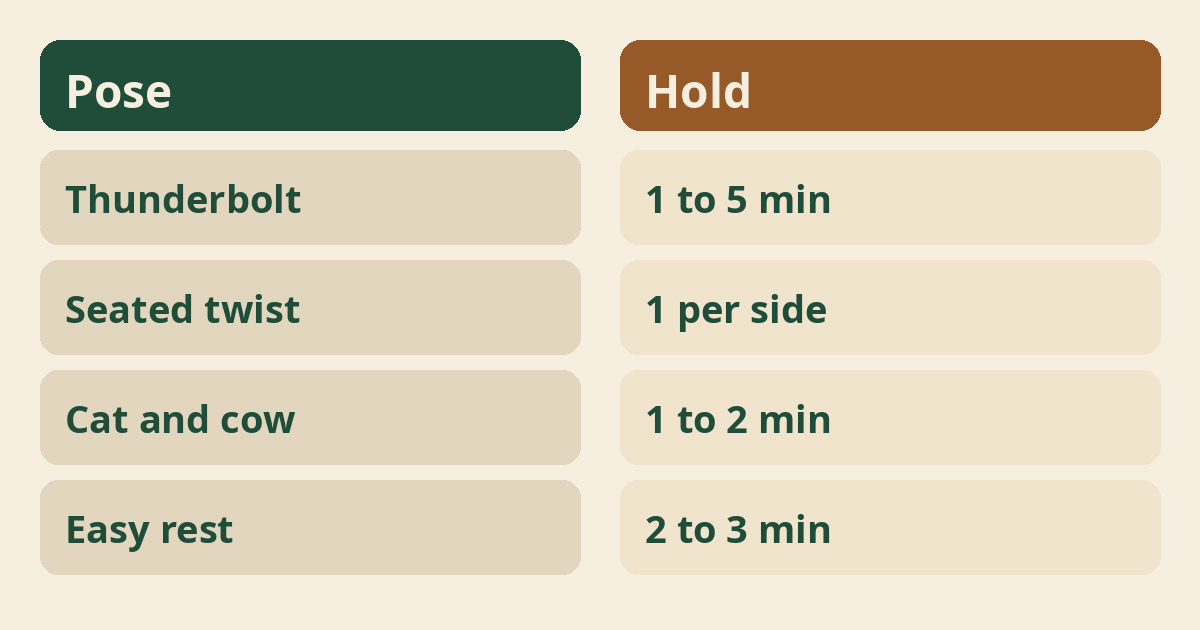
Thunderbolt pose, a simple kneeling seat, is the classic first pose after a meal. Many people sit in it for a few minutes after dinner because it keeps the spine tall and the belly soft. If kneeling is new to you, this beginner guide to thunderbolt pose shows the setup step by step. Come out slowly if your feet or knees complain.
Step 4: what comes next?
Add a slow, seated twist on each side to gently wake up the middle of your body. Keep the twist shallow, more of a turn than a wring. Breathe in to grow tall, breathe out to turn a little. Two or three breaths per side is plenty after eating.
Step 5: can you add a small flow?
A slow round of cat and cow on hands and knees can ease tension around the belly. Move with your breath, arching and rounding without force. If your wrists or knees need padding, fold the mat or use a blanket. This cat and cow walkthrough for beginners keeps the movement small and safe.
Step 6: how do you finish?
Finish by sitting or lying on your left side for a minute or two of quiet breathing. Some people prefer ending back in a tall seat with hands on the belly. There is no perfect ending. Choose whatever leaves you feeling settled and ready for the evening.
How should you breathe after dinner?
Slow belly breathing is the simplest choice and pairs well with every pose here. Let your belly soften and rise as you breathe in, and fall as you breathe out. Keep the breath quiet, not deep or forced. If you want a full walkthrough, this belly breathing starter for beginners breaks it into small steps.
Which poses work best after eating?
Upright seats, easy kneeling poses, and slow twists tend to feel best on a full stomach. Thunderbolt, a simple cross-legged seat, and a soft side stretch are common picks. Standing poses are fine if they stay calm and short. Skip anything that compresses the belly hard.
Which poses should you skip after a meal?
Skip deep forward folds, strong core work, and all inversions after eating. Headstands, shoulder stands, and deep bends can press on a full belly and feel awful. Save strong flows for an empty stomach, like morning practice. Tonight, easy wins.
How long should a session last?
Five to fifteen minutes is the sweet spot for yoga after eating. That is enough time to breathe, move a little, and settle. Longer sessions add nothing on a full stomach and can tip into workout territory. Short and regular beats long and rare.
How often can you do yoga after eating?
You can practice a short session after dinner every day if it feels good. Consistency matters more than length for building the habit. If you wonder how daily practice fits into a week, this guide on how often to do yoga lays out simple schedules. Rest days are always allowed.
What props make it more comfortable?
A cushion, a folded blanket, and a mat cover almost everything you need. A cushion under the hips makes tall sitting easier after a meal. A blanket pads knees in thunderbolt pose. For a fuller kit, this beginner guide to yoga props explains what is worth having at home.
What are common mistakes to avoid?
The biggest mistake is treating after dinner yoga like exercise. Pushing into deep stretches, holding your breath, or jumping straight into practice on a very full stomach all backfire. Rushing the wait time is another one. Keep it small, slow, and honest.
Can you rest in child’s pose after eating?
A wide, supported child’s pose can work for some people, but the belly pressure bothers others. Try it with knees wide and a cushion under your chest so the belly hangs free. If pressure builds, switch to a tall seat instead. The child’s pose guide for beginners shows how to prop it well.
Who should be careful or talk to a doctor first?
Anyone with reflux, a hernia, recent abdominal surgery, or a digestive condition should check with a doctor first. Pregnancy also changes which poses make sense, so get guidance there too. If a pose ever causes pain, dizziness, or nausea, stop and rest. Your safety outranks any routine.
Is yoga after eating a treatment for digestion problems?
No, yoga after eating is not a treatment, a cure, or a fix for any digestive condition. It is a comfort practice, like a slow walk or a warm drink. Real problems like ongoing pain, reflux, or bowel changes belong with a doctor. Yoga can sit alongside medical care, never replace it.
What benefits do people report?
Many people find they feel less heavy, less gassy, and more relaxed after a short session, though results vary. Some notice the habit helps them eat more slowly in the first place. Research on yoga and digestion is still developing, and groups like National Center for Complementary and Integrative Health share balanced overviews of what is known so far. Treat any benefit as a pleasant bonus, not a promise.
Can yoga replace medicine or diet changes?
No, yoga cannot replace medicine, prescribed diets, or medical care. If a doctor has given you a plan, this practice is an extra, not a swap. Keep taking what you are prescribed and follow the advice you were given. Bring yoga up at your next visit if you want an opinion.
How do you build the habit?
Tie the practice to something you already do, like clearing the table or making tea. Same place, same rough time, same short sequence. A habit that small is easy to keep even on tired nights. Miss a day without drama and start again tomorrow.
How does the practice progress over time?
Progress means a little more ease and a little more consistency, not harder poses. After a few weeks you might sit longer in thunderbolt or add one more twist. The practice stays easy by design because the goal is comfort. Let it grow slowly or not at all.
Should you work with a teacher?
A teacher can help you pick poses that suit your body and your digestion. Even one or two beginner classes give you feedback you cannot get alone. Online videos work too, as long as they stay in the easy range. Bring your questions and any health concerns to them.
What mindset helps most?
Treat the practice as a kindness after a meal, not a task to complete. Some nights it will feel great and some nights it will feel like nothing. Both are fine. The win is showing up for a few quiet minutes.
Is it okay to practice after a late dinner?
Yes, but keep the session extra short and choose the calmest poses. Late meals often mean a tired body, so seated breathing and thunderbolt may be all you need. Skip twists if you feel very full. Let sleep win if that is what your body asks for.
What if you feel too full to move?
Then do nothing but sit tall and breathe for a few minutes. Forcing movement on an overloaded stomach is the one mistake that makes people quit this practice. Sitting quietly still counts as the habit. Next time, wait a little longer before starting.
What signs tell you to stop?
Stop if you feel nausea, sharp pain, heartburn flare-ups, or dizziness. Mild awareness of your meal is normal; real discomfort is not. Come out of the pose, sit or lie comfortably, and let it pass. If symptoms keep returning, mention them to your doctor.
How does this fit into a bigger digestion practice?
This routine is one small piece of a wider approach to comfortable digestion through yoga. For the full picture, including morning practices, pose sequences, and daily habits, see the pillar guide at yoga-for-digestion-for-beginners. Start here with after dinner sessions, then explore the rest at your own pace. Small steps stack up.
Where to read next
For a calm, beginner-friendly start, Ranjana Sinha’s Begin Where You Are is written for people who want simple steps. Our guide to starting a home yoga practice adds a gentle routine you can follow at home.
Frequently asked questions
Can I do yoga right after a big meal?
Wait 20 to 60 minutes depending on meal size, and keep the poses easy and upright.
What pose should I try first after dinner?
Thunderbolt pose is the classic choice because it keeps you tall, still, and comfortable.
Will moving after eating upset my stomach?
Slow, low-impact poses are usually fine, but stop if you feel pressure, nausea, or pain.
Is a walk or yoga better after dinner?
Both are light options many people enjoy, so pick the one you will actually stick with.
Do I need yoga experience to start this?
No, the poses here are beginner level and need no flexibility or prior practice.
The bottom line
Start with five quiet minutes after your next dinner and let the habit grow from there.

