
Some yoga poses can make sciatica worse, especially deep forward bends and strong twists. If your lower back and the back of your leg already ache after a long day of sitting, the wrong stretch can turn that ache into a sharp, shooting pain. The good news is that you can still practice. You just need to know which shapes to skip, which to change, and which calm poses tend to feel kind to a cranky sciatic nerve.
This article is general education for beginners, not medical advice or a plan for your specific back. Talk with your doctor or physical therapist before you start, especially if you have pain, numbness, or a diagnosed spine condition.
What is sciatica?
Sciatica is pain that travels along the sciatic nerve from your lower back down your leg. It can feel like a dull ache, a burning line, or a sharp zap. Sitting for long hours often makes it worse, and many beginners first notice it at the end of a workday.
Why can yoga sometimes flare sciatica?
Some poses pull or press on the sciatic nerve, which can set off the pain. A stretch that feels fine for most people can be too much when the nerve is already irritated. Tight hamstrings and a tired lower back add to the problem.
Which sciatica yoga poses should you avoid first?
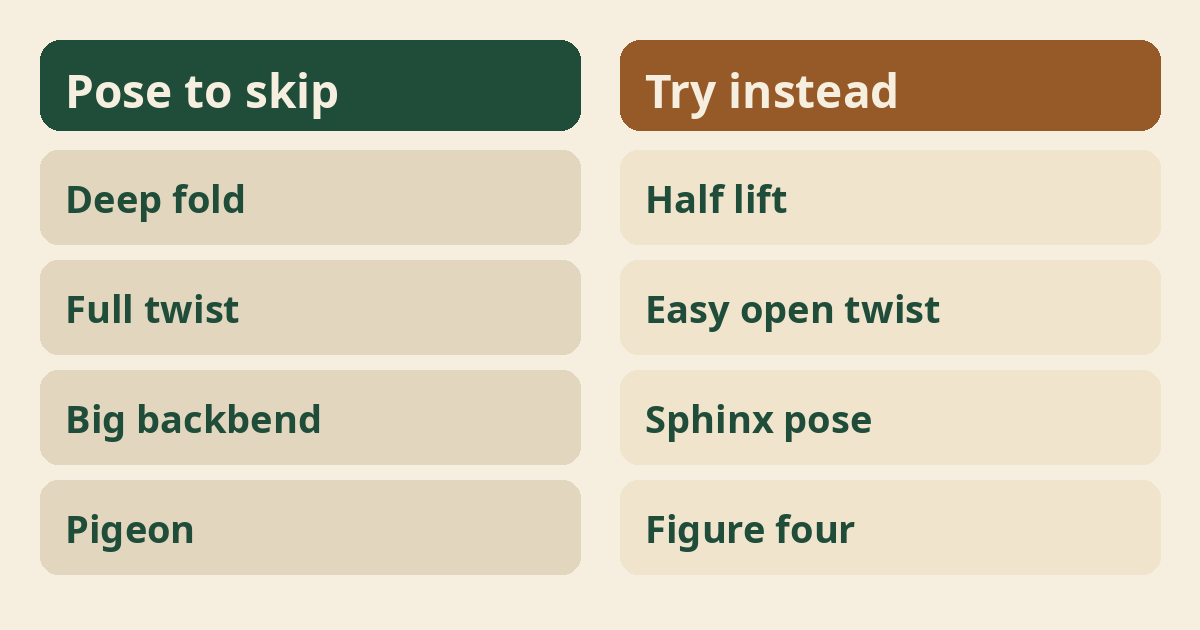
The main sciatica yoga poses to avoid are deep forward folds, deep twists, big backbends, and pigeon pose. These shapes stretch or squeeze the exact spots where the sciatic nerve runs. Skipping them at the start keeps your practice calm instead of painful.
Why are deep forward bends risky?
Deep forward bends pull hard on the hamstrings, and that pull travels straight to the sciatic nerve. Standing toe touches and seated straight-leg folds are the usual troublemakers. A half fold with bent knees is far kinder.
Are seated forward folds safe?
Most seated forward folds with straight legs are not a good idea while sciatica is active. Rounding the lower back under load can bother the discs near the nerve. If you fold at all, bend your knees, keep your back long, and stay well above your toes.
Should you skip deep twists?
Yes, deep seated and standing twists belong on the list of what exercises to avoid with sciatica. Twisting puts pressure through the lower spine, right where the nerve roots live. A very mild open twist with a long spine may be fine later, but go slow.
What about backbends like full cobra?
Strong backbends can pinch the lower back and fire up the nerve. A small sphinx or baby cobra, where you lift only a little, usually sits better. If you feel any pinch or a jolt down the leg, come down at once.
Is pigeon pose a good idea?
Pigeon pose is famous for tight hips, but the deep version can be rough on an angry sciatic nerve. A figure four stretch lying on your back gives a similar hip opening with your spine supported. Many beginners find that swap much more comfortable.
What exercises to avoid beyond yoga?
High-impact moves and heavy lifting are common triggers when the sciatic nerve is irritated. That includes running on hard ground, jumping, and heavy deadlifts or squats. Walking, easy swimming, and slow yoga are calmer picks for now.
Why do people try yoga for sciatica at all?
People turn to yoga because slow movement and easy stretching often calm a tight, guarded back. When you pick the right poses, you loosen stiff muscles without jolting the nerve. If you want the full safe path, our pillar guide to yoga for sciatica for beginners walks you through it step by step.
How do you start safely?
Start with a short, simple practice made only of poses that keep your spine long and supported. Skip anything that makes the pain travel farther down your leg. Ten quiet minutes beat thirty painful ones.
Step 1: check with a doctor
See a doctor or physical therapist before you begin, so you know what is driving your pain. Sciatica has many causes, and the right moves depend on yours. This one step keeps guesswork out of your practice.
Step 2: learn your triggers
Notice which daily positions set off the pain before you roll out a mat. Long sitting, bending to pick things up, and twisting in bed are common ones. Knowing your triggers tells you which poses to keep off the list.
Step 3: choose calm floor poses
Pick poses done on your back or hands and knees, where the floor supports your spine. A shape like cat cow pose moves the back without loading it. Child’s pose with the knees wide is another steady rest spot.
Step 4: move slowly into every shape
Ease into each pose over several breaths instead of dropping in. Slow movement gives you time to notice early warning signs. Sharp pain, numbness, or tingling down the leg means back out right away.
Step 5: finish with rest
End every session lying down for a few quiet minutes. Rest lets your muscles settle and tells you how your back truly feels. If the ache grew during practice, shorten the next session.
How does breathing help?
Slow breathing relaxes the muscles that guard a sore lower back. When you brace and hold your breath, everything tightens. A simple belly breathing pattern, in through the nose and out long through the mouth, keeps the body loose.
How long should a session be?
Ten to fifteen minutes is plenty for a beginner with sciatica. Short sessions lower the chance of overtiring the muscles that support your spine. You can always add time later as your back settles.
How often should you practice?
Most beginners do well with short practice three to five days a week. Daily easy movement often beats one long weekly session. Our guide on how often to do yoga explains how to build a rhythm that fits a sore back.
What are common mistakes beginners make?
The biggest mistake is pushing into a stretch to make progress faster. Other common slips are bouncing into folds, holding the breath, and copying advanced students in class. Pain down the leg is never a sign to push harder.
Which props make practice safer?
Props lift the floor closer to you so poses stay easy on the nerve. A folded blanket under the hips, blocks under the hands, and a strap around the feet all reduce the pull. Our beginner guide to yoga props shows simple home stand-ins like books and belts.
Who should be extra careful?
Anyone with leg numbness, weakness, or bladder or bowel changes should see a doctor first, not a yoga mat. Those signs can point to a more serious nerve problem. Pregnant students and people with disc injuries also need personal guidance before practice.
Is yoga a treatment for sciatica?
No, yoga is not a treatment or a cure for sciatica. At best, careful practice is a complement to the care your doctor gives you. It can help you stay mobile and calm while your body does its own repair work.
What benefits might you notice?
Many people find that easy, regular movement eases stiffness and makes daily tasks feel lighter, though results vary from person to person. Slow practice may also lower the stress that makes pain feel bigger. The National Center for Complementary and Integrative Health notes that yoga is generally safe when practiced with care, and that people with back pain should adapt poses to their needs.
What are safer swaps for risky poses?
Almost every risky pose has a kinder cousin that works the same area. Swap a deep fold for a half lift with bent knees, a full twist for an easy open one, and pigeon for figure four on your back. You lose nothing important at the start.
How do you progress over time?
Add range and time in small steps only after weeks of pain-free practice. Deepen a pose a little, then watch how your back feels that evening and the next morning. If all stays quiet, keep the new range; if not, step back.
Should you work with a teacher?
A few sessions with a teacher who knows back care can save you months of trial and error. Tell them about your sciatica before class starts. A good teacher will hand you swaps instead of pushing you into the full shapes.
What mindset helps?
Treat the skipped poses as a parking spot, not a permanent loss. Many people return to folds and twists once their back calms down. Patience now is what makes that possible.
Can you practice yoga with a bad back in general?
Yes, most people with back trouble can still practice when they choose poses with care. Our article on yoga with a bad back covers the ground rules in more detail. The same idea applies here: support the spine, move slowly, and skip what hurts.
What are warning signs to stop?
Stop right away if pain sharpens, travels farther down the leg, or brings numbness or tingling. Also stop if the pain lingers or grows after practice. A mild muscle stretch feeling is fine; nerve pain is a red light.
Does daytime posture matter?
How you sit and stand all day affects your sciatic nerve far more than ten minutes on the mat. Change positions often, and stand up from your desk every half hour or so. A small cushion behind your lower back can make long sitting easier.
What if a pose felt fine before but hurts now?
Skip it for now, because a nerve that was calm last month can be touchy today. Bodies change week to week. Your avoid list is allowed to change with them, in both directions.
Should you stretch a tight hamstring?
Only lightly, and never to the point of pulling, since hamstring stretches tug directly on the sciatic nerve. A strap around the foot while lying down keeps the stretch small and controlled. Ease off the moment you feel the nerve, not the muscle.
When should you ask for help?
Ask for help if pain lasts more than a few weeks or keeps getting worse. Also check in if you feel weakness in the leg or foot. A doctor or physical therapist can find the cause and clear you for practice.
Where to read next
For a calm, beginner-friendly start, Ranjana Sinha’s Begin Where You Are is written for people who want simple steps. Our guide to starting a home yoga practice adds a gentle routine you can follow at home.
Frequently asked questions
Can yoga make sciatica worse?
Yes, deep folds, twists, and backbends can flare the nerve, which is why beginners skip them at first.
Is walking a better choice than yoga right now?
Walking is often well tolerated and pairs nicely with a short, careful yoga practice.
Should I push through a stretch that burns?
No, burning or shooting pain down the leg is a sign to come out of the pose, not to push.
Will I ever get back to normal yoga poses?
Many people return to fuller poses once the nerve settles, building back slowly over weeks or months.
What is the best time of day to practice with sciatica?
Many people find midday or early evening easiest, since the back is often stiffest right after waking.
The bottom line
Skip the deep folds and twists for now, practice the calm swaps, and let your back set the pace.

