
Yoga for chefs is a set of simple stretches and breathing exercises that help with the aches and stress of kitchen work. You do not need a mat, a studio, or any experience. A few minutes before or after a shift can make your back, shoulders, wrists, and feet feel better. This guide shows you where to start.
This article is general education, not medical advice. If you have a health condition, an injury, or pain that does not go away, check with a doctor before starting.
What Is Yoga for Chefs?
Yoga for chefs is gentle stretching and breathing designed around the demands of kitchen work. It focuses on the spots that work hardest during a shift: lower back, shoulders, neck, wrists, and feet. The moves are simple, slow, and easy to learn. You can do most of them in a small space, even near a prep table.
Why Do Chefs Try Yoga?
Many chefs try yoga because long shifts leave their bodies sore and their minds wound up. Standing for hours, lifting heavy pots, and leaning over cutting boards builds up tension. The pace of service adds mental strain. Many chefs say a short practice helps them unwind and feel steadier at work.
How Does Kitchen Work Affect Your Body?
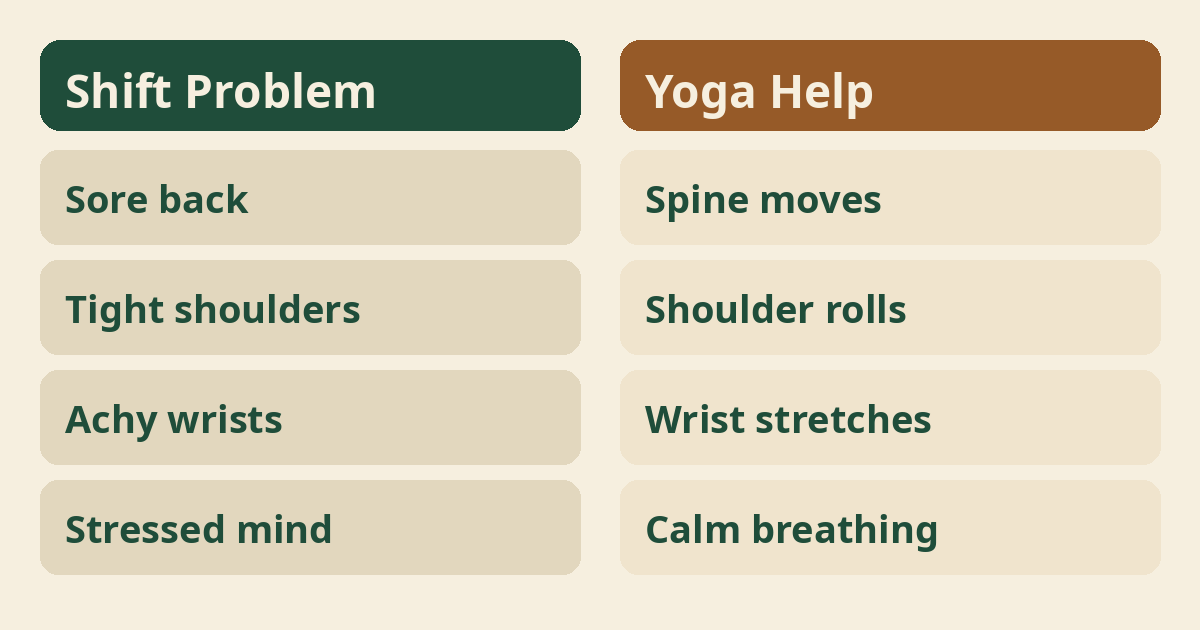
Kitchen work puts repeated stress on the same muscles and joints every day. You stand on hard floors for hours, often in one spot. Chopping and stirring repeat small wrist motions. Reaching, lifting, and bending load the back and shoulders. Heat and noise raise stress levels too.
Is Yoga Good for Beginners?
Yes, yoga works well for beginners because you start with easy poses and go at your own pace. You do not need to be flexible or fit to begin. The poses in this guide are chosen for people who have never done yoga. If you can stand and breathe, you can start.
How Do You Start Yoga as a Chef?
The simplest way to start is with five or ten minutes of gentle moves at home or in a quiet corner before a shift. Pick two or three poses from this guide. Do them slowly and breathe through your nose. Wear whatever you have on, as long as it lets you move. That is a real practice.
Step 1: Stand Tall
Step one is to stand tall with your feet hip width apart and your arms relaxed. This is called mountain pose, and it teaches you how good standing posture feels. Let your weight spread evenly across both feet. Soften your knees slightly so they are not locked. You can learn more in our guide to mountain pose for beginners.
Step 2: Warm Up Your Spine
Step two is to move your spine gently with slow rounds of arching and rounding. On hands and knees, breathe in and drop your belly as you look up. Breathe out and round your back. This pair of moves is called cat cow, and it loosens a stiff back fast. Our guide to cat cow pose shows the full move.
Step 3: Stretch Your Shoulders
Step three is to release your shoulders with slow rolls and gentle reaches. Lift your shoulders up toward your ears, roll them back, and let them drop. Do this five or six times. Then reach one arm across your chest and hold it with the other arm for a few breaths on each side.
Step 4: Open Your Wrists
Step four is to stretch your wrists, which work hard during chopping and stirring. Make a gentle fist, then spread your fingers wide. Rotate each wrist slowly in both directions. Press your palms together in front of your chest and lower your hands until you feel a mild stretch.
Step 5: Rest Your Back
Step five is to rest your whole back in a simple floor pose called child’s pose. Kneel down, sit back toward your heels, and fold forward with your arms out in front. Let your forehead rest on the floor or a folded towel. Stay for five to ten slow breaths. See our guide to child’s pose for beginners if you want more detail.
Step 6: Finish with Calm Breathing
Step six is to finish every session with a few minutes of slow, easy breathing. Sit or stand comfortably and breathe in through your nose for a count of four, then out for a count of six. Longer exhales help your body settle. This is a useful reset after a loud, hot service.
Why Does Breathing Matter in Yoga?
Breathing matters because slow, steady breaths calm your nervous system and make each stretch work better. Most people in busy jobs breathe shallow and fast without noticing. Yoga asks you to slow that down. Belly breathing is the easiest place to start, and our guide to belly breathing for beginners walks you through it.
Can Yoga Help with Stress from the Kitchen?
Many people find that yoga helps them feel calmer after high-pressure work, though results vary. Slow movement plus slow breathing is a common way to downshift after a rush. It gives your mind one simple thing to do. Even five minutes can change how the rest of your evening feels.
What About Neck and Shoulder Tension?
Neck and shoulder tension is one of the most common complaints from chefs, and gentle yoga targets it directly. Plating, tasting, and looking down at a cutting board for hours shortens these muscles. Slow neck tilts and shoulder stretches can ease that tight feeling. Our guide to yoga for neck and shoulders has more moves.
How Can Yoga Help Tired Feet?
Yoga can help tired feet by stretching the soles and calves and improving how you stand. Rolling the soles of your feet and doing gentle calf stretches feels good after a long shift. Standing poses teach you to spread weight evenly instead of leaning into one hip. Better standing habits mean less strain over a full day.
How Long Should a Session Be?
A session of ten to twenty minutes is enough for a beginner to feel a difference. Short sessions done often beat long sessions done rarely. On a day off you might practice for twenty minutes. On a work day, five minutes before your shift still counts.
How Often Should Chefs Do Yoga?
Most beginners do well with three to five short sessions a week. Consistency matters more than length. A few minutes most days builds the habit and keeps stiffness from piling up. For more on finding your rhythm, see how often should you do yoga.
What Time of Day Works Best?
The best time to do yoga is whatever time you will actually do it. Some chefs like a short session before a shift to wake up the body. Others prefer after work to unwind. Try both for a week and keep the one that fits your schedule.
Do You Need a Mat or Props?
You do not need any equipment to start yoga, though a few simple props can make it more comfortable. A folded towel works as padding for knees and head. A chair or counter can help with balance. If you want to set up a small kit, our guide to yoga props for beginners covers the basics.
Can You Do Yoga in a Small Space?
Yes, you can do a full beginner session in a space the size of a yoga mat. Most of the poses in this guide need only standing or kneeling room. A quiet corner at home or a calm spot before service both work. Small spaces are fine for a small practice.
What Are Common Beginner Mistakes?
The most common beginner mistakes are pushing into pain, holding the breath, and comparing yourself to others. A stretch should feel mild, never sharp. Keep breathing slowly the whole time. Your body will open at its own speed, and forcing it only slows you down.
Is It Normal to Feel Stiff at First?
Yes, feeling stiff at the start is completely normal, especially after years of physical work. Stiffness usually eases over the first few weeks of regular practice. Go slower than you think you need to. Mild effort is enough; pain is a signal to back off.
Who Should Be Careful with Yoga?
Anyone with an injury, a back problem, joint pain, or a health condition should talk to a doctor before starting yoga. This includes people with wrist problems, knee trouble, or high blood pressure. A doctor can tell you which moves to skip. Tell a yoga teacher about any limits before a class.
Is Yoga a Treatment for Pain?
No, yoga is not a treatment, a cure, or a replacement for medical care. It is a gentle way to move, stretch, and relax. If you have pain that lasts, sharp pain, or numbness, see a doctor. Yoga can sit alongside good medical care, but it does not replace it.
What Are the Possible Benefits?
Many chefs report feeling looser, calmer, and less achy after a few weeks of regular practice, though results vary from person to person. Common themes people mention include easier movement, better sleep, and a calmer head after service. Research on yoga is growing, and the National Center for Complementary and Integrative Health has a plain summary of what studies suggest. Nothing is guaranteed, but the habit is low risk and easy to try.
How Do You Progress Over Time?
You progress by holding poses a little longer, moving a little smoother, and adding new poses slowly. There is no rush and no finish line. When a pose feels easy, you can explore a slightly deeper version. A beginner class or a good teacher can guide the next steps.
Should You Work with a Teacher?
Working with a teacher is helpful but not required, and many beginners start fine on their own. A teacher can check your form and suggest changes for your body. Even a few classes teach you a lot. Online videos made for beginners are a good low-cost start.
What Is the Right Mindset for Yoga?
The right mindset is patient and curious, with no pressure to perform. Yoga is not a competition, not even with yourself. Some days your body feels open and some days it does not. Both are fine. Showing up for a few minutes is the whole practice.
Can You Stretch During a Shift?
Yes, small stretches during a shift can help, and even thirty seconds makes a difference. Roll your shoulders between tickets. Stretch your wrists while water boils. Stand tall and take three slow breaths during a quiet moment. These micro breaks add up across a long day.
Does Yoga Help with Balance on Your Feet?
Yoga can help with balance, which matters when you spend all day moving around a busy kitchen. Simple standing poses train the small muscles in your feet and ankles. Better balance also makes lifting and carrying feel more stable. Our guide to yoga for balance for beginners is a good next read.
What If You Are Too Tired After Work?
If you are too tired after work, do one pose and one minute of breathing, and let that be enough. A tiny practice keeps the habit alive on hard days. Rest is also part of taking care of your body. Do what you can and leave the rest.
How Do You Build a Habit That Sticks?
The easiest way to build a habit is to tie yoga to something you already do every day. Practice right after you take off your work shoes, or right before your first coffee. Keep it short so it never feels like a chore. Small and regular beats big and rare.
Where to read next
For a calm, beginner-friendly start, Ranjana Sinha’s Begin Where You Are is written for people who want simple steps. Our guide to starting a home yoga practice adds a gentle routine you can follow at home.
Frequently asked questions
Can a chef do yoga with no experience?
Yes, the poses here are made for complete beginners and need no experience or flexibility.
How long before I notice a difference?
Many people feel a little looser within two to three weeks of short, regular sessions, though results vary.
Can yoga fix back pain from standing all day?
Yoga is not a treatment, but gentle stretching may help you feel more comfortable; see a doctor for lasting pain.
What if I only have five minutes?
Five minutes of two or three poses plus slow breathing is a real and useful session.
Do I need special clothes?
No, any comfortable clothing that lets you bend and reach will work fine.
The bottom line
Start with one pose and a few slow breaths today, and let the habit grow from there.

