Yoga for climbers is a gentle way to explore movement, balance, breathing, and quiet focus alongside climbing. Start with short, comfortable poses on a rest day or after an easy session, not when you are exhausted or in pain. You do not need to be flexible, and you do not need to copy a demanding routine. Keep the effort low, move without forcing a stretch, and ask a qualified health professional about your situation before beginning if you have a health concern or an active injury.
This article is general education, not medical advice. If you have a health condition, recent injury, persistent pain, or uncertainty about exercise, check with your doctor before starting and follow their advice.
What is yoga for climbers?
Yoga for climbers is a calm movement practice that can sit beside, not replace, climbing training. It can use simple standing, seated, and floor poses with steady breathing. The aim is to notice how your body feels and move within an easy range, rather than force a climber’s body into a shape.
Why do climbers try yoga?
Climbers may use yoga to add gentle movement, balance practice, and a change of pace to their routine. Some people enjoy moving areas that feel stiff after time on a wall, while others value breathing and attention. These are personal reasons to explore it, not promises about climbing performance or physical results.
A useful starting point
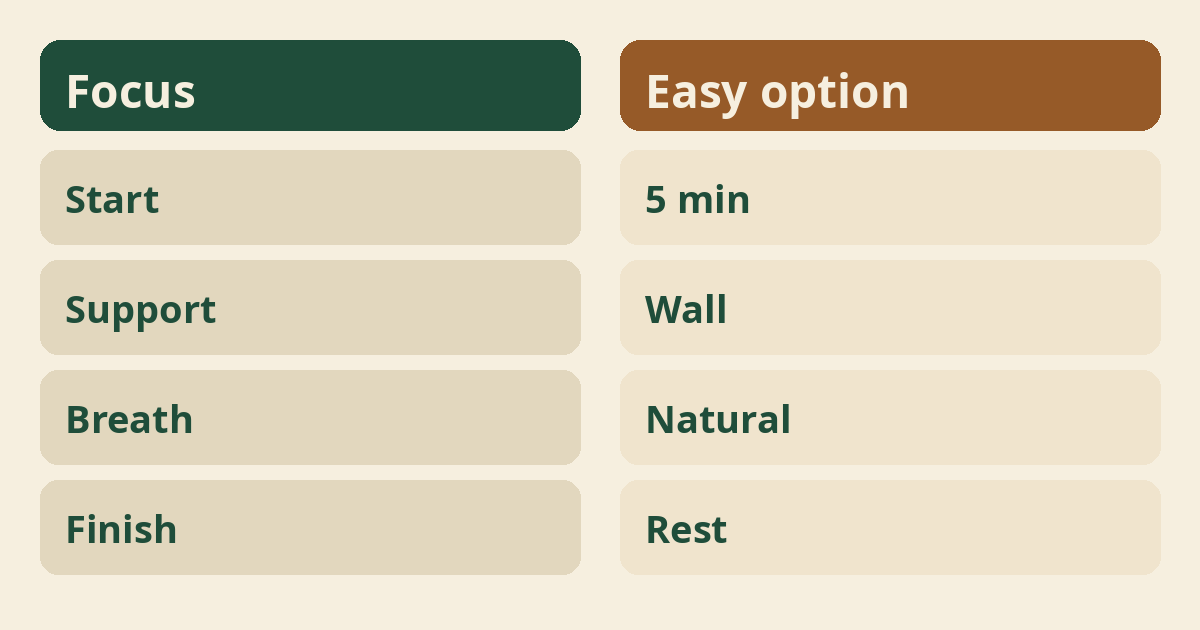
A good first practice is short, comfortable, and easy to stop. Choose a few simple movements on a day when you are not rushing into a hard climb. If you feel unusually tired, sore, unwell, or distracted, rest instead or keep the practice to relaxed breathing.
Choose your timing
Try yoga on a rest day or after light activity, when you can pay attention to your movement. Avoid a long or intense routine just before a difficult climbing session if it leaves you tired or changes how your body feels. There is no single best time; your comfort and your doctor’s guidance come first.
Set up your space
Use a stable, uncluttered area where you can step and lie down safely. A mat is optional; a non-slip floor and enough room may be enough for basic poses. Keep water nearby and make sure pets, furniture, or loose gear will not interrupt a balance exercise.
Begin with a check-in
Pause before moving and notice how you feel that day. Check for new pain, marked soreness, dizziness, or unusual fatigue, and do not try to stretch through them. If symptoms concern you, stop and ask a health professional what activity is suitable.
Step 1: Stand easily
Begin with a comfortable upright stance and let your arms rest by your sides. Keep your knees soft and your weight spread across both feet without gripping the floor with your toes. Mountain Pose for beginners offers another simple way to explore a steady standing position.
Step 2: Move the spine gently
Use a small, unforced movement to make the start of your practice feel gradual. On hands and knees, try a few easy rounds of Cat-Cow, moving only as far as feels comfortable. Keep the neck relaxed and let the movement follow your breathing; skip it if kneeling or spinal movement is not right for you.
Step 3: Choose a resting pose
A supported resting shape can give you a quiet pause between movements. You might sit back toward your heels only if your knees and ankles are comfortable, or choose another seated position. Child’s Pose for beginners describes one option, but no pose is required if it does not suit you.
Step 4: Explore a standing fold
A small hip hinge can let you notice the back of your legs without pulling hard. Bend your knees, keep your hands on your thighs or a support, and stop well before strain. There is no need to touch your toes; a comfortable upright position is just as valid.
Step 5: Practice a simple balance
A supported balance pose can help you pay attention to where your weight is. Stand near a wall or sturdy chair and keep one hand within reach of it. Lift a heel or shift weight gently before trying anything more challenging; use the support freely and stop if you feel unsteady.
Step 6: Finish on the floor
End with a few relaxed breaths in a position that feels easy to leave. You may lie on your back with knees bent or sit comfortably, as long as getting down and up feels safe. Take your time and skip floor poses if they aggravate a concern or make you feel dizzy.
Keep the range small
A small range of motion is enough for a beginner practice. Move until you notice a mild stretch or simple effort, then pause rather than pushing deeper. Do not bounce, compete with another climber, or use a partner to press you into a pose.
Breathe without strain
Let breathing stay quiet and natural throughout the movements. You can breathe in and out through the nose if that is comfortable, but there is no need to hold your breath or take unusually deep breaths. If breathwork feels uncomfortable, return to ordinary breathing and stop the exercise.
Try belly breathing
Gentle belly breathing is an option for a seated or resting pause. Let the abdomen soften as you breathe, without pushing it out or trying to control every breath. Belly breathing for beginners explains a simple approach; skip it if focusing on breathing makes you uncomfortable.
How long should you practice?
Start with about five to ten easy minutes and adjust to how you feel. A short practice is enough to learn a few movements; it does not need to become a workout. End sooner if you feel pain, strain, light-headedness, or a level of effort that seems wrong for you.
How often should you practice?
Begin with one short session a week and change the frequency only if it suits you. More sessions are not automatically better, especially when climbing, work, sleep, or recovery already take energy. How often should you do yoga? can help you think through a gradual schedule.
On climbing days
Keep any yoga on a climbing day gentle and brief unless your clinician has advised otherwise. A few easy movements may feel more suitable than a challenging flow, but skip yoga if you are fatigued or uncomfortable. Notice how you feel before climbing and do not use a pose to test a painful area.
On rest days
A rest day can include quiet movement, complete rest, or both. Yoga should not turn a planned recovery day into another hard session. If you feel worn down, choose rest; if you move, finish feeling comfortable rather than depleted.
Common mistake: forcing range
Pushing deeper because a pose looks simple can make the practice less comfortable. Keep joints soft and use a shorter range than you think you need. Stop at sharp, increasing, or unusual discomfort instead of treating it as a sign that the pose is working.
Common mistake: copying advanced poses
An advanced climber’s yoga routine may not fit your body or experience. Use beginner options and make support part of the pose rather than a fallback. Balance, flexibility, and strength vary from person to person, so comparison is not a useful measure of progress.
Common mistake: doing too much
Adding a long routine to an already demanding training week can leave less room for rest. Keep the first few practices simple and review how you feel later that day and the next day. If a movement repeatedly causes discomfort, stop it and get individual guidance.
Use props if helpful
Props can make a pose easier to adapt to your comfort. A folded blanket, cushion, wall, or sturdy chair may offer support, but no special equipment is needed. Yoga props for beginners has ideas for using ordinary supports safely.
Work with a qualified teacher
A teacher who understands beginner needs can offer options and help you avoid being pushed. Tell the teacher that you climb and mention relevant limitations before class. A teacher is not a substitute for medical care, and you can decline hands-on adjustments or any pose that does not feel appropriate.
Who should be careful?
Ask your doctor before starting if you have an active injury, a health condition, recent surgery, persistent pain, or exercise restrictions. This doctor-first step matters even when a routine is described as gentle. Follow your clinician’s instructions, and do not assume a general yoga article can assess your personal risks.
Stop and seek advice
Stop the practice if you develop pain, numbness, dizziness, unusual shortness of breath, or another concerning symptom. Do not restart simply to see whether the symptom returns. Contact a health professional for advice, and seek urgent care for severe or sudden symptoms according to local guidance.
Is yoga a treatment?
No, this beginner routine is not a treatment for an injury or health condition. Yoga cannot diagnose what is causing discomfort, and this article does not replace care from a qualified clinician. Use it only as general movement education if your doctor says activity is appropriate for you.
Possible benefits
Many people find that gentle yoga feels calming or helps them notice movement and breathing, but results vary. These experiences are subjective and should not be taken as medical outcomes or a guarantee of better climbing. National Center for Complementary and Integrative Health offers general information about yoga and health; discuss personal questions with your doctor.
Progress at your pace
Progress can mean becoming more familiar with a simple routine, not reaching a deeper pose. Repeat only movements that feel comfortable and change one thing at a time, such as adding a minute or a gentle variation. If you feel worse afterwards, reduce the practice or stop and seek advice.
A climber’s mindset
Treat the practice as a chance to pay attention, not another grade to send. Use curiosity rather than judging your flexibility, balance, or breathing. It is fine to leave a pose early, take a rest, or decide that yoga is not a good fit for you now.
Adapt for balance
Balance practice should be supported, steady, and optional. A wall or chair can make it easier to stay within a comfortable challenge, and you can keep both feet on the ground. Yoga for balance for beginners shares beginner ideas without requiring a one-leg pose.
Adapt for shoulders and wrists
Keep arm-bearing poses optional if your wrists or shoulders are sensitive. You can sit, stand, or rest instead of loading your hands on the floor. Do not test a sore area with repeated weight-bearing poses, and ask your clinician for guidance if you have pain or restrictions.
A simple mini-routine
A beginner mini-routine can be standing, a gentle spinal movement, a supported balance shift, and a quiet finish. Spend a few breaths on each choice and leave out anything unsuitable. The sequence is only a menu, not a required program; your comfort and clinician’s advice take priority.
How to notice a good fit
A suitable practice should feel manageable during and after it. Notice whether you can breathe normally, move without forcing, and stop easily. If you feel more pain or an unusual symptom, discontinue the routine and ask a health professional what to do.
When to skip yoga
Skip the session when you are ill, unusually exhausted, in pain, or advised to avoid exercise. A missed session does not need to be made up later. Rest is a reasonable choice, and returning should depend on how you feel and any professional guidance you have received.
Keep the practice personal
The best routine is one that respects your needs and limits. Some climbers may enjoy yoga, while others may prefer a walk, rest, or another form of gentle movement. There is no requirement to add yoga to climbing, and it should not replace advice tailored to you.
Where to read next
For a calm, beginner-friendly start, Ranjana Sinha’s Begin Where You Are is written for people who want simple steps. Our guide to starting a home yoga practice adds a gentle routine you can follow at home.
Frequently asked questions
Do climbers need to be flexible to try yoga?
No, start with easy movements and use a comfortable range.
Should I do yoga before climbing?
Keep it brief and gentle, and skip it if it leaves you tired or uncomfortable.
Can I practice yoga with an injury?
Ask your doctor first and follow their individual guidance.
Do I need a yoga mat?
No, a stable non-slip space and optional support may be enough.
How long should a beginner session last?
Try five to ten easy minutes and stop sooner if anything feels wrong.
The bottom line
Start with a few calm movements, keep your doctor’s advice in view, and let comfort guide whether yoga belongs in your climbing routine.