
Yoga can give cricket players a calm way to practise gentle movement, balance, and body awareness alongside their usual training. A beginner routine does not need to be long or athletic. Start with easy shapes, steady breathing, and a range of motion that feels comfortable today. This guide explains how to build a simple practice around cricket, what to leave out, and when to ask a doctor or qualified health professional before beginning.
This article is general education, not medical advice. Check with your doctor before starting if you have a health condition, recent surgery, ongoing pain, or another concern.
What is yoga for cricket players?
It is a gentle movement practice that can sit beside cricket training. Yoga uses positions, breathing, and attention to help a person explore comfortable movement. A cricket-focused session can include standing, sitting, and balance shapes without copying a demanding workout. The goal is to practise with care, not to prove flexibility or replace sport-specific coaching.
Why do some players try yoga?
Players may use yoga to add variety and quiet focus to a training week. A slow session gives time to notice posture, breathing, and how movement feels after practice. Some people enjoy having a routine that is different from batting, bowling, or fielding drills. Experiences vary, so treat yoga as an optional support rather than a promise of better performance.
Yoga’s place beside cricket
Yoga works best as an addition to a player’s normal plan. Keep cricket coaching, strength work, rest, and advice from a clinician in their proper roles. Tell a coach about a new routine if it changes the weekly workload. A few gentle movements may fit well, while a hard or unfamiliar class could add more effort than expected.
What movements does cricket involve?
Cricket asks players to move in several directions and respond to changing play. Batting, bowling, wicketkeeping, and fielding each have different demands, and players have different roles. Do not assume one yoga sequence suits every cricketer. Choose easy movements that feel relevant to your own practice, and ask your coach how to fit them around planned training.
How should a beginner start?
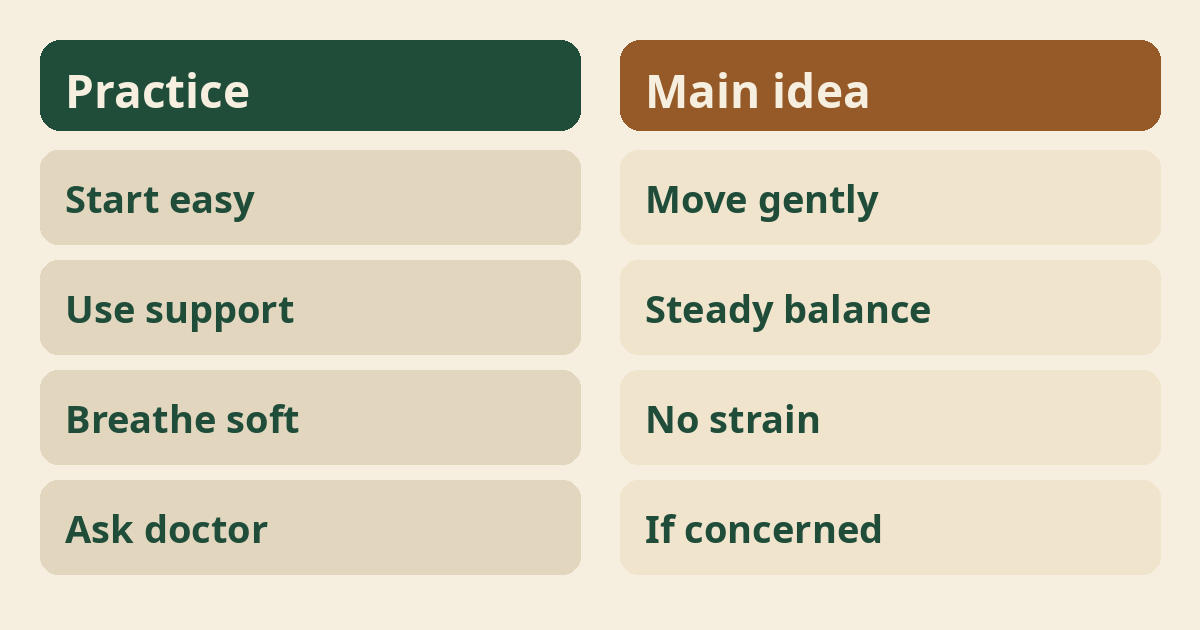
Begin with a short, easy session on a stable surface. Pick a quiet space where you can stand and sit without bumping into furniture. Wear clothes that let you move, and keep water nearby if you need it. Start with a few familiar shapes, use a comfortable pace, and stop if something feels sharp, unusual, or worrying.
Step 1: Set up safely
Make the space clear before you begin moving. Place a non-slip mat or a firm surface underfoot and move bags, bats, and other equipment out of the way. Keep a chair close for support if balance is uncertain. Leave enough room to stretch your arms without touching a wall or another person.
Step 2: Check in with your body
Notice how you feel before choosing the movements. Stand quietly for a moment and observe whether you feel tired, stiff, or unsettled. Keep your first practice especially gentle after a long match or demanding training day. A player does not need to push through discomfort to count a session as useful.
Step 3: Warm up gently
Start with small, unhurried movements rather than deep stretches. Roll the shoulders in an easy range, shift weight between the feet, and bend and straighten the knees lightly if that feels comfortable. A few rounds of Cat-Cow Pose can offer a simple way to explore the spine. Keep each action smooth and avoid forcing an end position.
Step 4: Add a standing shape
Use a steady standing pose to practise balance and attention. Stand with feet set at a comfortable width and let the arms rest by your sides. Keep your gaze on one still point, and soften the knees instead of locking them. Mountain Pose for beginners can be a simple place to start without chasing a dramatic shape.
Step 5: Finish on the floor
Use a supported floor position to end at an easy pace. Sit on a folded blanket or lie down if getting to the floor feels comfortable and safe for you. Keep the movement small and leave room to change position whenever needed. A supported Child’s Pose is one option, but it is fine to choose a different resting position.
Use breathing without strain
Let breathing stay quiet and natural throughout the session. Notice the air moving in and out without holding it or trying to take the biggest breath possible. If a breathing exercise feels uncomfortable, stop and return to ordinary breathing. Gentle belly breathing is an optional practice, not a test of lung capacity.
Try simple balance work
Balance practice should feel steady and supported. Stand beside a wall or chair and shift weight slowly from one foot to the other. Keep both feet down at first, and only lift a heel or foot if that feels secure. Beginner balance poses can be adapted, and using support is sensible rather than a failure.
Give the hips room
Choose hip movements that stay within a comfortable range. Sitting cross-legged is not required, and knees do not need to move toward the floor. Try a chair or cushions if sitting low feels awkward. A gentle Butterfly Pose may be an option, but skip it if it creates discomfort or strain.
Keep shoulder movement easy
Move the shoulders slowly and avoid forcing the arms overhead. Let the arms travel only as far as feels natural, keeping the neck relaxed. Cricket players who bowl or throw may prefer a smaller range on a tired day. If a movement causes pain or feels different from ordinary stiffness, stop and seek appropriate advice.
Approach hamstring stretches gently
A stretch should feel mild, not sharp or forced. Keep the knees a little bent and hinge only a small amount if you try a standing fold. There is no need to reach the toes or copy another player’s shape. Use a chair or wall for balance, and come upright slowly if you feel light-headed.
Fit practice around training
Place yoga where it does not crowd out recovery or coaching. A light session on a rest day may feel different from one after a match, so adjust the effort accordingly. Avoid treating every practice as a workout to finish. If the schedule already feels full, shorten the session or skip it and follow your coach’s plan.
How long should a session be?
A beginner can start with a few minutes and build only if it suits them. There is no required minimum that makes a session count. Try a brief sequence of comfortable movements, then pause and notice how you feel afterwards. If you have time and energy, add a little more on another day rather than stretching the first session to meet an arbitrary target.
How often should players practise?
Choose a pace that fits your training, rest, and personal needs. One short practice can be enough to learn the basics before deciding whether to repeat it. Keep a simple note of what you tried and how it felt, without treating the notes as a medical record. For general ideas, see how often beginners practise yoga.
Common beginner mistakes
Forcing a pose is a common way to make practice less comfortable. Do not compete with teammates, chase a deep stretch, or hold your breath to stay in shape. Avoid adding a demanding sequence immediately before or after hard training. A beginner routine should be adjustable, and leaving a movement out is always a valid choice.
Use props for comfort
Props can make a position easier to adjust. A firm chair, folded blanket, or block can bring support closer without requiring a person to reach or balance beyond their comfort. Keep props stable and use them on a clear surface. Beginner yoga props can be simple household items when used safely.
Who should be careful?
Ask a doctor first if a health concern could affect movement or balance. This includes a recent operation, a long-term condition, ongoing pain, dizziness, or uncertainty about safe activity. A doctor or qualified health professional can offer advice based on your situation. Stop a pose that causes pain, numbness, unusual breathlessness, or feeling faint, and get appropriate help.
Is yoga a treatment?
No, this beginner routine is not a treatment. It cannot diagnose or manage an injury or health condition, and this article does not replace advice from a doctor or physiotherapist. If you have symptoms or need a recovery plan, speak with a qualified professional. Keep the yoga session gentle and separate from any prescribed care.
Possible benefits, with care
Many people find gentle yoga calming or useful for noticing how they move. Experiences differ, and a person may enjoy some parts while finding other parts unsuitable. Research summaries from the National Center for Complementary and Integrative Health describe what is known about yoga and health; they do not guarantee a result for a particular player. Keep claims modest and ask a clinician about personal health questions.
Progress at your own pace
Add new movements only when the current ones feel manageable. Repeat a simple sequence before making it longer or more complex. Change one thing at a time, such as adding a supported balance shape, so it is easier to notice how the change feels. Progress is not measured by how far a stretch goes or whether a pose looks impressive.
Choosing a teacher
Look for a teacher who welcomes questions and offers options. Tell the instructor that you play cricket and are new to yoga. Ask whether the class includes beginner choices and whether you can rest or skip a pose. A teacher should not pressure you to ignore pain or follow a movement that does not feel appropriate.
Keep a useful mindset
Treat practice as exploration, not a performance. Bodies differ, and the same player may feel different from one day to the next. A pose does not need to look like a picture to be worthwhile. Focus on steady movement and comfortable breathing, and allow yourself to stop or change position whenever you choose.
After a cricket session
Let your energy and comfort guide whether you practise afterwards. After a long game, a quiet rest may be a better fit than extra movement. If you do choose yoga, keep it brief and gentle rather than using it to push through fatigue. Drink and eat according to your usual needs, and follow any guidance from your coach or clinician.
Before a match
Do not use a new or demanding routine right before an important game. If you already have a familiar warm-up approved by your coach, keep that plan. A few easy movements may help you settle, but avoid testing unfamiliar poses under time pressure. Match preparation should remain predictable and specific to your team and role.
Listen to signs of fatigue
Tiredness is a reason to reduce effort or rest. Pause if your balance becomes unsteady or your attention fades. Do not interpret soreness after training as a cue to stretch harder. If a symptom is new, severe, or worrying, stop and ask a qualified health professional what to do next.
Make home practice easy
A small repeatable routine is easier to fit into ordinary life. Choose a time and place that do not clash with school, work, family, or cricket plans. Keep the mat or chair ready if that helps, but do not make equipment a condition for starting. Missing a day is not a problem; return when it suits your schedule.
What if a pose feels difficult?
Change the shape or leave it out if it does not feel right. Try a smaller movement, use a stable prop, or rest instead. A pose is optional, and no single position is essential for a useful beginner session. If difficulty comes from pain or a health concern, do not keep experimenting; ask a doctor or qualified professional.
Can teenagers play and practise yoga?
A young player should use age-appropriate instruction and adult support. Parents or guardians can help choose a suitable class and check that the space is safe. Keep the session gentle, avoid competitive stretching, and follow the young person’s comfort and interest. A coach or healthcare professional can help answer questions about activity in an individual situation.
Can yoga replace cricket warm-ups?
No, yoga should not replace a coach’s sport-specific warm-up. Cricket teams may have routines designed for their practice and match setting. Keep following the coach’s instructions, and ask before changing a warm-up. Yoga can be a separate personal practice when it fits the schedule, but it should not override team guidance.
Build a simple sequence
A short sequence can include a check-in, a few easy poses, and rest. For example, begin standing, move the shoulders gently, practise a supported balance shift, then choose a comfortable floor or chair position. Keep the steps familiar and skip anything unsuitable. Finish with ordinary breathing and a moment to notice whether you feel ready to return to your day.
Questions to ask yourself
Ask whether the practice feels comfortable and fits today’s plan. Check if you can breathe normally, keep balance with support, and stop easily when needed. If the answer is no, make the session smaller or leave it for another time. These simple checks help a beginner make choices without turning yoga into a test or competition.
Keep expectations realistic
Yoga is one optional part of a broader approach to sport and wellbeing. It cannot guarantee improved cricket skills, a particular body change, or a specific health result. Skills develop through appropriate coaching and practice, while rest and personal health needs matter too. Keep what feels useful, drop what does not, and ask qualified people for advice on individual concerns.
Where to read next
For a calm, beginner-friendly start, Ranjana Sinha’s Begin Where You Are is written for people who want simple steps. Our guide to starting a home yoga practice adds a gentle routine you can follow at home.
Frequently asked questions
Is yoga suitable for every cricket player?
No single routine suits everyone, so choose gentle options and ask a doctor about personal health concerns.
Should I stretch deeply before bowling?
Avoid forcing a deep stretch, and follow your coach’s warm-up plan.
Do I need yoga equipment?
No, a stable chair or clear floor space may be enough for simple movements.
Can yoga improve my cricket performance?
Results vary, and yoga cannot promise a change in performance.
What should I do if I feel pain?
Stop the movement and ask a qualified health professional for advice.
The bottom line
Start gently, follow your coach’s plan, and ask a doctor about any health concern before making yoga part of your cricket routine.

