Gentle yoga after driving can give tight shoulders a chance to move without forcing a stretch. Once you have parked safely and finished your journey, a few small movements may feel more inviting than a demanding workout. Start with supported sitting, relaxed breathing, and easy arm movements rather than deep neck stretches. If you have pain, a recent injury, or symptoms that keep returning, speak with a doctor before trying a routine. The goal is comfortable movement, not pushing through discomfort.
This article offers general education and is not medical advice or a personal exercise plan. Check with a doctor before starting if you have pain, an injury, a medical condition, or concerns about which movements are safe for you.
What is post-driving shoulder yoga?
It is a short yoga practice that explores gentle shoulder and upper-body movement after a drive. You do not need a mat, special clothes, or a large range of motion. Think of it as a quiet transition out of the driving position, with room to stop whenever something feels wrong.
Why can shoulders feel tight after driving?
Holding your arms in one position may leave the shoulder area feeling tired or stiff. A long journey can involve gripping, reaching, and staying alert without much change in position. That feeling does not identify a specific problem, and ongoing or painful symptoms deserve medical assessment rather than an assumed explanation.
Why do people try this practice?
Many people want a gentle way to change positions after sitting behind the wheel. A small routine can also mark the shift from a busy journey to home or work. You are not trying to reverse every effect of the drive or make your shoulders feel different on a deadline.
When should you begin?
Begin only after you have parked safely, turned off the vehicle, and found a suitable place to practice. Never stretch while driving or while stopped in traffic. If you step outside, choose stable ground well away from moving vehicles, and leave the routine until later if the surroundings feel unsafe.
How do you start?
Start by checking whether you feel well enough for gentle movement today. Notice pain, dizziness, unusual weakness, or any change from your usual state before choosing a position. If you feel merely tired and otherwise comfortable, begin with a small movement rather than testing your biggest stretch straight away.
Step one: Find supported sitting
Sit on a stable chair with your feet resting comfortably on the floor. Let your hands rest on your thighs and allow the chair to support you without bracing your whole body. A parked car seat may feel cramped, so move to a more suitable chair when one is available.
Step two: Let the hands soften
Open your hands gently and allow your fingers to relax before moving your shoulders. Rest your forearms if holding them up feels tiring, and avoid squeezing your palms into fists. This simple pause helps you notice whether you are still gripping as though you were holding the steering wheel.
Step three: Try small shoulder rolls
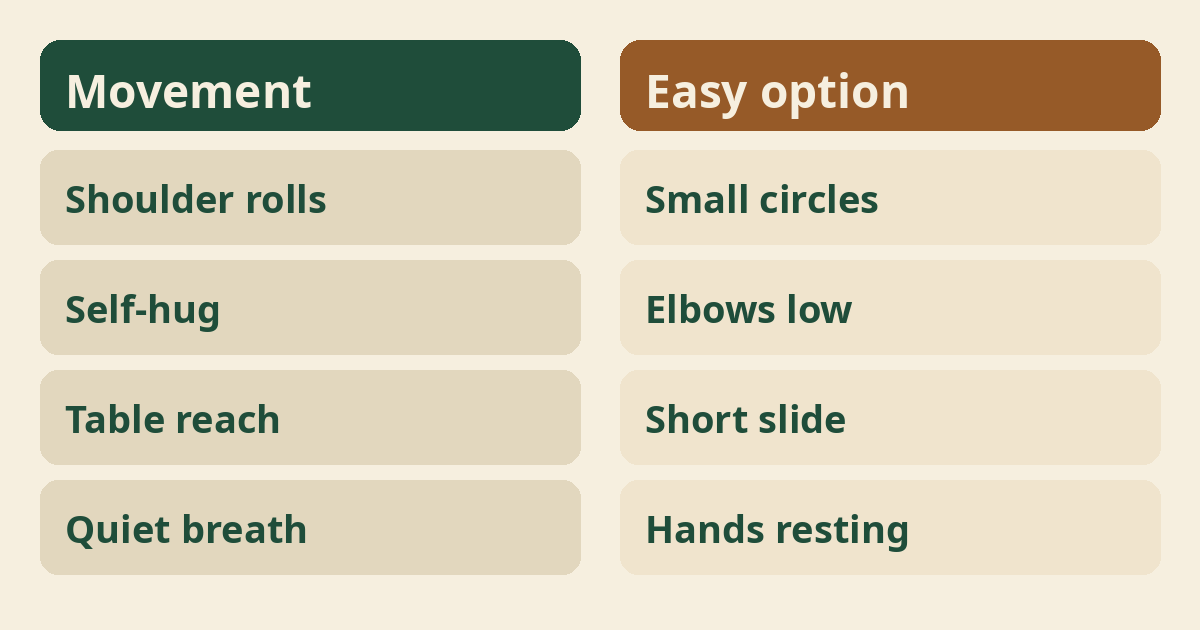
Make slow, small shoulder circles without pulling your head into the movement. Lift the shoulders only a little, let them travel back comfortably, then allow them to settle. Try a few easy circles and pause; leave this step out if it produces pinching, pain, or an unpleasant catching feeling.
Step four: Open the arms gently
Turn your palms slightly forward with your elbows close to your sides. Allow a little space across the front of your chest without forcing your shoulder blades together. Keep your ribs quiet rather than arching your lower back, and return your hands to your thighs whenever the position starts to feel effortful.
Step five: Explore a small self-hug
Place your hands lightly on opposite upper arms for a loose, comfortable self-hug. Keep your elbows low enough that your shoulders do not strain, and let your upper back broaden without collapsing your chest. Release slowly and change which arm is on top only if both versions feel easy.
Step six: Reach along a table
Slide your hands a short distance forward on a stable table while keeping your feet grounded. Hinge forward slightly from your hips instead of dropping your head or hanging through your shoulders. Keep the reach modest, then slide back; a deeper shape such as puppy pose is not required.
How should you breathe?
Breathe quietly and naturally throughout the movements, without holding your breath. Let your shoulders stay out of the job of making each breath bigger, and skip any breathing method that causes lightheadedness. For a separate introduction, belly breathing for beginners offers another gentle topic to explore without adding strain here.
How far should you stretch?
Use a range that feels easy to enter, remain in, and leave. A stretch does not need to feel intense to belong in a yoga practice. Sharpness, burning, tingling, or numbness are reasons to stop, not signals that you have found a productive edge or should hold the position longer.
Should you stretch the neck too?
Neck movement is optional, and deep neck pulling is unnecessary for this routine. Keep your head comfortably balanced and avoid using your hand to drag it sideways. If a small turn feels smooth, you may explore it gently; see yoga for neck and shoulders as a separate practice, not an extra requirement.
How long should a session last?
A few quiet minutes are enough for an initial session. Try one easy round of the movements instead of holding every shape for a long time. Stop sooner if you feel tired, and remember that finishing a planned sequence matters less than leaving the practice feeling comfortable and steady.
How often can you practice?
Choose a frequency based on comfort rather than a rule that every drive must end with yoga. You might try the routine after an occasional journey and see how you feel later that day. How often to do yoga can help you think about a wider routine without turning this pause into an obligation.
What benefits are reasonable to expect?
Many people find that gentle movement offers a pleasant pause and a sense of easier movement, but results vary. It may also help you notice habits such as gripping or lifting your shoulders. Broader information about yoga is available through National Center for Complementary and Integrative Health, but general yoga guidance does not establish that this particular routine will change your symptoms.
Is this a treatment?
No, this routine is not a treatment for shoulder pain or a diagnosed condition. A feeling of tightness can have different explanations, and a yoga article cannot tell which one applies to you. If symptoms recur, worsen, or affect daily tasks, seek medical advice instead of adding stronger stretches or longer sessions.
Who should check with a doctor first?
Speak with a doctor first if you have shoulder or neck pain, a recent injury, surgery, or a condition affecting movement. Also ask before trying these steps if you have joint instability, altered sensation, or unexplained weakness. Follow any personal movement limits you have been given rather than replacing them with a general online routine.
When is urgent help more important?
Seek urgent medical help for chest pressure, breathlessness, fainting, or sudden arm weakness rather than trying yoga. Shoulder discomfort alongside these symptoms should not be assumed to come from the drive. New severe pain, a visibly changed shoulder shape after injury, or rapidly worsening symptoms also call for prompt medical assessment.
Which props can help?
A stable chair and a firm table are usually enough for this practice. If your feet do not reach the floor, use a secure foot support rather than balancing on your toes. Yoga props for beginners explains support options, but avoid improvised stacks, rolling chairs, and furniture that shifts under pressure.
Can you practice standing?
Standing is an option if you feel steady and have a safe space around you. Keep your feet comfortably apart and soften your knees rather than locking them. The quiet setup in mountain pose can be useful here, but sitting is equally valid and may feel better after a tiring journey.
What are common mistakes?
Forcing the shoulders back, lifting the chin, and chasing a strong stretch can make this pause unnecessarily hard. Another mistake is holding your breath while trying to look upright. Make the shape smaller, support your arms, or stop completely rather than working harder to reproduce a picture of perfect posture.
Should your posture be perfectly straight?
Aim for a comfortable, supported position rather than a rigidly straight spine. You can let the chest feel open without pushing the ribs forward or squeezing the shoulder blades together. Small changes in position are welcome, and there is no need to hold your body still just to prove that you are sitting correctly.
What if one side feels tighter?
Use a smaller range on the tighter side without trying to make both shoulders match. Differences can be ordinary, but new, painful, or persistent changes deserve assessment. Do not pull harder with the other hand, and leave out any movement that feels uncertain until you have suitable advice about it.
Can you do this during a journey break?
You can try a brief version during a proper break in a safe place away from traffic. Walk to a suitable resting area first if that is safe for you, then choose one or two easy movements. Do not use a hard shoulder, fuel lane, or another hazardous area as a yoga space.
Does the driving setup matter?
An awkward reach or unsupported position may be worth reviewing separately from your yoga routine. Adjust the seat and controls only while parked and follow the vehicle’s safety guidance, including airbag clearance. Avoid making changes that compromise your view or control, and do not use yoga as a substitute for a workable driving position.
What if you go straight to a desk?
Change position before settling into another long period of sitting. A short comfortable walk or a quiet seated pause may be enough before you begin work. If you later want a separate movement break, yoga at your desk can provide a different setting without stacking several routines together at once.
Do floor poses belong here?
Floor poses are optional and may be less practical than chair-based movements after driving. You do not need to kneel, bear weight through your hands, or lower yourself onto a mat to complete this practice. Choose familiar, comfortable options rather than adding floor work simply because a routine is called yoga.
How can you progress?
Progress by becoming more comfortable and attentive before increasing movement or duration. Repeat the same small routine until it feels familiar, then consider adding one gentle movement at a time. A broader practice such as yoga for flexibility belongs in its own session if adding it here makes the break demanding.
When can a teacher help?
A qualified yoga teacher can help you adapt a comfortable practice once medical concerns have been addressed. Explain that your shoulders feel tight after driving and describe which movements feel awkward without asking the teacher to diagnose them. Look for someone who welcomes smaller ranges, supported positions, and your decision to skip a movement.
What mindset makes practice easier?
Treat the routine as an invitation to notice your body, not a test of how loose you can become. Some days your shoulders may feel unchanged, and that does not mean you should push harder. Give yourself permission to finish after one movement or choose rest instead when the journey has left you drained.
How should you finish?
Finish with your hands supported and a few ordinary breaths before returning to daily tasks. Check that you feel steady when you stand, and rise slowly if you have been sitting for a while. There is no need to test your shoulders with a large circle or a heavy lift to see whether the practice worked.
What if tightness keeps returning?
Repeated tightness that worries you deserves a doctor’s assessment rather than an ever-longer yoga sequence. Note when it happens, whether it involves pain, and whether daily tasks feel different so you can explain it clearly. Until you have advice, avoid using strong stretches to chase a feeling that keeps coming back.
Where to read next
For a calm, beginner-friendly start, Ranjana Sinha’s Begin Where You Are is written for people who want simple steps. Our guide to starting a home yoga practice adds a gentle routine you can follow at home.
Frequently asked questions
The bottom line
After driving, choose a safe place, keep movements small, and let comfort rather than intensity guide your next step.