Kapalbhati is a forceful breathing practice, so beginners should start slowly and check with a doctor first if they have any health concerns. It uses quick, sharp exhales through the nose with a passive inhale. Many people like it, but it is not right for everyone. This guide explains what it is, who should be careful, how to try a mild version, and a gentle breathing option that is easier on the body.
This article is general education only and is not medical advice. If you have a heart, lung, blood pressure, eye, hernia or other health condition, or if you are pregnant, talk with your doctor before trying forceful breathing.
What is kapalbhati?
Kapalbhati is a yogic breathing practice made of short, quick exhales. The word is often translated as “skull shining.” The belly pulls in sharply on each exhale, and the inhale happens on its own.
Why do people practice it?
People practice it because it feels energizing and wakes up the mind. Some like the focus it brings before sitting still. Others enjoy the active rhythm. Experiences differ from person to person.
Why does it need caution?
It needs caution because the breath is fast and forceful. Quick, strong exhales can change how you feel in seconds. Some beginners get dizzy, tense or lightheaded when they push too hard or go too long.
How is it different from calm breathing?
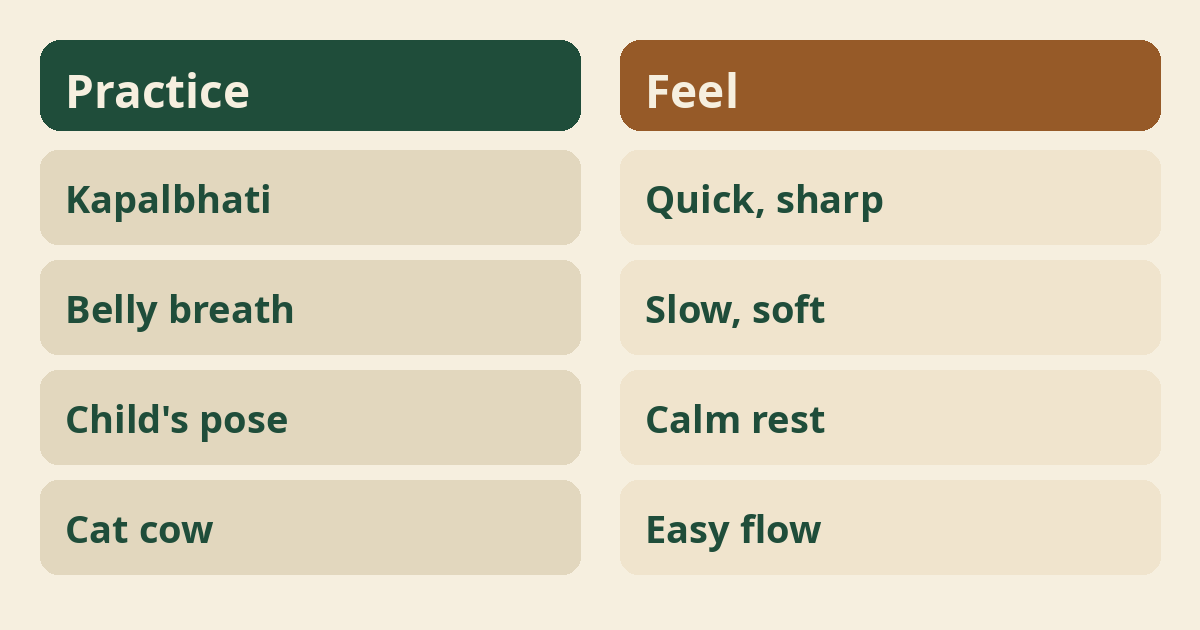
Calm breathing is slow and smooth, while kapalbhati is quick and sharp. Slow breathing asks you to soften. Kapalbhati asks the belly to work. That is why the two feel so different, and why one is gentler for new students.
Who should be careful?
People with certain health conditions should be careful and ask a doctor first. This includes anyone with heart or blood pressure concerns, lung conditions, a hernia, eye pressure issues, recent surgery, or ongoing stomach trouble. When in doubt, ask before you try.
Is it safe during pregnancy?
Pregnant women should skip forceful belly breathing unless a doctor and a trained teacher say otherwise. The strong belly action is not a good fit for most pregnancies. Gentle options are usually more suitable. See prenatal yoga vs regular yoga for more on this.
What about periods and digestion?
If you feel unwell, tired or crampy, a softer breath is usually the kinder choice. Listen to your body on those days. Practicing on a very full stomach is also uncomfortable, so wait a few hours after a meal.
Is it a treatment for any condition?
No, kapalbhati is not a treatment for any condition. It is a breathing exercise, not medicine. If you have a health concern, a doctor is the right person to guide you. Yoga can sit beside that care, not replace it.
What are the possible benefits?
Many people find that it feels refreshing and helps them feel alert. Results vary, and no one should expect a fixed outcome. For general background on breathing and relaxation practices, see [[nccih|the National Center for Complementary and Integrative Health]].
Should you learn it from a teacher?
Yes, a trained teacher can show you the movement and watch your pace. A teacher can spot tension in your neck or chest that you may miss. A short in-person lesson is worth more than many videos.
How do you get ready?
Sit comfortably on an empty or light stomach with a tall spine. Use a chair or the floor. Loosen your clothes at the waist. Keep your shoulders soft and your jaw relaxed. A quiet room helps.
Do props help?
Yes, a cushion or folded blanket can make sitting easier. If your hips are tight, raise them a little so your knees sit lower. A chair also works well. See yoga props for beginners for ideas.
Step 1: Find your seat
Start by sitting tall and still. Rest your hands on your knees. Close your eyes or look softly down. Take three slow breaths to settle in before anything else.
Step 2: Feel the belly
Place one hand on your lower belly and notice it move. Breathe in through the nose and let the belly rise. Breathe out and let it draw in. This is the base of the practice.
Step 3: Try one gentle pulse
Make one small, soft exhale through the nose and let the inhale happen by itself. Do not force the inhale. Pause and breathe normally. Repeat a few single pulses with plenty of rest in between.
Step 4: Build a tiny round
Link a few soft pulses together, then stop and breathe normally. Ten gentle pulses is plenty for a first try. Keep the face and shoulders calm. If anything feels off, stop at once.
Step 5: Rest and notice
After each round, sit quietly and watch your natural breath. Notice if you feel clear, shaky or tired. This check-in tells you if the pace was right. Resting is part of the practice.
Step 6: Stop with care
End the practice by returning to slow breathing before you stand up. Take your time getting up. Move slowly, especially if you felt any dizziness. Sip some water afterward if you like.
How should the breathing feel?
The breath should feel light and easy, never harsh. The exhale is short and quiet. The inhale is soft and passive. If you hear loud snorting or feel strain in the throat, slow down.
How long should a session last?
Keep early sessions very short, around a minute or two in total. That includes rests. It is better to do a little and feel good than to push and feel dizzy. Add time only when it feels easy.
How often should you practice?
A few times a week is a sensible start for most beginners. Daily practice is not required. Give your body time to adjust. For general pacing ideas, see how often should you do yoga.
What are common mistakes?
The most common mistake is going too fast and too hard. Others include forcing the inhale, lifting the shoulders, scrunching the face, and skipping rests. Slower is better when you are learning.
What should you do if you feel dizzy?
Stop right away and return to normal breathing. Sit or lie down until you feel steady. Do not push through. If dizziness keeps coming back, speak with a doctor before trying again.
Is there a gentler option?
Yes, belly breathing is a calm, gentle option for almost everyone to try. It uses the same belly movement without the force. Learn it in belly breathing for beginners.
How do you do gentle belly breathing?
Breathe in slowly through the nose and let the belly rise, then breathe out slowly. Count to four on the inhale and four to six on the exhale. Keep it smooth. Do this for a few minutes while seated or lying down.
Can movement help you prepare?
Easy stretches can loosen the body before you sit for breathing. A few slow rounds of cat cow pose warm up the spine. Rest in child’s pose afterward if you like.
Can you practice at a desk?
Yes, a few calm breaths at a desk are a simple reset. Keep it gentle and skip forceful pulses in public spaces or at work. See yoga at your desk for easy ideas.
How can you progress safely?
Progress by adding small amounts of time only after several comfortable weeks. Let your teacher guide any changes. If a stage feels hard, stay where you are. There is no race and no prize for speed.
What mindset helps most?
A patient, curious mindset helps more than effort. Treat each session as an experiment, not a test. Notice what you feel without judging it. Calm attention is the real skill here.
Can it be part of a stress routine?
It can be one small part, but calm breathing often suits stress better. When you feel tense, slow breaths tend to feel more soothing than fast ones. See yoga for stress relief for gentle ideas.
When should you talk to a doctor?
Talk to a doctor before starting if you have any health concern, and again if symptoms appear. Chest pain, fainting, strong headaches or shortness of breath are reasons to stop and get advice. Do not wait to see if they pass.
What if you want to keep going?
Keep your practice mild and steady, and let your teacher set the pace. Many people find a simple routine of calm breathing, a few stretches and a short sit is plenty. Enjoy the practice you can do comfortably.
Where to read next
For a calm, beginner-friendly start, Ranjana Sinha’s Begin Where You Are is written for people who want simple steps. Our guide to starting a home yoga practice adds a gentle routine you can follow at home.
Frequently asked questions
Can beginners do kapalbhati? |
Some can, in very mild form with a teacher, but anyone with health concerns should ask a doctor first.
Is kapalbhati the same as belly breathing? |
No, belly breathing is slow and smooth, while kapalbhati uses quick, forceful exhales.
What should I do if I feel lightheaded? |
Stop, breathe normally, and sit or lie down until you feel steady.
Can I practice kapalbhati every day? |
Most beginners do well with a few short sessions a week rather than daily practice.
What is a gentle alternative? |
Slow belly breathing with a longer exhale is a calm option that most people can try.
The bottom line
Go slowly, stay curious, and choose the gentle breath whenever the forceful one does not feel right.