
A good beginner yoga mat is about 4 to 6 mm thick, long enough for your body, and grippy enough that your hands and feet do not slide. That is the short answer. Everything else, material, weight, texture and care, is about matching the mat to where and how you will practise. This guide walks you through each choice step by step, so your first mat feels steady, comfortable and easy to keep clean from day one.
This article is general education for healthy adults, not medical advice. If you have a health condition, joint pain, or are pregnant, check with your doctor before starting yoga.
What is a yoga mat?
A yoga mat is a thin, padded, non-slip surface made for floor practice. It gives your body a little cushion and your hands and feet a steady grip. It also marks your own clean space, at home or in a class.
Why does the right mat matter for beginners?
The right mat makes early practice feel safe and steady instead of slippery and sore. When your hands slide or your knees ache, you focus on discomfort instead of the pose. A mat that fits your body lets you relax and learn.
How thick should a beginner mat be?
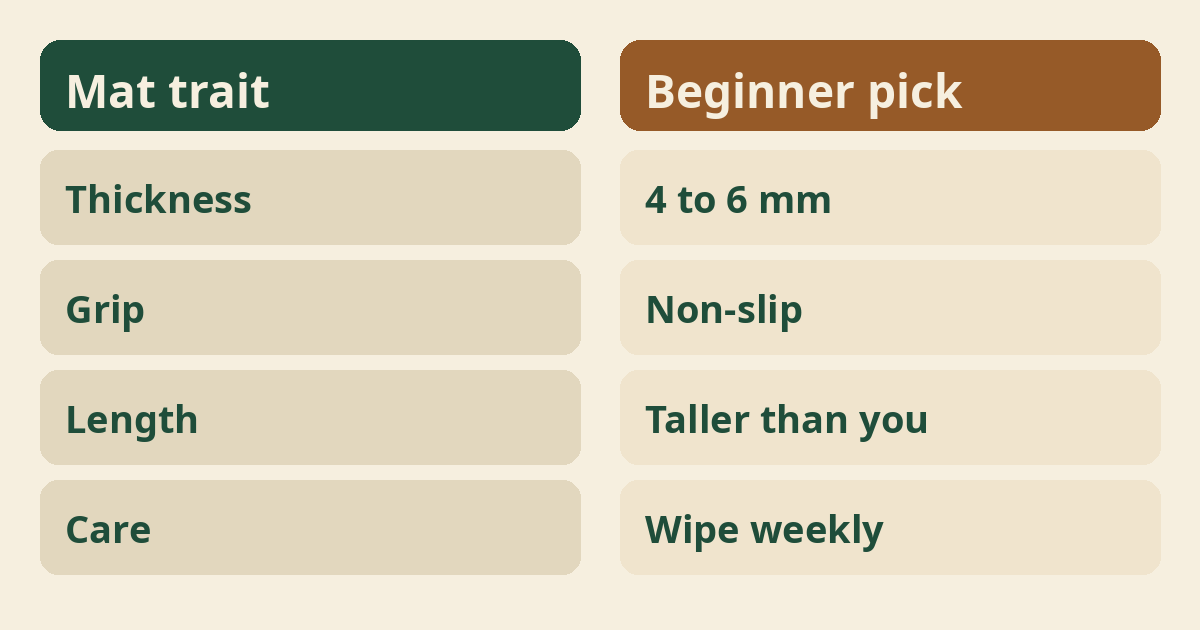
Most beginners do well with a mat that is 4 to 6 mm thick. Thinner mats feel steadier for standing poses but harder on knees. Thicker mats cushion the joints but can feel wobbly. The middle range suits most people starting out.
What size yoga mat do you need?
Your mat should be a little longer than your height and wide enough for your shoulders. A standard mat fits most adults. If you are tall, look for a long version so your head and feet stay on the mat when you lie down.
What is mat grip?
Grip is how well the mat holds your hands and feet without sliding. Good grip matters in standing poses and downward dog, where hands carry weight. A slippery mat makes simple poses feel hard and can knock your confidence.
How do you check a mat’s grip?
Press your damp palm into the mat and push gently forward to feel for sliding. If your hand stays planted, the grip will likely hold in practice. If it slides easily, look for a more textured surface or a stickier material.
Which mat materials are common?
Most mats are made from PVC, rubber, TPE, or cork and cotton blends. PVC is common and grippy. Rubber and cork feel natural and firm. Each material has a different texture, weight and smell, so it helps to touch a mat before choosing one.
What is a sticky mat?
A sticky mat has a surface that lightly holds your skin so you do not slide. This is the classic beginner choice because it forgives sweaty hands. If your palms sweat a lot, stickiness matters more than thickness.
Do you need an eco-friendly mat?
An eco-friendly mat is a personal choice, not a requirement for good practice. Natural rubber, cork and cotton mats appeal to people who want fewer synthetic materials. What matters most is that the mat feels steady under you and you actually enjoy using it.
How heavy should your mat be?
If you carry your mat to class, lighter is better; if it stays home, weight matters less. Travel mats are thin and light but less cushioned. A mat that never leaves your living room can be thicker and heavier without any downside.
Where will you practise?
Decide first whether your mat will live at home, travel to a class, or both. Home practice allows a thicker, heavier mat. Carrying a mat on a commute or scooter makes a lighter roll-up mat the kinder choice for your shoulders.
Step 1: measure your space
Roll out room for your mat where you can stretch your arms fully in every direction. A clear floor area keeps practice calm and safe. Even a small, tidy corner of a room works well as a regular practice spot.
Step 2: pick thickness for your joints
Choose more cushioning if your knees or wrists feel tender on hard floors. You can also fold a blanket under sore spots on a thinner mat. Comfort in kneeling poses is often what keeps a beginner coming back.
Step 3: test the surface feel
Touch the mat and imagine your bare feet and palms on it for a full session. Some surfaces feel smooth, others textured. Neither is better on its own. Pick the feel that makes you want to step on the mat again tomorrow.
Step 4: check the roll and carry
Roll the mat up and see if you can carry it comfortably in one hand. A mat that unrolls flat without curling at the ends is easier to use. Curled edges under your feet are a small but real annoyance in practice.
Step 5: unroll it at home first
Before any class, unroll your new mat at home and try a few slow poses on it. Stand tall in mountain pose and feel the floor through the mat. A quiet first session at home tells you more than any label does.
How long does a yoga mat last?
A well-kept beginner mat often lasts years of regular practice. Life depends on the material, how often you practise, and how you clean it. When the surface peels, crumbles, or turns slippery no matter what, it is time to replace it.
How often will you use the mat?
Buy for the practice you will really do, not the practice you imagine. If you plan short sessions a few days a week, a simple mat is enough. Our guide on how often to practise can help you set a realistic rhythm.
Breathing on your new mat
Calm breathing helps you settle into a new mat and a new habit. Sit comfortably and try a few slow rounds of belly breathing before you move. It turns the mat into a place your mind links with quiet.
Common mistake: choosing by looks only
A pretty mat that slips or cramps you will not get used. Colour is fine to enjoy, but check thickness, length and grip first. Function is what carries you through your first months of practice.
Common mistake: buying too thin
A very thin travel mat can feel punishing on beginner knees. Many new students think thin means professional, then avoid kneeling poses. Start with comfort; you can always add a lighter mat later.
Common mistake: never cleaning it
A mat that is never wiped down collects sweat, dust and smell. A quick wipe after practice keeps the surface grippy and fresh. It also keeps the mat pleasant to unroll, which matters more than people expect.
How do you clean a yoga mat?
Wipe your mat with a damp cloth and mild soapy water, then let it dry fully. Avoid soaking it or leaving it in harsh sun, which can crack some materials. Always dry it completely before rolling it up.
How should you store your mat?
Roll your mat loosely and keep it in a cool, dry spot out of direct sun. Standing it in a corner or sliding it under a bed both work. Tight straps and hot car boots can warp or crack the material over time.
Do you need props with your mat?
Props are optional helpers, and a mat alone is enough to begin. That said, a block, strap or folded blanket can make early poses far more comfortable. See yoga props for beginners if you want simple add-ons later.
Should you put a towel on your mat?
A towel on top of the mat helps only if your hands sweat heavily. For most beginners, the mat’s own grip is enough. If you slide in sweaty sessions, a small hand towel under your palms is a simple fix.
Who should be careful with floor practice?
Anyone with joint pain, balance problems, pregnancy, or a health condition should speak with a doctor first. Extra cushioning and slower transitions help tender knees and wrists. If you have back concerns, read about yoga with a bad back and get medical guidance first.
Is a yoga mat a treatment?
No, a yoga mat is not a treatment, and yoga gear does not fix medical problems. A mat is simply a comfortable, grippy surface for practice. Health conditions belong with your doctor, and any product promising cures deserves scepticism.
What are the benefits of a good mat?
Many people find a comfortable, grippy mat makes practice feel safer and more inviting, though results vary from person to person. A mat you like can make it easier to practise regularly, and regular gentle movement and breathing are widely linked with relaxation and body awareness. National Center for Complementary and Integrative Health Individual experiences differ, so notice how your own body responds.
How do you progress with your mat?
As your practice grows, your mat needs may change, and that is normal. You might add a second mat for travel, or a softer surface for restorative sessions. Let your actual practice guide upgrades, not advertising.
Do you need a teacher to start?
A teacher helps, but you can begin gently at home on your mat. A few classes, in person or online, teach you alignment and safe habits early. Then home practice on your own mat feels familiar instead of uncertain.
What mindset helps beginners?
Treat your mat as a place to practise, not a place to perform. Some days feel steady and some feel stiff, and both are normal. Rolling out the mat is itself the win; everything else builds from there.
Can you practise yoga without a mat?
Yes, yoga can be done on carpet, a rug, or a firm floor, though a mat adds grip and cushion. Bare floors can be slippery for hands and feet. If you start without a mat, choose simple seated and standing poses and keep the surface dry.
Is a thick exercise mat the same as a yoga mat?
No, gym and exercise mats are usually thicker and softer than yoga mats. Extra softness feels nice lying down but wobbles in standing poses. For yoga, choose a mat made for grip and stability rather than maximum padding.
What if your mat feels slippery at first?
Some new mats have a light factory film that wears off after a few sessions or a gentle wash. Wipe the mat with mild soapy water and let it dry fully. If it stays slippery after weeks, the surface may simply not suit sweaty practice.
Which mat suits sensitive knees and backs?
A cushioned 6 mm mat with good grip suits most people with sensitive joints. You can also pad sore spots with a folded blanket during kneeling poses. Restorative shapes like child’s pose feel kinder with that extra softness under you.
Where to read next
For a calm, beginner-friendly start, Ranjana Sinha’s Begin Where You Are is written for people who want simple steps. Our guide to starting a home yoga practice adds a gentle routine you can follow at home.
Frequently asked questions
How thick should a beginner yoga mat be?
Around 4 to 6 mm suits most beginners, balancing cushion and stability.
Can I do yoga on carpet instead of a mat?
Yes, but carpet can bunch and slip, so a mat gives a steadier surface.
How do I stop my hands from sliding on the mat?
Wipe the mat clean, keep palms dry, and use a small towel if you sweat a lot.
How do I clean a yoga mat?
Wipe it with a damp cloth and mild soapy water, then dry it fully before rolling.
How long should a yoga mat be?
Pick a mat a little longer than your height so your whole body fits when lying down.
The bottom line
Choose a mat that fits your body and your real practice, and it will quietly support you every time you roll it out.

