Yoga after walking is a short, gentle stretching routine you do right after a walk to help your body cool down and stay loose. Walking is good for your heart and legs, but it can leave your calves, hips, and lower back feeling tight. A few slow poses and calm breathing can ease that tightness and help you relax. This guide shows you exactly how to do it, step by step, with no experience needed. Want a full routine? Read our complete yoga for weight loss guide.
This article is general education, not medical advice. If you have a health condition, an injury, or pain that does not go away, check with your doctor before starting.
What is yoga after walking?
It is a short set of gentle yoga poses you do after a walk. The goal is simple: cool your body down and stretch the muscles that worked hard. Walking uses your calves, thighs, hips, and lower back again and again. A few minutes of slow stretching tells those muscles they can relax now.
Why do people do yoga after walking?
People do it to feel less stiff and to wind down after their walk. Many walkers notice tight calves or a stiff lower back when they stop moving. A short yoga routine gives the body a soft landing instead of an abrupt stop. Many people also find it a calm moment to enjoy before going back to their day.
Is yoga after walking safe for beginners?
Yes, gentle stretching after a walk is safe for most healthy people. Your muscles are already warm, which makes light stretching easier. The key word is gentle: move slowly and never push into pain. If something hurts in a sharp way, stop and rest.
When should you stretch after a walk?
The best time is within about ten minutes of finishing your walk. Your muscles are still warm then, so they stretch more easily. If you cannot stretch right away, later is still fine. Even a few minutes before bed can help your legs feel lighter.
How do you start yoga after walking?
Start small, with three or four easy poses and slow breathing. You do not need a class, a mat, or any skill to begin. Pick a quiet spot, kick off your shoes if you like, and follow the steps below. Five to ten minutes is plenty for your first sessions.
Step 1: cool down first
Walk slowly for the last few minutes before you stop. Do not go straight from brisk walking into deep stretches. Let your heart rate settle while you stroll at an easy pace. Then stand still, take a few breaths, and begin your routine.
Step 2: start with your breath
Sit or stand tall and take five slow breaths before any stretching. Breathe in through your nose and let your belly rise, then breathe out slowly. This calms your nervous system after the effort of walking. If you want to learn this properly, belly breathing is a great place to begin.
Step 3: loosen your calves
Gently stretch each calf for about half a minute. Place your hands on a wall, step one foot back, and press that heel toward the floor. Keep the back leg straight and lean in softly until you feel a mild pull. Switch sides and repeat.
Step 4: open your hips
Use a slow hip stretch to release the front of your hips. Walking shortens the hip flexors, the muscles at the front of your hips. Step one foot forward into a low lunge with the back knee on the floor, and let your hips sink gently. Hold, breathe, then change sides.
Step 5: release your back
Finish the active part with a soft forward fold for your lower back. Stand with feet hip width apart and let your upper body hang toward the floor with bent knees. Let your head and arms dangle. This takes pressure off the lower back after upright walking.
Step 6: rest at the end
Lie down or sit quietly for one or two minutes to finish. Rest is part of the practice, not a waste of time. Close your eyes, breathe naturally, and notice how your legs feel. Then get up slowly and carry on with your day.
How should you breathe during the stretches?
Breathe slowly through your nose the whole time. A calm breath tells your muscles it is safe to let go. Try to make your out-breath a little longer than your in-breath. Never hold your breath while stretching.
How long should a session be?
Five to fifteen minutes is enough for most people. A short walk deserves a short routine, and a long walk can earn a longer one. Even five minutes of gentle stretching is better than none. Listen to your body and stop when you feel done.
How often should you do yoga after walking?
You can do it after every walk, even daily. Gentle stretching is easy on the body, so there is no need for rest days from it. If you are wondering how often you should do yoga in general, this guide on yoga frequency explains it simply. Consistency matters more than length.
Mountain pose after a walk
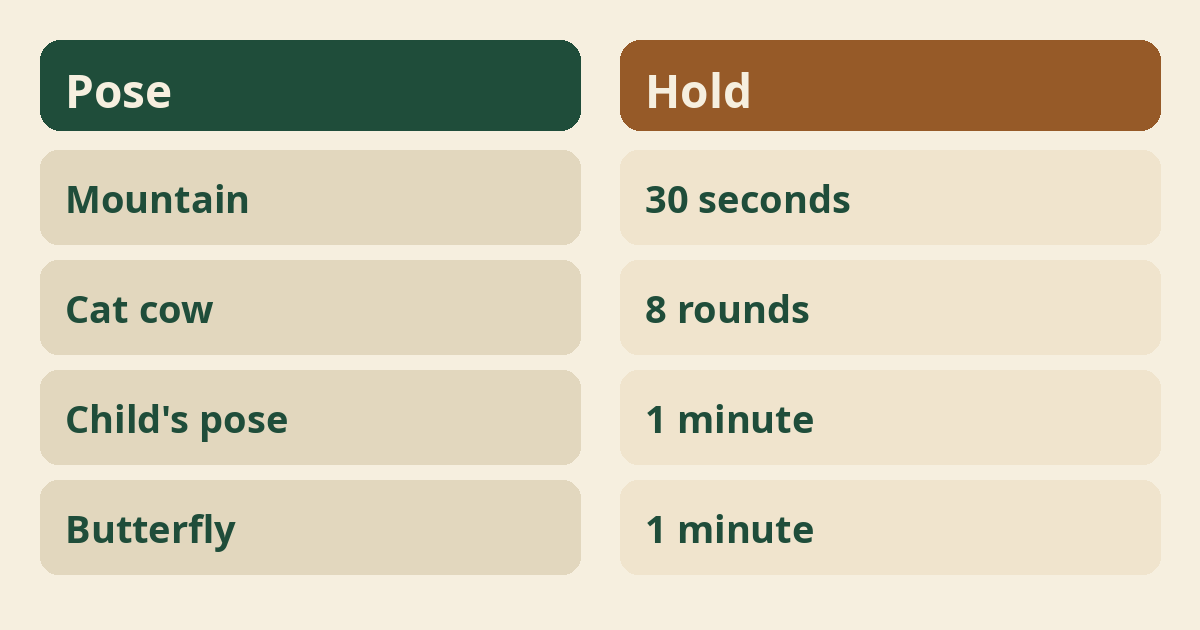
Mountain pose is a simple standing posture that resets your posture. Stand tall with your feet together, arms relaxed, and weight spread evenly. Feel your feet pressing down and your head lifting up. Mountain pose for beginners walks you through the small details.
Child’s pose for tired legs
Child’s pose gently rests your back, hips, and mind. Kneel, sit back toward your heels, and fold forward with your arms stretched out or by your sides. Stay for a minute and breathe. The full steps are in child’s pose for beginners.
Cat and cow for a stiff spine
Cat and cow movements wake up a spine that feels stiff after walking. Come onto hands and knees, then slowly round your back up and arch it down with your breath. Move through eight slow rounds. Cat cow pose for beginners shows the timing with breathing.
Butterfly pose for your hips
Butterfly pose opens the inner thighs and hips that tighten during walking. Sit tall, bring the soles of your feet together, and let your knees fall out to the sides. Hold your feet and breathe without forcing the knees down. You can read more in butterfly pose for beginners.
Thunderbolt pose for digestion
Thunderbolt is a kneeling pose many people find calming after exercise. Kneel and sit back on your heels with a tall spine and relaxed shoulders. Stay for a minute or two with slow breaths. Thunderbolt pose for beginners explains the setup in detail.
A short routine you can follow
Here is a simple ten minute routine for after your walk. Start with five slow breaths, then stretch each calf for thirty seconds. Move into cat and cow, then child’s pose, then butterfly pose. End with a short rest lying down or sitting.
Common mistakes to avoid
The biggest mistake is stretching too hard, too fast. Bouncing, forcing a stretch, or skipping the cool-down are other common errors. Stretching should feel like a mild pull, never a sharp pain. Slow and easy wins every time.
Props that make it easier
A wall, a chair, a cushion, or a folded blanket can make every pose kinder. Sit on a cushion in butterfly pose if your hips feel tight, or rest your head on a folded blanket in child’s pose. You do not need fancy gear to start. If you want ideas, yoga props for beginners covers simple household options.
Yoga after walking versus before walking
Stretching after a walk and warming up before a walk are different jobs. Before walking, keep your body moving with easy swings and a slow start. Save the longer, still stretches for after, when your muscles are warm. Both help, but they are not the same thing.
Long walks and uphill walks need extra care
The longer or steeper the walk, the more your legs will thank you for stretching. Uphill walking loads the calves and hips much more than flat ground. Give those areas extra time after a hilly route. Keep the same gentle approach, just a little longer.
Who should be careful?
Anyone with a health condition, recent injury, or joint problem should talk to a doctor first. This includes people with back, knee, hip, or heart concerns, and anyone who is pregnant or recovering from surgery. A doctor or physiotherapist can tell you which stretches suit you. When in doubt, ask before you stretch.
Is yoga after walking a treatment?
No, yoga after walking is not a treatment or a cure for any condition. It is a gentle habit that may help you feel looser and calmer. It does not replace medical care, physiotherapy, or any plan your doctor has given you. Think of it as everyday self-care, not medicine.
What are the benefits?
Many people find their legs feel lighter and their mood calmer after a short routine. Gentle movement and slow breathing are widely used to support flexibility and relaxation, and resources like National Center for Complementary and Integrative Health describe yoga as generally safe when practiced gently. Many people find they recover from walks more comfortably, though results vary from person to person. The surest way to know is to try it for a few weeks and notice how you feel.
Will it help your flexibility?
Regular gentle stretching can slowly improve how freely your legs and hips move. Change comes gradually, over weeks rather than days. Pairing walking with stretching is a friendly way to work on flexibility without intense effort. For a fuller picture, see yoga for flexibility for beginners.
Can it help your balance?
Yes, simple standing work after walking can support steadier balance over time. Standing tall in mountain pose and moving slowly between positions trains the small muscles that keep you upright. Better balance matters for walkers of every age. Yoga for balance for beginners is a good next read.
How do you progress over time?
Add a minute here and a new pose there, slowly. When five minutes feels easy, try ten. When ten feels easy, add one new pose or hold each stretch a little longer. There is no rush and no finish line.
Should you work with a teacher?
A teacher can help, but you can safely start this simple routine on your own. If you have pain, a health condition, or feel unsure, a few sessions with a qualified teacher are a good idea. A teacher can adjust poses to your body. For a basic cool-down routine, self-practice at home is fine.
The right mindset
Treat this routine as a thank-you to your body, not another task to crush. There is no perfect pose and no score to beat. Some days your legs will feel open, other days stiff, and both are normal. Show up, breathe, and let that be enough.
Can you stretch after a walking commute?
Yes, the same routine works after walking to work or getting off transport. If you cannot stretch right away, a few desk-friendly moves later still help. Shoulder rolls, gentle twists, and calf stretches all work in small spaces. Yoga at your desk for beginners has more ideas for busy days.
What if your legs feel sore after walking?
Mild soreness is normal, and gentle stretching plus rest usually helps it pass. Keep the stretches extra soft on sore days and skip anything that hurts. Drink water, rest well, and let your body adapt. Sharp or lasting pain is different, and that deserves a doctor’s opinion.
Yoga for stress after a walk
Slow breathing and quiet poses can settle a busy mind along with the body. A walk often clears the head, and a few minutes of stillness afterwards can deepen that calm. Many people find this combination a simple way to manage everyday stress. Yoga for stress relief for beginners explores this further.
Where to read next
For a calm, beginner-friendly start, Ranjana Sinha’s Begin Where You Are is written for people who want simple steps. Our guide to starting a home yoga practice adds a gentle routine you can follow at home.
Frequently asked questions
Can I do yoga right after walking?
Yes, your muscles are warm after a walk, which makes gentle stretching easier and more comfortable.
How long should I stretch after a walk?
Five to fifteen minutes is plenty for most people, depending on how long you walked.
Do I need a yoga mat?
No, a carpet, rug, or folded blanket on the floor works fine for this routine.
Is yoga after walking good for weight loss?
It is a light cool-down, not a workout, so see it as recovery rather than a calorie-burning tool.
What if I feel pain while stretching?
Stop right away, rest, and talk to a doctor if the pain is sharp or keeps coming back.
The bottom line
A walk and a few gentle yoga poses fit together naturally, so keep it simple, breathe slowly, and let your body enjoy the cool-down.