

Neck rolls are slow, gentle circles of the head that many people use to loosen up after sitting or screen time. You do not need special gear or experience. This guide explains what neck rolls are, how to try them with care, and how to keep them comfortable. Go slowly, stay within an easy range, and stop if anything feels sharp, dizzy, or wrong. A minute or two is enough to start, and you can do it in a chair.
This article is general education and not medical advice. If you have neck pain, an injury, or any health condition, check with your doctor before you try these movements.
What are neck rolls?
Neck rolls are slow, smooth movements where you guide your head in a gentle arc. You tilt the head forward, to one side, and back toward the other side in a flowing path. Most people keep the movement small and easy.
Why do people do neck rolls?
Many people do neck rolls to feel looser after long hours of sitting. Desk work, phones, and driving can leave the neck feeling stiff. A short, calm movement break is a simple way to check in with your body.
Is it normal to feel stiff in the neck?
Yes, mild stiffness is common for people who hold one position for a long time. The head is heavy, and holding it forward for hours can feel tiring. A few minutes of gentle movement is a kind way to give the area some attention.
How do I start neck rolls?
Start by sitting or standing tall and letting your shoulders relax. Pick a quiet spot. Take a few easy breaths before you move. Think of this as a slow check-in, not an exercise you have to win.
Where should I sit for neck rolls?
Sit on a firm chair or on the floor with a long, easy spine. Place both feet flat if you are on a chair. Rest your hands on your thighs. A steady seat helps the neck move without the body wobbling.
How should I set up my posture?
Set your ears over your shoulders and let your jaw soften. Imagine a string lifting the crown of your head. Drop the shoulders away from your ears. Mountain pose is a good model for a tall, relaxed stance.
Step 1: How do I begin the first movement?
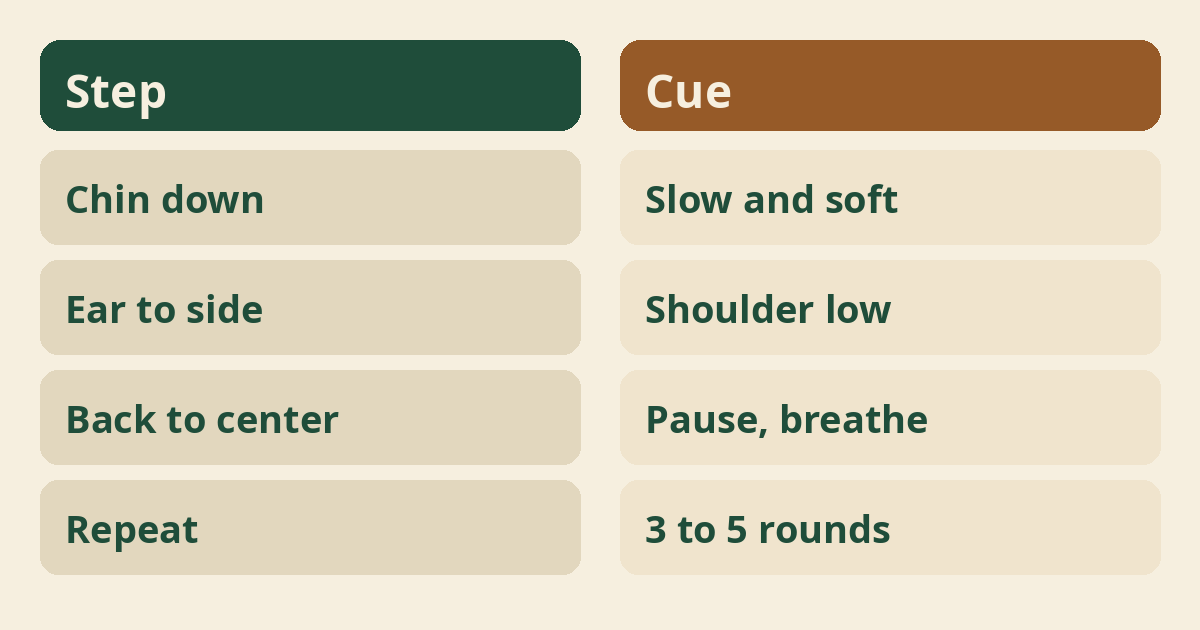
Begin by lowering your chin a little toward your chest. Let the weight of the head do the work. You should feel a mild stretch at the back of the neck, never a pinch. Stay for one slow breath.
Step 2: How do I move to the side?
Slowly bring one ear toward the same shoulder without lifting the shoulder. Keep the other shoulder low and soft. Pause for a breath. Go only as far as feels easy and pleasant.
Step 3: How do I return to the center?
Lift the head back to center before you go any further. Many beginners skip this pause. Coming back to center each time keeps the movement controlled and helps you notice how each side feels.
Step 4: Should I roll the head all the way back?
Most beginners do better by keeping the head from dropping far back. A full backward drop can feel uncomfortable for some people. A half circle, front to side to front, is a calm and sensible choice.
Step 5: How do I do the other side?
Repeat the same slow path to the other side, matching the size of the first. Notice if one side feels tighter. That is common and not a problem. Do not push the tight side to match.
Step 6: How do I finish?
Finish by returning to center and resting the eyes on a point ahead. Take two or three easy breaths. Let your shoulders melt down. Notice any change in how your neck and head feel.
How should I breathe during neck rolls?
Breathe slowly through the nose and let the breath set your pace. Breathe in as you lift or return to center. Breathe out as you lower or tilt. If you hold your breath, you are probably going too fast. Belly breathing pairs well with this practice.
Why does the breath matter here?
A steady breath keeps the face, jaw, and shoulders from tightening. When the breath is smooth, the body tends to relax. When the breath is short, the neck often grips. Use the breath as a guide to your pace.
How long should a neck roll session last?
One to three minutes is plenty for a beginner. Short is fine. You can do a few slow rounds, then rest. There is no prize for going longer, and gentle is better than hurried.
How many rolls should I do?
Three to five slow rounds in each direction is a good start. Count breaths, not reps. If you feel tired or tight, do fewer. You can add a round when it feels comfortable over several days.
How often can I do neck rolls?
Many people do them once or twice a day, as it feels comfortable. A short break in the morning and another in the afternoon is common. See how often you should do yoga for a wider view of pacing.
What speed is right?
A slow, steady speed is right, about one full breath per move. Fast swings can feel jerky and are not the goal. Think of tracing a soft shape in the air with the top of your head.
What are common mistakes?
The most common mistake is moving too fast or too far. Others include lifting the shoulders, holding the breath, and forcing the head back. Slow down and make the circle smaller if you notice any of these.
Why should I avoid forcing the stretch?
Forcing can leave the neck feeling sore instead of loose. Your range will change from day to day. Take each session as a fresh start and respect how you feel today.
What if I feel dizzy?
If you feel dizzy, stop and sit quietly with your eyes open. Dizziness is a signal to pause. Bring this up with your doctor before you try neck rolls again, especially if it happens more than once.
Can props help?
Yes, a folded blanket or a wall can make the practice feel more supported. Sit on a cushion to lift the hips, or rest your back against a wall to stay tall. See yoga props for beginners for simple ideas.
Can I do neck rolls at my desk?
Yes, neck rolls are easy to do in a chair at work. Sit tall, uncross your legs, and drop your shoulders. Many people pair them with other quick breaks. Try yoga at your desk for more ideas.
Who should be careful with neck rolls?
Anyone with neck pain, an injury, or a health condition should check with a doctor first. This includes past neck or spine problems, numbness, tingling, or dizziness. Pregnant people and older adults may also want advice first. Your doctor knows your history best.
When should I stop right away?
Stop if you feel sharp pain, numbness, tingling, or dizziness. These feelings are not part of a normal gentle stretch. Rest, and speak with a doctor or other qualified health professional if they continue.
Is this a treatment?
No, neck rolls are not a treatment for any condition. They are a gentle movement habit for general comfort. They do not replace care from a doctor or physical therapist. Please keep your health team in the loop.
What are the possible benefits?
Many people find neck rolls leave them feeling looser and calmer, though results vary. Some enjoy the pause from screens and the chance to breathe. For general background on movement and relaxation, see National Center for Complementary and Integrative Health. Your own experience may differ.
Can neck rolls help me relax?
Many people find the slow pace and breath a calming break, though results vary. The focus on a simple task can quiet a busy mind. A minute of this can feel like a small reset in a long day.
How do neck rolls fit with other stretches?
They work well as a warm-up before other gentle movement. Try them before cat cow pose or yoga for neck and shoulders. Keep the order slow and easy.
How can I progress over time?
Progress by adding a breath or two, not by going faster or farther. Once the basic circle feels easy, you might hold each side a little longer. Keep the range comfortable. More is not always better.
Should I find a teacher?
A good teacher can watch your form and suggest changes that suit you. If you are unsure, ask a qualified yoga teacher for help. Share any health concerns first. A teacher can offer easier options when needed.
What mindset helps most?
A kind, patient mindset helps most. See the practice as time for yourself, not a task to finish. Notice how you feel without judging it. Small, regular habits tend to feel better than rare big efforts.
What time of day is best?
Any time that suits you is fine, and many people like morning or a mid-day break. Some like it before bed to wind down. Choose a time you can repeat easily. Consistency matters more than the clock.
Can I do neck rolls with a stiff body?
Yes, you can make the movement smaller and easier. Stiff or tight bodies are common. Use a short range and a slow pace. Over time, comfortable range may change, though everyone is different. See yoga for flexibility.
Where to read next
For a calm, beginner-friendly start, Ranjana Sinha’s Begin Where You Are is written for people who want simple steps. Our guide to starting a home yoga practice adds a gentle routine you can follow at home.
Frequently asked questions
Are neck rolls safe for everyone?
Not always, so check with your doctor first if you have neck pain, an injury, or a health condition.
Should I roll my head in a full circle?
Many beginners prefer a half circle from side to side through the front, which feels calmer.
How many times a day can I do them?
Many people do a short round once or twice a day, as it feels comfortable.
Can I do neck rolls while standing?
Yes, as long as you stand tall, keep your knees soft, and move slowly.
What should I do if I feel a click or pop?
Stop, rest, and mention it to your doctor if it keeps happening or hurts.
The bottom line
Keep your neck rolls slow, small, and kind, and let comfort be your guide.

