
Sore wrists are common in yoga, especially in downward dog, plank and cat and cow. A good warm up, simple changes and gentle stretching can make practice more comfortable. This guide shows how, and explains when wrist pain needs a doctor.
This is general education, not medical advice. If you have wrist pain, numbness, tingling, an injury, are pregnant or have a health condition, speak to your doctor or a physiotherapist before continuing.
Why do wrists get sore in yoga?
Wrists often feel sore in yoga because poses like downward dog, plank and cat and cow put body weight on the hands, and many beginners have stiff or weak wrists. Long hours at a keyboard or phone can also leave the wrists tight. Gentle preparation and smart changes to poses can make practice far more comfortable. If you have ongoing wrist pain, numbness or tingling, speak to a doctor before continuing. The National Center for Complementary and Integrative Health describes yoga as a mind and body practice that should be adapted to your body.
Is wrist discomfort normal?
Mild stretching sensations can be normal, but sharp pain, numbness, tingling or swelling is a signal to stop. Learn the difference between a mild stretch and pain. If you feel pinching in the wrist, ease off. Do not push through it. Seek advice from a doctor or physiotherapist if it keeps happening.
Warm up the wrists first
Make gentle circles with the wrists, open and close the hands and shake them out for one to two minutes before weight bearing poses. Warming up increases comfort. Move slowly. Our guide to yoga at your desk includes easy hand and wrist breaks.
Wrist stretch with palms together
Press the palms together in front of the chest and slowly lower the hands toward the belly, keeping the palms touching. Hold for three to five breaths. Keep the shoulders relaxed. Stop if you feel any sharp sensation. This stretches the underside of the forearms.
Reverse prayer stretch
Place the backs of the hands together in front of the chest, fingers pointing down, and slowly turn the fingers up. Go only as far as feels comfortable. Hold for a few breaths. Skip it if it hurts. It is a gentle stretch for the tops of the wrists.
Forearm stretch on a table
Place the palm on a table with the fingers pointing toward you and lean back gently. Keep the elbow soft. Hold for three breaths. Switch sides. You can do this at your desk.
Make hands and knees more comfortable
Place the hands slightly forward of the shoulders, spread the fingers wide and press evenly through the whole palm. Distribute weight across the knuckles and the base of the fingers rather than dumping it into the heel of the hand. Turn the hands slightly outward if it feels better.
Use a rolled mat or wedge
Place the heels of the hands on a rolled towel or folded edge of the mat so the wrists bend less. Keep the fingers on the floor. This lowers the angle at the wrist. Our yoga mat guide explains how a thick mat can cushion hands and knees.
Try fists or forearms
Make loose fists, or rest on the forearms, in cat and cow, plank or child’s pose variations. This takes pressure off the wrists. Keep the fists neutral, not bent. Our guide to downward dog shows other options.
Change downward dog
Bend the knees, press the hands firmly into the mat and keep the weight light on the wrists. If it is still uncomfortable, try a wall version, where you place the hands on a wall and fold forward. Our guide to yoga for flexibility explains safe stretching.
Use a chair
Place the hands on a sturdy chair seat for poses like a plank or a dog variation. This shortens the lever and cuts the load on the wrists. Our guide to chair yoga shows seated options.
Skip weight bearing poses
Choose standing and seated poses instead when your wrists need a rest. Our guides to tree pose and warrior pose use no hand weight. There is plenty of yoga that never touches the wrists.
Strengthen the wrists gently
Hold a light object like a small water bottle and curl the wrist up and down slowly, ten times each way. Go slowly. Stop if you feel pain. Strength builds slowly over weeks. Ask a physiotherapist for a plan if you have an injury.
Check your posture
Keep the shoulders stacked over the wrists in plank, avoid sinking into the shoulders and engage the arms gently. A good alignment spreads the load. Our guide to yoga for posture explains general alignment.
What about typing and phone use?
Take breaks, keep wrists neutral at the keyboard and stretch every hour. Wrist soreness in yoga often starts in daily habits. Raise the screen, relax the hands and move often. Our guide to reducing screen time has ideas.
When is a brace useful?
A brace may help some people, but ask a doctor or physiotherapist before using one. Supports can mask a problem. Get advice on whether you need one and for how long.
How often should you stretch?
Short daily stretches of one to two minutes are better than one long session. Do them after a long stretch of typing or before yoga. Keep them gentle. Our guide on how often to do yoga shows ways to build a routine.
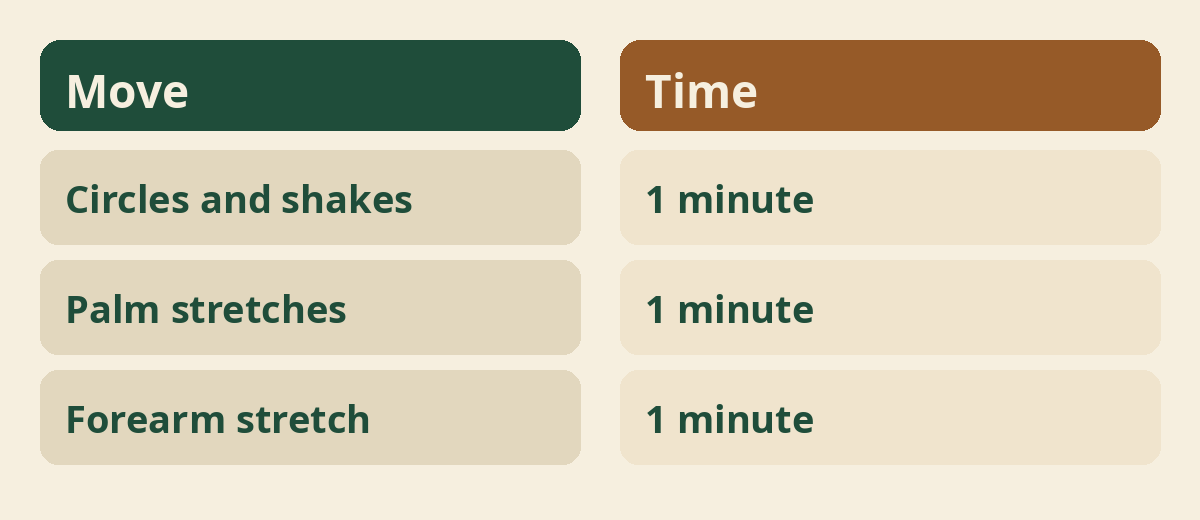
A simple three minute wrist routine
Spend one minute on circles and hand shakes, one minute on palm and reverse prayer stretches and one minute on a forearm stretch. Repeat daily. Keep movements slow. Stop if you feel pain.
What mistakes do beginners make?
Pushing through pain, dumping weight into the heels of the hands, locking the elbows and skipping warm ups. Soften the elbows, spread the weight and use options. Rest if sore.
Can wrist issues come from something else?
Yes. Carpal tunnel, arthritis, sprains and other conditions can cause wrist pain. Do not self diagnose. Speak to a doctor if you have numbness, tingling, weakness or pain that does not settle. Our guide to yoga for hips shows poses that need no wrist weight.
Is it safe in pregnancy or with health conditions?
Speak to a doctor first if you are pregnant or have arthritis, an injury or any health condition. Our guide to prenatal yoga explains special care. Stop if you feel unwell.
When should you see a doctor?
See a doctor if wrist pain lasts more than a few days, is sharp or comes with numbness, tingling, swelling or weakness. Stop weight bearing poses until you get advice. This guide is general education, not medical advice.
How should you place your hands on the mat?
Spread the fingers wide, point the middle fingers forward and press evenly through the palm and the base of each finger. Grip the mat gently with the fingertips. Avoid letting the palm collapse. A clear, even press spreads weight across the hand and reduces load on the wrist. A non slip mat helps your hands stay put and stops you gripping too hard.
What if your hands sweat or slip?
Use a mat with good grip, wipe the hands and mat with a dry towel and consider a grippy towel over the mat. Slipping makes you tense, which strains the wrists. Wash the hands before practice and keep a small towel nearby. Choose a surface that gives you steady, comfortable support.
How can you rest between poses?
Shake out the hands, make loose fists and open the fingers for a few seconds before the next pose. Short pauses keep the wrists fresh. Child’s pose with the arms by your sides is a good rest. Do not stay in weight bearing poses longer than you comfortably can. Quality is more useful than length.
How do you build up gradually?
Start with short holds on the hands, add a few breaths each week and stop if soreness lingers the next day. Wrists adapt slowly. Give them time. If they feel tender the next day, reduce the load and use options. Patience protects the joints and lets strength grow safely.
Where to read next
For a calm, beginner-friendly start, Ranjana Sinha’s Begin Where You Are is written for people who want simple steps. Our guide to starting a home yoga practice adds a gentle routine you can follow at home.
Frequently asked questions
Why do my wrists hurt in downward dog?
Weight on stiff or weak wrists can cause discomfort. Warm up and adjust the pose.
Can I do yoga with sore wrists?
Often with changes, but speak to a doctor if pain is sharp or lasts.
What are good wrist stretches?
Palms together, reverse prayer and forearm stretches.
Should I use a brace?
Ask a doctor or physiotherapist first.
Which poses avoid wrist weight?
Standing poses, seated poses and forearm variations.
The bottom line
Care for your wrists and they will care for you. Warm up, adjust poses and see a doctor if pain lasts.

