
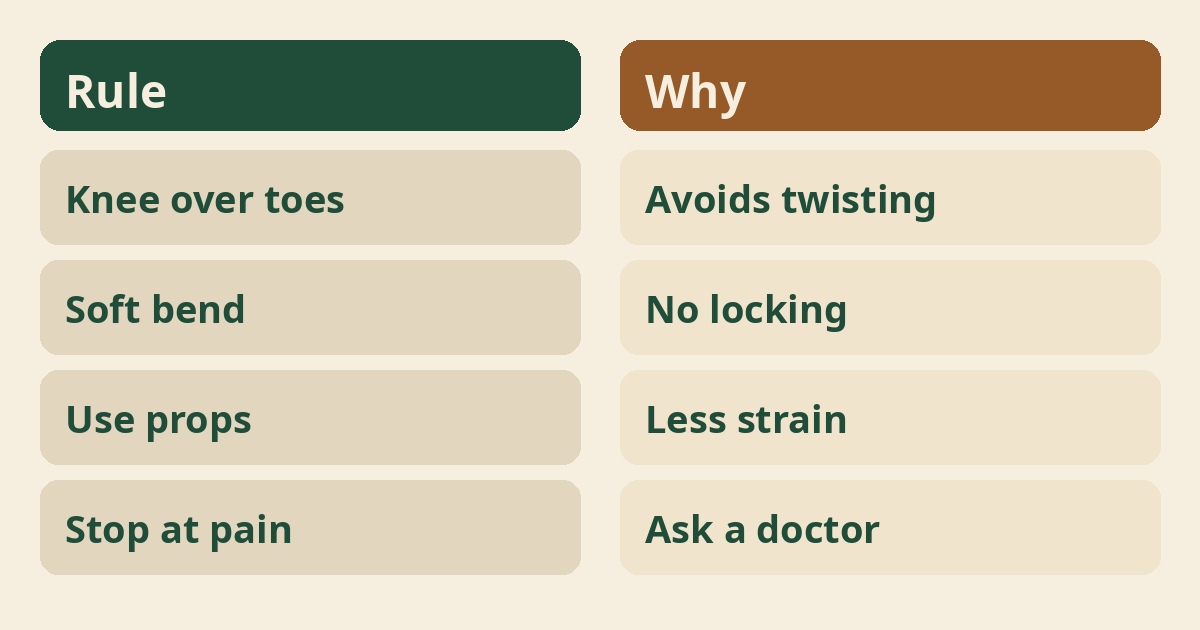
Yoga can be gentle on sensitive knees if you keep the knee over the toes, avoid twisting and forcing deep bends, and use props like chairs and blankets. Stop at sharp pain and ask a doctor first if you have an injury, swelling or arthritis.
This is general education, not medical advice. If you have knee pain, swelling, a past injury, surgery or arthritis, check with your doctor or physiotherapist before starting yoga.
Is yoga safe for sensitive knees?
Gentle yoga can be comfortable for many people with sensitive knees when poses are adapted, but pain is a signal to stop and ask a doctor. Knees are hinge joints and they dislike twisting under load. Good yoga for knees avoids deep bending and forcing. Our guide to chair yoga is a very gentle option. If you have pain, swelling or a past injury, speak with a doctor or physiotherapist first.
What helps knees feel supported?
Strong, flexible muscles around the hips and thighs and careful alignment help the knees do their work. Many knee problems are linked to how the hips and ankles move. Gentle strengthening and stretching of the whole leg can help. The National Center for Complementary and Integrative Health describes yoga as a gentle mind and body practice. Go slowly and keep movements small.
What is the golden rule for knees?
Keep your knee pointing the same way as your toes, and never twist the knee when the foot is planted. When you bend a knee, check that it lines up over the middle of the foot. In warrior pose, the front knee should stay over the ankle, not fall inward. This one habit protects the joint in many poses.
Which poses are usually comfortable?
Chair pose with a shallow bend, mountain pose, bridge pose and gentle reclined stretches are often comfortable choices. Start with small ranges. In a shallow chair pose, bend only a little. In bridge, press through the feet and lift the hips gently. Use a wall or a chair for support if you need it.
Which poses need care?
Deep kneeling poses, full squats, lotus and any pose that twists the knee need care and often should be skipped. If a pose makes the knee feel pinched or sore, back out. Pigeon pose and cross legged sitting can strain the knees if the hips are tight, so use props or choose an easier shape.
How can you protect your knees in kneeling poses?
Place a folded blanket under your knees, or use a cushion between your thighs and calves. In child’s pose, a pillow under the hips and a blanket under the knees can make a big difference. If kneeling hurts, try sitting back in a chair instead.
What about standing poses?
Keep a soft bend in the knee rather than locking it, and keep your weight spread across the whole foot. Locking the knee puts pressure on the joint. In tree pose, never press the foot against the side of the knee. Place it on the ankle or calf, or keep the toes on the floor.
How do props help?
A chair, blocks, a strap and blankets let you reach the floor or the stretch without forcing the knee. Sit on a block in seated poses. Use a strap to hold a foot. Keep a wall nearby for balance. Props are a way to make yoga fit your body, not a sign you are doing it wrong.
What about warming up?
A few minutes of gentle movement, such as walking, ankle circles and slow knee lifts, warm up the joints and make poses easier. Move slowly. Lift one knee, then the other, while holding a chair. Warm muscles support the joint better than cold ones.
How can you strengthen around the knees safely?
Small, slow movements such as a shallow chair pose, bridge and side leg lifts build support in the hips and thighs. Do a few repetitions, rest, and stop before the knee feels sore. Our guide to yoga for flexibility covers the stretching side. A balance of strength and stretch is best.
What should you do about sharp pain?
Stop at once, rest and do not push through. Speak to a doctor if pain continues. A dull stretch in the muscle is different from a sharp or pinching pain in the joint. If you feel pain in the joint, come out of the pose and try a gentler option or skip it.
How about stiffness after sitting?
Gentle movements every half hour, like standing, walking and a few ankle circles, help knees that feel stiff after long sitting. Short breaks are very helpful. Stand up and shift your weight. Our morning yoga routine is a gentle way to loosen up at the start of the day.
What footwear and floor matter?
Practise barefoot or in grippy socks on a non-slip surface, and use a thicker mat if hard floors bother your knees. A slippery floor can cause a sudden twist. Our yoga mat guide explains grip. Choose a steady surface and clear the space of clutter.
Can yoga help with knee comfort long term?
Gentle regular practice may help you feel more comfortable and move with more confidence, though results vary and it is not a treatment. Yoga does not cure knee conditions. If you have arthritis or an injury, work with your doctor or physiotherapist and use yoga as a gentle supplement if they agree.
What about weight and knees?
Extra weight can add load to the knees, and gentle activity may help you move more comfortably, but speak with a doctor for personal advice. Avoid strict targets. Choose kind movement you can keep up. Walking and gentle yoga are often good partners.
How should older adults practise?
Older adults can practise gently with a chair or wall for support, shorter holds and plenty of rest. Our guide to chair yoga is a good place to begin. Move slowly, breathe easily and stop if anything hurts. Check with a doctor before starting.
What about squats and lunges?
Take them small and shallow at first, and use a chair or wall for support if needed. In a low lunge, put a folded blanket under the back knee and keep the front knee over the ankle. In a squat, sit only as low as you can go without discomfort.
How long should you hold poses?
Hold for a few slow breaths, then come out, and avoid long holds in bent knee poses. Short holds with rest in between are kinder to the knee than one long hold. Change position often and keep the breath smooth.
What breathing helps?
Slow, steady breathing keeps you calm and helps you notice early signs of strain. Our guide to box breathing is one simple pattern. If you find yourself holding your breath, the pose is probably too much.
How do you finish a session?
End with a rest on your back, with a cushion under your knees if it feels better. Our guide to savasana explains the final rest. Lie quietly, breathe slowly and notice how your legs feel.
When should you see a doctor?
See a doctor before starting if you have knee pain, swelling, a past injury, surgery, arthritis or any health condition. This guide is general education, not medical advice. A doctor or physiotherapist can say which movements are right for you. Tell your yoga teacher about your knees before class.
What common mistakes should you avoid?
Forcing deep bends, twisting the knee, locking the joints and ignoring pain are the most common mistakes. Go slowly, use props and keep the knee over the foot. Compare yourself only with your last session. A smaller version of a pose is still yoga.
How can you tell progress?
Notice whether stairs, getting up from a chair or walking feel easier, and keep a short note after each session. Daily comfort is a better sign of progress than depth in a pose. Be patient, and give your body time to adapt.
What if the knees feel worse afterwards?
Rest, reduce the range next time and speak to a doctor if discomfort lasts more than a day or two. Mild tiredness in the muscles is normal. Joint ache or swelling is not. Choose gentler poses or take a break until you have checked with a professional.
How can you make yoga a habit that suits your knees?
Keep sessions short, pick comfortable poses and plan rest days. Our guide to how often to do yoga gives a simple plan. A kind and steady practice is the one that lasts.
Where to read next
For a calm, beginner-friendly start, Ranjana Sinha’s Begin Where You Are is written for people who want simple steps. Our guide to starting a home yoga practice adds a gentle routine you can follow at home.
Frequently asked questions
Is yoga bad for knees?
Not if you move gently, keep the knee over the toes and avoid forcing deep bends.
What yoga poses should I avoid with knee pain?
Deep kneeling, full squats, lotus and any pose that twists the knee, unless your doctor agrees.
Can I do yoga with knee arthritis?
Many people do gentle, supported yoga, but ask your doctor or physiotherapist first.
Do props help knees?
Yes. Blankets, blocks and chairs can reduce strain and make poses easier.
When should I stop?
Stop at once if you feel sharp or pinching pain, and see a doctor if it continues.
The bottom line
Move slowly, protect the joint and use props. Gentle yoga can be comfortable for many knees, but pain is a sign to stop and ask a doctor.

