
Yoga can help you move more freely when you practise gently and regularly. Warm up first, hold each stretch for 20 to 40 seconds, breathe slowly and never force a pose. Short sessions three to five times a week work well for most beginners.
This is general education, not medical advice. If you have an injury, hypermobility, osteoporosis, back pain or are pregnant, check with your doctor before stretching.
What does yoga for flexibility mean?
Yoga for flexibility means using gentle, regular stretching and breathing to help your muscles and joints move more freely over time. Flexibility is the range of motion you have at a joint. Yoga poses stretch many muscle groups, and holding them with slow breathing may help you feel looser. Progress is gradual and differs for everyone. Our guide to the benefits of yoga explains more about what regular practice can offer.
Can anyone become flexible with yoga?
Most people can improve how easily they move with regular, gentle practice, though how far you go depends on your body, age and history. Bone shape, past injuries and genetics all play a part. You do not need to touch your toes or do the splits to benefit. The goal is to move comfortably and safely. Compare yourself only with your own past, not with anyone else.
How often should you practise?
Short sessions three to five times a week usually work better than one long session. Ten to twenty minutes is enough for a beginner. Regular practice helps your body get used to the stretches. Rest days matter too. If you feel sore or tired, take a day off or choose a gentler session such as chair yoga.
Should you warm up first?
Yes, a few minutes of gentle movement warms the muscles and makes stretching safer. Try cat and cow, shoulder rolls, hip circles or a slow walk. A sun salutation is also a good warm-up, and you can follow our guide to sun salutations. Stretching cold muscles hard is more likely to cause strain.
Which poses help most?
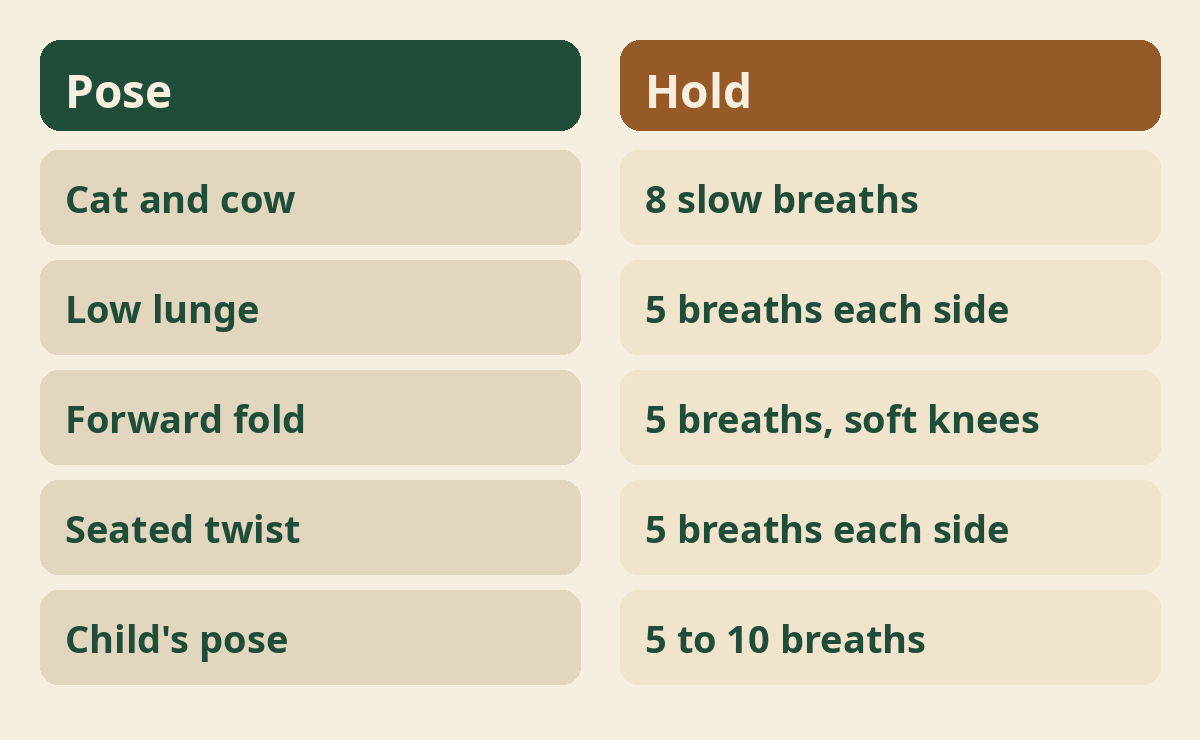
Gentle forward folds, low lunges, seated twists, cat and cow and a supported pigeon are popular choices for beginners. Choose a few poses that cover the hips, hamstrings, shoulders and spine. Use props such as blocks and straps. Keep your knees soft in forward folds. Do each pose slowly and avoid bouncing. Our guide to child’s pose is a good rest between stretches.
How long should you hold each stretch?
Hold each pose for about 20 to 40 seconds, or five to eight slow breaths, as long as it feels comfortable. Short holds are enough to start. You may build up to a minute for some poses. Never hold a stretch that causes sharp pain. Breathe slowly and let the muscle soften. If the stretch fades, you may go a little deeper, but gently.
How should it feel?
It should feel like a mild, steady stretch, not pain, burning or tingling. If a stretch hurts, ease out. Pain is a signal to stop. Use the rule of staying at about a six out of ten in intensity. Your breath is a good guide: if you cannot breathe smoothly, you are going too far.
What role does breathing play?
Slow, steady breathing helps you stay relaxed, and many people find they can ease into a stretch on each exhale. Do not hold your breath. A long, calm exhale tells your body it is safe to let go. Our guide to pranayama for beginners has simple breathing practices. Keep your face and jaw soft.
What are common mistakes?
Common mistakes include bouncing, forcing the stretch, skipping the warm-up, holding the breath and comparing yourself with others. Another is locking the knees or elbows. Keep your joints soft. Do not push a stretch at the end of your range. If you feel pinching in a joint, change the position. Patience pays off over weeks.
How can props help?
Blocks, straps, blankets and cushions bring the floor closer and let you hold poses with less strain. A strap helps you reach your feet in a seated fold. A block under the hand makes a lunge more stable. A folded blanket under the hips eases a seated pose. Props are not cheating. They help you stay safe and relaxed while your body adapts.
How does age affect flexibility?
Flexibility often reduces with age, but gentle regular practice can help you keep moving comfortably. Older adults may prefer slower, supported practices. Our guide to chair yoga for beginners offers a safe starting point. Always speak with your doctor if you have joint or bone concerns.
Is yoga for flexibility safe?
It is safe for many people when done gently, but it can strain joints if you push too hard. If you have an injury, hypermobility, osteoporosis, back pain or are pregnant, ask your doctor first. Our guides to yoga for back pain and yoga with a bad back explain more. The National Center for Complementary and Integrative Health notes that yoga is generally low risk when practised with care, but injuries can occur.
What if you are very stiff?
Start with supported poses, short holds and slow movement, and give your body time. Stiffness is common after long periods of sitting. Begin with simple moves such as neck rolls and cat and cow. Add stretching gradually. A short daily routine works better than occasional long sessions. You will likely notice small changes after a few weeks.
What if you are very flexible already?
If you are naturally flexible, focus on strength and control rather than going deeper into stretches. Very flexible people can overstretch joints. Add poses that build stability, such as standing poses and core work. Do not rely on ligaments to hold you in a pose. A teacher can show you how to protect your joints.
How can you track progress?
Note how a few poses feel each week, such as a forward fold or a lunge, and compare over time. You may take a photo, or simply write a few lines. Look for ease, not depth. If a pose feels easier or lasts longer, that is progress. Avoid daily testing, which can cause strain.
How does sleep and nutrition affect flexibility?
Rest and general health help muscles recover, so good sleep, water and balanced meals support your practice. Do not stretch hard when you are very tired or dehydrated. Keep water nearby. A light meal is best at least an hour before practice. Our guide to winding down before bed can help you rest well.
What should you expect over time?
You may feel looser after a few weeks, but results vary, and yoga is not a quick fix. Some people see change in a month, others take longer. Stay patient and consistent. If you have ongoing stiffness or pain, speak with a doctor or physiotherapist, as yoga is not a treatment.
What should you wear?
Wear comfortable, stretchy clothing that lets you move freely, and practise on a non-slip mat. Avoid anything too tight at the waist or knees, and avoid slippery socks. Bare feet give the best grip. If the floor is hard, add a folded blanket under the knees. A relaxed outfit also helps you feel at ease, which makes it easier to breathe smoothly and let muscles soften.
Can you stretch after exercise?
Yes, gentle stretching after a walk, run or workout can feel good, and your muscles are already warm. Choose slower holds and avoid pushing hard when you are tired. Focus on the legs, hips and shoulders. Breathe slowly. If you have an injury, speak with a physiotherapist before stretching it. A few minutes of calm breathing at the end helps you cool down.
What other habits help?
Walking, changing position often, good posture and regular rest all support flexible, comfortable movement. If you sit for long hours, stand up every thirty to sixty minutes and move for a minute. Our guide to a short break at work has a few ideas. Small daily habits often matter more than a single long stretching session.
Where to read next
For a calm, beginner-friendly start, Ranjana Sinha’s Begin Where You Are is written for people who want simple steps. Our guide to starting a home yoga practice adds a gentle routine you can follow at home.
Frequently asked questions
How long does it take to get more flexible with yoga?
Many people notice small changes after a few weeks of regular practice, but it varies.
Is it okay to stretch every day?
Gentle stretching daily is fine for many people. Rest if you feel pain or soreness.
Should stretching hurt?
No. It should feel like a mild stretch, not pain.
Do I need to warm up?
Yes. A few minutes of gentle movement makes stretching safer.
Can I do yoga for flexibility at home?
Yes, with a mat and a few props, following a gentle routine.
The bottom line
Flexibility grows slowly. Warm up, stretch gently, breathe and be patient. Regular, comfortable practice is the safest way to move more freely.

