
Yes, you can meditate for too long, but for most healthy people the risk is not harm so much as strain, restlessness or discomfort. A good rule is to stop when the session stops feeling calm and steady, and to build up time slowly. There is no single right length. Ten to twenty minutes suits many people, and longer sittings are best added gradually and with guidance. This guide explains how to judge your own limit.
This is general education, not medical advice. If you have a mental health condition, a history of trauma, or feel distressed during meditation, speak with a doctor or a qualified teacher before extending your practice.
Can you meditate for too long?
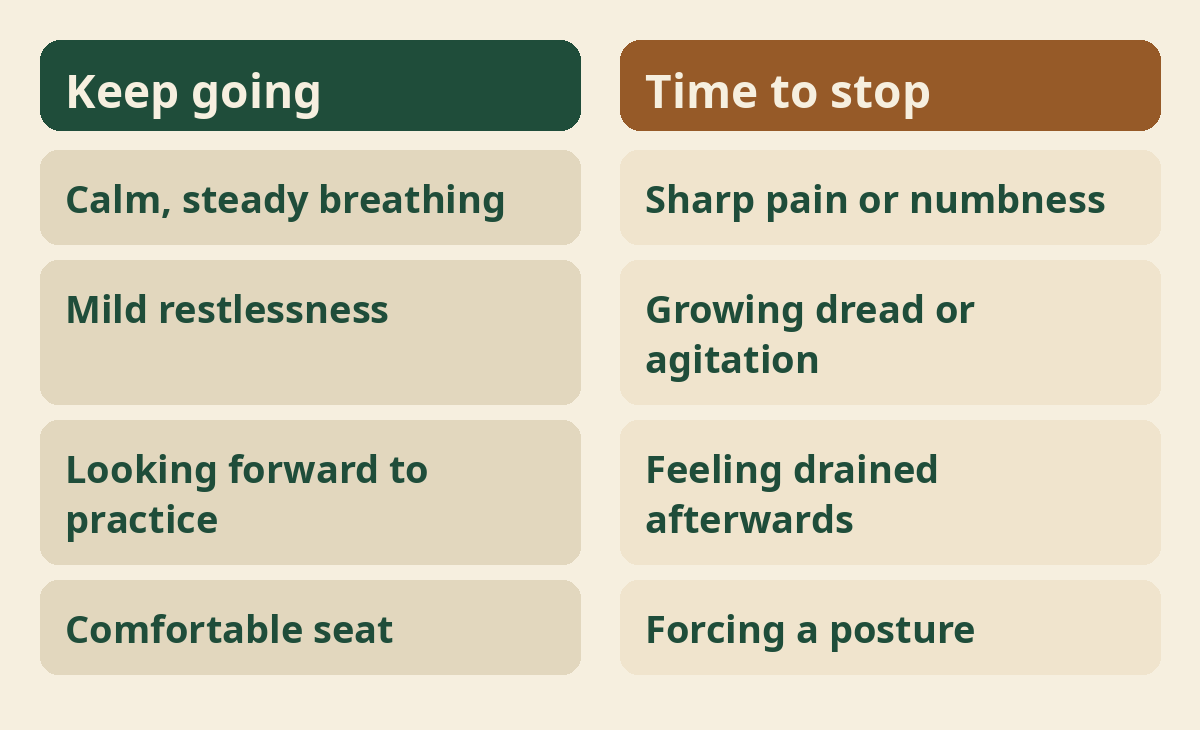
You can, if “too long” means longer than your body and mind can comfortably manage. Signs include pain, numbness, a rising sense of agitation or dread, or feeling worse after a session than before. Most of the time this is a sign to shorten the sitting, not to quit meditation.
A beginner who jumps from five minutes to an hour often ends up tired and discouraged. A person who builds up slowly rarely has the same trouble. Our guide on how long to meditate gives a practical starting range.
What are the signs you are meditating too long?
The clearest signs are physical pain, strong restlessness, anxiety that grows through the session, and feeling drained afterwards. A little discomfort in the legs or back is common, but sharp pain or tingling that does not ease is not.
- Pain in the knees, hips or back that gets worse as you sit.
- Numbness or pins and needles that do not clear when you shift.
- Growing agitation, dread or a wish to run away.
- Feeling spaced out, tired or low for hours afterwards.
- Dreading your practice instead of looking forward to it.
If you notice these, shorten your sessions, change your position and return to simple breathing practice.
How long is a good length for beginners?
Five to ten minutes a day is a sensible start, and most people can slowly grow to fifteen or twenty. Short, regular sessions build the habit without strain. If your mind wanders constantly, that is normal and not a reason to sit longer.
Think of it as training attention. You would not lift your heaviest weight on day one. Add a minute or two when the current length feels easy for several days in a row.
What helps you meditate longer without strain?
A comfortable seat, a calm place and gentle, regular practice help the most. Sit on a chair or a firm cushion with a tall spine. Support your knees if they are higher than your hips. Keep your shoulders loose and your hands resting.
- Choose a quiet time when you will not be disturbed.
- Sit comfortably with a tall, relaxed spine.
- Set a soft timer so you are not watching the clock.
- Breathe naturally and rest your attention on the breath.
- When the mind wanders, return to the breath without scolding yourself.
- Stop early if you feel pain, dizziness or distress.
If sitting feels hard, read our notes on common obstacles to meditation.
Is there such a thing as too much meditation?
For most people, ordinary daily practice is not harmful, but very long or intense retreats can be difficult for some, especially those with a history of anxiety, trauma or depression. Researchers have noted that meditation can sometimes bring up uncomfortable thoughts or feelings. This is uncommon in short, gentle practice, and more likely in long, intensive sittings.
If this happens to you, there is no need to push through. Take a break, talk to someone you trust and consider guidance from a qualified teacher or health professional. The National Center for Complementary and Integrative Health describes what is known about meditation and mindfulness safety.
Should you meditate every day?
Daily practice is helpful for most people, but a short daily session is better than a long, occasional one. Regular practice builds the habit and makes each sitting feel easier. If you miss a day, simply begin again without guilt.
Many people like to meditate in the morning before the day gets busy. Our guide to morning meditation shows how to build that habit in a few minutes.
What should you do if meditation feels uncomfortable?
Shorten the session, change your posture and return to gentle breathing. You can also try eyes open, a chair instead of the floor, or a walking practice. Meditation should feel steady, not forced.
- Shorten to a length that feels easy.
- Sit on a chair instead of the floor.
- Rest your attention on sounds or the feeling of your hands.
- Take a few slow breaths and stretch gently.
- Talk to a teacher or a doctor if distress continues.
How does long meditation fit with yoga traditions?
Traditional yoga texts describe meditation as a late stage on a path that begins with ethics, posture and breath work, not a skill to push at the start. Our guide to the eight limbs of yoga shows this order. The idea is that a settled body and breath make longer sitting more natural.
That is a useful hint for modern practice. If long sitting is hard, work on posture, breathing and routine first. Our guide to pranayama for beginners offers easy breathing practices to prepare.
Who should be careful with longer sessions?
People with anxiety, depression, trauma, or chronic pain should build up slowly and consider guidance from a qualified teacher or health professional. Those with back, hip or knee problems should use a chair or supportive seat. Pregnant women and people with health conditions should check with a doctor before long sittings or breath practices.
How do you know when it is time to add more minutes?
Add time when your current length feels easy and calm for about a week. Easy means you can sit without pain, you are not watching the clock and you feel settled afterwards. Then add one or two minutes, not ten. If the new length feels hard, go back to the earlier one and try again later.
A short note after each session helps. Write the length, how the body felt and how the mind behaved. Looking back over a few weeks shows whether a longer sitting is really suiting you or whether you were pushing.
Is a long session better than two short ones?
For most beginners, two short sessions in a day are easier and just as useful as one long one. For example, five to ten minutes in the morning and the same before bed. Short sessions fit around real life, and they reduce the chance of strain. They also make it easier to keep the habit when you are busy or tired.
- Morning: a few minutes of easy breathing and quiet sitting.
- Midday: a short pause to notice breath and posture.
- Evening: a calm sitting before bed, without screens.
What if you fall asleep while meditating?
Falling asleep usually means you are tired, and it is a reason to adjust the time or position, not a failure. Try sitting upright on a chair, meditating earlier in the day or keeping your eyes slightly open. If you are often sleepy, you may simply need more rest, and a nap or an earlier bedtime will help more than a longer sitting.
Some people use a short, lying-down practice on purpose for sleep. That is a different practice, and our guide to yoga nidra for better sleep explains how to do it gently.
Common myths
- “The longer you sit, the better.” Quality and comfort matter more than minutes.
- “If you feel restless, you are doing it wrong.” Restlessness is normal and part of the practice.
- “You must sit cross-legged.” A chair is fine.
- “Meditation is always relaxing.” It can bring up difficult feelings, and it is fine to pause.
Where to read next
For a calm, beginner-friendly start, Ranjana Sinha’s Begin Where You Are is written for people who want simple steps. Our article on starting a home yoga practice shows how to build a gentle routine.
Frequently asked questions
Can you meditate for too long?
Yes. Longer than you can comfortably manage may cause pain, agitation or tiredness. Build up slowly and stop when practice stops feeling steady.
How long should a beginner meditate?
Five to ten minutes a day is a good start. Add a minute or two only when it feels easy.
Is it bad to meditate for an hour?
It is not harmful for everyone, but it can be hard for beginners. Build up gradually and use a comfortable seat.
Can meditation make anxiety worse?
Sometimes, especially in long or intense sessions. If you feel distressed, shorten the practice and speak with a professional.
Should I meditate every day?
Short daily sessions are helpful for most people. Missing a day is fine.
What should I do if my legs go numb?
Change position gently, sit on a chair or use support. Do not force a cross-legged posture.
The bottom line
You can meditate too long if you push past comfort. Start with short, regular sessions, add time slowly and stop when practice feels strained. Seek guidance if meditation brings up distress.

