A yoga class, an outdoor bike ride and an indoor cycling session offer different experiences. Choosing between them is easier when you name the activity you actually mean, rather than comparing a gentle yoga class with a demanding ride or assuming every bike session involves traffic.
Yoga includes practices of posture, breathing and attention within a wider tradition. Cycling centres on pedalling a bicycle or exercise bike, with different skills and surroundings depending on where you ride.
This guide compares practical starting points. It does not prescribe a training plan, rank treatments or promise a particular change in weight or appearance.
Start with the purpose
Ask what you want to learn. If exploring yoga is the interest, look for a suitable teacher and an introductory class. If you want to travel by bicycle, improve riding confidence or enjoy pedalling, cycling instruction and an appropriate bike are more directly relevant.
Fitness can be part of either choice, but it is not the only reason to participate. A person may enjoy a quiet yoga practice, a social ride, a useful commute or the music and company of an indoor class.
You do not have to prove one is superior before trying it. You do need to understand the demands of the particular option.
What a yoga class can include
NCCIH describes yoga as an ancient and complex practice rooted in Indian philosophy. Contemporary classes often emphasise physical postures, breathing techniques and meditation, but these do not represent the whole tradition.
Classes can be gentle or physically demanding. Some involve substantial standing work and repeated transitions; others use support and longer periods of stillness. Ask about pace, floor access, props and alternatives before booking.
The class name alone does not establish how hard it will feel or which movements will suit you. Beginner-friendly teaching should leave room to ask questions and decline a position.
Three different cycling settings
Outdoor cycling combines pedalling with bike handling and attention to the surroundings. Even a leisurely route involves starting, stopping and responding to other people or surface changes.
Indoor cycling removes road traffic and route planning from the session. It still requires a suitable bike setup and effort that fits your starting point. A high-energy class is not the only indoor option.
Adapted cycling can include different equipment and support. British Cycling describes accessible sessions through its Limitless programme, while Moving Medicine discusses recumbent bikes and arm bikes. Availability and individual suitability need checking locally.
Yoga and cycling compared
| Question | Yoga | Cycling |
|---|---|---|
| Core task | Postures, breath and attention | Pedalling; handling outdoors |
| Effort | Depends on the class | Depends on pace, resistance and route |
| Setup | Stable space and suitable support | A working bike that fits |
| Learning | Teacher-led options and transitions | Bike setup and relevant riding skills |
| Setting | Home, class or suitable outdoor space | Indoor equipment or an outdoor route |
These are starting questions, not a scorecard. The best fit may change when you compare a specific class, instructor, bike or route.
How the aerobic work differs
The CDC lists riding a bike on level ground or with few hills among moderate-effort aerobic activities. Faster riding or hills can involve vigorous effort. Your fitness and health also affect how demanding the activity feels.
That range matters. Cycling does not have to mean racing, and a stationary bike does not have to mean a maximal-effort spin class. Moving Medicine advises starting at a comfortable level and building gradually.
Yoga classes vary too. Feeling effort in a pose does not automatically mean that the class supplies the same sustained aerobic work as cycling. The CDC lists some yoga postures among muscle-strengthening examples, which is a different category from aerobic activity.
If meeting physical activity recommendations is your goal, consider the whole pattern of activity rather than expecting either label to cover every need.
Strength, bones and balance are separate questions
Repeated pedalling can be demanding, but that does not tell you whether your activity programme challenges all major muscle groups. The CDC distinguishes aerobic work from muscle-strengthening activity for the whole body.
Harvard Health also distinguishes cycling, where the bicycle supports body weight, from weight-bearing activities such as walking. Do not assume that a long ride provides every type of loading relevant to bone health.
This is not a reason to replace cycling with difficult yoga poses. A yoga class is not automatically a complete bone-health programme either. If you have osteoporosis or another condition affecting exercise choices, get advice matched to your circumstances.
Balance has its own learning demands. Being comfortable on an indoor bike does not teach road handling, and managing a yoga balance does not demonstrate that you can ride safely in traffic.
Outdoor riding needs more than fitness
The US National Highway Traffic Safety Administration recommends a bike that fits and works, a properly fitted helmet, suitable visibility equipment and a planned route. Local rules and conditions still apply wherever you ride.
If handling a bicycle is unfamiliar, seek instruction in a suitable place away from traffic before choosing a road ride. Fitness does not replace practice with starting, braking, turning and awareness of other road users.
British Cycling makes a useful distinction: its Sofa to Saddle programme is intended for people already comfortable riding a bike. Learning to ride is a separate starting point, not a step everyone should be assumed to have completed.
Choose a route for the skills and conditions you have now. A short journey with difficult junctions may be a less suitable introduction than a longer traffic-free route.
Indoor cycling changes the choice
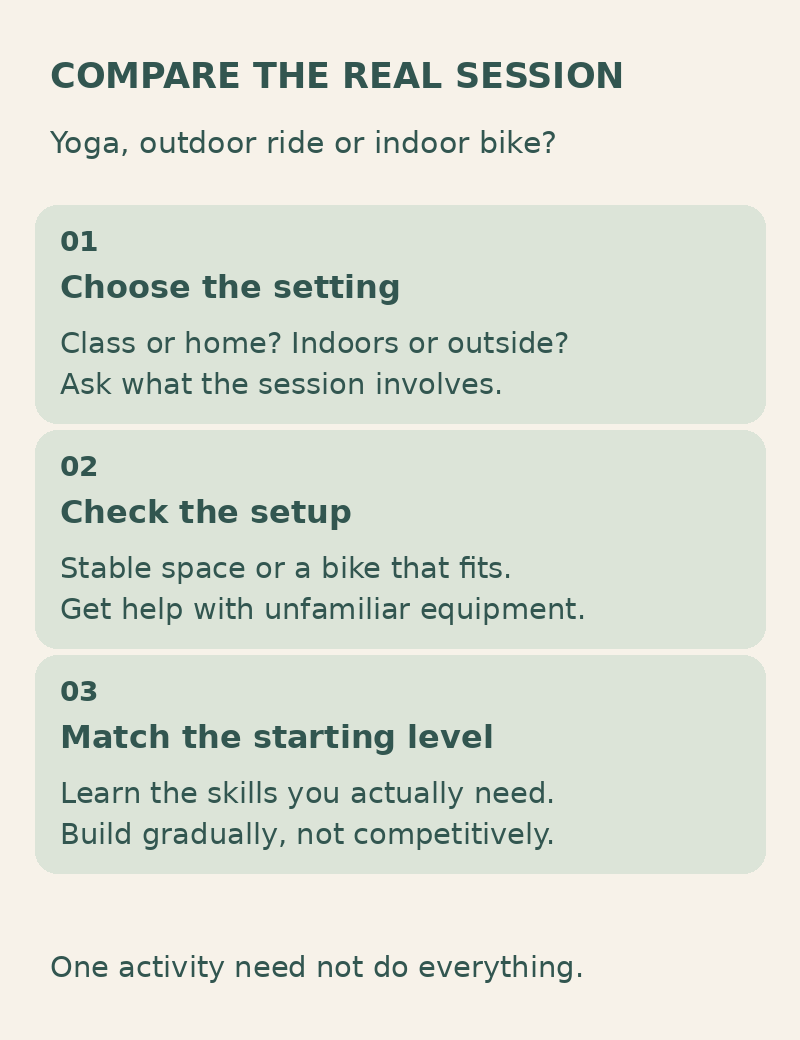
If traffic or weather makes outdoor riding unattractive, an exercise bike may be worth exploring. It does not require road handling during the session, but getting on and off, adjusting the bike and managing effort still matter.
Moving Medicine recommends asking an instructor to check the fit and discussing what feels right. A recumbent bike or another design may suit some people better than an upright studio bike; no single model is right for everyone.
Before a first class, ask whether someone will show you the controls, help with setup and explain how to reduce effort or stop. You do not need to copy another rider’s resistance or pace.
Compare access before buying equipment
Yoga may involve a class fee, travel, props and enough clear space to practise. Cycling may involve a bike or gym access, maintenance, storage and protective or visibility equipment for outdoor riding.
Neither option is automatically cheaper or easier. A bike already available to you may make cycling practical; a nearby introductory yoga class may offer more useful support than an unfamiliar home setup.
British Cycling describes hiring, second-hand sources and indoor bikes as possible entry routes. Check the condition, fit and terms of any actual option rather than treating a general suggestion as an endorsement of a particular seller.
Can you enjoy both?
Yes, but combining activities should not become a rule that every ride needs an extra class. A demanding yoga session adds work, and a hard ride is not a recovery session simply because the bike supports you.
Tell the teacher or cycling instructor about other activity you do. Ask how the session can fit your current ability and available recovery rather than filling every spare day.
Yoga also cannot diagnose recurring discomfort on a bike or replace a check of the cycling setup. Repeated pain needs assessment, not an assumption that a deeper stretch will fix it.
Keep health needs ahead of the comparison
NCCIH recommends qualified yoga instruction and notes that injuries can occur. Health conditions, pregnancy, older age and existing injuries may require changes to the practice.
Seek individual advice before starting or increasing activity if you have a relevant condition, recent surgery, ongoing pain or uncertainty about suitable effort. Stop for pain, dizziness or concerning symptoms rather than trying to finish a class or route. Seek urgent help for chest pain, fainting or severe breathing difficulty.
Choose yoga for the practice you want to explore, cycling for the riding or pedalling you want to learn, or both when they fit. A useful choice is specific, supported and realistic, not a universal winner.