
Reverse Warrior is a standing yoga pose that pairs a wide lunge with a gentle side bend. Start with a shorter stance and keep your front knee comfortably bent while reaching one arm overhead. The shape can be adjusted by resting your back hand on your leg or using a wall for balance. Move slowly, breathe without strain, and leave out any range that feels uncomfortable. This guide explains a simple way to learn the pose and make it your own.
This article is for general education and is not medical advice. Check with your doctor before practicing if you have a health condition, injury, balance concern, or are unsure whether yoga is appropriate for you.
What Reverse Warrior Is
Reverse Warrior is a standing pose with the front knee bent and the torso gently arcing toward the back leg. The front arm reaches up and back while the other hand rests lightly on the rear leg. The pose may be called Viparita Virabhadrasana in some classes. Exact alignment can vary by teacher and tradition.
Why People Practice It
Many people use Reverse Warrior as part of a flowing sequence of standing poses. Its broad stance gives practitioners a chance to explore balance, steady breathing, and movement through the sides of the body. It can also add variety to a sequence that includes lunges. Experiences differ, and the pose does not need to feel intense to be useful.
Set a Comfortable Intention
The aim is to find a stable shape that lets you breathe normally. Rather than trying to make a dramatic arch, notice whether your feet feel grounded and your shoulders can stay easy. A small range is a complete version of the pose. You can pause or leave the shape at any time.
Prepare Your Space
Choose a clear, nonslip space where you can step out in either direction. Keep a sturdy chair or wall within reach if balance is uncertain. Wear clothes that let your legs and arms move freely. If you are new to standing poses, practice when you are alert and not rushing.
Warm Up First
A few easy movements can help you notice how your body feels before a wide stance. Try gentle marching in place, shoulder circles, or a comfortable Cat-Cow movement on hands and knees. Keep the warm-up relaxed and skip any movement that brings pain, dizziness, or unusual discomfort.
Step 1: Stand Tall
Begin upright with your feet about hip width apart and arms resting by your sides. Feel the floor under both feet and look at one steady point. Take a few natural breaths without forcing a special breathing pattern. This is a chance to check your balance before stepping into a wider position.
Step 2: Make a Wide Stance
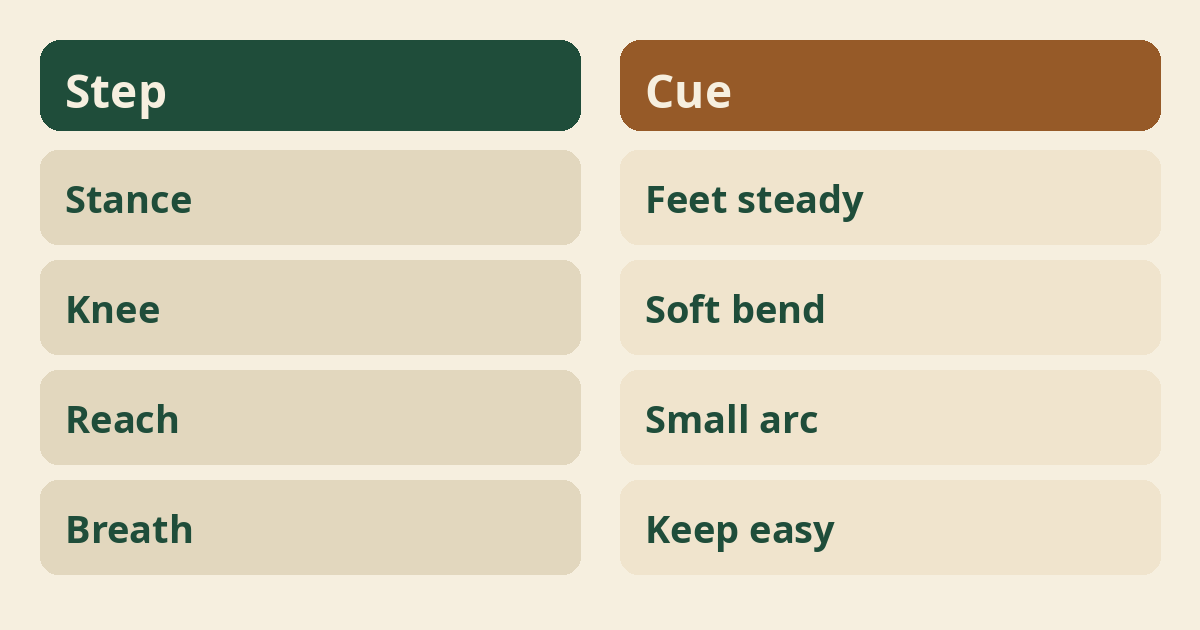
Step one foot back far enough to create a stable, comfortable base. Turn the back toes slightly outward and let the front toes point ahead or a little inward, whichever feels steady. Keep enough space between your feet from side to side. Shorten the stance if your legs feel stretched or unbalanced.
Step 3: Bend the Front Knee
Bend the front knee a little while keeping the back leg long but not locked. Let the knee point in the same general direction as the front toes. There is no need to reach a right angle. If the knee feels pressured, straighten it somewhat, shorten your stance, or come upright.
Step 4: Place Your Arms
Reach the front arm forward at shoulder height and rest the other hand on the rear thigh. Keep the lower hand light rather than leaning your weight into the leg. If reaching forward strains your shoulder, leave that arm lower or keep both hands at your hips while you find your footing.
Step 5: Reach Up and Over
Slowly arc the front arm overhead and slightly toward the back leg. Let the upper body move only as far as you can keep your stance steady and breath easy. Your chest may turn somewhat upward, but do not force a twist. A small side reach is enough to explore the shape.
Step 6: Find the Hold
Stay for a few comfortable breaths, then return upright before changing sides. Keep pressure spread through the whole front foot and the outer edge of the back foot. Relax your jaw and let your shoulders stay away from your ears. If you cannot breathe smoothly, reduce the reach or step out.
Breathe Without Forcing
Let your breath continue at a pace that feels natural while you hold the pose. Some people inhale as they reach and exhale as they return upright, but there is no need to match a fixed count. Avoid holding your breath. If you feel light-headed or short of breath, come out and rest.
How Long to Stay
Hold the pose only as long as you can remain steady and comfortable. A brief pause of one or two easy breaths can be a sensible first try. With practice, you may choose a little longer if the shape remains calm. Duration is personal, not a measure of skill.
How Often to Practice
You can add the pose when it fits a balanced standing sequence. If you want to build a simple routine, start with both sides once and notice how you feel afterwards. For general planning, see how often to do yoga. Rest days and lighter sessions are valid choices.
Check Your Front Knee
Keep the front knee tracking in the direction of the toes rather than collapsing inward. A mirror or teacher may help you notice the direction, but do not chase a perfect angle. If pressure appears around the knee, reduce the bend, move your feet closer, or stop for the day.
Keep the Back Leg Easy
Let the back leg support you without locking the knee or gripping the thigh. Press gently through the back foot and adjust its angle if the ankle or hip feels strained. If you cannot find a stable foot position, make the stance narrower or practice beside a wall.
Common Mistake: Reaching Too Far
Reaching farther does not make the pose better if your balance or breath becomes strained. People sometimes tip the ribs forward or press the lower hand hard into the leg to create a deeper curve. Try a smaller arc and keep your torso supported by your own posture. Ease out if the movement feels pinchy.
Common Mistake: Shrugging
Keep the reaching shoulder relaxed rather than lifting it toward the ear. The arm can be bent or lowered if a straight reach is uncomfortable. Let the shoulder blade move naturally as the arm rises. If overhead movement is limited, keep your hand at your waist and focus on the legs.
Use a Wall for Balance
Standing near a wall can make the pose feel more secure. Set up with your back or side near the wall and use a light fingertip touch if needed. The wall is support, not something to push against. Keep your feet on a clear surface and avoid leaning into the wall.
Use a Chair or Block
A stable chair or yoga block can offer an alternative place for the lower hand. Position the support where you can reach it without twisting or leaning heavily. Yoga props can make adjustments easier; see yoga props for beginners for basic ideas. Check that any object is firm and will not slide.
Try a Smaller Version
You can keep both hands on your hips and make only a small side reach. This variation reduces the need to hold an overhead arm position. Another option is to keep the front knee nearly straight and shorten your stance. Explore one change at a time so you can tell what feels comfortable.
Who Should Be Careful
Speak with your doctor before practicing if you have a condition or injury that affects balance, knees, hips, ankles, shoulders, or the spine. Be especially cautious if a recent procedure, pregnancy, medication effect, or dizziness changes how you move. A qualified yoga teacher can offer general setup ideas, but should not replace medical guidance. Stop if you feel sharp pain, numbness, faintness, or unusual symptoms.
Is This a Treatment?
No, Reverse Warrior is not a treatment for a medical condition. It is a yoga posture used for movement and practice, not a substitute for medical care or a prescribed plan. Do not use the pose to delay an appointment or ignore symptoms. Ask your clinician what activity is suitable for your situation.
Possible Benefits
Many people find that the pose offers a chance to practice balance, coordination, and a gentle side reach, though results vary. It may feel refreshing as part of a comfortable movement routine, but no particular result is promised. For general background on yoga research and health, see National Center for Complementary and Integrative Health. Choose a range that remains easy to control.
Progress Gradually
Change one part of the pose at a time as your confidence grows. You might first practice the stance, then add a small knee bend, and later explore the arm reach. Keep the same easy breathing throughout. If an adjustment makes the pose less comfortable, return to the simpler version.
Practice Both Sides
Try the pose on each side, while allowing the sides to feel different. You do not need to copy the same depth on both sides. Start with the side that feels less steady if you want more time to explore it. Use the same support on each side when it helps you feel secure.
What to Wear
Choose clothing that stays in place and does not restrict your legs or shoulders. Bare feet can help many people feel the floor, though stable footwear may suit some settings. Avoid socks on a slippery floor unless they have reliable grip. Adjust clothing before moving into a wide stance.
Choose a Teacher
A qualified teacher can help you explore alignment and suitable variations in person. Look for someone who welcomes questions and does not pressure you to move deeper. Tell the teacher about relevant limitations before class. If you need advice about a medical concern, ask a health professional rather than relying on a class cue.
Mindset for Beginners
Curiosity matters more than making the pose look a certain way. Notice the support of your feet, the direction of your knee, and the quality of your breath. It is fine to pause, use a prop, or skip a posture. A calm, repeatable practice is more useful than pushing through discomfort.
Connect It to a Sequence
Reverse Warrior can follow a standing lunge when you can step safely between positions. Move slowly from one shape to the next, and return to standing if the transition feels unsteady. A simple sequence might also include Mountain Pose at the beginning or end, with a rest in between.
Pair It With Gentle Rest
After standing work, choose a comfortable position to let your effort settle. You might sit on a chair or rest in a supported Child’s Pose if getting down to the floor is comfortable. If floor movement is difficult, remain seated or stand quietly instead.
When to Stop
Leave the pose if you feel pain, dizziness, tingling, breathlessness, or a sense of instability. Return to a neutral stance slowly and rest somewhere safe. If a symptom is severe, new, or does not settle, seek appropriate medical advice. Do not try to test the pose again to see whether the symptom repeats.
A Simple First Practice
For a first practice, spend a few minutes learning the stance before adding the full reach. Stand near support, try the shape on one side, return to center, and repeat on the other side only if comfortable. Finish with a few relaxed breaths. The goal is to learn what feels steady, not to complete a set number of repetitions.
Where to read next
For a calm, beginner-friendly start, Ranjana Sinha’s Begin Where You Are is written for people who want simple steps. Our guide to starting a home yoga practice adds a gentle routine you can follow at home.
Frequently asked questions
Does the Back Hand Hold Weight?
Keep the back hand resting lightly rather than using it to carry your body weight. If you need more support, use a sturdy chair or wall and shorten the stance. Pressing down hard can change the pose and may make it harder to notice discomfort.
Must the Front Knee Bend Deeply?
No, the front knee can stay only slightly bent or nearly straight. Choose the bend that lets you keep your foot grounded and breath comfortable. A shallow bend is a valid way to practice.
Can I Keep My Gaze Forward?
Yes, looking forward is a useful option if looking up feels uncomfortable or unsteady. Keep the head and neck relaxed rather than forcing the chin toward the ceiling. Choose the gaze that lets you stay balanced.
Should the Chest Face the Ceiling?
No, the chest does not need to turn fully upward. Keep the torso at a comfortable angle and avoid forcing a twist. The pose is still recognizable when the movement is small.
What If I Feel Wobbly?
Step out of the pose and try a narrower stance beside a wall or chair. Balance can change from day to day, so use support whenever it helps. If wobbling comes with dizziness or other symptoms, stop and seek suitable guidance.
What is Reverse Warrior Pose?
It is a standing lunge with a gentle side reach and one arm reaching overhead.
How deep should I bend my front knee?
Bend it only as much as feels stable and comfortable.
Can I use a wall for support?
Yes, a light hand touch on a wall can help you feel steadier.
How long should a beginner hold the pose?
Begin with a few easy breaths and come out sooner if needed.
Should I feel pain during Reverse Warrior?
No, stop and adjust or leave the pose if you feel pain.
The bottom line
Practice Reverse Warrior in a small, steady range, use support when helpful, and let comfort guide each side.

