
Yoga for hikers is a simple way to add mindful movement before or after a walk on the trail. You can begin with a few easy poses, steady breathing, and a clear space at home or at a safe rest stop. The aim is not to become more flexible or to push through discomfort. It is to notice how your body feels and choose movements that suit the day, your experience, and the ground beneath you.
This article is for general education and is not medical advice. If you have a health condition, injury, or questions about starting, check with your doctor first.
What yoga for hikers means
Yoga for hikers combines gentle yoga movements with the needs of walking on trails. It can include standing, seated, or floor-based poses, along with relaxed breathing and brief pauses. You do not need special clothes or a long class to begin, and you can practice on a non-hiking day.
Why hikers try yoga
Hikers may use yoga as a calm way to move before or after time on a trail. A short routine can help you pay attention to your posture, balance, and breathing without adding another demanding workout. People have different aims, so choose a few movements that feel useful rather than copying someone else’s full routine.
It is not a test
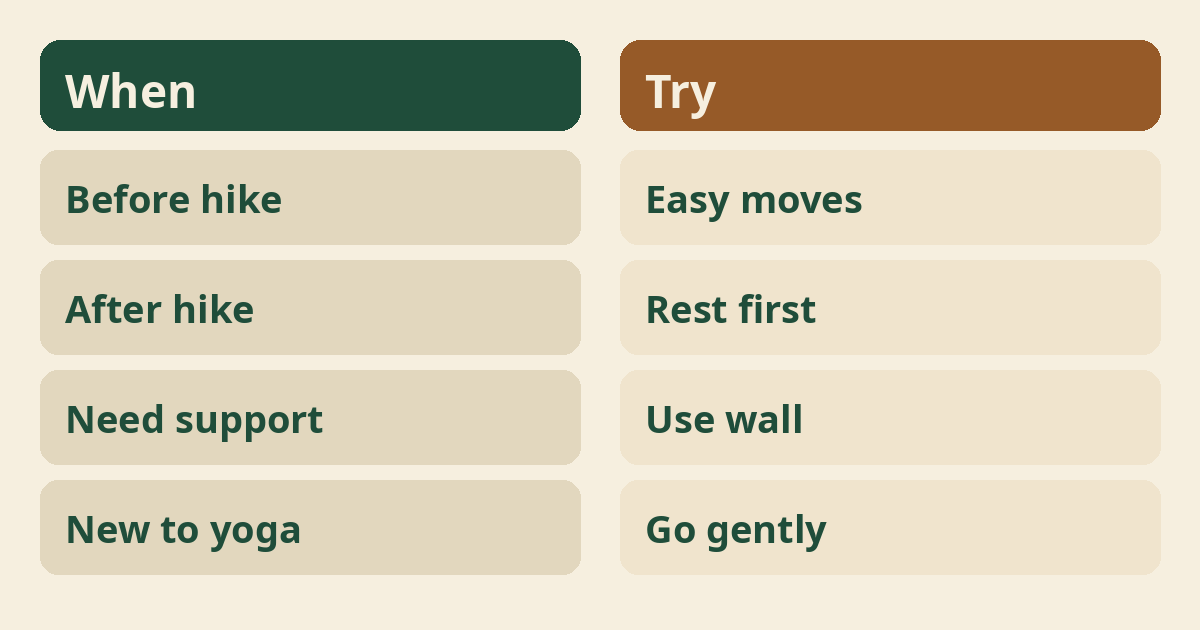
Yoga for hiking does not need to be intense, athletic, or perfectly still. A comfortable range of motion is enough for a beginner session. You can keep a hand on a wall or chair, bend your knees, or skip a pose whenever that makes the practice feel steadier.
Choose a session
The best first session is one that fits your time, energy, and setting. At home, you might use a mat and a quiet corner; outdoors, choose a stable, dry place away from trail traffic and edges. If the surface is uneven, slippery, crowded, or exposed, wait until you have a safer spot.
Set up your space
A clear, level space makes beginner poses easier to approach. Move bags, poles, and loose stones out of the way, and keep water nearby. On a trail, do not block the path or step onto fragile plants, and stay aware of other hikers around you.
How to start
Begin with a few simple movements and pause to notice how they feel. You can start with one or two minutes of easy breathing, then move through a small selection of standing or seated shapes. Keep the session modest at first; the goal is to learn the movements, not to earn a certain level of effort.
Step one: arrive
Start by standing or sitting in a position that feels stable. Let your shoulders rest naturally and notice the contact of your feet or seat with the ground. Take a moment to look around and check that your practice area is safe before you move.
Step two: warm up
Use small, unforced movements to get familiar with your range of motion. Slowly roll your shoulders or shift your weight from one foot to the other while keeping your knees soft. Stop if a movement brings sharp pain, dizziness, or a feeling that you need to brace yourself.
Step three: move the spine
Gentle spinal movements can make a useful transition into a short yoga routine. Try a few slow rounds of Cat-Cow Pose on a stable surface, or make a smaller seated version if getting onto the floor is not comfortable. Keep the movement easy and let your breath stay relaxed.
Step four: stand tall
A simple standing pose can help you practice steady posture. In Mountain Pose, stand with feet comfortably apart and knees unlocked, then notice how your weight is shared. You can place a hand on a wall or trekking pole for support if balancing without help feels uncertain.
Step five: fold gently
A supported forward fold is an option, not a required stretch. Keep your knees bent and rest your hands on your thighs or a sturdy support rather than reaching toward the floor. Leave space to breathe, and come back upright slowly if you feel light-headed or unsteady.
Step six: rest
Finish the movement portion with a comfortable pause. Sit on a bench, rock only if it is stable, or stand with support and let your breathing return to its usual pace. Take a drink of water if needed and check how you feel before packing up or walking on.
Breathing on the trail
Let your breathing stay natural and comfortable during yoga for hikers. A slow, easy exhale may help you settle, but there is no need to hold your breath or force a deep inhale. If breathwork feels uncomfortable, stop it and return to ordinary breathing.
Standing poses
Standing poses can be adjusted to match your balance and the surface. Choose a level area and keep a wall, bench, or stable support within reach when available. You can try a small side reach or gentle weight shift instead of a one-leg pose, especially when tired.
Seated poses
Seated poses give you an option when standing feels tiring or awkward. Sit on a chair, low step, or folded blanket that will not slide, with both feet supported if possible. A small seated twist can be done without pulling on your knee or forcing your spine to turn farther.
Hips and legs
Keep hip and leg movements small enough to stay comfortable. A gentle seated hip opener may feel easier to control than a deep lunge, and you can use a chair for support. For another beginner option, see Butterfly Pose, keeping the knees high if that is more comfortable.
Calves and ankles
Slow ankle circles and easy calf movements can fit into a brief routine. Hold a stable support while you move one ankle at a time, using a small range that feels smooth. Avoid bouncing or leaning hard into a stretch, especially if your legs are tired from a long walk.
After a hike
After hiking, let rest and ordinary recovery come before a demanding stretch session. A few comfortable movements may be enough, and it is fine to sit, eat, hydrate, or simply rest instead. If you choose a pose, use a support and avoid pushing into soreness or fatigue.
Before a hike
Before hiking, use gentle movement rather than a long, tiring yoga session. Try a few easy shoulder rolls, ankle circles, and relaxed standing movements, then begin the walk at a comfortable pace. Save longer holds or unfamiliar poses for another time so you can notice how your body responds.
How long to practice
A first session can be brief, and it can end whenever you have had enough. Try five to ten minutes if that suits your schedule, but there is no required duration. A shorter practice that feels manageable is a sensible starting point, especially on a day when you are also hiking.
How often to practice
Choose a frequency that fits your life and leaves room for rest. Some beginners try a short routine once or twice a week, while others prefer occasional movement after walks. For general scheduling ideas, read how often to do yoga, then adjust based on your own comfort and plans.
Common mistakes
Beginners can make the practice harder by turning every pose into a deep stretch. Avoid comparing your range of motion with a photo, locking the knees, or rushing between shapes. If you are holding your breath or gripping for balance, make the pose smaller or choose a supported version.
Useful props
A few simple props can make yoga for hikers more comfortable and steady. A folded blanket, stable chair, wall, or firm cushion may help you adjust a pose; trekking poles are useful only when they are planted securely. Learn more about beginner yoga props and use only items that will not shift beneath you.
Footwear and clothing
Wear clothing that lets you move without catching or restricting your steps. At home, bare feet or grippy socks may suit a stable surface; outdoors, keep shoes on if the ground is rough, cold, or slippery. Do not assume a trail rock, log, or bench is stable enough to use as a prop.
Pain and stopping
Stop a movement when it causes sharp pain, unusual discomfort, or loss of balance. Return to a neutral position slowly and choose rest instead of testing the same movement again. If discomfort does not settle or you are unsure what is safe, ask a qualified health professional for guidance.
Who should be careful
Check with your doctor first if you have a health condition, recent injury, or a concern about exercise. This is especially important before trying unfamiliar movements after surgery or when balance, breathing, or joint movement is limited. Follow the advice you have been given, and ask what types of movement are suitable for you.
Is yoga a treatment?
No, yoga for hikers is not a treatment for an injury or health condition. This routine is general movement education and should not replace care from a doctor or other qualified clinician. If you are seeking help for a symptom, speak with a health professional rather than relying on a yoga pose.
Possible benefits
Many people find that gentle yoga helps them pause and notice how their body feels, but results vary. Research on yoga covers many different practices and groups, so it cannot promise a specific result for hikers. For a general overview of yoga research, see National Center for Complementary and Integrative Health and discuss personal health questions with your doctor.
Progress at your pace
Progress can mean learning a comfortable routine, not achieving a more difficult pose. You might remember a sequence, use less effort to set up, or feel more confident choosing a safe support. Change one thing at a time, and keep what feels appropriate rather than measuring success by depth or duration.
Finding a teacher
A qualified yoga teacher can help you learn options and adapt movements. Look for someone who welcomes beginners, explains alternatives, and does not pressure students to ignore discomfort. You can tell the teacher that hiking is part of your routine and ask for simple movements that do not depend on advanced balance.
Mindset for beginners
Treat the practice as a chance to notice rather than a challenge to conquer. Your body may feel different from one day to another, and that does not mean you have failed. It is reasonable to skip a pose, change the plan, or finish early when rest is the better choice.
Adapt for the trail
Keep trail yoga brief and practical, with safety taking priority over the routine. Check weather, footing, visibility, and nearby people before stopping to move. Do not practice near a cliff edge, roadway, fast water, or any place where losing balance could put you in danger.
Balance and support
Use support whenever a pose feels wobbly or your legs are tired. Stand near a wall, hold a sturdy rail, or keep both feet on the ground instead of testing a one-legged shape. If the support itself shifts, stop and choose a safer position.
Keep a simple routine
A small repeatable sequence is often easier to remember than a long list of poses. You might begin with a pause, a few shoulder and ankle movements, one supported standing pose, and a seated rest. Keep notes about what felt comfortable so you can make a calm choice next time.
Where to read next
For a calm, beginner-friendly start, Ranjana Sinha’s Begin Where You Are is written for people who want simple steps. Our guide to starting a home yoga practice adds a gentle routine you can follow at home.
Frequently asked questions
Do I need yoga experience?
No, beginners can start with simple movements and support.
Can I practice outdoors?
Yes, choose a safe, level place that does not block the trail.
Should I stretch before hiking?
Keep pre-hike movement gentle and do not force a stretch.
What if I cannot reach the floor?
You can use a chair, wall, or standing version instead.
Can yoga replace hiking?
No, yoga and hiking are different activities.
The bottom line
Start with a few calm movements, use support when needed, and let comfort guide your yoga for hikers routine.

