
Some days, worry sits in your chest before your feet even touch the floor. Grounding yoga is a slow, floor-based practice built for days like that. It uses easy poses, steady breathing, and attention to physical sensations to help you feel more settled. You need no experience, no special gear, and only a small patch of floor. This guide walks you through what it is, a simple routine, and how to make it a habit.
This article is for general education only and is not medical advice. If you live with anxiety, panic, or any health condition, talk with your doctor before starting a new practice.
What is grounding yoga?
Grounding yoga is a slow, floor-friendly practice that anchors your attention in physical sensations. It combines easy poses, steady breathing, and awareness of touch points like your feet, seat, and hands. The pace is slow on purpose. Many beginners like it because nothing feels rushed or forced.
Why do people practice on anxious days?
Many people reach for grounding yoga when worry feels loud because it gives the mind one simple job at a time. Anxious thoughts tend to race ahead or loop backward. Feeling the floor under you pulls attention back to the present moment. Results vary from person to person, but many describe feeling more settled afterward.
How is it different from faster styles?
Grounding yoga stays slow and low, while flow styles move quickly and build heat. There are no fast transitions to keep up with and no demanding holds. The aim is steadiness rather than a workout. That slower shape is exactly why it suits a tense, tired day.
Where does it fit in a bigger practice?
Grounding work is one quiet piece of a larger yoga toolkit for hard days. For a wider view of this topic, our cornerstone guide on yoga for anxiety walks through routines, breathing ideas, and common questions. Grounding sessions pair naturally with the other approaches covered there. Think of it as the calm base layer.
How do you start at home?
Start with five to ten minutes, a clear patch of floor, and one or two poses you like. Pick a time when the house is fairly calm. Silence your phone if you can. Short and consistent beats long and rare for most beginners.
Do you need any experience?
No experience is needed, because grounding yoga uses basic positions and simple breathing. Most poses are versions of standing, sitting, kneeling, or lying down. You move slowly and rest whenever you want. Curiosity matters more than skill here.
How much space do you need?
You need about the floor space of a yoga mat, roughly six feet by two feet. A bedroom corner, a spot beside the bed, or a stretch of living room floor all work. Clear anything you might bump into. A folded blanket can stand in for a mat on hard floors.
What should you wear?
Wear anything soft and loose that lets you bend and breathe easily. Pajamas, sweatpants, or a stretched-out t-shirt are all fine. Bare feet help you feel the floor, which is the whole point of grounding. Skip anything tight around your waist or ribs.
Step one: how do you settle in?
Begin by standing tall in mountain pose and simply noticing your feet. Let your arms hang, soften your knees, and feel your weight spread across both soles. Stay for five slow breaths. Our guide to mountain pose for beginners shows the details, and a sturdy chair works if standing feels unsteady.
Step two: how do you wake up your feet?
Rock slowly from heel to toe and notice how pressure moves across each foot. Then spread your toes and press down through all four corners of both feet. Spend about a minute here. This simple drill is a fast way to feel present when your thoughts are scattered.
Step three: how do you move with your breath?
Move into a slow cat-cow on your hands and knees, letting each breath lead the motion. Inhale as your chest lifts, exhale as your spine rounds. Keep the pace unhurried for eight to ten rounds. The full setup is in our cat-cow pose for beginners guide if you want pictures.
Step four: how do you rest low to the ground?
Sink back into child’s pose and let your forehead rest on the mat or a folded blanket. Knees can stay together or open wide, whichever feels better on your body. Breathe into your back for a minute or two. Our child’s pose for beginners article covers easy adjustments for tight hips or knees.
Step five: how do you finish?
End seated or lying down, doing nothing but noticing contact points for a few breaths. Feel where your sit bones, back, or heels meet the floor. Let your hands rest heavy on your thighs. Give yourself at least a minute before you stand up and return to your day.
How should you breathe during grounding yoga?
Breathe slowly through your nose, letting your belly rise and fall instead of your chest. A simple pattern is a soft count of four in and six out. Longer exhales feel calming to many people, though comfort matters more than any exact count. If belly breathing is new to you, belly breathing for beginners breaks it down step by step.
What is the 5-4-3-2-1 sensory drill?
It is a grounding exercise where you name five things you see, four you feel, three you hear, two you smell, and one you taste. You can run it quietly during any pose or while lying down. It works like an anchor for a busy mind. Many people pair it with slow breathing for a stronger settling effect.
How long should a session last?
Anywhere from five to twenty minutes is enough for most beginners. A short session done often beats a long one done rarely. Start small and add time only if it feels good. Even three poses and ten slow breaths count as practice.
How often can you do grounding yoga?
You can practice daily, since the poses are low effort and easy on the body. Many people like a short session each morning or before bed. Others save it for days that feel hard. For a broader look at building a routine, read about how often you should do yoga.
What time of day works well?
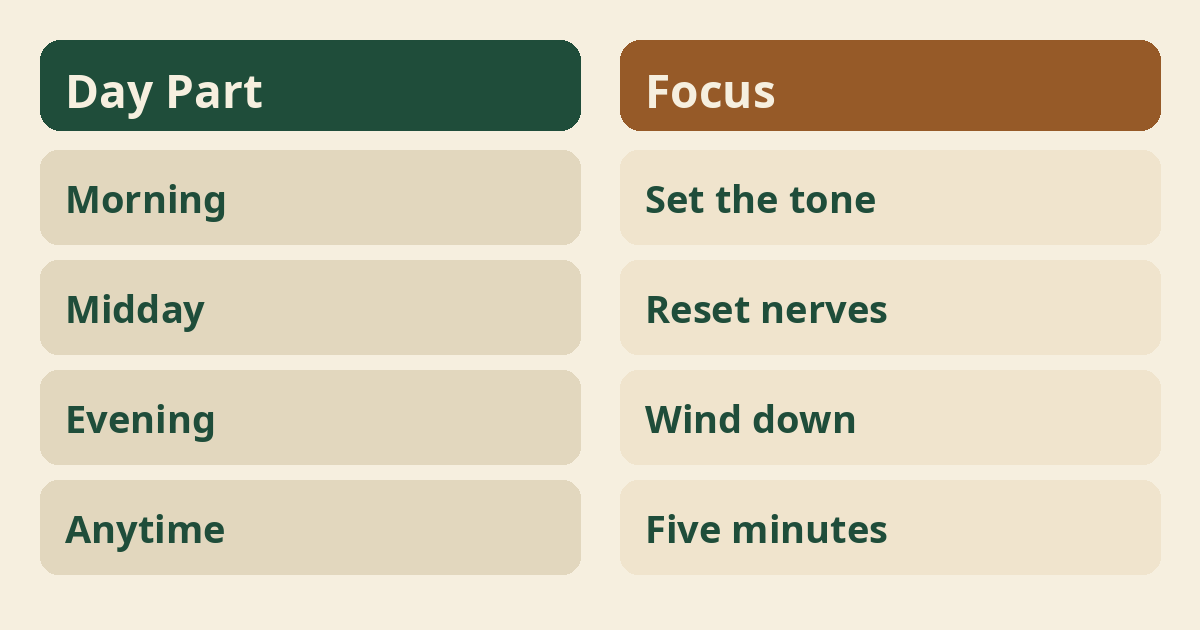
The best time is whatever time you will actually keep. Morning sessions can set a steady tone before the day gets busy. Evening sessions help some people unwind before sleep. Try both for a week and notice which one your body prefers.
What props are useful?
A mat, a blanket, and a pillow cover almost everything a beginner needs. A folded blanket under the knees softens floor poses, and a pillow under the forehead makes resting poses easier. Blocks are nice but not required. Our yoga props for beginners guide shows budget-friendly swaps using things you already own.
What mistakes do beginners make?
The most common mistakes are rushing, holding the breath, and pushing into poses that hurt. Grounding yoga works best at a pace that feels almost too slow. Skip any pose that causes pain. Comfort is not laziness here; it is the method.
What if your mind will not slow down?
A busy mind is normal, and noticing it wander is part of the practice, not a failure. Each time you catch yourself thinking, come back to one sensation, like your feet on the mat. You might do this twenty times in five minutes. That repetition is the exercise.
Can you do grounding yoga at your desk?
Yes, seated breathing, foot pressing, and slow shoulder rolls all count as grounding at a desk. Press both feet into the floor, feel the chair under you, and take five slow breaths. Our yoga at your desk routine has more ideas for workdays. Nobody around you needs to know you are practicing.
Who should check with a doctor first?
Anyone with a health condition, a recent injury, pregnancy, or ongoing anxiety care should talk with a doctor before starting. The same goes if you feel dizzy when changing positions or have joint pain that flares on the floor. A quick conversation can flag what to skip or adapt. Your safety comes before any routine.
Is grounding yoga a treatment for anxiety?
No, grounding yoga is not a treatment, a cure, or a replacement for professional care. It is a self-care practice that many people find calming, and results vary widely. If anxiety affects your daily life, a doctor or licensed therapist is the right first stop. Yoga can sit alongside that care, not instead of it.
What benefits do people report?
Many people say grounding yoga leaves them feeling calmer, more present, and better able to sleep, though results vary. Some notice slower breathing and looser shoulders right after a session. Others value having a plan for hard moments. Research on yoga and wellbeing is still developing, and sources like National Center for Complementary and Integrative Health offer balanced overviews of what is known so far.
Can it ease everyday stress?
Many people find that slow movement and long exhales take the edge off everyday stress. It will not remove the source of stress, and no one should expect that. What it can offer is a few minutes where your body gets the message that it is allowed to downshift. For more ideas, see our guide to yoga for stress relief.
How do you progress over time?
Progress looks like longer holds, smoother breathing, and noticing your body sooner, not harder poses. Add a minute or two per week if you want more. You might add one new pose each month. Grounding yoga has no finish line, and staying basic forever is completely fine.
Should you learn from a teacher?
A teacher is not required, but a few beginner classes can build confidence and catch unhelpful habits early. Look for classes labeled slow, restorative, or beginner. Tell the teacher you are new and mention any injuries. Online videos from qualified teachers also work if getting to a studio is hard.
What mindset helps beginners?
Approach each session as an experiment, not a test you can pass or fail. Some days the practice will feel soothing and other days flat, and both are normal. Let go of doing it right. Showing up for five honest minutes beats a perfect half hour you never do.
What if you feel dizzy or emotional?
Come out of the pose slowly, sit or lie down, and let the feeling pass before you continue. Slow breathing and stillness can sometimes stir up feelings, and that is a known part of body-based practice. If it feels like too much, stop for the day. Talk with a professional if strong feelings keep showing up.
Can you mix grounding yoga with other styles?
Yes, grounding work pairs well with balance poses, stretching, and stronger practices on other days. Many people use it as a warm-up or a cooldown. If you want to build steadiness in standing poses too, our yoga for balance guide is a natural next step. Mixing styles keeps the habit fresh.
Does grounding yoga work right away?
Some people feel a shift in one session, while others notice changes after a few weeks, and both are normal. The first sign is often small, like an easier exhale or a quieter minute before sleep. Keep expectations modest and track how you feel over time. Slow change still counts.
Do you need a quiet room?
A quiet room helps, but it is not required, and real life rarely offers one anyway. Household noise, traffic, or a TV in the next room can all be part of the practice. Noticing sounds without chasing them is itself a grounding skill. Earplugs or soft music are fine shortcuts too.
What if you only have five minutes?
Five minutes is enough: stand, breathe, do one slow pose, and finish seated. Try a minute of mountain pose, two minutes of cat-cow, a minute in child’s pose, and a minute of quiet sitting. Short sessions build the habit that long sessions grow from. Five honest minutes beats an hour you keep postponing.
Where to read next
For a calm, beginner-friendly start, Ranjana Sinha’s Begin Where You Are is written for people who want simple steps. Our guide to starting a home yoga practice adds a gentle routine you can follow at home.
Frequently asked questions
Can I do grounding yoga in bed?
Yes, many grounding poses like child’s pose and seated breathing adapt well to a firm mattress.
Will grounding yoga stop a panic attack?
No, it is not a treatment for panic, though some people find slow breathing soothing, so follow your doctor’s guidance.
Do I need a mat for grounding yoga?
A mat helps with grip and comfort, but carpet or a folded blanket works fine for most poses.
Is grounding yoga safe during pregnancy?
Many poses adapt well, but check with your doctor first and ask how prenatal and regular yoga differ.
What should I do if a pose feels wrong?
Come out of the pose slowly, rest, and skip anything that causes pain or sharp discomfort.
The bottom line
Start with one quiet minute on the floor today and let the habit grow from there.

