When your chest feels tight and your thoughts will not slow down, simple breathing exercises for anxiety can help you feel steadier in just a few minutes. You can do them anywhere, at home, at work, or in a parked car, and you need nothing but your own breath. This guide walks you through easy techniques step by step, shows you how often to practice, and explains what to expect as a beginner. Everything here is slow, safe, and made for first-timers.
This article is general education, not medical advice or a substitute for care from a professional. If you live with a health condition or ongoing anxiety, check with your doctor before starting a new breathing practice.
What are breathing exercises for anxiety?
Breathing exercises for anxiety are simple patterns of slow, controlled breathing that help your body shift toward a calmer state. They work by changing how fast and how deeply you breathe. Most take only a few minutes and need no equipment at all. Beginners usually start with one easy pattern and practice it daily.
Why do people practice breathing exercises for anxiety?
People practice them because anxious feelings often come with fast, shallow breathing, and slowing the breath can send the body a signal to settle. Many people like that the exercises are free, private, and always available. You can use one before a meeting, in traffic, or when you wake at night. For many, it becomes a small daily habit that fits anywhere.
What happens in your body when you breathe slowly?
Slow breathing appears to nudge the nervous system away from its alert mode and toward its rest mode. Your heart rate may ease down, and tight muscles may loosen a little. Scientists link this shift to the vagus nerve, which helps regulate calm. The effect is mild at first and builds with regular practice.
How do you start as a complete beginner?
Start with five minutes a day of one simple technique, like counted breathing, in a quiet spot. Sit or lie somewhere comfortable and set a timer so you do not watch the clock. Keep your breath easy rather than deep or forced. Short, relaxed practice beats long, strained practice every time.
Step 1: Find a comfortable position
Sit in a chair with your feet flat or lie on your back, whichever feels easier. Rest your hands on your thighs or your belly. Loosen anything tight around your waist or neck. Comfort matters because tension makes slow breathing harder.
Step 2: Notice your natural breath
Before changing anything, spend about a minute just watching how you already breathe. Notice whether your breath is fast or slow, shallow or deep. Do not judge it or fix it yet. This quiet noticing is itself part of the exercise.
Step 3: Breathe in through your nose
Draw a slow, easy breath in through your nose, letting your belly soften and rise. Keep your shoulders relaxed rather than lifting them. Aim for a smooth breath, not a big one. If your nose is blocked, breathing in through your mouth is fine.
Step 4: Breathe out slowly
Let the breath leave slowly, either through your nose or through pursed lips. Many people find a longer exhale feels especially calming. Do not push the air out; let it fall out on its own. Each slow exhale is a small signal for your body to ease.
Step 5: Add a slow count
Count softly in your head, such as breathing in for four and out for six. The count gives your mind a job, which makes wandering thoughts easier to notice. Any comfortable ratio works. If counting stresses you, drop it and just follow the breath.
Step 6: Repeat for a few minutes
Keep the slow rhythm going for five to ten breaths, or a few minutes if that feels good. End by letting your breath return to normal on its own. Notice how your body feels before you stand up. Over days, this short loop becomes familiar and easier to enter.
What is belly breathing?
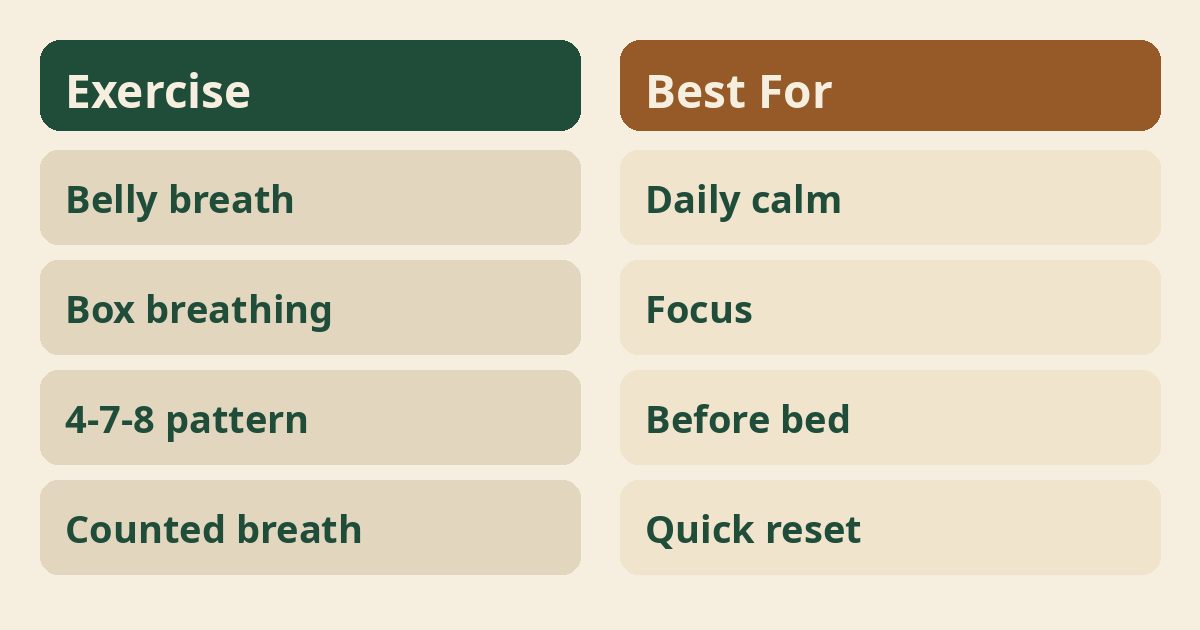
Belly breathing means letting your abdomen rise on the inhale and fall on the exhale, instead of moving only your chest. Place one hand on your belly and one on your chest to feel the difference. The lower hand should move more than the upper one. Our guide to belly breathing for beginners walks through this foundation in more detail.
What is box breathing?
Box breathing is a steady pattern where you breathe in, hold, breathe out, and hold again, each for the same count. A common version uses a count of four for each side of the box. The even rhythm can feel steadying when thoughts jump around. Skip the holds if holding your breath feels uncomfortable.
What is the 4-7-8 breathing pattern?
The 4-7-8 pattern means breathing in for four counts, holding for seven, and breathing out for eight. The long exhale is the heart of the technique. Some people find the holds tricky at first, so shorten them as needed. It is often used as a wind-down practice in the evening.
What is alternate nostril breathing?
Alternate nostril breathing is a yoga practice where you close one nostril at a time and breathe through the other. Use your thumb and finger to close each side softly. The pattern asks for focus, which some people find quietly absorbing. Keep the breath light and stop if you feel dizzy.
How long should one session be?
For most beginners, five to ten minutes is plenty. Short sessions are easier to repeat, and repetition is where the benefit tends to build. You can always add time later. Even two minutes of slow breathing is worth doing.
How often should you practice?
Daily practice, even for a few minutes, tends to work better than long sessions once in a while. Many people attach it to an existing habit, like morning coffee or bedtime. Regular reps teach your body the pathway to calm. If you also move your body, our piece on how often to do yoga shows how beginners build a steady rhythm.
When during the day does practice help most?
The best time is the time you will actually do it, and many people pick mornings or evenings. Morning practice can set a steady tone for the day. Evening practice can mark the shift toward rest. Some people also keep a one-minute version ready for stressful moments.
Can breathing help during an anxious moment?
Yes, slow breathing is one of the few tools you can use right in the middle of a hard moment. Lengthen your exhale first, since that part tends to calm the fastest. Keep the breath soft instead of gulping air. It may not erase the feeling, but many people find it takes the edge off.
What are common beginner mistakes?
The most common mistakes are breathing too deeply, forcing the pace, and quitting when the mind wanders. Bigger breaths are not better; comfortable ones are. Forcing can make you dizzy or tense. A wandering mind is normal, so just return to the count without scolding yourself.
How do you know you are doing it right?
You are doing it right if the breath feels smooth and easy and you finish feeling at least a little more settled. There is no perfect form to chase. Signs of strain, like dizziness or tight shoulders, mean you should soften the breath. Comfort is the real measure.
What setup or props make practice easier?
A quiet corner, a chair or cushion, and a timer are all you need. A folded blanket under your hips can make sitting kinder on your back. Some people like an eye pillow in the evening. Our roundup of yoga props for beginners covers simple, low-cost options.
How does breathing fit with yoga?
Breathwork is a core part of yoga, and pairing it with easy poses can deepen the calming effect. A restful shape like child’s pose gives slow breathing a comfortable home. For the bigger picture, our cornerstone guide yoga-for-anxiety explains how breathing, poses, and routine fit together.
Can you practice at your desk?
Yes, counted breathing is quiet and invisible, so it works well at a desk. Sit tall, drop your shoulders, and run a few slow rounds between tasks. Nobody needs to know you are doing it. Our guide to yoga at your desk has more ideas for workday calm.
Who should talk to a doctor first?
Anyone with a heart or lung condition, pregnancy, severe anxiety, or a history of fainting should check with a doctor first. Breath holds and very slow breathing are not right for everyone. A doctor can tell you which patterns suit your situation. Bring it up at your next visit if you are unsure.
Are breathing exercises a treatment for anxiety?
No, breathing exercises are a self-care practice, not a treatment or a cure. They are not a replacement for therapy, medication, or medical care. If anxiety disrupts your daily life, a doctor or licensed therapist is the right first stop. Think of breathing practice as one small support, not the whole answer.
What benefits do people report?
Many people report feeling calmer, sleeping more easily, and handling stressful moments with a bit more steadiness, though results vary. Research on slow breathing is still growing, and no single result is guaranteed. National Center for Complementary and Integrative Health The most common report is simply that practice makes anxious moments feel more manageable. Your own experience is the best guide.
How do you build the habit?
Attach your practice to something you already do every day, like brushing your teeth or making tea. Keep the first two weeks small so the habit feels easy. A checkmark on a calendar can keep you honest. Missed days are normal; just start again the next day.
How do you progress over time?
Progress means longer, easier sessions and quicker calm, not harder techniques. After a few weeks, you might stretch sessions to ten or fifteen minutes. You can also try a second technique, like box breathing, for variety. Move slowly and keep comfort first.
Do you need a teacher?
No, the basic techniques are simple enough to learn on your own. A teacher can still help if you want feedback or feel stuck. Many yoga classes include breathwork at the start and end. A short class now and then can refresh your practice.
What if breathing exercises make you feel worse?
If focusing on your breath makes you more anxious or dizzy, stop and return to normal breathing. This happens to some people and says nothing bad about you. Try shorter sessions, softer breaths, or eyes open. If it keeps happening, talk with your doctor about other calming tools.
Can breathing help before sleep?
Many people use slow breathing at bedtime to help their body shift toward rest. Try a few minutes lying in bed with the lights low. A longer exhale, like in the 4-7-8 pattern, is a popular choice. It is not a sleep fix, but many find it eases the transition.
Does posture matter?
Posture matters because a slumped chest makes full, easy breathing harder. Sit or stand tall with your shoulders soft and your ribs free to move. Even a simple stance like mountain pose can show you what open, easy alignment feels like.
What role does mindset play?
A patient, curious mindset works better than chasing instant results. Treat each session as practice, not a test you can fail. Some days will feel calm and others will not, and both are normal. The value comes from showing up again tomorrow.
How do you stay motivated?
Track your practice simply and notice small wins, like falling asleep faster or recovering from stress sooner. Pairing breathing with a pleasant ritual, like morning light or evening tea, helps it stick. Remind yourself why you started when motivation dips. Small and steady wins this race.
Where to read next
For a calm, beginner-friendly start, Ranjana Sinha’s Begin Where You Are is written for people who want simple steps. Our guide to starting a home yoga practice adds a gentle routine you can follow at home.
Frequently asked questions
Can I do breathing exercises lying down?
Yes, lying on your back with one hand on your belly is a comfortable way for beginners to practice.
Is feeling light-headed at the start normal?
Mild light-headedness can happen if you breathe too big or too fast, so ease back and let your breath return to normal.
Do breathing exercises work for everyone?
No single technique works for everyone, and many people need a few weeks of steady practice before they notice much.
Will these exercises stop a panic attack?
They may help some people feel steadier during panic, but they are not a fix, so follow your doctor’s plan for panic symptoms.
What should I do when my mind keeps wandering?
Wandering is normal; each time it happens, gently bring your attention back to the count or the breath.
The bottom line
Start with five quiet minutes today, and let slow, steady breathing become the calmest habit you own.