
Feeling tired, moody, or out of rhythm for weeks can leave you wondering if your hormones are off, and yoga is one calm, low-cost habit many beginners use to feel steadier. This guide shows you how to start yoga for hormonal imbalance with easy poses, slow breathing, and simple routines you can do at home. No experience, fancy gear, or long sessions are needed. You will learn what to try, how often to practice, and when to see a doctor first.
This article shares general education about yoga and wellness. It is not medical advice, so talk with your doctor before starting if you have a health condition, take medication, or notice new symptoms.
What is hormonal imbalance?
Hormonal imbalance means your body makes too much or too little of certain hormones. Hormones are chemical messengers that guide sleep, mood, energy, weight, and cycles. When they drift out of range, daily life can feel harder. Small shifts are common and often respond to steady habits over time.
How can yoga fit in?
Yoga gives you a calm, low-impact way to move, breathe, and unwind in one practice. Slow movement and rest may help your body handle stress, which is tied to many hormone signals. Yoga for hormonal imbalance is popular because it is kind to joints and easy to start at home. You control the pace, the poses, and the length of every session.
Why do people try yoga for this?
Many people want a natural habit they can control between doctor visits. Long workdays, poor sleep, and worry can stir up stress hormones. A short daily practice offers a pause that feels doable, even on busy days. It also builds body awareness, which helps you notice changes earlier.
What about imbalance in females?
Hormonal imbalance in females often shows up around cycles, mood, skin, and energy. Shifts can follow puberty, pregnancy, busy years of work, or midlife changes. Rest-based poses are a common choice because they ask little and give the body room to settle. Tracking your cycle alongside your practice can reveal useful patterns.
Which signs call for a doctor?
Ongoing fatigue, missed cycles, sudden weight change, or low mood deserve a medical check first. A doctor can run simple tests and rule out causes that yoga cannot address. Bring notes about your sleep, energy, and cycles to the visit. The more specific your notes, the faster the conversation goes.
Is yoga for hormonal imbalance a treatment?
No, yoga is not a treatment, and it should never replace medical care. Think of it as a supportive habit that sits next to your doctor’s plan. If you have a diagnosis, your care team stays in charge of the medical side. Yoga simply gives you something steady to do for yourself in the meantime.
What benefits do people report?
Many people say they sleep better, feel calmer, and carry less tension after a few weeks. Results vary from person to person, and research in this area is still growing National Center for Complementary and Integrative Health. The safest expectation is a steadier mood and body over time, not a quick fix. Some also notice they handle stressful days with more patience.
How do you start at home?
Pick a quiet corner, a mat or folded blanket, and ten free minutes. Wear clothes you can breathe in and keep water nearby. Morning or evening both work, so choose the slot you can repeat. Tell the people you live with that it is your quiet time.
Step 1: Settle your space
Begin by dimming distractions and standing tall for a few slow breaths. Notice your feet on the floor and let your shoulders drop. This one minute tells your body that practice has started. Silence your phone so nothing pulls you away.
Step 2: Find your base in mountain pose
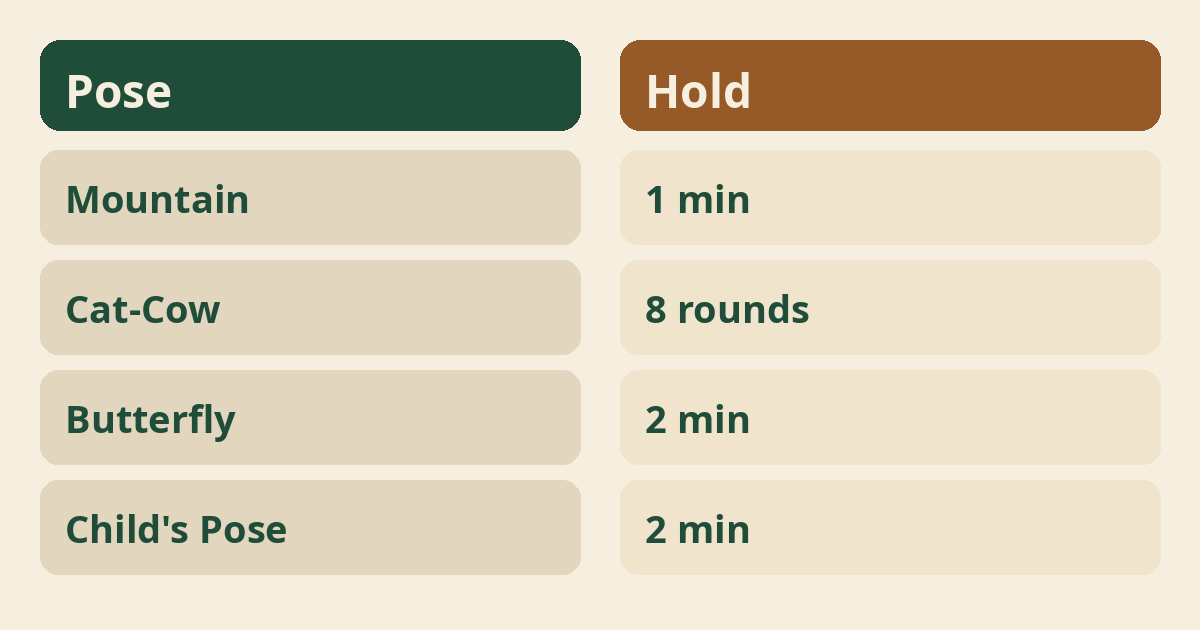
Stand tall with feet hip width apart and arms relaxed at your sides. Mountain pose builds posture awareness and calm focus in under a minute. A fuller walkthrough lives in our guide to mountain pose for beginners. Let your breath settle before you move on.
Step 3: Warm up with cat-cow
Move your spine slowly between arching and rounding for five to eight rounds. Match each bend to your breath and keep the pace easy. If you want extra detail, see our steps for cat-cow for beginners. This wakes up the back without strain.
Step 4: Open the hips with butterfly
Sit tall, bring the soles of your feet together, and let your knees fall outward. Stay for one to two minutes and breathe into any tight spots. Props and variations are covered in butterfly pose for beginners. Hips often hold tension that quietly feeds stress.
Step 5: Rest in child’s pose
Fold forward with your knees wide and your forehead on the mat or a pillow. This resting shape quiets the body and works as a safe pause between harder poses. Our breakdown of child’s pose for beginners shows easy options for tight hips. Stay as long as it feels good.
Step 6: Finish with deep rest
Lie on your back for three to five minutes and let your whole body soften. Keep your breath slow and natural while you rest. Many people find this quiet minute is where the practice really lands. Set a soft timer so you do not watch the clock.
How does breathing help?
Slow belly breathing signals safety to the body, which can ease the stress response. Place a hand on your belly, let it rise as you inhale, and soften as you exhale. New to this? Try the simple pattern in belly breathing for beginners. Two minutes a day is enough to build the habit.
How long should a session be?
Ten to twenty minutes is plenty for a beginner. Short sessions done often beat long ones done rarely. Add time only when the habit starts to feel easy. If twenty minutes sounds like a lot, start with five.
How often should you practice?
Three to five sessions a week is a solid rhythm for most beginners. Daily easy movement is fine if your body feels good. Rest days are part of the plan, not a failure. Consistency matters far more than intensity at this stage.
What time of day works best?
The best time is the one you can actually keep. Mornings may set a calm tone for the day ahead. Evenings can help you unwind before sleep. Try both for a week each and keep the one that sticks.
What does a simple week look like?
A beginner week might be three short sessions on the mat and one longer one on a day off. For example, practice Monday, Wednesday, and Friday for ten minutes, then twenty minutes on Sunday. Fill the gaps with walks or slow breathing. Adjust the days to fit your real life, not an ideal one.
What mistakes should you avoid?
The biggest mistakes are pushing into pain, holding your breath, and skipping rest. Compare nothing to photos online; your body sets the range. If a pose pinches or strains, come out of it slowly. Rushing through poses to finish faster also steals the calm you came for.
What props make it easier?
A pillow, a folded blanket, and a sturdy chair cover almost everything. Props bring the floor closer and take pressure off tight joints. Our full list lives in yoga props for beginners. You likely own everything you need already.
Who should check with a doctor first?
Anyone who is pregnant, recovering from surgery, or managing a diagnosed condition should talk to a doctor first. The same goes for thyroid issues, blood pressure concerns, or new unexplained symptoms. A short conversation keeps your practice safe. Share your plans with your doctor so advice fits your situation.
Can stress make hormones worse?
High ongoing stress can nudge several hormones out of their usual rhythm. That is one reason slow, rest-based yoga appeals to so many people. For a wider routine, see our page on yoga for stress relief for beginners. Lower stress often shows up as better sleep first.
How does sleep fit in?
Poor sleep and hormone shifts often feed each other, so rest matters as much as movement. A short evening practice may help your body wind down. Keep screens off and lights low for the last hour when you can. A regular bedtime does more than any single pose.
What about food and habits?
Balanced meals, regular movement, and steady sleep support the work you do on the mat. You do not need a perfect diet to benefit from practice. Small, repeatable habits tend to win over strict plans. Start with one change, like regular meal times.
How do you progress over time?
Add one new pose or a few extra minutes only after two easy weeks. Slow progress keeps the practice kind to your body. Jot down what you tried so you can spot patterns. A simple notebook or phone note works well.
Should you work with a teacher?
A qualified teacher can check your form and adapt poses to your body. Even one or two sessions can save months of guesswork. Look for someone with beginner experience and a patient style. Online classes can work too if you choose slow, beginner-labeled sessions.
What if your energy is low?
On low-energy days, do the shortest version: three poses and quiet breathing. Hormonal ups and downs can drain motivation, so plan a minimum practice in advance. Five calm minutes still count. Roll out the mat anyway; starting is usually the hard part.
Can you practice during your period?
Yes, and many people prefer slower, rest-based poses during their period. Skip anything that feels draining and lean on pillows for comfort. Your body leads, not the plan. Some people rest fully on the first day and return the next.
What about hot flashes and mood swings?
Cooling breaths and long, slow exhales are popular choices for sudden heat or irritability. Keep your practice space cool and your pace unhurried. Many people find a fan and dim light help a lot. Loose clothing makes these sessions more comfortable too.
Does PCOS change the approach?
PCOS is one common cause of hormone shifts, and it deserves its own plan. If PCOS is part of your picture, our pillar guide on yoga for PCOS for beginners covers poses and routines chosen for it. A doctor’s input matters even more with a diagnosis in hand. The basics in this guide still apply as a starting point.
How do you stay consistent?
Tie your practice to a daily cue, like after brushing your teeth. Keep the mat visible and the goal small. Motivation comes and goes, but a tiny habit survives busy weeks. Miss a day? Just begin again the next one.
What results should you expect?
Most people notice calmer evenings and easier sleep before anything else. Changes in energy or cycles, if they come, tend to take weeks or months. Results vary, so track how you feel instead of chasing a timeline. Small wins are still wins.
When should you stop a pose?
Stop right away for sharp pain, dizziness, or shortness of breath. Mild stretch is fine, but pain is a stop sign, not a goal. Come out slowly and rest before trying anything else. If symptoms keep showing up, mention them to your doctor.
Is daily practice safe?
Short, easy daily sessions are safe for most healthy beginners. Vary the poses so the same joints do not work hard every day. When in doubt, rest or ask your doctor. Listening to your body is a skill that grows with practice.
Where to read next
For a calm, beginner-friendly start, Ranjana Sinha’s Begin Where You Are is written for people who want simple steps. Our guide to starting a home yoga practice adds a gentle routine you can follow at home.
Frequently asked questions
Will yoga fix my hormones by itself?
No, yoga is a supportive habit that may help you feel steadier, while medical care belongs to your doctor.
I have never exercised; can I still begin?
Yes, this routine uses simple, low-impact poses made for people with no experience.
Which style suits someone with hormone concerns?
Slow, rest-focused styles with long holds and easy breathing are the most beginner-friendly choice.
What if a pose feels wrong in my body?
Come out of it slowly, rest, and swap in an easier version or skip it entirely.
Does this routine apply to men as well?
Yes, the poses and breathing suit anyone, though hormone patterns in females and males differ.
The bottom line
Start small, stay kind to your body, and let steady practice do its quiet work.

