
Yoga for weight lifters can add a slower movement practice alongside strength training, without replacing the lifting plan. Start with comfortable poses, steady breathing, and a short session that leaves you feeling able to move normally. You do not need to be flexible or know advanced poses. Choose a level that fits your experience, and ask a doctor before beginning if you have a health concern, recent injury, or restrictions on exercise.
This article is general education, not medical advice. Check with your doctor before starting if you have a health condition, pain, injury, pregnancy, or exercise restrictions.
What this practice means
Yoga for weight lifters is a beginner-friendly movement practice used alongside resistance training. It can include simple standing, seated, or floor poses, with attention to breath and body position. You can choose a gentle pace and skip movements that do not feel right.
Why lifters try yoga
Many lifters add yoga to bring a different pace and range of movement into their week. Some enjoy a quiet break from sets and equipment, while others like practicing balance or controlled transitions. Preferences differ, and yoga is optional rather than a requirement for lifting.
Keep strength work central
Yoga can sit beside a lifting plan, but it does not replace strength training or a coach’s program. Keep your main training goals in view when choosing how much yoga to do. If a trainer or clinician has given you a plan, ask them before changing it.
Start with a calm session
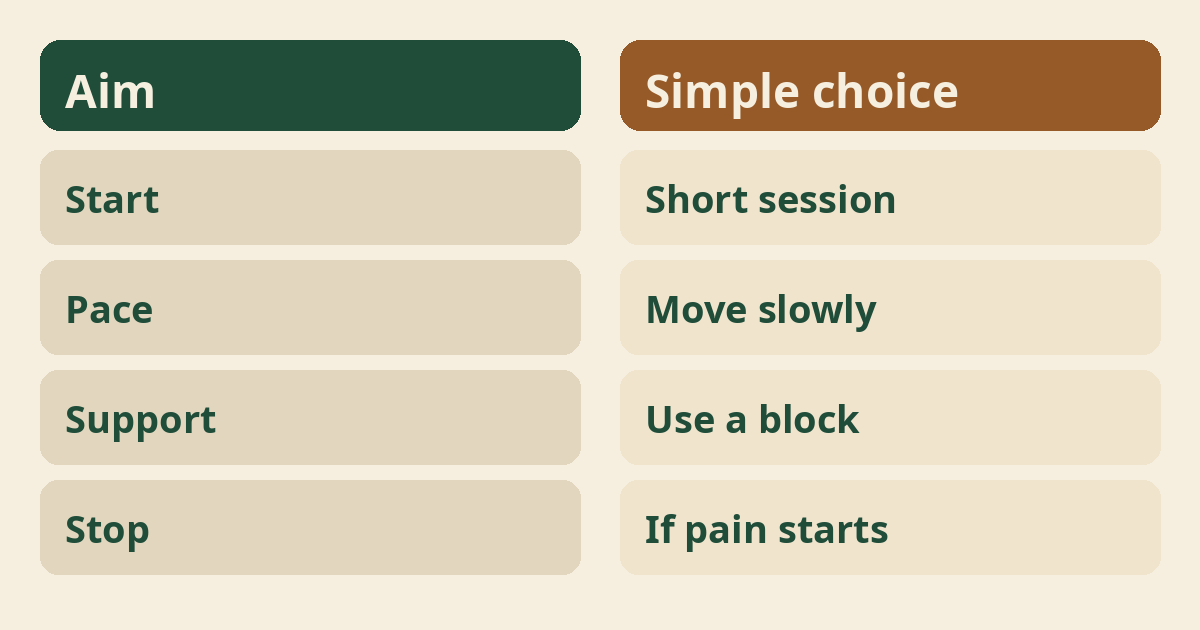
A short, easy session is a sensible place for a beginner to begin. Choose a few familiar movements and leave time to notice how they feel. A first session is for learning the positions, not testing flexibility or pushing through effort.
Check in with a doctor first
A doctor should be your first stop when a health condition or exercise restriction may affect movement. Ask before starting if you have a recent operation, injury, ongoing symptoms, or a condition that changes what exercise is suitable. Follow individual medical guidance rather than general online instructions.
Choose a suitable setting
A stable, clear floor and enough room to move make practice easier to manage. Use a mat or a non-slip surface, and keep furniture or weights out of your movement area. If balance is uncertain, practice near a sturdy support without relying on anything that can roll or tip.
Step one: settle your stance
Begin by standing or sitting in a position that feels steady and easy to breathe in. Let your shoulders rest and look ahead rather than straining your neck. Take a moment to check whether the space, clothing, and floor feel safe for movement.
Step two: move at an easy pace
Slow, controlled movement helps you notice your own limits while learning a pose. Try a small range first, then pause before making it larger. There is no need to match a video or another person’s depth, speed, or shape.
Step three: use a simple pose
A familiar pose such as Mountain Pose can be a clear starting point. Stand with a comfortable distance between your feet and keep your knees unlocked. For a visual guide, see Mountain Pose for beginners.
Step four: explore gentle movement
Cat-Cow can introduce a slow change between two comfortable spinal positions. Move only as far as feels controlled, and keep the pace smooth rather than forcing a stretch. See Cat-Cow Pose instructions for a basic setup.
Step five: pause between shapes
Short pauses give you time to decide whether a movement feels suitable. Rest in a seated position or return to standing whenever needed. A pause is part of practice, not a sign that you have done something wrong.
Step six: finish with ease
A relaxed closing position can help mark the end of a session. Choose a comfortable seated pose or lie down only if getting up and down is easy for you. Leave the floor slowly and check your balance before returning to other tasks.
Breathe without forcing it
Let breathing stay comfortable and natural while you learn the poses. You may notice your breath more when moving slowly, but there is no need to hold it or make it unusually deep. Stop a breathing exercise if it feels uncomfortable or brings dizziness.
Avoid breath competitions
Yoga breathing is not a test of how long you can hold or control each breath. Skip forceful breathing techniques unless a qualified instructor has taught them and your doctor has cleared them when needed. Keep ordinary breathing available throughout movement.
Pick a session length
Beginners can start with a few minutes and add time only when the routine still feels comfortable. A short session is easier to fit around lifting and makes it simpler to notice your response. There is no single ideal duration for every lifter.
Choose a weekly rhythm
A repeatable schedule matters more than copying someone else’s number of sessions. Begin with a light, occasional practice and see how it fits beside training and rest. For more on building a routine, read how often to do yoga.
Avoid stacking hard efforts
A demanding yoga class may add another challenging workout to an already busy training week. When you are new, choose gentle sessions and avoid turning every movement into a maximum-effort stretch. If you are unsure how it fits your lifting load, ask your coach or doctor.
Common mistake: pushing range
Forcing a pose deeper is not required for a useful practice. A comfortable version is a valid version, even if it looks different from a demonstration. Ease out if you feel sharp pain, numbness, dizziness, or unusual symptoms, and seek appropriate advice.
Common mistake: copying others
Each person has a different movement history and comfort level. Do not use a classmate’s pose depth as a target or assume their variation suits you. Choose a version you can enter and leave with control.
Common mistake: rushing transitions
Moving quickly between floor and standing poses can feel unsteady for some beginners. Take your time when changing levels and use support if it is stable and suitable. Stop if you feel faint or cannot keep your balance.
Common mistake: ignoring fatigue
A tired body may not feel the same as it does at the start of practice. Keep the effort modest after a demanding lifting session, or choose rest instead. If symptoms or pain are new or concerning, do not use yoga to test them.
Use props for support
A block, folded blanket, or strap can make a pose easier to reach without forcing it. Props should be stable and used in a way that does not create a trip hazard. See beginner yoga props for simple options.
Make room for recovery
Rest days and low-effort days can be part of a balanced training week. Yoga does not have to be added after every lifting session, and skipping it is fine. Choose rest when that best matches your coach’s plan or how you feel.
Who should be careful
People with health conditions, pain, recent injury, or movement restrictions should check with a doctor first. Ask what kinds of movement and effort are appropriate for you before following a general routine. A teacher can help with pose options, but cannot replace your clinician’s advice.
When to stop a movement
Stop if a pose causes sharp pain, numbness, dizziness, or a symptom that worries you. Return to a comfortable position only if you can do so safely, and seek medical guidance when appropriate. Do not assume that discomfort must be pushed through to make progress.
Is this a treatment?
No, yoga is not a treatment for an injury, disease, or other medical condition. This routine is for general movement education and cannot diagnose or manage a health problem. Talk with your doctor about symptoms and care, and do not delay that conversation to try a pose.
Possible general benefits
Many people find that gentle yoga offers a change of pace and a chance to focus on movement. Experiences vary, and no particular result is promised. For general information on yoga research and health, see National Center for Complementary and Integrative Health and discuss personal questions with your doctor.
Progress at your own pace
A gradual approach lets you learn what feels manageable without turning practice into a performance. Repeat simple movements before adding new ones, and make one change at a time. Progress can mean becoming more familiar with a routine, not achieving a specific pose shape.
Finding a teacher
A qualified beginner-friendly teacher can explain options and show how to set up a pose. Tell the teacher you lift weights and mention any doctor-given limits before class. Choose instruction that welcomes questions and does not pressure you to ignore pain or compete.
Mindset for lifters
Treat yoga as a separate skill to explore, not another score to beat. Strength, flexibility, and balance are not measured by how far a pose goes. A steady, comfortable session can be enough for the day.
Before a lifting session
If you practice near a lifting workout, keep the yoga easy and leave yourself time to transition. Follow any warm-up guidance from your coach rather than assuming a yoga sequence covers it. Avoid movements that make you feel distracted, unsteady, or uncomfortable before handling weights.
After a lifting session
After lifting, choose rest or gentle movement according to your plan and how you feel. Do not force a deep stretch into a tired area or use a pose to check a new pain. If you need help deciding what is appropriate after training, ask your coach or clinician.
Make it practical
A simple routine you can repeat is often easier to fit into an established training week. Keep the space ready, choose a few poses, and set a modest time limit. You can change the plan later if it becomes inconvenient or does not suit your needs.
Review how it feels
Notice whether the practice feels comfortable during the session and afterward. A notebook can help you remember which poses felt steady or awkward without making claims about medical effects. Use that information to adjust the routine or to ask a qualified professional a clear question.
Plan a simple first week
A first week can focus on trying one short, easy session rather than making a strict commitment. Choose a day that does not crowd your main lifting work, and keep another option open for rest. If the session does not feel suitable, pause and seek advice instead of forcing a schedule.
Where to read next
For a calm, beginner-friendly start, Ranjana Sinha’s Begin Where You Are is written for people who want simple steps. Our guide to starting a home yoga practice adds a gentle routine you can follow at home.
Frequently asked questions
Can beginners who lift weights do yoga?
Many beginners can explore gentle yoga, but anyone with a health concern or exercise restriction should ask a doctor first.
Should yoga replace my lifting plan?
No, keep yoga separate from your strength program unless your coach advises a change.
Do I need to be flexible?
No, begin with comfortable movements and choose pose options that fit your current range.
Can I do yoga after lifting?
You can choose gentle movement or rest, but avoid forcing poses when tired or uncomfortable.
What if a pose hurts?
Stop the movement and seek medical advice when pain or another symptom is concerning.
The bottom line
Start gently, keep your doctor’s guidance first, and let your lifting plan and comfort shape whether yoga belongs in your week.

