A hotel room can be a calm place to stretch and move after a day of travel, even when you have no mat and only a small patch of floor. This beginner’s guide shows you how to check your space, choose simple movements, and build a short routine that you can adapt to your comfort and schedule.
This article offers general movement guidance, not medical advice or treatment. If you have a health condition, an injury, are pregnant or recently gave birth, or have had surgery, ask a qualified clinician whether these movements are appropriate and follow their guidance. Stop if you feel pain, dizziness, unusual shortness of breath, or unwell.
Why practice yoga in a hotel room?
Hotel-room yoga can give you a simple opportunity to move in a familiar way while you are away from home. Travel days can involve long periods of sitting, changing routines, and unfamiliar surroundings. A few minutes of gentle movement may feel pleasant, but you do not need to complete a full class or meet a target. Let the practice support your day rather than become another obligation.
What makes a hotel room different?
A hotel room usually has less open floor space and more furniture than a studio. You may also have carpet, a slippery floor, a low bed, nearby luggage, or other guests in the room. Those details matter more than the size of your routine. Choose movements that stay controlled and close to a stable surface, and skip anything that needs a wide stance or a long reach.
Choose a clear practice area
Find a level patch of floor where you can sit and extend your arms without hitting furniture. Move a chair or suitcase only if it is easy and safe to do so. Keep the doorway, bathroom route, and path to the phone clear. If the only open spot is beside a sharp table edge or glass surface, choose seated movements instead of trying to rearrange the room.
Check the floor before you begin
Check that your practice area is dry, steady, and free of objects before moving. Hotel carpets can bunch near the edges, and polished floors can feel slick in socks. Remove shoes if that feels safe, but do not assume bare feet will grip every surface. If your footing feels uncertain, sit on a firm chair or stand beside a fixed wall without leaning heavily on it.
Make a mat-free practice comfortable
You can practice without a yoga mat by using a folded towel for seated comfort. A bath towel may slide or wrinkle, so test it gently before placing weight on it. Avoid using a plush bed as a substitute for the floor when balance matters. For standing movements, bare feet or secure footwear may be more stable than a loose towel underfoot. The same ideas used in a home practice space apply here.
Use hotel furniture with care
Treat hotel furniture as part of the environment, not as exercise equipment. A chair can help with seated movement when it has four stable legs and is placed on a level surface. Avoid rolling desk chairs, folding luggage racks, glass tables, and furniture that shifts when touched. Do not stand on a chair or use a wheeled suitcase for balance.
Set a realistic time window
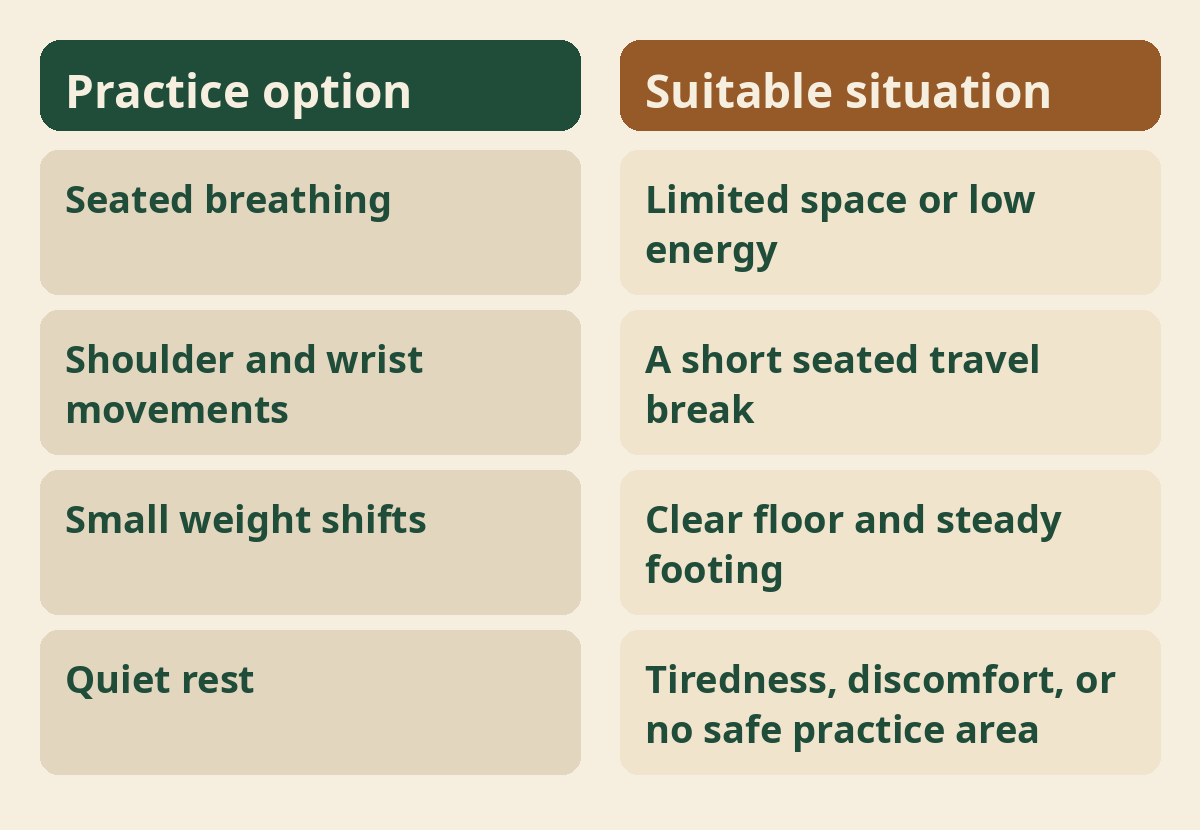
A short practice can be useful when travel leaves little time or energy. Choose a time that fits the day, such as after checking in or before getting ready to leave. Five to fifteen minutes is enough to explore a few movements at an unhurried pace. You can stop sooner, skip a movement, or simply breathe quietly if that suits you better.
Pick a pace that feels manageable
Beginners can move slowly and leave space between one movement and the next. There is no need to copy a fast video or match a pose exactly. Pause to notice whether your breathing stays comfortable and whether the movement feels steady. If you are tired after travel, choose a seated sequence or rest instead of pushing through fatigue.
Begin with a simple arrival pause
Sit or stand comfortably and take a moment to notice how you feel before moving. Let your shoulders rest naturally and keep your jaw unclenched if that feels comfortable. Breathe normally rather than taking unusually deep breaths. Notice whether you are stiff, energetic, sleepy, or unsettled, then choose an easy practice that matches your current state.
Try comfortable seated breathing
Sit near the front of a stable chair with both feet supported on the floor. Rest your hands on your thighs and observe a few ordinary breaths without forcing them to become longer or deeper. If focusing on breathing feels uncomfortable, shift attention to the feeling of your feet on the ground or the sounds in the room.
Move the shoulders gently
Small shoulder rolls can be done while sitting or standing with a relaxed posture. Lift the shoulders a little, move them back if comfortable, and let them settle down. Make a few slow circles in either direction without forcing the range. If a circle pinches or feels awkward, reduce it to a small shrug or leave the shoulders still.
Add easy neck movement
Keep neck movements small and within a comfortable range. You might turn your head slightly to one side and return to the centre, then repeat on the other side. Keep the movement smooth and avoid pulling your head with your hand or dropping it forcefully backward. Skip neck movement if it feels painful, dizzying, or unsuitable for you.
Stretch the hands and wrists
Gentle hand and wrist movement can fit into a seated travel break. Open and close your hands several times, then make small wrist circles if they feel comfortable. Keep your forearms supported or relaxed rather than holding them up for long. This is an option, not a requirement, and it should not create tingling or pain.
Try a seated side reach
Sit with both feet grounded and reach one arm upward only as far as feels easy. If comfortable, lean a little to the opposite side while keeping both sitting bones supported. Return to centre before changing sides. Keep the movement modest so you do not bump a lamp, wall, or headboard, and leave it out if the chair or floor feels unstable.
Use a seated forward hinge
From a chair, place your feet comfortably apart and tip forward slightly from the hips. Rest your hands on your thighs or let them hang only as far as feels comfortable. Keep the movement gentle and come upright slowly. You do not need to reach the floor, and you can skip the hinge if bending forward is uncomfortable or restricted for you.
Explore a seated twist
Sit upright and turn your chest a small amount to one side while keeping your hips facing forward. Your hands can rest on your thighs rather than pulling on the chair. Return to the middle before turning the other way. A small movement is enough; avoid forcing the turn or holding your breath, and stop if it feels uncomfortable.
Stand beside a stable wall
A clear wall can provide a nearby reference point for simple standing movements. Stand close enough to touch it lightly if needed, without leaning your weight into it. Keep both feet planted before shifting your weight. If the wall is blocked by furniture or you feel uncertain on your feet, stay seated rather than attempting a standing balance exercise.
Try gentle standing weight shifts
With feet comfortably apart, shift a little weight from one foot toward the other. Keep your steps small and your hand near a stable support without gripping it tightly. This is not a test of balance. If you feel unsteady, sit down and choose a seated movement; there is no benefit to risking a fall in an unfamiliar room.
Practice a small standing side reach
Stand with feet grounded and let one arm reach gently upward or outward. Keep the reach within the space you have checked, and avoid leaning into a wall or furniture. Return to a comfortable upright position before switching sides. If you cannot raise an arm comfortably, keep both hands at your sides and simply stand with relaxed breathing.
Use a chair for a supported squat alternative
You may practise sitting down and standing up from a stable chair only if that motion is comfortable. Position the chair against a wall if it can be placed there safely, and use your hands for support as needed. Move slowly and use a smaller range than you would at home. If standing up feels difficult or unsafe, leave this movement out.
Keep floor poses optional
Floor-based poses are optional and should depend on the room and your comfort. A narrow space, thick carpet, or difficulty getting down and up can make floor work awkward. Do not feel you must kneel or lie on the floor to call it yoga. Seated movements, gentle standing, and quiet rest can all make a complete brief practice. Legs up the wall needs only a small clear wall.
Skip poses that need more room
Leave out wide lunges, fast transitions, and movements that bring you near furniture. A hotel room is not a studio, and the goal is not to reproduce a full class. Avoid jumping, kicking, or swinging limbs near lamps, televisions, windows, and other guests. If a pose needs you to move furniture or balance on an object, pick a simpler option.
Use videos thoughtfully
If you follow a video, preview it and choose one designed for beginners and limited space. Check whether the instructor expects a mat, floor transitions, or equipment before you begin. Pause the video whenever you need to adjust the room or rest. You are free to modify or stop, and following the instructor is less important than staying within your comfort and safe space.
Avoid comparing your range
Your hotel practice does not need to look like an instructor’s demonstration. Body proportions, mobility, experience, energy, and the room itself all vary. Use a smaller range if that feels better, and avoid pushing a joint to match a picture. A comfortable position is more useful for this short practice than a dramatic-looking shape.
Plan for common travel limitations
Adjust your practice when you are tired, sore, short on space, or feeling out of sorts. After a long journey, a quiet pause may suit you better than standing movement. If you have a new symptom or feel unwell, do not use yoga to test what is wrong. Rest and seek appropriate medical advice according to your situation.
Keep hydration and temperature in mind
Choose a comfortable room temperature and keep water nearby if you want it. You do not need to practise in a hot room or work up a sweat. Avoid blocking vents or moving heavy furniture to change the room. If you feel overheated, thirsty, or uncomfortable, stop and take care of that need before deciding whether to continue.
Respect shared and quiet spaces
Keep movements quiet and contained when another person is sharing the room. Check that your routine will not disturb a sleeping companion or someone on a call. Avoid music or videos at a volume that carries into the hall. A silent seated practice can work just as well when privacy, noise, or the hour makes a larger routine unsuitable.
Build a five-minute routine
A brief routine can combine a pause, a few seated movements, and a comfortable finish. For example, spend a minute settling into a chair, move the shoulders and hands gently, add a small side reach or twist, then sit quietly for a few breaths. The order is flexible, and you can shorten it or skip any part that does not suit you. See five-minute yoga for beginners.
Make a ten-minute routine
A ten-minute plan can add a few simple standing movements if the floor is clear. Begin with a minute of easy breathing, continue with seated shoulder, wrist, and side movements, then stand beside a wall for small weight shifts or a gentle reach. Return to the chair for a short rest. Keep the sequence relaxed instead of rushing to fit more poses. See ten-minute yoga for beginners.
Use a longer practice only if it suits
A longer hotel-room practice should still feel calm and easy to interrupt. You might repeat a comfortable seated or standing movement, add a quiet pause, or follow a suitable beginner video. Do not add difficult poses just to fill time. If attention or energy fades, end the practice and continue with your day.
Finish without rushing
End by returning to a comfortable seated or standing position and noticing how you feel. Let your breathing remain natural and give yourself a moment before walking across the room. There is no required meditation, special closing pose, or result to achieve. If you feel dizzy or unwell, sit or lie down safely and seek help if needed.
Adapt your practice across different stays
The best routine may change from one hotel room to another. A room with a firm chair and open floor offers different choices from a small room with a narrow walkway. Take a moment to inspect the space each time rather than relying on memory from another stay. Keep the movements that fit and leave the rest.
Let consistency stay flexible
A travel routine works best when it remains an invitation rather than a rule. Some days you may stretch for several minutes; on others, you may choose rest. Missing a practice does not require making it up later. Travel already changes sleep, meals, and plans, so respond kindly to the day you actually have.
What to remember before practising
Check the space, keep movements small, and stop when something feels wrong. You do not need special clothing, equipment, or a perfect routine to move gently in a hotel room. Start with an easy option, keep a clear path around you, and let comfort set the limits. When in doubt, choose stillness or ask a clinician for guidance. For general information about yoga research and safety, see National Center for Complementary and Integrative Health.
Where to read next
For a calm, beginner-friendly start, Ranjana Sinha’s Begin Where You Are is written for people who want simple steps. Our guide to starting a home yoga practice adds a gentle routine you can follow at home.
Frequently asked questions
Can I do yoga in a hotel room without a mat?
Yes, choose stable seated or standing movements and use a towel only if it stays firmly in place.
How long should a beginner practise in a hotel room?
Start with a few comfortable minutes and stop or rest whenever you need.
What if my hotel room has almost no floor space?
Choose seated movements in a stable chair or take a quiet breathing pause.
Is it safe to use a hotel chair for balance?
Use only a stable non-rolling chair for seated support and do not stand on it.
Should I practise yoga when I am injured or unwell?
Ask a qualified clinician about appropriate activity and avoid movements that worsen symptoms.
The bottom line
Hotel-room yoga can be simple, quiet, and adapted to the space you have. Check the floor, choose a few easy movements, and keep your comfort and safety ahead of completing a sequence. A short pause is enough; you can return to a longer practice when the setting and your energy allow.