Exams can put pressure on sleep, concentration, and daily routines. A short, gentle yoga practice may give you a structured pause between study sessions, helping you notice your breath and release some physical tension. It is not a shortcut to better grades or a treatment for anxiety. This guide explains practical ways to use simple movement and breathing alongside a sensible revision plan, rest, and support when you need it.
If stress feels overwhelming, is affecting daily life, or comes with persistent anxiety, panic, low mood, or difficulty sleeping, speak with a qualified health professional, school counsellor, or trusted adult. Seek medical advice before starting if you have an injury, health condition, are pregnant, or are unsure which movements are suitable. Stop any movement that causes pain, dizziness, breathlessness, or distress. Yoga is optional support, not medical care or a replacement for it.
What exam stress can feel like
Exam stress can show up in thoughts, feelings, and the body. You might notice a racing mind, tight shoulders, restlessness, a fluttery stomach, or trouble settling into a task. A little pressure is a common response to an important deadline, but everyone’s experience differs. Naming what you notice without judging yourself can help you choose a useful next step, such as a short break, a glass of water, or asking for support.
What yoga can and cannot do
Yoga can offer a brief pause, but it cannot promise a particular exam result. Gentle movement and unhurried breathing can make a study break feel deliberate and help some people feel more settled in the moment. That experience is personal and may vary from day to day. Yoga does not replace revision, sleep, accessibility support, counselling, or medical care, and there is no single practice that works for everybody. For general information about yoga research and safety, see National Center for Complementary and Integrative Health.
Keep the goal modest
A useful practice is one you can stop or adapt easily. Rather than trying to eliminate every worried thought, aim to take a few comfortable breaths, move within an easy range, and return to your next task with a little more awareness. If you still feel stressed afterward, that does not mean you failed. You can choose another kind of break or talk with someone you trust.
Choose a practical time
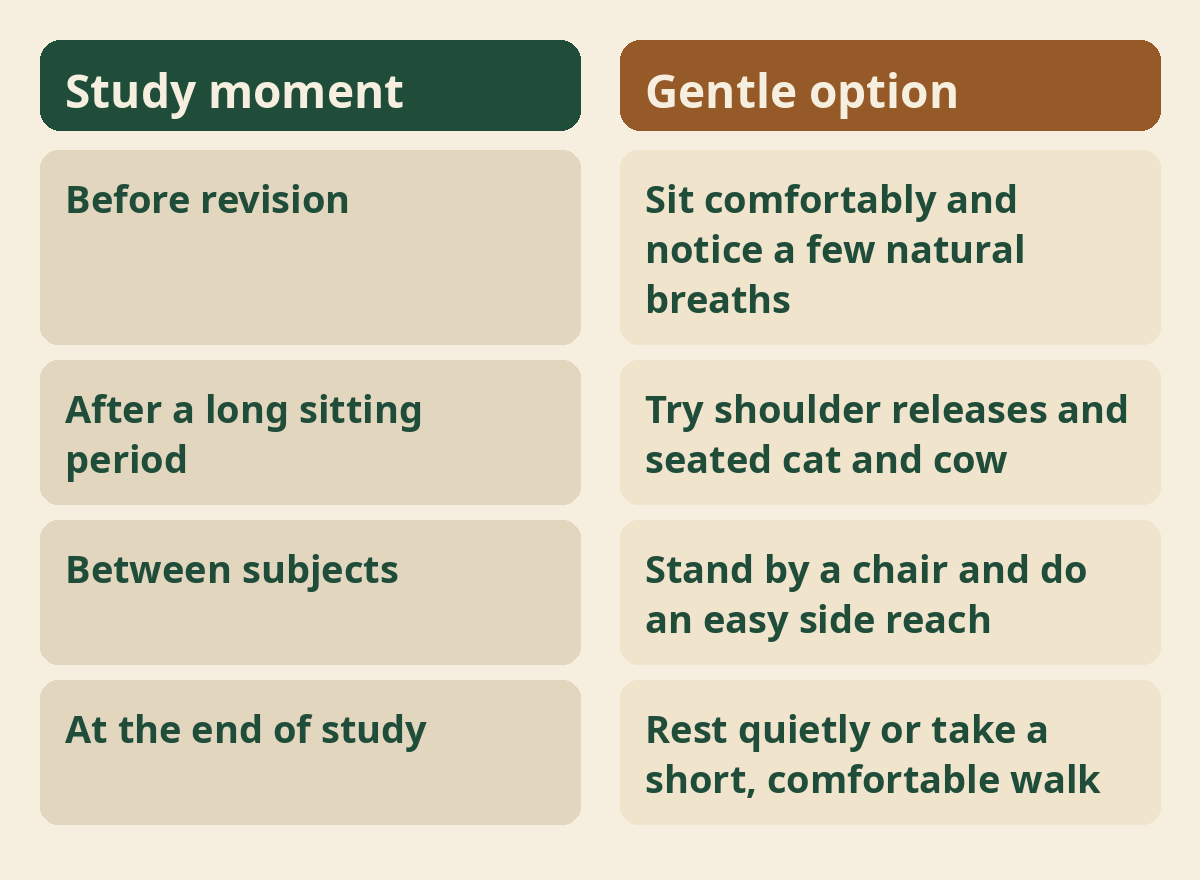
A short session between study blocks is often easier to keep than a long one. Try a few minutes before beginning revision, after a focused study block, or when changing subjects. You do not need to wait until stress feels intense. Avoid turning practice into another task to perfect: a brief pause counts, and skipping a day does not undo the value of other helpful habits.
Set up a comfortable space
Make enough room to sit or stand without bumping into furniture. A mat is optional; a stable chair or clear patch of floor can work. Wear clothes that let you move comfortably, keep a drink nearby, and silence notifications if that helps. Choose a place where you can leave the door open or ask someone to stay nearby if that feels safer.
Check in before you begin
Start by noticing how your body feels today. Sit or stand comfortably and ask yourself whether you feel steady, tired, sore, or unwell. Keep movements small if you are stiff or have been sitting for a long time. If you feel faint, ill, or in pain, skip the routine and choose rest or appropriate help instead of pushing through.
Use a chair when helpful
A chair can make a beginner routine more accessible and stable. Choose a sturdy chair without wheels and place it on a non-slip surface. Sit toward the front with both feet supported, or stand beside the chair and hold its back lightly for balance. A chair is not a lesser version of yoga; it is a practical way to adapt movement to your needs.
Start with natural breathing
Let your breath stay comfortable rather than forcing it to change. Sit tall without stiffening, or rest your hands loosely on your lap. Notice the breath as it is for several cycles. If it feels comfortable, allow the exhale to be a little slower than the inhale, but do not hold your breath or count if that creates pressure.
Try a gentle shoulder release
Small shoulder movements can interrupt the stillness of a long study session. Inhale and lift your shoulders only as high as feels easy; exhale and let them soften down. Repeat a few times, then roll them slowly backward and forward. Keep your jaw relaxed. If a circle pinches or feels uncomfortable, make it smaller or simply rest your arms.
Move your neck with care
Gentle neck movement should stay within a comfortable range. Sit upright and look ahead, then slowly turn your head a small distance to one side and return to centre before changing sides. Keep your chin level and avoid pulling on your head. Skip neck movement if you have pain, recent injury, or advice to avoid it.
Stretch the sides of your body
A light side reach can change your posture after reading at a desk. Sit or stand with your feet grounded. Reach one arm upward only if comfortable, then lean slightly to the opposite side without twisting or collapsing forward. Take one easy breath and return to centre before switching. Keep both hips steady and reduce the reach if your shoulder or back objects.
Try seated cat and cow
Gentle spinal movement can make a seated break feel less static. Sit near the front of a chair with hands on thighs. As you breathe in, lift your chest slightly and look forward; as you breathe out, round your back gently and let your gaze lower. Move slowly for a few rounds, keeping the range small and avoiding any forced arch.
Add a standing forward hinge
A supported hinge can offer a change of position without needing to touch the floor. Stand with feet about hip-width apart and knees soft, close to a desk or chair for balance. Place hands on thighs and hinge a little at the hips with a long back, then come upright. There is no need to fold deeply. Stop if you feel dizzy or strained.
Try a gentle standing reach
Reaching up can be a simple way to break a hunched study posture. Stand with feet steady and knees relaxed. Let your arms rise only as far as your shoulders allow, then lower them slowly. You can keep hands at chest height or leave them by your sides. Avoid arching your lower back or holding your breath to reach higher.
Use a supported balance
A brief balance practice can bring attention back to the present moment. Stand beside a wall or stable chair and keep one hand close to support. Shift weight gently from one foot to the other, or lift one heel while keeping toes down. There is no need to stand on one leg. Skip balance work if you feel unsteady or light-headed.
Rest in a comfortable position
Rest is a valid part of a yoga break. Sit back in a chair or lie down if that is comfortable and safe for you. Let your hands rest and notice where your body is supported. You do not need to clear your mind. If closing your eyes feels uncomfortable, keep them open and look softly at a still object.
Use a simple breathing pause
Comfortable breathing is more important than a special technique. Place both feet on the floor and breathe naturally for a minute or two. If counting feels helpful, breathe in for a comfortable count and out for the same or a slightly longer count, without strain. Stop counting if you feel air hunger, tingling, dizziness, or more alarmed. Box breathing is one easy option.
Avoid forceful breathwork
Fast breathing and long breath holds are not necessary for an exam break. Skip intense techniques, breath retention, or complicated patterns unless a qualified instructor has taught them for your situation. If attention to breathing makes you uncomfortable, focus instead on the feeling of your feet on the floor or the support of the chair. You can always stop and breathe normally.
Build a five-minute routine
A small repeatable sequence can fit between revision tasks. One simple option is a minute of natural breathing, a few shoulder releases, seated cat and cow, a gentle side reach on each side, and a final minute sitting quietly. Use only movements that feel comfortable. The sequence is a menu, not a test, so shorten or skip any part.
Choose a ten-minute routine
More time is optional, not a requirement for progress. If a longer break suits you, begin with a quiet check-in, then add shoulder movement, seated spinal motion, a supported hinge, and a few minutes of comfortable rest. Move at an unhurried pace and leave time to return to your books without rushing. You can also take a walk instead.
Pair movement with study blocks
A planned break can help separate one study task from the next. After a focused block, stand, stretch gently, refill your water, or step outside before starting another subject. Some people like to use a timer; others prefer to finish a page or problem set first. The best cue is the one that protects a real break without disrupting your study plan.
Use yoga before a study session
A short settling routine may make the transition into studying feel clearer. Before opening your notes, sit comfortably for a few breaths and decide on one specific task, such as reviewing a chapter summary. Keep the practice brief enough that it does not become a way to postpone starting. If you feel ready to work without yoga, begin directly. See yoga for focus for more ideas.
Use yoga after a difficult mock test
A reset can help you move from reviewing mistakes to planning the next step. Give yourself a few minutes away from the paper before analysing it. Try a gentle shoulder release or short walk, then identify one pattern to practise. Avoid judging your ability from a single score. If the result feels upsetting, speak with a teacher or someone supportive before making a new plan.
Support a realistic revision plan
Calm moments work best alongside practical preparation. Break a large subject into manageable tasks, schedule review time, and leave room for meals, movement, and sleep. Use past papers or practice questions when they fit your course. If you do not know where to begin, ask a teacher to help you choose a reasonable priority rather than trying to study everything at once.
Protect sleep and recovery
Rest is part of preparing, not time stolen from preparation. Keep a steady bedtime where possible and make late-night revision the exception rather than the whole plan. A quiet stretch or breathing pause may help mark the end of a study day, but it cannot guarantee sleep. If sleep problems persist or leave you struggling, talk with a health professional or trusted adult. A gentle sleep routine can help.
Remember food and water
Regular meals and hydration support ordinary daily needs during revision. Keep accessible snacks or meals available and take water breaks according to your needs. Yoga is not a substitute for eating, drinking, or getting medical help. Avoid using a practice to push through hunger, illness, or exhaustion. If eating or drinking feels difficult, tell a trusted adult or health professional.
Adapt the routine for your body
The right version is the one that feels safe and manageable for you. Use a chair, reduce the range, keep your eyes open, or choose rest instead of movement. Do not compare your practice with a video or another student’s flexibility. If you have a disability, injury, chronic condition, or pregnancy-related question, get individual guidance from a qualified professional familiar with your needs.
Notice signs to stop
Pain, dizziness, and distress are reasons to pause, not challenges to overcome. Stop the movement, return to a comfortable position, and breathe normally if you develop sharp pain, numbness, unusual shortness of breath, faintness, or worsening anxiety. Seek appropriate medical advice for concerning or persistent symptoms. Do not resume a movement just to finish the routine or match a timer.
When to seek more support
You deserve help if exam worry is becoming too much to manage alone. Reach out to a parent, guardian, teacher, school counsellor, doctor, or another trusted person if worry is persistent, affects attendance or daily activities, or feels overwhelming. If you are in immediate danger or may harm yourself, contact local emergency services or a crisis service and tell someone nearby now. Meditation for stress is another option some people like.
Make the practice yours
A routine should fit your actual study day and preferences. You might prefer standing stretches, chair movement, a quiet walk, or no yoga at all. Keep only the parts that feel useful and safe. If a particular pose or breathing cue makes you tense, leave it out. Your break does not need a yoga label to count as care.
Keep expectations kind
One quiet moment does not need to transform the whole day. Exam preparation has ups and downs, and stress may return after a break. Treat the practice as one small option among many, not proof that you should always feel calm. Notice what helped, make a modest adjustment if needed, and ask for support when a problem is bigger than a short routine.
A sample study-break plan
A simple plan can make it easier to remember to pause. After a study block, put your notes aside, stand or sit comfortably, take a few natural breaths, move your shoulders and spine gently, then choose whether to continue, walk, or rest. Keep the clock flexible. If you are in a focused flow, you can finish the current task before taking the break.
How to practise safely at home
A beginner practice should stay gentle, optional, and easy to modify. Use a stable surface, avoid slippery socks, and keep furniture clear of your movement area. Follow an instructor who offers adaptations and does not pressure you to ignore discomfort. Online videos cannot assess your individual health, so choose simple options and seek professional advice when you need personal guidance.
Make a routine sustainable
Consistency can be flexible and still be useful. Link a short practice to a natural cue, such as closing a notebook or switching subjects, if that works for you. Start with two or three minutes rather than setting an ambitious daily target. During busy weeks, one comfortable breath or a short walk may be all that fits, and that is acceptable.
What to do if yoga is not for you
You can choose another kind of break without losing anything. Try walking, listening to a calming song, getting fresh air, doing a puzzle, or chatting with someone you trust. If a breathing exercise feels unsettling, keep your attention on an ordinary task such as arranging your desk. The aim is to support yourself, not to follow a specific wellness routine.
Return to revision gently
After the break, choose one clear next action. Write down the next small step, such as answering three questions or rereading one section, and begin there. If you still feel distracted, make the task smaller or ask for help prioritising. A planned pause is useful when it helps you care for your needs and re-enter the day without self-criticism.
Where to read next
For a calm, beginner-friendly start, Ranjana Sinha’s Begin Where You Are is written for people who want simple steps. Our guide to starting a home yoga practice adds a gentle routine you can follow at home.
Frequently asked questions
Can yoga help with exam stress?
Gentle yoga may offer some people a structured pause, but it cannot guarantee lower stress or better exam results.
How long should a beginner practise?
Start with a few comfortable minutes and stop or adapt whenever needed.
Is yoga safe before an exam?
Gentle familiar movement may suit some people, but avoid anything painful, forceful, or unfamiliar that makes you feel unwell.
Can yoga replace counselling or medical care?
No, seek qualified support for persistent or overwhelming stress and follow professional advice.
What if breathing exercises make me anxious?
Stop counting or focusing on the breath and choose a grounding activity that feels comfortable.
The bottom line
You do not have to feel perfectly calm to prepare well. A few gentle movements, a comfortable breathing pause, or a walk can be one small way to take care of yourself between study tasks. Keep the practice optional and suited to your body, and pair it with realistic revision, sleep, meals, and support from people you trust. If exam stress is affecting your health or daily life, speak with a qualified professional or trusted adult.