
Yoga bolsters and blankets are soft props that support your body so poses feel easier and calmer. A bolster is a firm cushion, and a blanket is simply folded cloth. You do not need either one to practise, but both can make sitting, lying and resting more comfortable. This guide explains what they are, how to pick them, and how to use them in plain steps.
This article is general education only and is not medical advice. If you have an injury, are pregnant, or live with a health condition, please check with your doctor before you use props or start a new practice.
What are yoga bolsters and blankets?
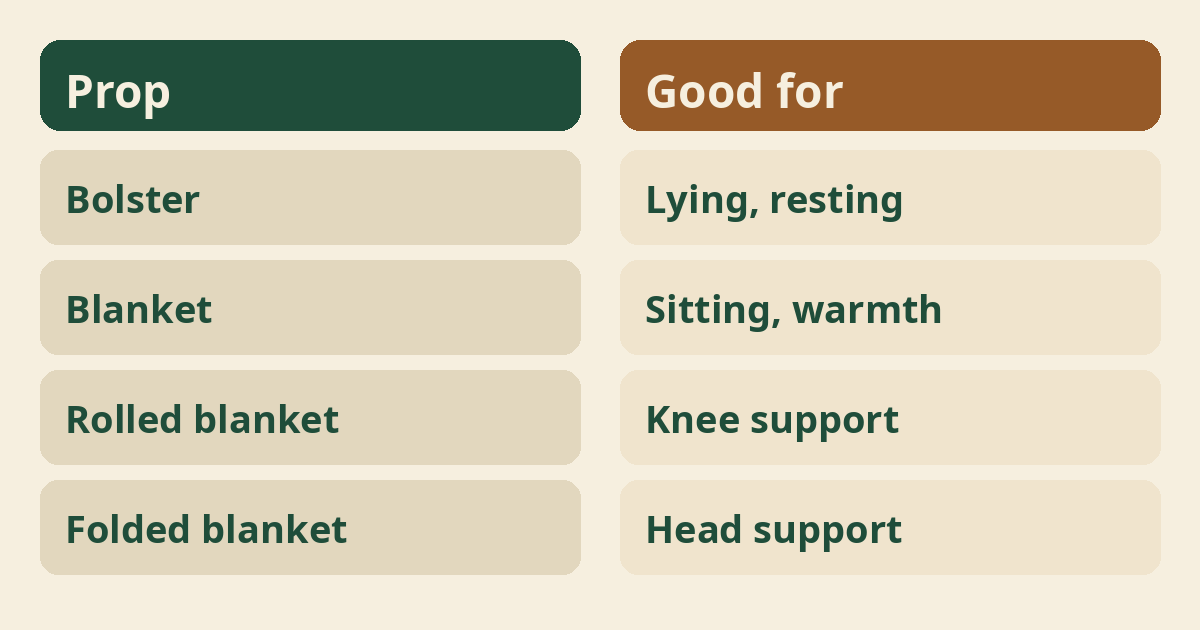
They are soft props that hold your body in a supported position. A bolster is a firm, long cushion. A blanket is a folded cloth, often wool or thick cotton. Both fill the gap between you and the floor.
What is a yoga bolster?
A bolster is a firm cushion, round or rectangular, made to carry your weight. It is denser than a pillow, so it does not flatten at once. Many are filled with cotton or buckwheat hulls.
What is a yoga blanket?
A yoga blanket is a sturdy blanket you fold into pads, rolls and wedges. Thick cotton or wool holds its shape well. Thin fleece slips and squashes, so it is less useful.
Why do people use props?
People use props to feel steadier and more relaxed in a pose. A prop brings the floor closer to you. That means less strain and more time to notice your breath.
Why use a bolster in particular?
A bolster gives long, even support along your back or under your knees. Many people find that it makes resting poses feel gentler. It also lets you stay in a pose longer without effort.
Why use a blanket?
A blanket is cheap, flexible and already in most homes. You can fold it thin or thick, roll it, or lay it over your body for warmth. One blanket does many jobs.
Do beginners need props?
No, but beginners often enjoy them. Props are not a sign of weakness. They are simply tools. Learn more in the guide on yoga props for beginners.
How do I start?
Start with one blanket and one simple seated or resting pose. Fold the blanket, sit on it, and breathe for a minute. Add a bolster later if you enjoy the feel of it.
Step 1: How do I fold a blanket for sitting?
Fold the blanket into a flat rectangle about the size of a small cushion. Sit on the front edge so your hips rise a little above your knees. Many people find this makes a cross legged seat easier on the lower back.
Step 2: How do I place a bolster for resting?
Lay the bolster lengthwise on your mat. Sit with your lower back against one end, then lie back slowly so the bolster runs along your spine. Keep your head resting on the floor or on a folded blanket.
Step 3: How do I support my knees?
Place a rolled blanket or bolster under your bent or crossed knees. Lie on your back and let the support hold the weight of your legs. If you feel any pinch, change the height.
Step 4: How do I support my head and neck?
Put a thin folded blanket under your head so your chin stays level. Your forehead should not tip higher than your chin. Adjust until your neck feels long and easy.
Step 5: How do I use a bolster in a forward fold?
Place the bolster in front of you and rest your chest or forehead on it. Fold slowly and stop where it feels comfortable. This works well with child’s pose.
Step 6: How do I finish a session?
Roll to your side, rest a moment, and rise slowly. Use a hand on the floor to push up. Put the props away only after you feel steady again.
How should I breathe with props?
Breathe slowly through your nose and let the prop carry your weight. Let your belly soften on the inhale. A simple guide is belly breathing for beginners.
How long should I stay in a supported pose?
Start with one to three minutes and extend only if you feel at ease. Supported poses are quiet, so time passes slowly. Come out sooner if you feel pins and needles, pain or restlessness.
How often can I practise with props?
Many beginners enjoy a short supported practice a few times a week. Short and regular is easier to keep than long and rare. See how often should you do yoga for more ideas.
Which poses work well with a bolster?
Child’s pose, butterfly pose and simple resting poses are gentle starting points. A bolster under your chest or knees can make these poses softer. Try butterfly pose with a bolster under your spine.
Which poses work well with a blanket?
A blanket suits seated poses, thunderbolt pose and final rest. Fold it under your hips, between your calves and thighs, or under your ankles. Small changes often make a big difference.
How do I choose a bolster?
Pick a firm bolster that is comfortable to lie on and easy to move. Check the cover is washable. A smaller size is easier to store, while a longer one suits lying poses.
How do I choose a blanket?
Choose a medium weight blanket that holds a fold without sliding. Thick cotton and wool work well. Avoid slippery fabric that shifts when you move.
Can I use household items instead?
Yes, firm pillows, rolled towels and couch cushions can stand in. Make sure they are stable and will not slide on the floor. Replace them with proper props when you feel ready.
What are common mistakes?
The most common mistake is stacking props too high or too soft. A wobbly stack makes you tense instead of calm. Keep the setup low, firm and steady.
Is it a mistake to force a stretch?
Yes, props are meant to reduce effort, not add stretch. If you feel sharp or pulling pain, ease off. A supported pose should feel quiet and comfortable.
What are other mistakes?
Holding your breath and rushing in and out of the pose are also common. Move slowly and keep your breath smooth. Rest is the point of these poses.
Who should be careful?
Anyone with an injury, pregnancy or a health condition should talk to a doctor first. Lying flat or leaning back may not suit everyone. Please check with your doctor and a qualified teacher before you begin, and see prenatal yoga vs regular yoga if you are expecting.
Is bolster yoga a treatment?
No, it is not a treatment for any condition. It is a gentle way to rest and practise. It does not replace medical care or advice from your doctor.
What are the possible benefits?
Many people find supported poses calming and comfortable, though results vary. Some feel more relaxed or more aware of their breath. For general information on mind and body practices, see the National Center for Complementary and Integrative Health page on yoga.
Can props help with stress?
Some people find that slow, supported rest helps them feel calmer. Effects differ from person to person. A quiet routine like yoga for stress relief may fit well with it.
Can props help with flexibility?
Props can make stretches feel safer to explore, and many people find they ease in gradually. They let you stay in a pose without forcing. Read yoga for flexibility for a slow approach.
How do I progress over time?
Progress by staying a little longer, trying new shapes, or using fewer props. There is no rush to drop props. Some experienced students keep using them for rest every week.
Do I need a teacher?
A teacher is not required, but one can show you a safe setup. A good teacher watches your body and suggests changes. Ask questions and speak up if something feels wrong.
What mindset helps?
A kind, patient mindset helps most. You are not trying to look a certain way. You are giving yourself a few quiet minutes with comfort and support.
How do I care for my props?
Air them out, wash covers as directed, and store them dry. Fold blankets loosely. Keep bolsters away from damp corners so they stay fresh.
Where to read next
For a calm, beginner-friendly start, Ranjana Sinha’s Begin Where You Are is written for people who want simple steps. Our guide to starting a home yoga practice adds a gentle routine you can follow at home.
Frequently asked questions
Is a bolster better than a pillow? |
A bolster is firmer and holds its shape, while a pillow usually flattens quickly.
Can I use two blankets at once? |
Yes, you can stack or roll them, as long as the setup stays stable and comfortable.
Should a supported pose feel like a stretch? |
It should feel mostly restful, and you should ease out if you feel pain.
Do I need to buy new props? |
No, you can begin with items from home and buy later if you enjoy the practice.
Can children or older adults use props? |
Many can, but it is wise to ask a doctor and a teacher about a safe setup first.
The bottom line
Start small, keep it comfortable, and let a simple bolster or blanket make your practice feel kinder.

