
Your first yoga class is usually calm, slow, and friendlier than most people expect. You arrive, set up a mat, move gently through simple shapes, breathe, and rest at the end. Nobody expects you to be flexible or to know the names of poses. This guide walks you through the whole hour, from what to wear to what to do when you feel lost, so you can walk in with a quiet mind.
This article is general education and is not medical advice. If you have a health condition, an injury, or you are pregnant, please check with your doctor before you start any new movement practice.
What is a beginner yoga class?
It is a slow, guided session where a teacher shows simple poses and you follow at your own pace. Most classes mix gentle movement, breathing, and a short rest. The teacher explains each step, so you do not need any experience.
Why do people go to a first yoga class?
People go to feel calmer, move their bodies, and try something new. Some come for stretching, some for quiet time, and some because a friend asked. Any reason is a good enough reason to start.
How do I start?
Start by choosing a class that is labeled beginner, gentle, or basics. Look for a studio, community hall, or online class near you. Read the short description and pick a time you can keep without rushing.
Step 1: How do I pick a class?
Pick a beginner class with a clear start time and a teacher who welcomes new people. Call or message the studio and say it is your first time. Most teachers are glad to hear it and will keep an eye on you.
Step 2: What should I wear?
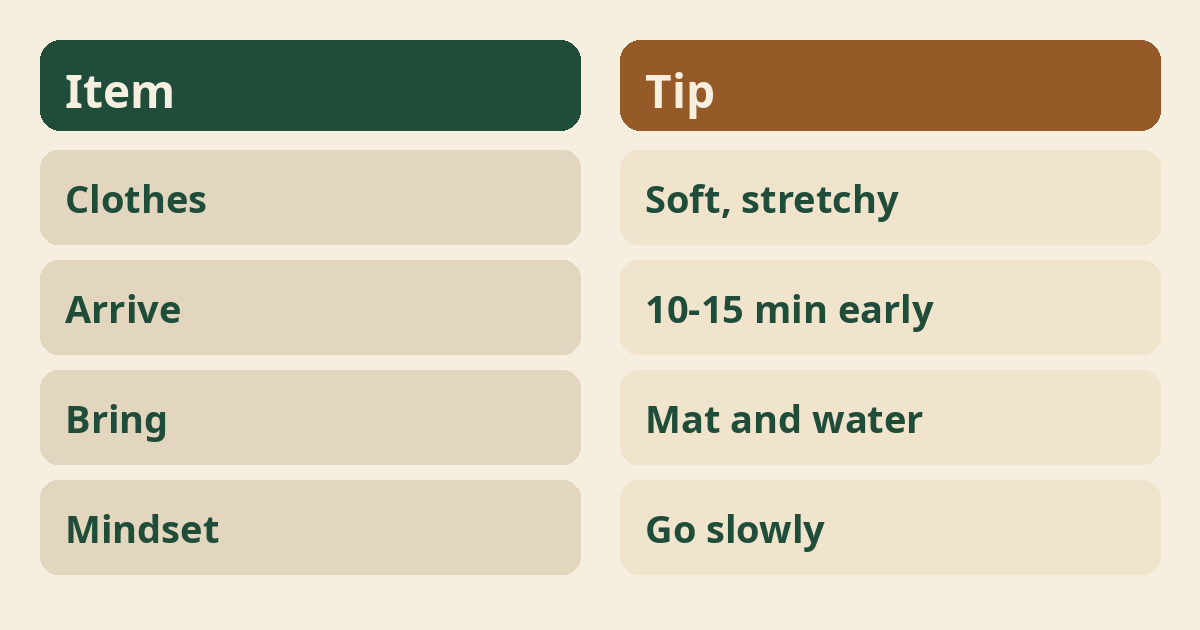
Wear soft, stretchy clothes that let you bend and reach without tugging. Choose a top that stays put when you bend forward. Bare feet are normal in yoga, so socks are optional and a grippy pair is fine.
Step 3: When should I arrive?
Arrive ten to fifteen minutes early so you are not rushed. This gives you time to sign in, find a spot, and ask the teacher any small questions. Early arrival also helps your mind settle.
Step 4: Where should I place my mat?
Place your mat toward the middle or back if you are nervous, with space around you. Many beginners like the back row so they can watch others. A spot near a wall can also feel steady.
Step 5: What happens when class begins?
The teacher usually starts with a short settling time, sitting or lying down. You may be asked to close your eyes and notice your breath. If closing your eyes feels odd, rest your gaze softly on the floor.
Step 6: How do I follow along?
Listen to the teacher first, and glance at others only if you need a hint. If a pose is unclear, watch for a moment and then try a smaller version. You never have to match the person next to you.
What do I need to bring?
You need a mat, water, and a small towel if you tend to sweat. Many studios rent or lend mats for a small fee or for free. Leave valuables at home or in a locker when you can.
Do I need props?
No, but props such as blocks and straps can make poses easier to reach. Studios usually have them on hand. Learn more about yoga props for beginners before you go, so they feel familiar.
How does breathing work in class?
You will mostly breathe in and out through your nose, slowly and evenly. The teacher may guide the breath with simple words. If it feels hard, just breathe in a natural way and keep it easy. Belly breathing for beginners is a gentle way to practice at home.
How long does a first class last?
Most beginner classes last forty-five to seventy-five minutes. Check the schedule before you book. A shorter class can be a kind way to begin if an hour feels long.
What does the class flow look like?
Expect a gentle warm up, a few standing or floor poses, and a final rest. The order can vary by teacher and style. The pace is steady and quiet, with time to pause between shapes.
What poses might I try?
You will likely try simple poses like standing tall, bending forward, and resting on your knees. Common ones include mountain pose, cat and cow, and child’s pose. Each has easy options.
What is the final rest?
The final rest is a few quiet minutes lying on your back at the end. It can feel strange at first, and some people feel sleepy. Let your body be heavy and stay as still as feels comfortable.
Will I be the only beginner?
Almost certainly not, since most classes include a mix of new and returning people. Many students remember their first class and feel kind toward newcomers. Everyone is busy with their own mat anyway.
Do I need to be flexible?
No, because yoga is a place to build flexibility, not a test of it. Beginners often find their hands stop well short of their toes, and that is normal. Yoga for flexibility for beginners shows how it grows slowly.
What if I fall behind or feel lost?
Rest in child’s pose or sit quietly until you are ready to rejoin. Taking a break is part of yoga, not a failure. Teachers expect it and will not mind.
Can I talk to the teacher?
Yes, and it helps to tell the teacher before class that you are new. Mention any injuries, pregnancy, or worries. The teacher can then suggest easier options during the session.
How often should I go?
Once or twice a week is a friendly rhythm for many beginners. Regular, short practice often feels better than one long, tiring session. How often should you do yoga explains how to find your own pace.
What are the most common mistakes?
The most common mistakes are pushing too hard, holding the breath, and comparing yourself to others. Eating a big meal just before class can also feel heavy. Go slowly, breathe, and keep your attention on your own mat.
Should I eat before class?
A light snack an hour or two before is usually more comfortable than a full meal. Bending and twisting on a full stomach can feel uneasy. Drink water through the day, with only small sips during class.
What about pain or discomfort?
Mild stretching feels normal, but sharp or sudden pain is a sign to stop. Ease out of the pose and tell the teacher. Yoga should feel steady and manageable, never like something you force.
Who should be careful?
People with injuries, health conditions, high or low blood pressure, or pregnancy should speak with their doctor first. Your doctor knows your history and can say which movements suit you. Share that advice with your teacher before class.
Is yoga good for a bad back?
Some people with back concerns find gentle yoga comfortable, but advice from a doctor comes first. Teachers can offer softer options once they know. Can you do yoga with a bad back covers the basics in plain words.
Is yoga a treatment?
No, yoga is not a treatment for any condition, and a class does not replace medical care. Think of it as a gentle movement and breathing practice. Keep seeing your doctor for anything health related.
What are the possible benefits?
Many people find yoga leaves them feeling calmer and a little more relaxed in the body. Results vary from person to person, and nobody can promise a particular outcome. You can read plain background on yoga from the National Center for Complementary and Integrative Health resource page.
How should I think about my first class?
Treat it as a visit, not an exam, and stay curious. You are there to learn what it feels like. Whatever happens, you have already done the hardest part by showing up.
What will I feel afterward?
Many people feel relaxed, a bit warm, and slightly tired. Some notice mild muscle awareness the next day. If something feels sore in a worrying way, rest and speak with your doctor.
How do I choose a good teacher?
A good beginner teacher explains clearly, offers options, and never pushes you into a pose. Try two or three classes before deciding. The right fit is someone whose voice and pace feel easy to follow.
How can I practice between classes?
Try five quiet minutes at home with simple stretches and slow breathing. Short sessions build comfort. Yoga for stress relief for beginners has easy ideas to start with.
How do I progress after the first class?
Come back a few times, then slowly try longer or slightly more active classes. Progress means feeling more at ease, not doing harder shapes. Let your confidence grow before you change anything.
What if I do not enjoy it?
That is fine, and you can try another teacher, style, or time of day. Yoga comes in many forms, from gentle and slow to more active. Walking or stretching is also a good choice if yoga is not for you.
Where to read next
For a calm, beginner-friendly start, Ranjana Sinha’s Begin Where You Are is written for people who want simple steps. Our guide to starting a home yoga practice adds a gentle routine you can follow at home.
Frequently asked questions
Do I have to be flexible to join?
No, you can join at any level and the teacher will offer easy options.
Can I wear socks?
Yes, though many people prefer bare feet or grip socks for a steady hold.
Is it okay to leave early?
Yes, just tell the teacher and slip out quietly.
Will I need to chant or pray?
Not usually, and you can simply listen or stay quiet if a class includes it.
Should I tell the teacher about an injury?
Yes, a quick word before class helps the teacher suggest safe options.
The bottom line
Walk in with an open mind, move gently, breathe easily, and enjoy your first class at your own pace.

