
Reclined hand to big toe pose is a lying hamstring stretch where you lift one leg toward the ceiling with a strap around the foot. Lying down means no balancing, and the strap makes it comfortable for everyone. The knee can stay bent. This guide shows a safe, simple way to practise, with easy options and a clear safety note.
This is general education, not medical advice. If you have back, hip or knee problems, sciatica, are pregnant or have a health condition, check with your doctor before trying this pose.
What is reclined hand to big toe pose?
Reclined hand to big toe pose is a lying hamstring stretch where you lift one leg toward the ceiling, holding the foot or a strap, while the other leg rests on the floor. The strap makes it easy for everyone. The pose stretches the back of the leg and lets the lower back rest on the floor. Our guide to the knee to chest pose is a gentler start.
Why do people practise it?
People practise it to stretch tight hamstrings in a supported, comfortable way without needing to balance. Lying down removes the effort of staying upright. Our guide to yoga for flexibility explains gentle stretching.
How do you set up?
Lie on your back with the legs stretched out, or with one knee bent and the foot flat if the lower back feels uneasy. Keep the neck long and the shoulders relaxed. Place a folded blanket under the head if the chin lifts. Take a few slow breaths.
How do you use a strap?
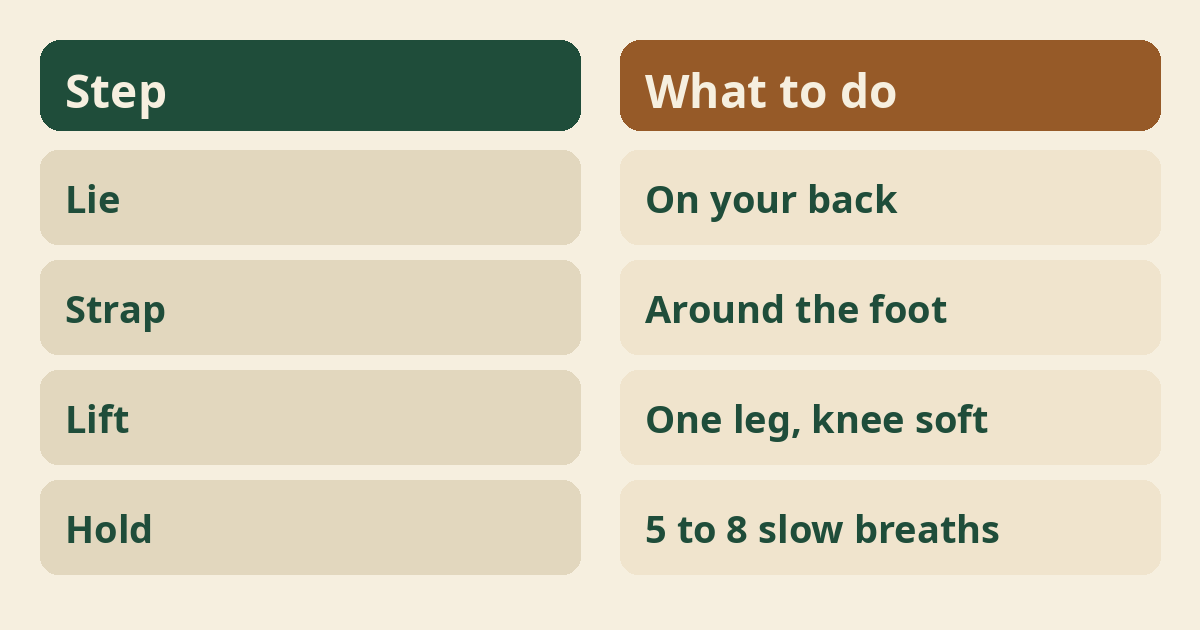
Loop a strap, belt or towel around the ball of the lifted foot and hold both ends, with the arms relaxed. The strap brings the foot to you. Do not pull hard. Hold it lightly and let the leg rest in the strap.
How high should the leg go?
Lift the leg only as high as is comfortable, even if the knee stays bent. A bent knee is a real stretch. Straighten the knee only if it feels easy. Do not chase height or lift the hips.
What should the other leg do?
Keep the other leg resting on the floor with the foot gently flexed, or bend the knee with the foot on the floor. The bent knee version is kinder for the lower back. Do not force the resting leg down.
What should the shoulders and neck do?
Keep the shoulders and the back of the head resting on the floor, with the neck long. If the head lifts, use a blanket under it. Our guide to yoga for neck and shoulders explains gentle care.
How do you breathe?
Breathe slowly through the nose, letting each out breath soften the leg a little. Do not hold the breath. Our guide to belly breathing explains an easy pattern.
How long should you stay?
Stay for five to eight slow breaths on each side. Short holds are enough at first. Our guide on how often to do yoga helps you plan a routine.
How do you come out?
Bend the knee, lower the foot to the floor and rest for a few breaths before the other side. Move slowly and hug the knee to the chest if it feels good. Then repeat on the other side.
What if the hamstrings feel tight?
Bend the knee, hold the strap closer to the knee and lift less. Tight hamstrings are common. Never force the leg straight. A small, calm stretch is enough.
What if the lower back feels uneasy?
Bend the resting knee with the foot flat, and lift the leg less. A bent knee supports the lower back. If the discomfort stays, stop and rest. Our guide to yoga with a bad back explains cautious practice.
What if the foot cramps?
Relax the foot, shake the leg gently and use a smaller stretch. Cramping means the stretch is too strong. Do not push through it.
What are common mistakes?
Pulling the leg hard, lifting the hips, holding the breath and forcing the knee straight. Keep the movement small and smooth. The goal is a calm stretch, not height.
How can you warm up?
Warm up with a few gentle knee hugs and ankle circles. Our guide to the knee to chest pose warms the hips. A warm body stretches more comfortably.
What poses pair well with it?
Knee to chest, supine twist, bridge and happy baby pair naturally with this pose. Try the supine twist afterwards. Our happy baby pose guide opens the hips.
Can you do it with a wall?
Yes. Lie with the hips near a wall and rest the lifted leg against it, using the wall instead of a strap. This is a restful option. Our guide to legs up the wall explains the wall setup.
What are the benefits?
Many people find the pose helps them feel looser through the backs of the legs, though results vary. The National Center for Complementary and Integrative Health notes that research on yoga is still developing. Practise for comfort, not for a fixed result.
Who should be careful?
People with back, hip or knee problems, sciatica, recent surgery or pregnancy should check with a doctor first. Our guide to prenatal yoga explains cautious practice in pregnancy. Lying flat on the back may not suit later pregnancy, so ask your doctor.
How often should you practise it?
A few times a week is plenty for most beginners. Give the body time to adapt. Keep each session gentle and stop if you feel pain.
Should you eat before practising?
Practise on a fairly empty stomach, leaving a couple of hours after a meal. A full stomach makes lying poses uncomfortable. Wear comfortable clothes and use a mat on a flat floor.
Is this pose right for everyone?
No. It is optional, and many people do better with simpler stretches. Yoga is not about reaching a shape. If it does not feel good, skip it without worry. Choose the poses that feel kind to your body today.
What should you notice afterwards?
Notice whether the legs feel looser, the breath feels easy and the back feels calm. If the back or leg feels sore, lift less or use more bend next time.
How do you progress over time?
Straighten the knee a little only when the bent knee version feels easy and pain free. Progress is measured in comfort, not height. Give each step a few weeks. If a change causes pain, return to the earlier version.
Can you practise it with a teacher?
Yes. A qualified teacher can check the hips, back and strap use. Learning with support is a sensible way to start, especially with a past injury.
Why do hamstrings get tight?
Long hours of sitting and little leg movement can leave the backs of the legs feeling short. Gentle daily stretching and walking can help. Be patient. Change comes slowly and without force.
What can you use if you have no strap?
A belt, a long scarf or a towel works just as well. Loop it around the foot and hold both ends. Keep it flat and the grip light. Any soft, long item that does not slip can do the job, so there is no need to buy anything.
Can you do it in bed?
Yes, if the surface is firm enough that you feel supported. A very soft bed can make the hips sink and the back uneasy. A mat or a carpeted floor is usually better. Keep the stretch small and calm.
What is a good mindset?
Treat the stretch as a quiet pause, not a flexibility test. Notice the breath and the feel of the leg. Let the body decide how far to go. A few relaxed minutes are worth more than a hard pull.
How can you make it more relaxing?
Dim the lights, rest the arms and let the breath lengthen. Close the eyes if you like. Let the floor hold your weight. Each out breath is a chance to soften. Stay a little longer if it feels peaceful, and stop if anything pinches.
Can you combine it with a short routine?
Yes. A simple order is knee to chest, this stretch on each side, supine twist and a short rest. Keep the whole sequence short at first. Ten minutes is plenty. End with a minute of slow breathing before getting up slowly.
Where to read next
For a calm, beginner-friendly start, Ranjana Sinha’s Begin Where You Are is written for people who want simple steps. Our guide to starting a home yoga practice adds a gentle routine you can follow at home.
Frequently asked questions
What is reclined hand to big toe pose good for?
A supported hamstring stretch while lying down.
Do I need a strap?
It helps a lot. A belt or towel also works.
How long should I hold it?
Five to eight slow breaths on each side.
Must the knee be straight?
No. A bent knee is a fine beginner version.
Is it safe?
Usually with care, but check with a doctor if you have back, hip or sciatica concerns.
The bottom line
This pose rewards patience. Keep the lift small, the knee soft and the breath slow.

