
Goddess pose is a wide standing squat that builds steady strength in the legs and opens the hips. The beginner version is a shallow bend with the hands on the hips, and a chair version is just as valid. This guide shows a safe, simple way to practise, with easy options and a clear safety note.
This is general education, not medical advice. If you have knee, hip or back problems, balance concerns, are pregnant or have a health condition, check with your doctor before trying this pose.
What is goddess pose?
Goddess pose is a wide standing squat where the feet are far apart, the knees bend over the toes and the arms are held in a bent, open shape. It builds steady strength in the legs and opens the hips and chest. The beginner version is a shallow squat with the hands on the hips. Our guide to the wide legged forward fold uses a similar stance.
Why do people practise it?
People practise goddess pose to build leg strength, to open the hips and to feel strong and grounded. It is a good pose for noticing the breath while the legs work. Our guide to benefits of yoga explains what regular practice may offer.
How do you set up?
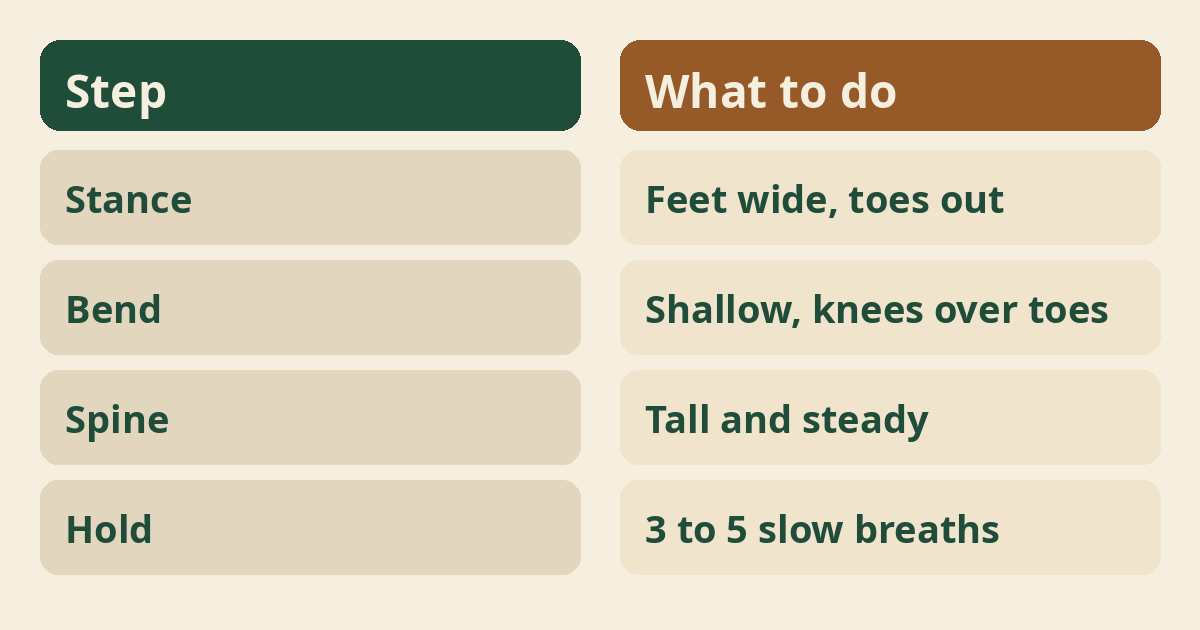
Stand with the feet wide apart, about one leg length, with the toes turned out slightly. Keep the heels under the knees when you bend. Place the hands on the hips. Take a few slow breaths and feel both feet on the floor.
How do you bend the knees?
Bend the knees slowly, tracking them over the toes, and lower the hips only as far as feels comfortable. A shallow bend is a real goddess pose. Do not let the knees fall inward. If they do, make the stance a little narrower or bend less.
What should the knees and feet do?
Keep the knees pointing the same way as the toes, with the weight spread evenly through both feet. Press the outer edges of the feet down. Do not let the arches collapse. Our guide to mountain pose explains steady foot contact.
What should the spine do?
Keep the spine tall and the tailbone dropping gently down, as if sitting between two chairs. Do not lean forward or arch the lower back. Draw the belly gently in. Our guide to yoga with a bad back explains cautious practice.
What should the arms do?
Keep the hands on the hips, or bend the elbows and open the palms forward at shoulder height. The arm shape is optional. Do not strain the shoulders. Our guide to yoga for neck and shoulders explains gentle care.
How do you breathe?
Breathe slowly through the nose, keeping the breath steady even when the legs feel the effort. Do not hold the breath. Our guide to belly breathing explains an easy pattern.
How long should you stay?
Stay for three to five slow breaths, then straighten the legs and rest. Short holds are enough. Repeat two or three times. Our guide on how often to do yoga helps you plan a routine.
How do you come out safely?
Press into the feet, straighten the legs slowly and step the feet together. Pause in mountain pose and breathe. Move slowly to avoid dizziness.
Can you use a wall?
Yes. Stand with the back against a wall and slide down only a little for support. The wall keeps the spine long and the weight steady. Keep the bend shallow. Come out if the knees feel uneasy.
What if the knees feel uneasy?
Bend less, narrow the stance and keep the knees over the toes. Knee discomfort is a clear sign to adapt. Never push into pain. A chair version is below.
What if the hips feel tight?
Turn the toes out less, bend less and keep the stance narrower. Tight hips are common. Our guide to the butterfly pose opens the hips gently.
What if the thighs shake?
Shaking is normal when muscles work. Straighten the legs and rest, then try a shallower bend. Shaking means the legs are doing real work. Breathe and stay calm. Do not push through cramping.
What are common mistakes?
Letting the knees fall in, leaning forward, holding the breath and bending too deep. Keep the knees over the toes and the spine tall. A shallow, steady squat is the goal.
How can you warm up?
Warm up with gentle hip circles, ankle circles and a few slow standing side bends. Our guide to the standing side bend warms the sides. A warm body squats more comfortably.
What poses pair well with it?
Mountain pose, wide legged fold, garland pose and triangle pair naturally with goddess pose. Try the garland pose afterwards. Our triangle pose guide uses a wide stance too.
Can you do it on a chair?
Yes. Sit near the front of a sturdy chair, open the knees wide and rest the hands on the thighs. This is a good option if standing is hard. Our guide to chair yoga explains more supported poses.
What are the benefits?
Many people find goddess pose helps them feel strong in the legs and open in the hips, though results vary. The National Center for Complementary and Integrative Health notes that research on yoga is still developing. Practise for comfort, not for a fixed result.
Who should be careful?
People with knee, hip or back problems, balance problems, blood pressure concerns, recent surgery or pregnancy should check with a doctor first. Our guide to prenatal yoga explains cautious practice in pregnancy. If you are unsure, skip this pose.
How often should you practise it?
Two or three times a week is plenty for most beginners. Give the body time to adapt. Keep each session gentle and stop if you feel pain.
Should you eat before practising?
Practise on a fairly empty stomach, leaving a couple of hours after a meal. A full stomach makes squats uncomfortable. Wear comfortable clothes and use a non slip mat.
Is goddess pose right for everyone?
No. It is optional, and many people do better with simpler standing poses. Yoga is not about reaching a shape. If goddess pose does not feel good, skip it without worry. Choose the poses that feel kind to your body today.
What should you notice afterwards?
Notice whether the legs feel steady, the breath feels easy and the hips feel open. If the knees or hips feel sore, bend less next time or skip the pose for a few days.
How do you progress over time?
Bend a little deeper only when the shallow version feels easy, steady and pain free. Progress is measured in comfort, not depth. Give each step a few weeks. If a change causes pain, return to the earlier version.
Can you practise it with a teacher?
Yes. A qualified teacher can check the knees, feet and spine and suggest props. Learning with support is a sensible way to start, especially with a past injury.
Can you add a gentle arm movement?
Yes. Slowly lift the arms to shoulder height as you bend and lower them as you straighten. Move with the breath and keep the shoulders relaxed. This adds a calm rhythm to the pose. Stop if the shoulders feel strained.
How does it feel different from a plain squat?
The wide stance and turned out toes shift the work toward the inner thighs and hips. Many people find it steadier than a narrow squat. Take your time finding a stance that feels comfortable for your own hips and knees.
Is goddess pose good for building confidence?
Many people enjoy it because the wide, strong stance feels grounding, though this is a personal experience. Standing wide and breathing steadily can feel empowering. Treat it as a gentle practice, not a performance. Notice the feet, the legs and the breath, and let that be enough.
How do you find the right stance width?
Step the feet apart, bend the knees a little and check that the knees point over the toes. If the knees fall inward, bring the feet a little closer. If the stance feels cramped, step slightly wider. The right width is the one that feels steady and pain free for you.
What props help?
A wall behind the back, a chair in front for the hands and a folded mat under the feet can all help. Props make the pose more kind, not less real. Keep the setup simple and safe, with a non slip floor and room around you to move.
Where to read next
For a calm, beginner-friendly start, Ranjana Sinha’s Begin Where You Are is written for people who want simple steps. Our guide to starting a home yoga practice adds a gentle routine you can follow at home.
Frequently asked questions
What is goddess pose good for?
A wide standing squat that builds leg strength and opens the hips.
How deep should I bend?
Only as far as is comfortable. A shallow bend counts.
How long should I hold it?
Three to five slow breaths.
Can I do it on a chair?
Yes, as a seated wide knee version.
Is it safe?
Usually with care, but check with a doctor if you have knee, hip or balance concerns.
The bottom line
Goddess pose rewards patience. Keep the bend shallow, the knees over the toes and the breath slow.

