
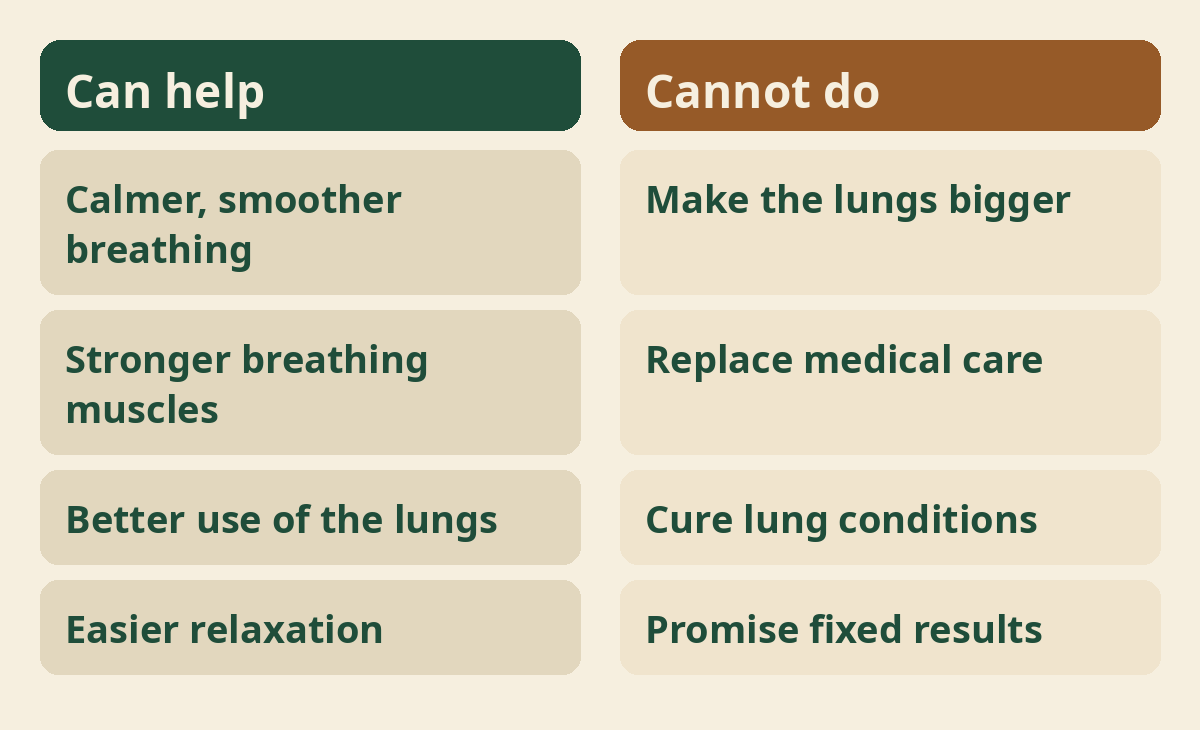
Breathing exercises can help you use your lungs more fully and breathe more calmly, but they do not make the lungs themselves bigger. Your total lung capacity is mostly set by your body size, age and health. What practice can change is how well you use that capacity, how relaxed your breathing is and how strong your breathing muscles feel. This guide explains what is realistic, what is not, and a few gentle exercises to try.
This is general education, not medical advice. If you have asthma, COPD, a heart condition, a recent illness, or any breathing difficulty, speak with your doctor before starting breathing exercises. Seek urgent care for chest pain or severe breathlessness.
Can breathing exercises increase lung capacity?
Breathing exercises cannot add new lung tissue, but they can improve how efficiently you breathe and may strengthen the muscles that move air. Think of it as training the pump, not enlarging the bucket. People often feel they can take fuller breaths and recover more easily after effort, even though the measured size of their lungs has not changed.
Claims that a simple routine will “double” your lung capacity are not supported. Be wary of any program that promises dramatic numbers. Gentle, regular practice is a more honest goal.
What does “lung capacity” actually mean?
Lung capacity is the total amount of air your lungs can hold, and it differs from how well you breathe in daily life. Doctors measure it with a breathing test. It depends on height, age, sex and health, and it changes slowly over years. Breathing patterns, posture and muscle strength affect how much of that capacity you actually use from moment to moment.
This difference explains why a person can feel breathless in one situation and comfortable in another with the same lungs. Stress, a slumped posture and shallow chest breathing all make breathing feel harder. Practice can improve the habits around the lungs.
Which muscles and habits matter?
The diaphragm is the main breathing muscle, and relaxed, low, slow breathing uses it better than quick, shallow chest breathing. The ribs and the muscles between them also move with each breath. When you sit tall and let the belly soften, these muscles can work more freely.
- Diaphragm. Moves down as you breathe in, so the belly gently rises.
- Rib muscles. Widen the ribcage sideways and at the back.
- Posture. A tall spine gives the ribs room to move.
- Pace. Slow breathing lets air reach the lower lungs.
What breathing exercises are gentle and safe to try?
Belly breathing and paced breathing are the simplest exercises for most healthy adults. Both are slow and unforced. Our guide to pranayama for beginners shows more gentle breathing practices.
Belly breathing
Sit or lie comfortably. Rest one hand on your belly. Breathe in slowly through the nose so the belly gently rises, and breathe out slowly so it falls. Do five to ten breaths.
Paced breathing
Breathe in for a count of four and out for a count of four to six. Keep the breath smooth and unforced for five rounds.
Side-rib breathing
Place your hands on the sides of your lower ribs. Breathe in and feel the ribs widen under your hands, then breathe out and feel them settle.
How to practise step by step
- Sit on a chair with your feet on the floor and your spine tall.
- Rest your hands on your belly or ribs.
- Breathe in slowly through the nose, feeling the belly and ribs expand.
- Breathe out slowly through the nose or pursed lips.
- Repeat for five to ten breaths, then breathe naturally for a minute.
- Stop if you feel dizzy, tense or short of breath.
How often should you practise?
Five to ten minutes a day is enough for most beginners. Regular short sessions are better than rare long ones. Add a minute only when practice feels easy, and never force the breath. A good time is when you are calm, such as in the morning or before bed.
If you like building habits, our guide to morning meditation shows how to attach a short breathing practice to your day.
What does the research say?
Research on breathing exercises is mixed and depends on the exercise and the group studied. The National Center for Complementary and Integrative Health summarises findings on yoga effectiveness and safety, and the American Lung Association offers general information on lung health. Neither suggests that a simple routine enlarges the lungs. People with lung conditions should follow their own doctor’s or therapist’s plan.
What can protect your lungs over the long term?
Not smoking, avoiding polluted air where possible, staying active and keeping up with medical care protect lung health more than any breathing exercise. Breathing practice is a helpful extra, not a substitute. Regular walking, gentle movement and good posture all support easier breathing.
Gentle yoga can fit in here as well. Our guides to the benefits of yoga and chair yoga for beginners offer easy ways to stay active.
Can yoga breathing help with stress and breathlessness?
Slow breathing often helps people feel calmer, and a calmer body usually breathes more easily. Many people notice that anxiety makes breathing quick and shallow, and that slowing the breath eases the feeling. This is a comfort effect, not a cure. Persistent breathlessness always deserves a medical check.
Who should be careful?
People with asthma, COPD, heart conditions, high blood pressure, a recent chest illness or pregnancy should speak with a doctor before breathing exercises. Avoid forceful breathing, long breath holds and fast breathing unless a trained professional guides you. Stop at once if you feel dizzy, faint, chest pain or unusual breathlessness.
Why do some people feel short of breath easily?
Feeling short of breath can come from many causes, including fitness level, stress, posture, a stuffy nose or a medical condition. Many are harmless, but some need medical attention. A new, sudden or worsening problem should always be checked by a doctor, and breathing exercises should never delay that.
When there is no medical cause, habits often play a part. Shallow chest breathing, long hours of sitting and constant tension in the shoulders can all make breathing feel tight. Gentle practice, movement and a few posture breaks often help these everyday patterns.
How can you check your breathing habits?
A simple check is to sit quietly and notice where your breath moves, how fast it is and whether it feels smooth. Put one hand on your chest and one on your belly. If the chest hand moves much more than the belly hand, your breathing may be shallow. This is not a diagnosis, only a prompt to practise slower, lower breathing.
- Notice if you hold your breath when you concentrate.
- Notice if your shoulders rise with each breath.
- Notice if you breathe through the mouth most of the day.
- Notice how your breath feels when you are calm compared with when you are rushed.
Small changes, such as relaxing the shoulders and breathing slowly through the nose, are a good place to start.
Can you combine breathing exercises with walking?
Yes. Easy, steady walking while breathing smoothly through the nose is a gentle way to practise. Walk at a pace where you can talk comfortably. Match your breath to your steps if that feels natural, for example in for three steps and out for three or four. Stop if you feel dizzy or breathless.
Walking supports the heart and lungs in its own right, so the combination is simple and low-cost. Add a few minutes at a time and keep the effort easy.
Common myths
- “Breathing exercises make your lungs bigger.” They improve how you use them, not their size.
- “Deeper is always better.” Smooth and relaxed matters more than deep and forced.
- “Holding the breath longer builds capacity.” Long holds can be unsafe for some people.
- “You need special equipment.” Simple exercises need nothing but a chair.
Where to read next
If you want a calm, beginner-friendly approach, Ranjana Sinha’s Begin Where You Are is a good starting point. Our guide to Kriya yoga and pranayama explains how breathing practice fits into the wider yoga path, and how long to meditate helps you plan a short daily session.
Frequently asked questions
Can breathing exercises increase lung capacity?
They do not enlarge the lungs, but they can improve how well you use them and strengthen breathing muscles.
How long does it take to improve breathing with exercises?
Some people feel calmer breathing within a week or two of daily practice. Changes in strength take longer and vary from person to person.
What is the best breathing exercise for beginners?
Belly breathing and gentle paced breathing are the simplest and safest places to start for most healthy adults.
Is it safe to do breathing exercises every day?
Gentle, unforced practice is generally safe for healthy adults. Check with a doctor first if you have a health condition.
Can yoga improve lung health?
Gentle yoga can support easier breathing and posture. It does not replace medical care for lung conditions.
When should I stop and see a doctor?
Stop if you feel dizzy, faint or have chest pain, and seek care for persistent breathlessness.
The bottom line
Breathing exercises do not make the lungs bigger, but they can help you breathe more calmly and fully. Keep practice gentle, stay regular and speak with your doctor if you have any lung or heart condition.

