
The house is finally quiet, your phone is face down, and you have ten minutes that belong to you. That is enough to practice kriya yoga at home. You do not need a studio, a class, or years of experience: a small clear floor space, a cushion, and a few slow breaths are the whole setup. This guide walks you through a simple beginner routine, step by step, from your first sit to a steady daily habit.
This article is general education about a traditional practice, not medical advice for your situation. If you are pregnant, have a health condition, or take medication, check with your doctor before starting breath work.
What is kriya yoga?
Kriya yoga is a style of practice that pairs simple movement, steady breathing, and quiet attention in a set order. The word kriya means action, and the idea is that small, repeated actions done with care can settle a busy mind. Most home routines use a short sequence you can learn in an afternoon. You do not need special gear or past experience to begin.
Why do people practice it?
Many people try kriya yoga at home because they want a calm, structured way to start or end the day. Some come for the breathing, some for the quiet sitting, and some because a friend or teacher suggested it. Results vary from person to person, and most notice changes slowly over weeks. The routine itself is the point, not any single outcome.
How do you practice kriya yoga at home?
Start with a short, simple version: a few minutes of easy movement, a few minutes of breathing, and a few minutes of quiet sitting. Learning how to practice kriya yoga at home is mostly about keeping the routine small and repeatable. Pick the same time each day so the habit sticks. Keep a small, clear spot on the floor and treat it as your practice corner.
Step 1: Set up your space
Choose a quiet, flat spot where you can sit and stretch without bumping into furniture. A rug or mat is enough, and a folded blanket under your hips can make sitting easier. Silence your phone and let others in the home know you need a few minutes. Small props like cushions or blocks can help, and our guide to yoga props for beginners shows cheap options you may already own.
Step 2: Sit tall and settle
Begin by sitting in a comfortable upright position with your spine long and your shoulders soft. You can sit cross-legged on a cushion or on a chair with both feet flat. Close your eyes or soften your gaze, and take a minute to simply notice how you feel. This settling time is part of the practice, not a warm-up to skip.
Step 3: Warm up the spine
Move your spine slowly through a few easy motions to wake it up before breathing work. Try slow rounds of arching and rounding your back on hands and knees, like in cat-cow pose for beginners. Roll your shoulders, turn your head slowly from side to side, and let each move follow the breath. Two or three minutes is plenty.
Step 4: Practice the breathing
The heart of kriya yoga is slow, controlled breathing done with full attention. Begin with simple belly breathing: one hand on your belly, feeling it rise as you breathe in and fall as you breathe out. If this is new, our lesson on belly breathing for beginners breaks it down. Keep the breath smooth and never strain or force it.
Step 5: Add a simple kriya cycle
A basic home kriya pairs a slow breath with a simple motion or a quiet focus point, repeated in a steady rhythm. One common beginner version is to breathe in for a count of four, breathe out for a count of six, and rest the mind on the flow of air. Repeat the cycle for a few minutes without rushing. If your mind wanders, that is normal; just come back to the count.
Step 6: Rest in stillness
End every session by sitting or lying quietly for a few minutes with no technique at all. Let the breath return to normal and notice the after-effects of practice. Many teachers say this rest is where the session settles into the body. Get up slowly when you are ready.
Breathing basics for home practice
Slow, even breathing through the nose is the base of almost every kriya exercise. Aim for breaths that are smooth and quiet, not deep to the point of strain. If you ever feel dizzy or short of air, stop, breathe normally, and rest. Breathing practices should leave you feeling steady, not winded.
How long should a session be?
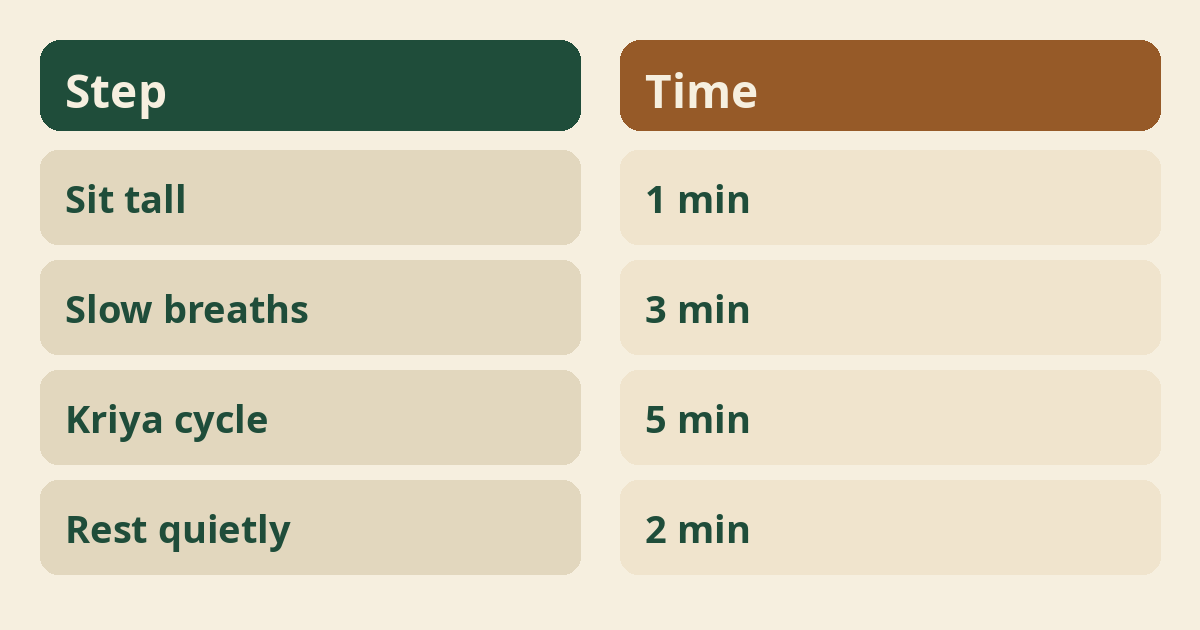
Ten to twenty minutes is a realistic home session for a beginner. That might be three minutes of movement, five to eight minutes of breathing, and a few minutes of quiet sitting. A short session you actually do beats a long one you keep skipping. You can add time slowly as the habit firms up.
How often should you practice?
Most beginners do well practicing once a day or at least most days of the week. Daily short sessions tend to build the habit faster than one long weekly session. If you want ideas for fitting practice into a busy week, our note on how often you should do yoga covers realistic schedules. Rest days are fine when life gets full.
Common mistakes to avoid
The biggest beginner mistake is trying to do too much, too fast, with the breath. Forcing long holds or deep breaths can leave you dizzy and discouraged. Other common slips are practicing on a full stomach, skipping the settling minute, and quitting after one distracted session. Keep it small and keep showing up.
Do you need props or gear?
No special gear is required, though a cushion, a blanket, and loose clothing make sitting easier. Sit on a folded blanket so your hips rest slightly higher than your knees. A chair works perfectly well if the floor is uncomfortable. Wear anything that lets you breathe and move freely.
Morning or evening practice?
Either time works; the best time is the one you can keep every day. Many people like early morning because the house is quiet and the mind is fresh. Others prefer evening as a way to unwind before sleep. Try both for a week and notice which one you actually stick with.
Who should be careful?
Anyone who is pregnant, has a heart or breathing condition, recent surgery, or dizziness issues should check with a doctor before starting breath work. Strong breathing techniques are not right for everyone, and some traditional kriyas are meant to be learned one-on-one. If a practice ever causes chest pain, faintness, or panic, stop and rest. Your doctor knows your history and can say what is safe for you.
Is kriya yoga a treatment?
No, kriya yoga is not a medical treatment, a cure, or a replacement for care from a health professional. It is a traditional mind-body practice that many people use as part of a healthy lifestyle. If you have a health concern, see a qualified doctor first and use practice only as a complement if they agree. Never change or stop any medication because of a yoga practice.
What benefits do people report?
Many people find that regular kriya practice leaves them feeling calmer, more focused, and better able to handle daily stress, though results vary. Some notice easier breathing or steadier sleep over time; others simply enjoy a few quiet minutes each day. Research into yoga and breathing practices is still growing, and the National Center for Complementary and Integrative Health has a plain-language overview of what is known so far. Treat any benefit as possible, not promised.
How do you progress over time?
Progress in kriya yoga means practicing more steadily, not pushing the breath harder. After a few weeks of a short daily routine, you can lengthen the quiet sitting or add a second short cycle. Learn new techniques slowly, one at a time, and give each a few weeks before judging it. For a fuller walk-through of the classic exercises, our cornerstone guide to kriya yoga techniques goes step by step.
Do you need a teacher?
A qualified teacher helps, especially for advanced breathing techniques, but a beginner can safely start a simple home routine alone. Books, videos, and beginner-friendly guides cover the basics well. When you move toward stronger practices like long breath holds or rapid breathing, seek live guidance. Many people practice at home most days and check in with a teacher now and then.
What mindset helps?
Come to each session curious and patient rather than chasing a particular feeling. Some days will feel calm and some will feel scattered, and both are normal parts of practice. Let go of grading yourself; the win is sitting down at all. A kind, steady attitude carries the practice further than effort does.
Can you practice with a busy mind?
Yes, a busy mind is exactly what the practice is for, not a reason to skip it. Notice the thoughts, return to the breath count, and repeat as many times as needed. Even a distracted session trains the habit of coming back. Over weeks, many people find the settling happens faster.
What if you miss a day?
Missing a day changes nothing; just practice the next day without making up for it. Habits survive gaps when you restart quickly and without guilt. If you miss a week, begin again with the short version rather than a long catch-up session. Consistency over months matters more than any single day.
Kriya yoga and stress
Slow breathing and quiet sitting are widely used as ways to unwind after a demanding day. Many people find a short evening session helps them shift out of work mode, though everyone responds differently. If stress relief is your main goal, our guide to yoga for stress relief for beginners offers more simple options. Practice is one tool among many, not a fix-all.
Eating and drinking before practice
Practice on a fairly empty stomach for the most comfortable breathing. A gap of two to three hours after a full meal works well for most people, and a light snack needs less time. Sip water beforehand if you are thirsty, but avoid drinking a lot right before you sit. Coffee right before practice can make settling harder for some people.
What to wear at home
Wear loose, comfortable clothing that does not squeeze your waist or chest. Pajamas or soft track clothes are fine for a home session. Tight waistbands can restrict belly breathing, so loosen them before you sit. Bare feet or socks are both fine on a rug or mat.
Sitting options for stiff bodies
Any upright, comfortable seat works for kriya practice, including a chair. Sit toward the front of the chair with feet flat and hands resting on your thighs. If you sit on the floor, prop your hips on cushions until your knees can relax downward. Comfort first; posture follows.
Adding simple poses
A few easy poses before breathing can loosen the body and make sitting more comfortable. A resting shape like child’s pose for beginners works well after a long day at a desk. Keep the movement slow and pain-free, and skip anything that pinches. Two or three poses are enough before you settle into breath work.
Practicing in a small space
Kriya yoga needs very little room: a strip of floor beside a bed or a cleared corner is enough. Because most of the practice is sitting and breathing, you will not be stretching across the room. Keep your cushion and blanket in a basket nearby so setup takes seconds. A space that is easy to reach gets used.
Tracking your habit
A simple check mark on a calendar is enough tracking for a home practice. Note the date and maybe one word about how the session felt. Watching the chain of marks grow is its own motivation. Skip apps and gadgets unless you find they truly help.
Keeping it quiet for others
Early morning and late evening sessions may need to be silent if others are asleep nearby. Kriya breathing is naturally quiet through the nose, so most of the practice makes no sound at all. If you like to chant or hum, save it for daytime or use a soft voice. Stillness itself is silent, so the core practice travels anywhere.
Signs you are pushing too hard
Light-headedness, tingling, chest tightness, or rising anxiety during breathing are signs to stop and breathe normally. Ease off the count, shorten the session, and build back up slowly over days. Breath work should feel sustainable, never like an endurance test. If symptoms keep coming back, talk with your doctor before continuing.
Building a weekly rhythm
A simple weekly rhythm might be five or six short sessions with one full rest day. Keep the same time slot so the habit anchors to something you already do, like morning tea. Longer sessions can wait for weekends if you enjoy them. The rhythm you can keep for a year beats any ambitious plan.
How kriya fits with other yoga
Kriya breathing and sitting pair well with gentle physical yoga on the same day. Some people do a few poses first, then sit for kriya practice; others keep them on separate days. There is no single right order for a home routine. What matters is that the whole thing stays easy enough to repeat.
Where to read next
For a calm, beginner-friendly start, Ranjana Sinha’s Begin Where You Are is written for people who want simple steps. Our guide to starting a home yoga practice adds a gentle routine you can follow at home.
Frequently asked questions
Can I learn kriya yoga at home without a class?
Yes, a beginner can start a simple breathing and sitting routine at home, though a teacher helps for advanced techniques.
Is ten minutes a day enough to matter?
Yes, short daily sessions build the habit and many people find them useful, with consistency mattering more than length.
What time of day works best for kriya?
The best time is whichever one you can repeat daily, whether that is early morning or before bed.
Do I need to sit on the floor?
No, a sturdy chair works just as well as long as you can sit upright and breathe freely.
Will kriya yoga fix my anxiety or sleep problems?
Kriya yoga is not a treatment, but many people find regular practice helps them feel calmer, so see a doctor for any health concern.
The bottom line
Start with ten quiet minutes tomorrow, and let the habit grow on its own.

