
Yoga can give badminton players a calm way to practise balance, body awareness, and comfortable movement away from the court. A short, gentle session may fit before or after play, or on a separate day, depending on how you feel. You do not need to be flexible or know advanced poses to begin. Choose movements that feel steady, leave room to move, and stop if something hurts. This guide explains a beginner-friendly approach that can sit alongside badminton, not replace coaching or sport-specific preparation.
This article is for general education and is not medical advice. Ask a doctor before starting if you have a health condition, injury, unusual pain, or questions about which movements are suitable for you.
What yoga means here
Yoga is a set of movements, positions, and breathing practices that can be adapted to your needs. For badminton players, it can mean a few controlled stretches and steady poses rather than a demanding class. Keep the practice comfortable and separate from hard court drills when needed.
Why players try yoga
Many players use yoga to practise moving with attention and taking a quiet pause. Badminton involves quick steps and repeated changes of direction, while yoga is usually slower. The contrast may help you notice how your body feels, but it does not promise a change in sport results.
A helpful starting point
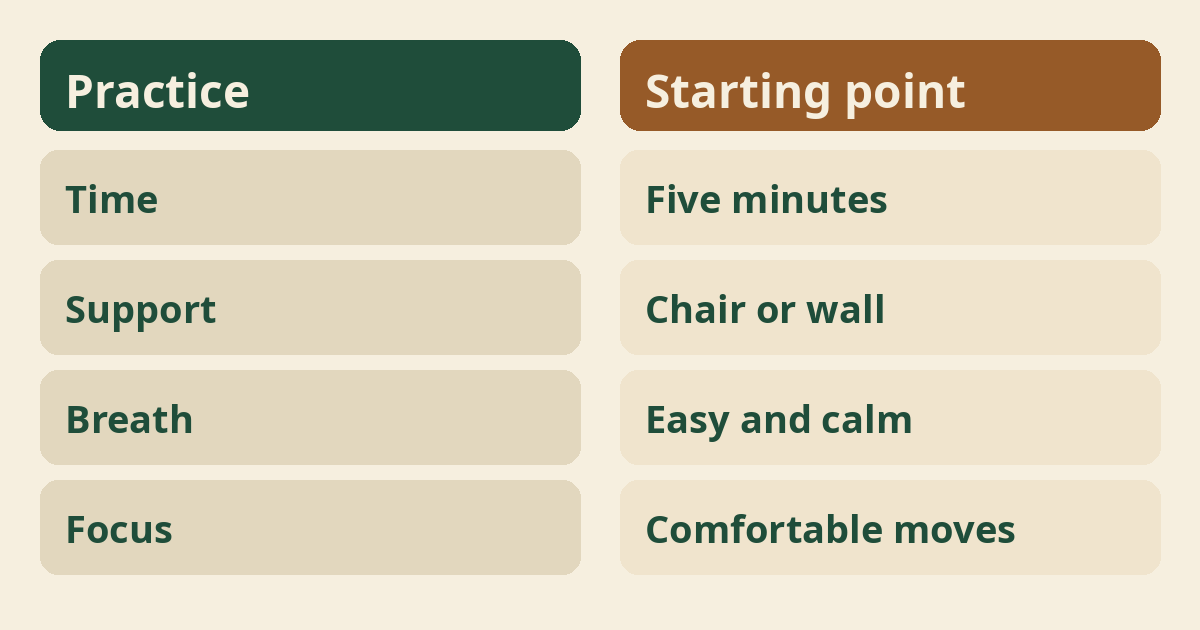
Start with easy movements and a few minutes of practice rather than a long routine. Pick a clear floor space and wear clothes that let you move. If you are new, try a chair or wall for support and leave any pose that feels forced.
Set a simple intention
Choose one modest goal, such as practising steady breathing or learning two comfortable poses. A clear aim helps keep a session manageable. It is fine if the goal is simply to pause and move gently after a busy day; there is no need to measure success by how far you stretch.
Step 1: check your body
Before you begin, notice whether you feel rested, sore, or unusually uncomfortable. On a day when you feel tired or stiff, choose a shorter, easier practice or rest. Do not use yoga to push through pain, and do not assume discomfort is a normal sign of progress.
Step 2: make room
Set up a stable surface with enough space to step and lie down safely. A yoga mat can reduce slipping, but a clean non-slip floor may work for simple standing poses. Move furniture and keep your racket, shuttlecocks, and other objects out of the practice area.
Step 3: arrive slowly
Begin standing or seated and take a few natural breaths before moving. Let your shoulders settle without forcing them down. Notice the contact of your feet or seat with the floor, then choose a gentle movement that feels easy to control.
Step 4: move through a small range
Try slow, comfortable movements before attempting deeper shapes. Bend your knees only as far as feels steady, and keep your balance supported if needed. For a simple floor movement, explore Cat-Cow Pose for Beginners at an unhurried pace.
Step 5: add one standing pose
Use a wall or chair as a steady support while learning to stand with ease. Place your feet in a comfortable position and keep your knees soft rather than locked. Mountain Pose for Beginners can be a simple way to practise an upright, relaxed stance.
Step 6: finish with a pause
End with a quiet minute seated or lying down if that feels comfortable. Let your breathing return to its usual rhythm and notice how you feel without judging it. If lying down is uncomfortable, stay seated or stand near a support instead.
Keep breathing easy
Breathe in a way that feels natural, without holding or forcing the breath. Some people find a slow, gentle exhale calming, but it should not create strain. If you feel dizzy, short of breath, or unwell, stop and return to normal breathing.
Avoid breath contests
Yoga breathing is not a test of how long you can hold air or how deeply you can inhale. Skip forceful breathing methods as a beginner, especially if they feel uncomfortable or you have a health concern. Keep your attention on ordinary, quiet breaths during simple movements.
How long to practise
A short session of about five to ten minutes is a reasonable place to start. There is no required minimum, and a few careful movements may be enough for one day. Add time only if the session continues to feel easy and fits your energy and schedule.
How often to practise
Choose a rhythm you can keep without crowding out rest, badminton, or daily needs. One or two brief sessions in a week may be a practical trial, then adjust based on how you feel. For more ideas, see how often to do yoga.
Before badminton
Keep any pre-play yoga brief, familiar, and gentle. Use it to settle and move comfortably, not to test your range or tire yourself out. Follow your coach’s sport-specific warm-up plan, and avoid trying new deep stretches just before a match.
After badminton
After playing, allow your breathing and pace to settle before moving into easy stretches. Choose positions that feel comfortable rather than pulling hard on tired muscles. A short pause and gentle movement may feel pleasant, but rest and ordinary recovery habits still matter.
Practise on a separate day
A separate, light session gives you room to learn poses without rushing to a court. Keep the first few practices simple and take breaks whenever needed. You can use a chair or wall throughout; balance and flexibility are not entry requirements.
Choose comfortable positions
A beginner routine can include standing, seated, and floor-based movements that feel manageable. No single pose is essential for every player. You might explore Child’s Pose for Beginners only if kneeling and resting that way feel suitable for you.
Use props for support
A folded blanket, sturdy chair, or yoga block can make some positions easier to adapt. Props should be stable and placed where they cannot slide. Learn more about choosing simple supports in yoga props for beginners.
Common mistake: forcing range
Pushing into a stretch can make a beginner session less comfortable and harder to control. Move only to a mild, manageable sensation, and ease out if you feel sharp, pinching, or worsening discomfort. A deeper position is not proof that a practice is better.
Common mistake: copying advanced poses
A pose shown online may not suit your current experience or body. Start with an easier version and use support rather than copying a difficult shape. You can skip any movement without needing to replace it with something equally challenging.
Common mistake: doing too much
A long or intense session is not necessary when you are learning. Begin with a small amount and see how your body feels later that day and the next. Make changes gradually, and rest if you feel more tired or uncomfortable than expected.
Common mistake: skipping rest
Rest is a useful part of practice, not a failure to complete the routine. Pause between movements and stop for the day if you feel unwell. Badminton already asks for active effort, so yoga does not need to become another workout.
Who should be careful
Ask a doctor first if you have an injury, ongoing pain, a medical condition, balance concerns, or recent surgery. Also check before beginning if you are unsure whether bending, kneeling, or floor work is suitable. Share relevant guidance with a qualified yoga teacher, and follow any care plan you have.
When to stop
Stop a movement if it causes pain, dizziness, numbness, or unusual shortness of breath. Return to a supported position and let your breathing settle. If symptoms are severe, persistent, or concerning, seek appropriate medical help rather than trying another pose.
Is yoga a treatment?
No, yoga is not a treatment for an injury or medical condition. This gentle practice is general movement education and cannot diagnose or manage a health problem. Talk with a doctor about symptoms, care, and whether a particular activity is appropriate for you.
Possible benefits
Many people find gentle yoga useful for taking a pause and paying attention to movement, though results vary. Some may enjoy practising balance or comfortable mobility, while others may notice little difference. These experiences are personal and do not establish a medical effect; see National Center for Complementary and Integrative Health for general information about yoga and health.
Progress at your pace
Repeat a comfortable routine for a while before deciding whether to add anything new. If you choose to progress, change one thing at a time, such as adding a pose or a few minutes. Keep support available and return to an easier version whenever that feels right.
Finding a teacher
A qualified teacher can show beginner options and help you use props safely. Tell them you play badminton and mention any limits or concerns you have. A good class should welcome questions and offer alternatives rather than pressuring you into a pose.
Choose a suitable class
Look for a beginner class that describes its pace and lets participants adapt movements. Ask about the teacher’s training and whether the class includes strenuous poses or breath practices. You can observe first, choose an online session with clear modifications, or practise at home instead.
Mindset for practice
Treat yoga as a chance to learn, not as a competition with yourself or other players. Bodies move differently, and a pose can look different from one day to the next. Curiosity and patience are more useful than comparing shapes or chasing a perfect routine.
Yoga and badminton training
Yoga can sit alongside badminton, but it should not replace coaching or your regular preparation. Keep sport drills, strength work, rest, and advice from your coach in their proper roles. If adding yoga makes your schedule feel crowded, reduce it or pause and review what is manageable.
A sample gentle plan
A first session might include a breathing pause, two easy movements, one supported standing pose, and rest. Keep each part brief and move at a comfortable pace. A simple sequence is easier to adjust than a long list of poses, and you can finish early whenever you have had enough.
Keep notes if useful
A brief note can help you remember what felt comfortable and what you want to change. Record the poses, support used, and general feeling after practice, not a score for flexibility. If something repeatedly feels uncomfortable, leave it out and ask a qualified professional for guidance.
When routines change
Your practice can change with your schedule, energy, and badminton sessions. A shorter session on a busy day or a rest day when needed is still a sensible choice. Do not feel obliged to practise at a fixed time or to make up missed sessions.
Where to read next
For a calm, beginner-friendly start, Ranjana Sinha’s Begin Where You Are is written for people who want simple steps. Our guide to starting a home yoga practice adds a gentle routine you can follow at home.
Frequently asked questions
Is yoga suitable for a badminton beginner?
Many beginners can try gentle, supported movements, but suitability depends on personal health and comfort.
Should I do yoga before a match?
Keep it brief and familiar, and follow your coach’s warm-up guidance.
Do I need a mat?
A non-slip surface is helpful, but simple poses may be possible without a mat.
Will yoga improve my badminton game?
There is no guaranteed sport result, though some people enjoy practising movement awareness and balance.
What should I do if a pose hurts?
Stop, return to a comfortable position, and seek medical guidance if the pain persists or concerns you.
The bottom line
Start with a few comfortable movements, keep your badminton coach’s guidance in view, and let your own comfort set the pace.

