
Yoga can give dancers a calm way to explore mobility, balance, breath, and body awareness alongside dance training. You do not need to be flexible or experienced to begin. Start with comfortable movements, use support when useful, and let your dance schedule guide how much you do. This guide explains how to build a simple practice without forcing a stretch or treating yoga as a replacement for dance instruction or medical care.
This article is general education, not medical advice or a personal exercise plan. If you have an injury, health condition, pain, or questions about whether movement is appropriate for you, check with a qualified doctor before starting and follow their guidance.
What yoga means for dancers
Yoga is a way to practise mindful movement, steady positions, and breathing. For dancers, a beginner practice can complement class by offering time to notice balance, posture, and how movement feels. There is no need to copy advanced shapes or make the practice look like choreography.
Why dancers try yoga
Many dancers use yoga to explore movement at a different pace. A slower practice may help you pay attention to how you distribute weight, where you feel steady, and whether you are holding your breath. These are skills to explore, not promises about performance or physical results.
Yoga is not dance training
Yoga and dance have different aims and neither replaces the other. Dance class teaches specific technique, artistry, and choreography with a teacher who understands that discipline. Yoga can offer another kind of movement practice, but it should not be used to override a dance teacher’s directions or a clinician’s advice.
Start with a simple goal
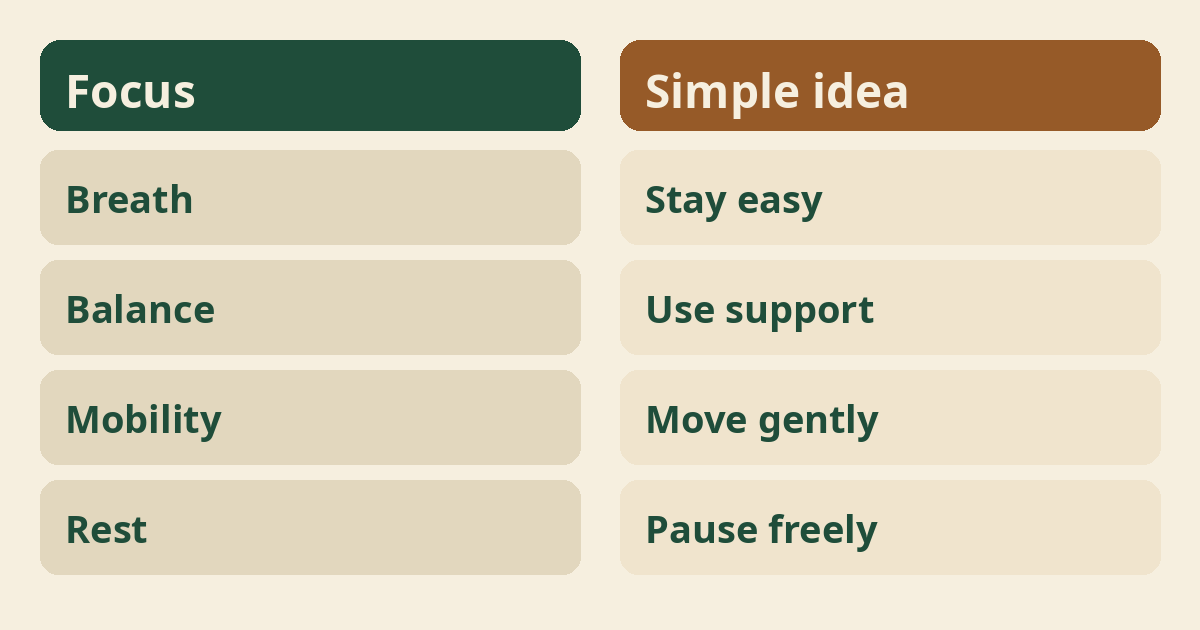
Choose one modest reason for practising, such as learning to breathe steadily. You might focus on balance, comfortable mobility, or a quiet transition after class. A narrow goal makes it easier to notice what feels useful without judging yourself against dancers who have practised yoga for years.
Set up a safe space
Use a clear, level area where you can move without rushing. Keep enough room to step and reach in every direction, and place a nonslip mat on a stable floor if you have one. Put water nearby and silence distractions so your attention can stay with the movement.
Choose a gentle pace
Move slowly enough to notice comfort and control. You should be able to pause, breathe normally, or leave a position at any time. If a movement brings sharp pain, numbness, dizziness, or unusual shortness of breath, stop and seek appropriate professional advice rather than pushing through.
Step one: arrive standing
Begin by standing comfortably and noticing your contact with the floor. Let your feet rest in a position that feels natural instead of forcing them parallel. Soften your knees, allow your arms to hang, and take a few easy breaths before you start moving.
Step two: explore the spine
Try small, comfortable movements that let the spine change shape. You can use a gentle standing curve or move through Cat-Cow pose on hands and knees if that is comfortable. Keep the range small at first and avoid turning the movement into a deep backbend.
Step three: practise a supported fold
A supported forward fold can be explored with bent knees and hands resting on a stable support. Hinge only as far as you can while keeping your breath easy. You do not need to touch the floor or pull yourself downward; come back upright slowly if you feel pressure or strain.
Step four: try a simple lunge
A short, supported lunge can help you practise shifting weight with control. Place one foot forward and keep your stance comfortable, using a wall or chair for balance if needed. Keep your front knee in a range that feels manageable, then step back and change sides without forcing depth.
Step five: find a resting shape
Choose a resting position that feels easy to leave. Some beginners try Child’s Pose with support under the chest or head, while others rest seated or lie on their back. There is no single correct rest position, so choose one that keeps breathing comfortable.
Step six: close with stillness
Finish by pausing for a few quiet breaths in a comfortable position. Notice whether your body feels different from when you began, without deciding that a particular sensation is good or bad. Sit or stand up slowly, especially after lying down or lowering your head.
Use breath without strain
Let breathing stay natural rather than trying to take the biggest breath possible. You can notice air moving in and out, or rest a hand on your abdomen and observe gentle movement. If breath focus feels uncomfortable, return to ordinary breathing and keep your attention on a steady point in the room.
How long should practice last?
A short practice is enough to learn the basic routine. Start with a few minutes and add time only if the practice remains comfortable and fits your day. A longer session is not automatically more useful, particularly when you already have a demanding rehearsal or performance schedule.
How often can you practise?
Choose a frequency that leaves room for dance, sleep, and recovery. Some people prefer brief movement on a regular basis, while others practise only when it fits their week. Use this beginner guide to yoga frequency as a starting point, not a rule that overrides how you feel or your clinician’s advice.
Yoga before dance class
Before dancing, keep yoga movements gentle and brief if you choose to do them. Use easy motions to arrive in your body rather than a long, tiring session or an intense stretch. Follow your dance teacher’s warm-up plan, since different styles, classes, and bodies may need different preparation.
Yoga after rehearsal
After dance, choose a calm practice that feels restorative rather than demanding. You might use comfortable breathing, easy joint movements, or a supported resting pose. If you feel unusually tired, sore, or unwell, skipping yoga and resting can be the more suitable choice.
Common mistake: forcing flexibility
Do not push into a stretch to match a dancer’s shape. Flexibility varies from person to person and can change from day to day. Use a smaller range, keep the breath easy, and stop if you feel sharp or worsening discomfort instead of treating intensity as progress.
Common mistake: copying advanced poses
Advanced shapes are not a requirement for a useful beginner practice. Photos and videos may show only one moment and may not explain a person’s training or modifications. Choose basic movements you can enter and leave with control, and ask a qualified teacher for individual guidance when unsure.
Common mistake: ignoring fatigue
Treat fatigue as information rather than a challenge to defeat. Dance training already asks a lot of attention and energy, so extra movement may not fit every day. Reduce the practice or rest when you are depleted, and discuss persistent or concerning symptoms with a qualified health professional.
Helpful props
Props can make a position easier to adapt, but they are optional. A folded blanket, stable chair, or yoga block may bring support closer to you; learn safe use from a qualified teacher if you are uncertain. See basic yoga prop ideas and avoid unstable objects that might slide or tip.
Balance without pressure
Balance practice can begin with a steady surface nearby. Stand near a wall or chair and keep your eyes open while shifting weight gently from one foot to the other. You can practise beginner balance movements without closing your eyes or standing on an unstable surface.
Mobility and flexibility
Yoga may offer a gentle way to explore comfortable movement through different areas. Many people find that regular, appropriate movement helps them feel more aware of mobility, but results vary. Avoid pulling joints to an end range, bouncing, or comparing your movement with someone else’s.
Breathing and focus
A steady, unforced breath can give your attention an anchor. Try counting a comfortable breath only if counting feels easy, and stop if it makes you tense or light-headed. Breath practice is not a test; let it be simple, and keep moving or resting in a way that feels manageable.
Is yoga a treatment?
No, yoga is not a treatment for an injury or medical condition. Do not use a yoga routine to diagnose a problem or replace care from a qualified clinician. If you are recovering from an injury, ask your doctor or physical therapist which movements, if any, are suitable for you.
Who should be careful?
Check with a doctor before starting if you have a health concern or are unsure whether yoga is suitable. This includes people with a current injury, ongoing pain, balance concerns, recent surgery, pregnancy-related questions, or a condition that affects movement or breathing. Follow individual medical guidance and ask a qualified yoga teacher about safe modifications.
When to stop
Stop a movement if it causes sharp pain, numbness, dizziness, or distress. Return to a comfortable position and let your breathing settle. If symptoms persist, worsen, or concern you, contact a qualified health professional rather than trying another pose to solve the problem.
Choose a qualified teacher
A good teacher welcomes questions and offers options without pressure. Look for clear instruction, respect for individual limits, and an approach that does not promise medical outcomes. Tell the teacher that you dance and mention relevant restrictions, while keeping private health details between you and your clinician when preferred.
Make room for differences
Dancers do not all need the same yoga practice. Dance style, training load, experience, mobility, and personal comfort all shape what may feel appropriate. Treat examples in this article as general ideas and make your choices with a qualified teacher or clinician when individual advice is needed.
Build gradually
Add one small change at a time and keep track of how it feels. You might repeat a short sequence before extending its length or adding a new movement. A practice that remains comfortable is easier to adjust than one built around ambitious targets or pressure to progress quickly.
Notice progress kindly
Progress can include steadier attention or more confidence with a basic movement. It does not have to mean a deeper pose, greater range, or a change in dance ability. Keep notes only if they help you make sensible choices, and allow for ordinary day-to-day variation.
Mindset for beginners
Curiosity is more useful than trying to perform yoga perfectly. Take breaks, use easier options, and let a position look different from a picture. A patient approach respects your body and makes it easier to keep yoga separate from the expectations you already face in dance.
A simple practice plan
Begin with standing, a few easy movements, one supported pose, and a quiet finish. Keep the sequence short enough that you can focus on comfortable transitions and normal breathing. Change or skip any part that does not suit you, and ask a qualified professional for advice about individual needs.
Possible benefits
Many people find that gentle yoga supports a sense of mobility, balance, calm, or body awareness, though results vary. Research on yoga is broad and does not establish a specific outcome for every dancer or every practice. For general information about yoga and health, see National Center for Complementary and Integrative Health and discuss personal questions with a qualified health professional.
A useful final check
After practice, ask whether the movements felt manageable and easy to stop. If the answer is no, make the next session simpler, use more support, or pause until you have guidance. Yoga should fit around your wellbeing and dance life, not become another reason to ignore discomfort.
Where to read next
For a calm, beginner-friendly start, Ranjana Sinha’s Begin Where You Are is written for people who want simple steps. Our guide to starting a home yoga practice adds a gentle routine you can follow at home.
Frequently asked questions
Do dancers need to be flexible to begin yoga?
No, beginners can use comfortable ranges and support without being flexible.
Can yoga replace a dance warm-up?
No, follow your dance teacher’s warm-up plan and use yoga only as an optional complement.
Should I do yoga on a rest day?
You can choose gentle movement or full rest according to your needs and professional guidance.
Can yoga improve my dancing?
Some people find it supports body awareness, but results vary and it is not a promise of dance improvement.
What should I do if a pose hurts?
Stop, return to a comfortable position, and consult a qualified health professional if symptoms persist or concern you.
The bottom line
Start with a few comfortable movements, stay curious, and let safety and personal guidance shape your practice.

