
Not every yoga practice needs a mat, a quiet room, or an hour of free time. Some days, what we need is a practice that meets us exactly where we are, even if where we are is a chair in the middle of a busy day. Chair yoga is that practice: gentle, adaptable, and surprisingly effective.
In this guide, we walk through what chair yoga is, why it works so well, and a simple 10-minute routine you can try today, whether you are brand new to yoga or returning after a long break.
What Is Chair Yoga?
Chair yoga adapts traditional yoga poses so they can be practised while sitting on a chair, or standing with a chair for support. The chair changes how a pose is supported. This can make some movements easier to approach for beginners or people who find floor practice difficult, but it does not make every movement suitable for every person.
It is not a lesser version of yoga. The breath work, the mindful movement, and the steady attention are all still there. The chair simply removes the barriers.
Why Chair Yoga Works So Well
- Support for movement. A chair can reduce the need to get down to the floor. Sitting still places demands on the body, so adjust the position and stop if a movement causes pain.
- A way to practise mobility. Gentle seated movements let you explore a comfortable range. A short stretching routine is not a complete strength-training programme.
- A quieter break. Moving with attention and comfortable breathing may feel settling. Responses vary, as we discuss in the benefits of meditation.
- Fits into real life. Ten minutes at your desk, in a waiting room, or at the kitchen table all count.
Before You Begin
This is general education, not a rehabilitation plan. If you are pregnant, recovering from surgery or injury, or have osteoporosis, glaucoma, significant back problems, severe high blood pressure or balance concerns, check which movements are appropriate with your health professional and teacher. Stop for pain, dizziness, chest discomfort or unusual breathlessness. Seek medical advice when symptoms are persistent or concerning.
A Gentle 10-Minute Chair Yoga Routine
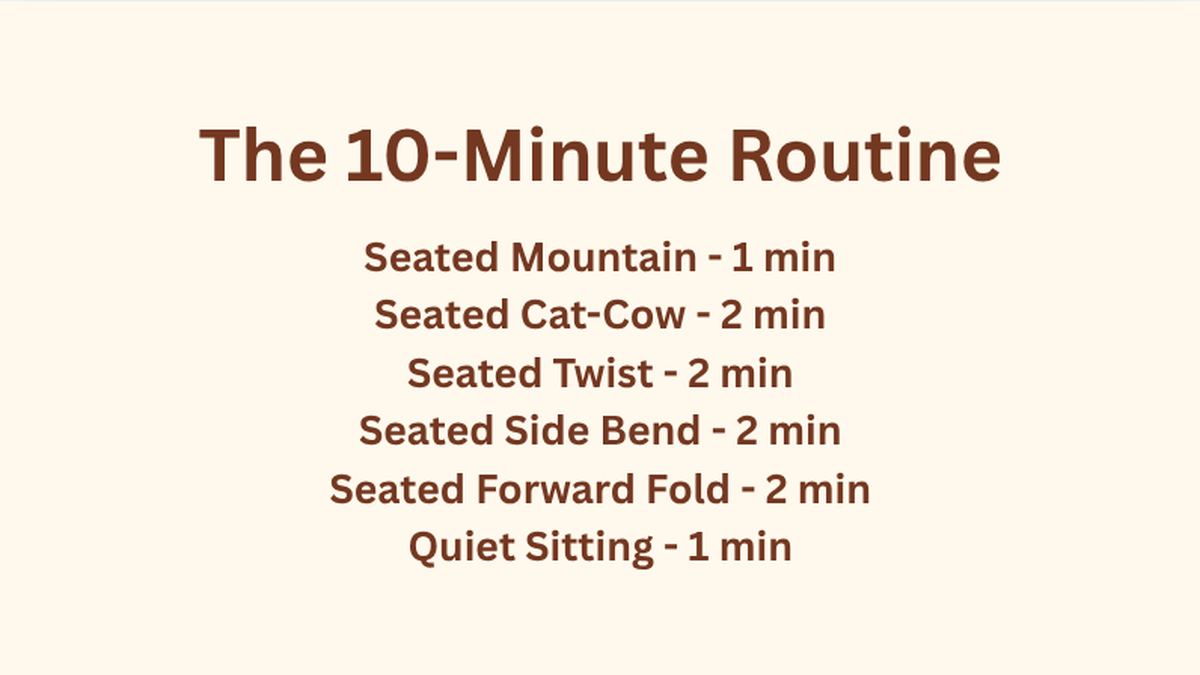
Use a sturdy chair without wheels, on a non-slip surface. Sit with your feet supported on the floor or a firm footrest. Move slowly and breathe normally. The timings below are a flexible guide, not a target to endure: take breaks and skip anything that does not suit you.
| Pose | Time | What to do |
|---|---|---|
| Seated Mountain | 1 minute | Sit tall, lengthen the spine, breathe slowly and settle in. |
| Seated Cat-Cow | 2 minutes | Hands on thighs. Explore a small, comfortable spinal movement without throwing the head back. Keep breathing normally; stay upright if rounding or arching is uncomfortable. |
| Seated Twist | 2 minutes | Turn a small amount within a comfortable range. Do not pull on the chair to force the twist. Return to centre between repetitions; split the time between sides. |
| Seated Side Bend | 2 minutes | Reach only as high as comfortable, or keep the hand at the waist. Make a small sideways movement without collapsing the chest. Switch sides halfway. |
| Seated Forward Fold | 2 minutes | Optional: make a small hip hinge with hands supported on thighs. Do not drop the head below the knees or force a stretch. If a health professional has advised against forward bending, remain upright. |
| Quiet Sitting | 1 minute | Sit comfortably, with eyes open or closed as you prefer. Notice ordinary breathing without holding it. |
If you enjoy the quiet minute at the end, our guide to morning meditation is a natural next step.
What Beginners Should Know
- Choose a stable chair. No wheels, no cushions that sink. A simple dining chair is perfect.
- Little and often beats long and rare. Choose a short practice you can repeat without strain rather than a rigid daily target. We discuss habit-building in overcoming the common obstacles to a practice.
- The breath is the practice. If you only sit tall and breathe slowly, you are already doing chair yoga.
- Rest is part of it too. On tired days, pair a few minutes of gentle movement with Yoga Nidra for deep rest.
Continue Learning
We have put together a free Chair Yoga PDF with more poses and gentle sequences you can print and keep beside your favourite chair. You will find it, along with guides for many other styles, in our free PDF library.
Frequently Asked Questions
Is chair yoga good for seniors?
Chair-supported practice can be an option for older adults, but age alone does not determine which movements are suitable. Balance problems, osteoporosis, recent surgery, joint replacements and other health conditions may require individual changes. Ask a qualified teacher and your health professional for guidance rather than assuming every seated pose is safe.
Can chair yoga help with back pain?
Gentle seated movement often eases the stiffness that comes from long hours of sitting. Move slowly, stay within a comfortable range, and check with your doctor first if you have an existing back condition.
How often should I practise?
Start with a few comfortable minutes and see how you feel. Repeat when it fits your day, allowing rest when needed. There is no guaranteed result from a particular number of minutes.
Sources and Limits
The NHS flexibility guide recommends starting gently and building up gradually. NCCIH’s yoga overview explains why people with health conditions may need to modify or avoid particular poses. These sources support the general safety advice here, not a promise that this exact ten-minute routine will treat pain or prevent falls.

