Listen to this article
What does meditation actually do for you? Not the promises on an app store page, but the real changes a regular practice brings to an ordinary life. This guide answers that question honestly, drawing on years of daily practice: the mental benefits, the physical benefits, the social and emotional benefits, and practical advice for starting your own practice.
Modern life gives us plenty of reasons to meditate. Work follows us home through 24×7 connectivity. Notifications, news channels, and advertisements flood us with more information than our minds were built to handle. Social media invites constant comparison. Hours in front of screens strain the body, and despite being more connected than ever, loneliness is on the rise. Meditation is not an escape from this world. It is a tool that helps you stay balanced inside it.
Mental Health Benefits of Meditation
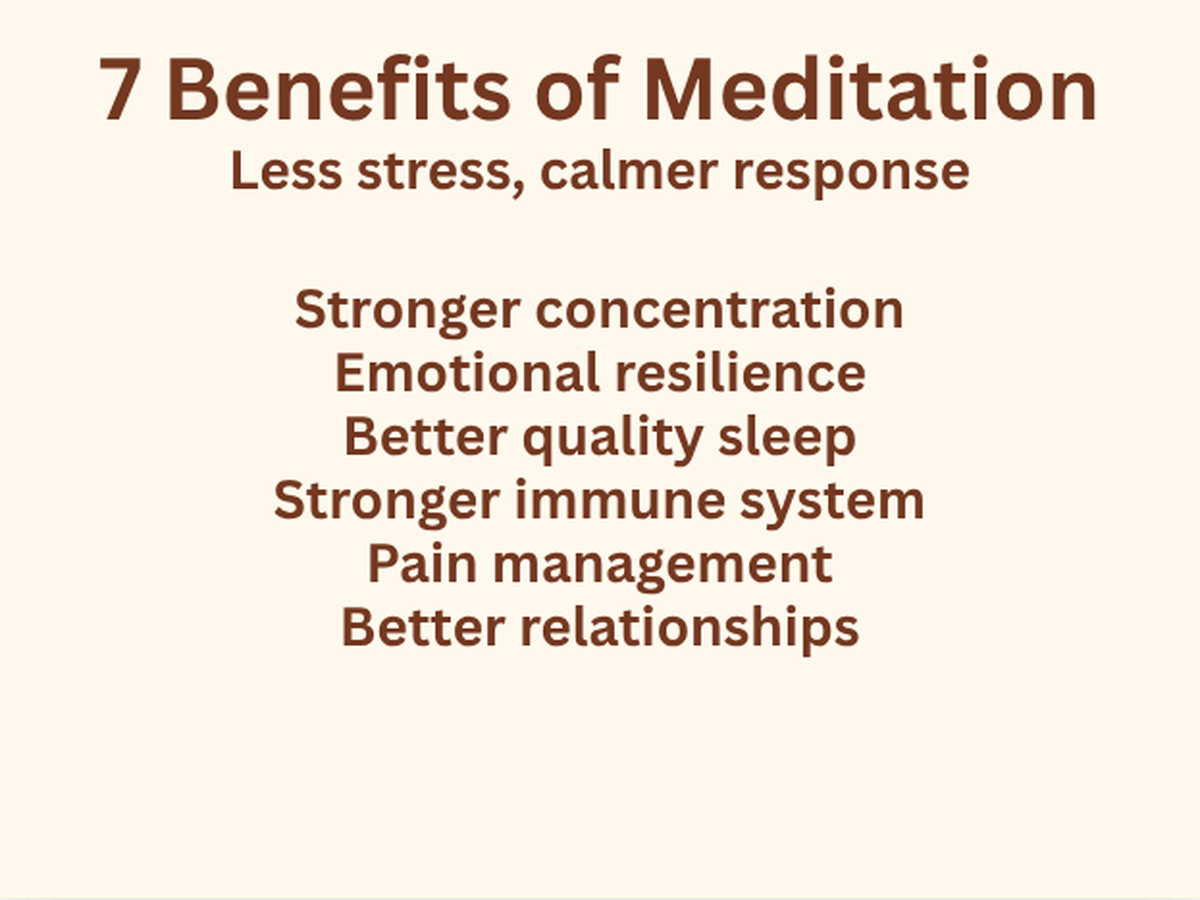
1. Less stress, and a calmer response to it
I draw these words from my own experience: life changes drastically when you meditate regularly. A good technique trains your mind to stay balanced under pressure. If you used to panic in stressful situations, you will notice that reaction shrink over time. Eventually, situations that once upset you may barely register. Everything that happens to us gains its meaning through our own patterns and behaviors, and practice lets you change those long-held patterns. Having control over how you respond is close to a superpower.
2. Stronger concentration and productivity
Attention spans have collapsed. Platforms built on 10-second videos make billions because many of us can now hold focus for only a few seconds at a time. Meditation is direct training for attention, and the work starts with the breath alone. If you practise sincerely, your ability to concentrate grows, and your work and studies benefit with it.
3. Emotional resilience
Have you ever lost control because of someone’s words or an insult you could not handle? Most people break down in moments like these. With regular practice, other people’s words stop affecting you in the same way. You begin to understand where they are coming from, and instead of anger or turmoil, you feel compassion and kindness for them. Take a moment to consider how much that single shift can change a life.
4. Better quality sleep
A long meditation practice changes your sleep. Over time you may notice you need slightly less of it: if you once needed eight hours to function well, you may find seven is enough. A relaxed body and a quieter mind leave you fresher and more energetic during the day.
Physical Health Benefits of Meditation
5. A stronger immune system
Over years of practice, I have found that you fall sick less often, and your body defends itself better. And when you do get sick, a balanced mind helps you recover with a positive attitude instead of panic.
6. Pain management, with one honest warning
Sitting and observing the reality of the body teaches you how pain works. You learn not to break down when it arises. But here is a warning I take seriously: do not use this tolerance to neglect your health. Long-term practitioners sometimes get so used to bearing discomfort that they ignore real problems. If something feels wrong in your body, see a doctor. Meditation complements medical care; it does not replace it.
Social and Emotional Benefits of Meditation
7. Better relationships
It has been my personal experience that practising for years gives you more grounding. Thoughts of judgment and negativity fade, and you begin to understand people instead of criticizing them. People love that about you. This is why I always say meditation is a magical tool: those who know it never leave the practice, because they have seen their life change for the better.
8. Self-esteem and self-confidence
Stage fright is one of the most common signs of low self-confidence, and it grows out of negative thought patterns. With the right practice, situations that once made you afraid to speak become normal. You feel more confident and expressive, and sharing your positive thoughts is never a problem again.
9. A sense of purpose
Everyone needs a purpose; without one, life becomes boring and difficult. What better goal than improving yourself every day? Each day you can sit down, observe yourself, and improve moment by moment. You will not be the same person at the end of it, and that changes everything for the better.
How to Start: Practical Tips
If you are meditating for the first time, be patient and have faith in the process. Real change does not arrive in a day; expect it to take months, and perhaps a year, to see drastic results. If you want to speed things up, attend a retreat: it helps you understand the technique properly and makes a regular sitting habit much easier. Choose your technique after thorough research, because the technique you pick shapes your progress. I only share what has worked for me.
These guides will help you take the next step: A Beginner’s Guide to Morning Meditation, How Long Should I Meditate?, and How to Meditate to Increase Focus.
Final Thoughts
The benefits of meditation are not reserved for monks or experts. They belong to anyone willing to sit down, practise, and stay patient. Do not be discouraged when obstacles appear; they come up in every practice. If you continue, you will succeed.
“Mindfulness is a pause – the space between stimulus and response: that’s where choice lies.” – Tara Brach
If this article helped you, share it with friends and family so they can learn about the benefits of meditation too. Sharing something useful is an act of kindness.